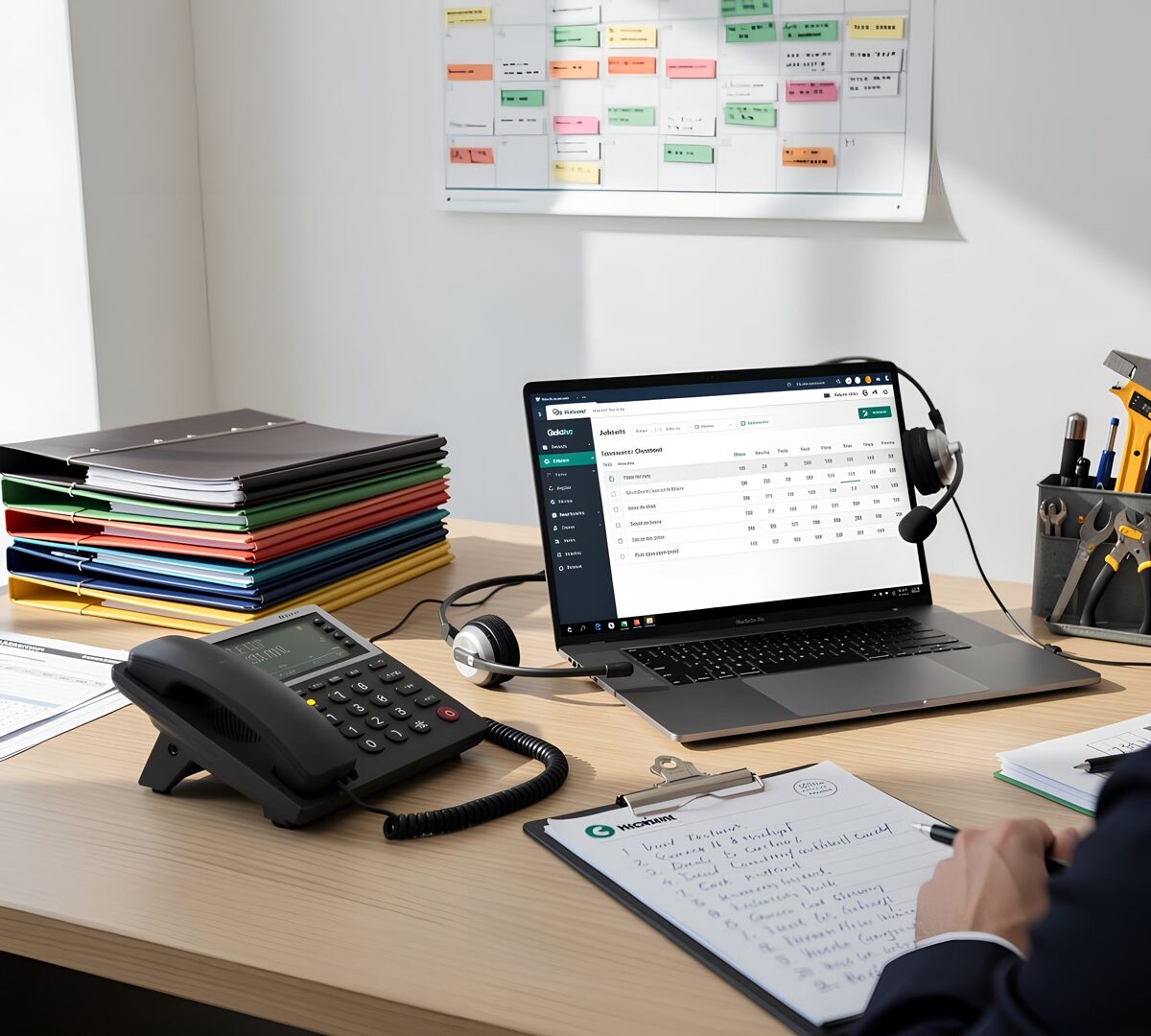
Many trade business owners reach a point where the workload becomes unmanageable on their own. Phones, scheduling, quoting, and customer communication begin competing with time on the tools. Hiring an admin or operations manager is often the first step toward creating structure inside the business and allowing the owner to focus on growth rather than constant problem-solving.
As the workload grows, administrative tasks begin to pull time away from quoting, leadership, and customer relationships. When that happens, the business begins to feel reactive and disorganised.
Hiring support at the right time gives the business operational breathing room. Hiring too early can create financial pressure. Hiring too late can slow growth and overwhelm the founder.
The key is recognising the point at which admin work is limiting the business more than the role’s cost.
Why This Question Appears in Growing Trade Businesses
Most residential trade businesses start in a very similar way.
A skilled electrician, plumber, builder, or technician begins taking on their own jobs. At the start, the business is straightforward:
- The owner quotes the job
- Completes the work
- Sends the invoice
- Books the next customer
Because the founder handles everything personally, coordination is easy. There are very few moving parts.
But things change once the team grows.
More technicians means more scheduling. More customers means more enquiries and follow-ups. More jobs means more paperwork, purchasing, and invoicing.
None of these tasks directly produce revenue. But they are essential for the business to run smoothly.
This is where pressure starts to build.
Highly paid technicians end up organising their own schedules. The owner spends evenings catching up on paperwork. Phone calls get missed during the day.
Eventually, the business reaches a stage where operational coordination becomes a full-time role.
Why Admin Roles Matter in Trade Businesses
Administrative coordination is not just a convenience. It directly affects productivity.
When technicians manage their own scheduling or paperwork, valuable billable hours disappear. For service businesses, every hour of field labour carries significant revenue potential.
Research into small business hiring decisions highlights a common pattern: Companies often realise they need to hire when high-value staff are stuck doing low-value tasks instead of revenue-generating work.
In a trade context, this is particularly important.
A technician may bill $180-$200+ per hour, depending on the trade and location. If that person spends an hour organising materials, chasing paperwork, or managing bookings, that revenue disappears.
Operational support roles protect those billable hours.
Another factor is customer experience. As demand increases, response time matters more. Missed calls, delayed quotes, or slow scheduling can quickly affect reputation and reviews.
The Most Common Triggers for Hiring Admin in a Trade Business
Several patterns tend to appear when trade companies reach the stage where administrative support becomes necessary.
The owner is spending nights on paperwork
One of the clearest signs is when the founder finishes the day physically tired but still has two hours of admin work waiting.
Quotes need sending. Invoices need processing. Suppliers need to be contacted.
This routine is common in growing trade businesses. But over time, it becomes unsustainable. Eventually, the business becomes dependent on the owner constantly catching up outside work hours.
Technicians are managing their own logistics
Another common sign appears in the field team.
Technicians start organising materials themselves. They answer customer calls. They manage parts orders or schedule changes.
On the surface, this might look like initiative. But in reality, it often means skilled labour is being used inefficiently. Administrative support allows technicians to focus on completing jobs efficiently rather than coordinating them.
Enquiries are being missed
As demand grows, inbound enquiries increase as well.
If the phone rings while the owner is on-site, it often goes unanswered. When customers leave messages, responses may come hours later or the next day.
In residential services, response speed often determines who wins the job.
If enquiries are regularly missed or delayed, the business is likely past the stage where a founder can handle everything personally.
The owner is constantly interrupted
A common experience for growing trade founders is constant interruptions.
Questions about scheduling. Customer requests. Supplier confirmations.
When every operational question flows through one person, the founder becomes the coordination centre for the entire business. This slows decision making and creates frustration across the team.
Signs Your Business Is Ready for Admin Support
Some indicators appear repeatedly in trade companies before they bring on their first administrative role.
You may recognise some of these patterns:
- The phone rings constantly during work hours
- The owner spends evenings quoting or invoicing
- Jobs occasionally start late due to scheduling confusion
- Customer follow-ups are inconsistent
- The team regularly asks operational questions during the day
- The owner struggles to find time for planning or leadership
Another common sign is lost opportunities.
Small business research shows companies often hire when they begin turning away work or missing opportunities due to lack of capacity.
In trade businesses, this usually happens when demand is strong but coordination is weak.
The work is there. But the business struggles to organise it effectively.
Hiring Too Early vs Hiring Too Late
Timing matters when bringing administrative support into a trade business.
Both extremes create different problems.
Hiring too early
Hiring admin support before the workload justifies it can create financial stress.
Payroll is one of the highest fixed costs for a small business. If the role does not have enough work yet, the owner may feel pressure to justify the expense.
Another challenge is role definition.
When the business is still small, the tasks may be inconsistent. The admin person may spend time waiting for work rather than managing a steady workflow.
Hiring too late
Waiting too long usually creates a different kind of pressure.
The founder becomes overwhelmed. Customer communication becomes inconsistent. Technicians lose productive hours.
Over time this can affect both revenue and team morale.
Research into small business hiring decisions notes that delaying necessary hires often leads to lost revenue or missed opportunities.
In trade businesses, those missed opportunities often show up as:
- Unreturned calls
- Delayed quotes
- Scheduling confusion
All of which affect customer experience.
A Practical Decision Framework
Instead of trying to guess the perfect timing, many founders find it helpful to use a simple decision framework.
Consider three areas.
1. Administrative hours per week
Add up the time spent on tasks such as:
- Answering calls
- Scheduling jobs
- Preparing invoices
- Ordering materials
- Updating job records
If these tasks are consuming 20-30 hours per week, the workload is approaching a full-time role.
2. Lost revenue opportunities
Ask a simple question:
How many enquiries or jobs are missed because the business cannot respond quickly enough?
If the number is noticeable, administrative support may quickly pay for itself.
3. Owner focus
The final question is about where the founder’s time should go.
If the owner is constantly handling coordination instead of focusing on:
- Quoting profitable work
- Managing the team
- Improving processes
The business is likely ready for support.
What Changes After Hiring Admin Support
When the right administrative role is introduced, several improvements usually follow.
Customer communication becomes faster. Technicians stay focused on completing jobs. The owner has time to lead rather than constantly react.
Operational flow also improves.
Jobs move from enquiry to completion with fewer interruptions. Information is organised in one place. The team spends less time chasing details.
These changes often make the entire business feel calmer and more structured.
The key takeaway
Almost every growing trade business reaches the point where administrative coordination becomes a real operational role.
At first, the founder handles everything. But once the team grows and demand increases, the workload behind the scenes grows with it.
Hiring admin support is not about adding overhead. It is about protecting the time of the people doing the most valuable work.
When that transition happens at the right stage, the business usually runs more smoothly without increasing stress on the owner.
FAQ
Common questions about Hypotential, membership, and getting started.
Many trade businesses hire their first admin when the founder spends significant time answering phones, scheduling jobs, and managing customer communication. If these tasks are regularly interrupting work or slowing down operations, administrative support can improve efficiency.
An admin usually handles tasks such as answering calls, booking jobs, scheduling technicians, managing invoices, and communicating with customers. These responsibilities help keep the business organised and reduce interruptions for the team.
An admin typically focuses on communication, scheduling, and office tasks. An operations manager takes responsibility for overseeing job delivery, coordinating teams, and ensuring work runs smoothly across the business.
Hiring admin support allows technicians and founders to focus on completing work rather than managing phones and scheduling. This often improves organisation, customer communication, and overall efficiency.
Hypotential is a platform designed to support residential trade business owners as they grow their companies. It focuses on practical topics such as pricing, hiring, leadership, and operational structure based on real experience running trade businesses.
Hypotential is built for trade founders who want to build structured businesses as their teams grow. This includes owners hiring their first staff as well as those managing larger trade companies looking for stronger systems and leadership inside their business.