About this episode
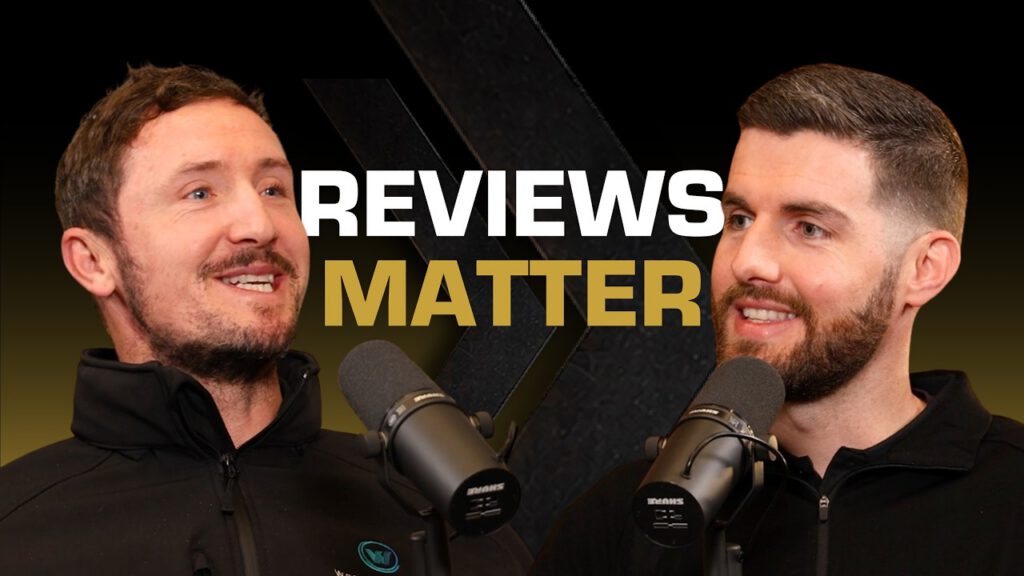
In this episode, Kane sits down with Louis, founder of WestOz Trades, one of Perth’s leading residential and commercial air conditioning businesses. Kane and Louis have known each other for 17 years, going back to their apprenticeship days, and this one has the easy honesty of two mates who have both been through the wringer building a trades business from scratch.
Louis runs a team of around 22 staff across the office and road, with a reputation built on premium service, nearly 1000 Google reviews, and a loyal property management client base. He and Kane get into the real stuff: how WestOz Trades moved into commercial work, the cert two course debate and what it is doing to the air conditioning industry, CRM and job management software, SOPs and team communication, the Monday morning toolbox talk that keeps the whole team aligned, a detailed walk through of the WestOz Trades sales process including follow up, how to charge a premium rate and actually win the job, Google ads and lead costs, door knocking as an underrated sales tactic, and what they both wish they had known when they started out.
If you run a trades business and want to hear how someone who has been doing it for nine years actually operates day to day, this one is worth your time.
Follow Hypotential:
Website: https://www.hypotential.com/
Instagram: https://www.instagram.com/hypotential_
Facebook: https://www.facebook.com/HypotentialCo
Follow Kane:
Instagram: https://www.instagram.com/kanetylersmith_/
Facebook: https://www.facebook.com/KaneTylerSmithWA
TikTok: https://www.tiktok.com/@kanetylersmith
Connect with WestOz Trades:
Website: https://westoztradesairconditioningservices.com.au/
Instagram: https://www.instagram.com/westoztrades/
Facebook: https: https://www.facebook.com/Westoztrades/
In this episode
- 00:00Intro
- 00:36Introducing Lois and 17 years of knowing each other
- 00:55How many staff does WestOz Trades have now?
- 01:15How WestOz Trades grew from residential into commercial
- 01:55Property management leading to bigger commercial contracts
- 02:30Do you need different tradies for commercial?
- 03:41The risks of getting commercial wrong
- 05:35The cert two course debate and the aircon industry
- 07:31The refrigeration mechanic electrical ticket gap
- 09:24Why WestOz Trades charges a premium and clients pay for it
- 10:19Framing quotes to show value not just price
- 10:57CRM vs job management software
- 11:41Go High Level for lead nurturing and email marketing
- 12:36Why job management software pays for itself
- 13:59Understanding ROI on Google ads
- 14:32AI, automation and knowing when to hire an expert
- 15:32Why bringing marketing in-house mostly did not work
- 17:13Why honesty wins on social media
- 17:50Why Hypotential works for tradies
- 20:16Running as an escape and managing health as a business owner
- 22:45Long game thinking in business and rehab
- 23:31Seven to eight years in business builds trust you cannot buy
- 23:46Getting wiped from Google reviews overnight and rebuilding
- 24:47How WestOz Trades gets reviews on site
- 25:39Using Podium for SMS review requests and AI responses
- 27:44Why your trade name matters for Google and SEO
- 32:57How Kane and Louis first met
- 34:44Monday toolbox talks and weekly one on ones
- 35:35Ops Central for SOPs and team accountability
- 37:19Using Loom to create process videos and SOPs
- 38:28How WestOz Trades structures its team roles
- 41:43Seasons in life, you cannot be the best at everything at once
- 44:55Louis asks Kane to walk through the Smartfix sales process
- 45:34Inbound calls and same day site assessors
- 46:25Investing in a sales trainer and what changed
- 47:41The follow up call and booking a specific time
- 48:39Winning a 7K job from a next day follow up
- 51:30Automated follow up vs the personal touch
- 53:16Managing Google ads with a specialist not an agency
- 54:12Cost per lead swings and daily account management
- 55:08Advice for someone starting a trades business with no money
- 56:09Door knocking as an underrated sales tactic
- 58:00Where to find Louis and WestOz Trades
- 58:18Wrap up
Full transcript
Read the full transcriptAuto-generated from the episode, lightly edited for clarity
Cold Open
Lewis: Like, the company spoke for itself. That was pretty cool.
Lewis: You right now you will not have time for yourself, but —
Kane: It's crazy.
Lewis: Yeah, we were going on a whole different path, but yeah, it's a crazy industry, man, when it comes to air con guys.
Meet Lewis Carter: Building One of Perth's Biggest Air Conditioning Businesses
Kane: Hey, I'm Kane Tonkin-Smith, the founder and CEO of Smartfix and Hypotential. This is Unlocking Business where we have real conversations around business, leadership, mindset, and personal growth. If you've been getting value from these conversations, please take a second to like, subscribe, and follow our channels. It helps us reach more people, bring on more guests, and share more stories. Now, let's get into this episode.
Today, we're joined by Lewis Carter, the founder of Westoz Trades. I've known you for about 17 years since we were doing our apprenticeships back in the day. It feels like we've come such a long way. Westoz Trades is now one of the biggest air conditioning businesses in Perth. How does that make you feel?
Lewis: Uh, scared, mate, to be honest, but yeah, also amazing for what we've accomplished. Back in the day, mate, we — yeah, as you said, 17 years we've known each other, so it's a long time, and here we are.
Kane: How many staff have you got now?
Lewis: About 22 in total. About six, seven in the office. Maybe — yeah, up and down, maybe 13, 14 on the road. One given time, so —
Kane: Yeah.
Lewis: Yeah, a lot to think about, for sure.
Kane: And that's a combination of you do residential and commercial?
Lewis: Yeah, our bread and butter has always been residential. Property management is how we got into the industry first of all. And I think that you'd know with the Smartfix stuff, you just kind of get used to not saying no to stuff. And for us, we want to give our team the ability to grow, uh, and have more complex challenges, so we've really just grown into that commercial side naturally, relatively.
How Property Management Leads to Commercial Air Conditioning Contracts
Kane: So, how did you get into commercial in the first place, then? Was it through your property management?
Lewis: Property management, always. So, a lot of the residential property managers we work for have a commercial side, and then, obviously, you know, word of mouth. We start doing a good job in the resi side, the low end, then we can kind of come up the track with the commercial. And then from that it's just, yeah, been referrals and just working with the right commercial property managers. And then that's led into some of the bigger stuff, you know, bigger projects and medical centers, Bunnings, Domino's.
Kane: That's what you're doing. Domino's, yeah, a fair few bigger names.
Lewis: So it's been enjoyable.
Do Air Conditioning Trades Need Different Staff for Residential vs Commercial Jobs?
Kane: That's cool. So do you have to have different trades then? Cuz for us we've never done commercial and my main reason is if we have like electricians only mainly do residential work, it's a little bit too different just to throw them on a commercial job. So do you have to hire specifically for that side?
Lewis: Do you remember, if you're a refrigeration mechanic, like you should know the ins and outs of installation servicing in terms of residential and commercial. It can be a lot different when you're working on the industrial side, your chillers, your ammonia plants, stuff like that, where you really need experience. But for the stuff that we do, they come inside quite well, really.
Kane: Yeah, okay.
Lewis: Yeah, I mean for us we've always been massive player in terms of stick to your niche and do what you do well. So we work alongside a fair few good like mechanical electricians who are more specified to that kind of stuff, your VSDs, your CO2 sensors.
Kane: What's a VSD? That's like the big commercial air con.
Lewis: VSDs are like your variable speed drive for like your different, you know, exhaust fans, stuff like that. Stuff that we don't really do that much.
Kane: Yeah, a lot of ventilation stuff. Car park exhausts, kitchen exhausts.
Lewis: Yeah.
Kane: What do you guys do the ductwork and stuff for that?
Lewis: Do the ductwork, install the fans, commission, but in terms of the electrical side, like the sensors and the calibration, we'll get the sparkies in to do that. So we've really got a good team that we trust. But by all means we fake it till we make it, but we still have to be under the rules and regulations. Every job our admin team would tell you has to be a learning curve. If it's not one thing it's another and it's just on a bigger scale in commercial.
Kane: Suppose it's more risky cuz if you do something wrong it potentially affects the whole job in the building.
Lewis: Especially like car park exhaust. You haven't got a thousand dollar cylinder repair, you got a hundred thousand dollar lawsuit coming at you. You know what I mean? So you got to know what you're talking about. Luckily we've got a good people within the company and people outside the company in terms of mechanical engineers and stuff as well that help us. But yeah, our bread and butter to answer your question is a bit of both. We still really enjoy the resi side as well.
Kane: Yeah. What splits and ducted for residential?
Lewis: Uh, yeah, splits, evaporators, ducted. As you know, it's hard to get boys or girls to want to install reverse cycle ducted systems. So that's been a challenge of its own, but we do have a few subcontractors that help us in regards to the installation side. But our bread and butter is troubleshooting, repairs, diagnostics, that stuff. Anything that the sparkies can't sort.
The Restricted Electrical Licence: Why Air Con Techs Can't Fix Their Own Split Systems
Kane: I was going to say that's where we've always — that's where we always struggle like that. I was going to ask you this the other day. I was going to ask you your thoughts on this whole split core thing.
Lewis: It's crazy. Like genuinely, like we obviously we do it because we can, but as a fridgy it's pretty ridiculous.
Kane: Yeah, I think we've come to the conclusion if you can't beat them, join them. So even in summer at peak time, most of our installers will be sparkies because I can —
Lewis: As in subbies? You sub it to those guys?
Kane: Yeah, we have a few subbies that we work solely with so they know our systems, you know, they know our checklists, they know our quality assurance forms. But what's the point of having, you know, a split subcontractor or fridgy subcontractor doing the pipe up and then have another electrical contractor come and do the power. Doesn't make sense. So yeah, in terms of the electrical side, we normally subcontract any of our work when we can or when we get too busy to sparkies.
Lewis: Yeah, okay.
Kane: But yeah, in terms of the whole cert two course, yeah, I mean it's good and bad, right? We get the benefit of fixing up all the issues, yeah, but ultimately we're losing a lot of work because like the pricing that they're giving people is ludicrous.
Lewis: Yeah.
Kane: And no one knows, like, for them, if they've got a system that's cooling or heating, happy days. But then like when an actual experienced tech goes to have a look, you'd be like, "Holy, did you — you did you not actually use the system? Did you actually get a photo of you, you know, pulling below 5 on your micron? Did you use black insulation? Did you tape near your flares?" There's stuff that's another level that people don't see. But yeah, good and bad. And yeah, the industry for air conditioning is definitely falling apart in that regard, for sure.
Lewis: What did you say? Because there's so many sparkies that are doing that split course.
Kane: Yeah, I mean if that was — if I've got my young boy growing up, he's 2 years old, and what comes to me saying, "What trade should I do?" I'd say, "Don't be electrician and then get your cert 2 course." Cuz that's going to be the shortest way for you to be, you know, a competent trade, if that's what you want to do. In, you know, in our sector, the resi like commercial space, it makes sense. On the bigger stuff, for sure. If you want to be a fridgy —
Lewis: Yeah.
Kane: And you can still earn decent money doing that.
Lewis: Yeah, it's obviously different for commercial, and even with ducting that we obviously dabble a bit with ducted, but it's actually funny — this week I called one of the inspectors from the ARC council, whatever they're called. And I was like, "How does — cuz we don't have a fridgy at the moment. We don't have fridgies." I said, "So, how does this work?" And so, "With our electricians that have their restricted split course ticket, we can go out, we can install a new split, we can top up the gas if the pipe work is long enough that needs to be, yeah. But if there's a leak on there, we can't repair it." So I'm like, "What? So, we can handle gas, we can top up gas, we can carry gas, we can buy gas, but then as soon as an issue, you can't." I was like, "That's crazy. Either you should, in my opinion, either we can or we can't. Can we handle gas or no?"
Kane: Yeah.
Lewis: Which is I think ridiculous because you —
Kane: It's a money-making thing for them, right? They're never going to change it. Ultimately, what they should do on the flip side, and I speak for every air con technician and fridgy out there, is they need to bring in more allowances that we can do as refrigeration mechanics in terms of electrical side. So we should be able to really do a week, two week course and be able to run our own circuit, own RCB out from the mains board to the outdoor unit. Something as simple as that.
Lewis: So you can get a restricted electrical ticket but that's still only straight swap replacements.
Kane: Yeah, and they're taking more and more of you — like I said, you know, before I had — but even changing an isolator we're not allowed to do it anymore. Running more than 5 m of interconnect we're not allowed to do it anymore.
Lewis: But if you had a restricted electrical, can you do that?
Kane: No, that's — that is with, or that is it. You can't replace an isolator.
Lewis: Can't replace an isolator?
Kane: Yeah.
Lewis: Really? I thought you was —
Kane: Any fit where I'm allowed to, you can work from, but you're not physically allowed to go and lock out the board, turn the breaker off, change an isolator. That's — we're not allowed to do that. But some of our — obviously refrigeration mechanics, we're smart with control cabling, like we do a lot of it. Troubleshooting, diagnostics, that stuff. So we should be allowed to run simple mains power.
Lewis: You would go down a whole different path for —
Kane: Yeah, it's a crazy industry, man, for air con guys.
Competing in Perth's Property Management and Air Conditioning Market
Kane: So you're, as I sort of mentioned before, you guys are one of the biggest in WA. Obviously there — I know some big people that do like industrial and stuff like that. Is there — do you have many competitors in your space doing the property management kind of work?
Lewis: Yeah, definitely a few competitors. Um, I mean, I definitely — biased in the way that I say we are the best in that area for sure. Only because we've been doing it for so long in that niche with property managers. So our systems are really derived to help property managers. From, you know, the SMS reminders, how to deal with strata, collecting keys, that stuff, right?
Kane: That's a whole another beast in itself.
Lewis: Yeah, you get to know it. So, yeah, a fair few people doing it. And don't get me wrong, we're definitely a premium in terms of pricing in that area. But for us to have capable staff, to train them well, um, you — fuel, insurances, all that stuff, anyway, with regards to overheads, we've got to pay the boys as well. And that's the only way we're going to get good technicians work for us.
Do Real Estate Agencies Pay a Premium for Reliable Trade Contractors?
Kane: That's a good point because I always assume with real estate it's probably different resi real estate to commercial strata, I don't know. We always just assume that they wouldn't pay our premium rate because I know residential, for example, I know the real estate's working with homeowners trying to get the cheapest price possible.
Lewis: Yeah.
Kane: So, with our pricing as a premium service, we always assume that we'd struggle with that.
Lewis: Mhm.
Kane: But do they pay a premium then for someone like you guys?
Lewis: You've got to chase a premium real estate, right? Like, if they're a premium real estate, they can't be going with the cheapest price because it's going to come and kick them in the ass in the long run.
Kane: Mhm.
Lewis: As you know, you pay the cheapest cost, pay peanuts get monkeys, as the old saying goes, and it is true — like in a year's time you're probably paying double that because you've got to go back and sort all these issues. So I think for any contractor out there, it's trying to sell to an avatar that has money, realistically, is number one. And you want to frame your quotes and your services in a way that gives you value, realistically. You can't just say on a quote, "Replace 20 amp isolator." You've got to, you know — what isolator you're replacing, how are you doing it, what you're taking away. You have to big up your quote to show more value in what you do. And that's how you can win, I guess I would say, better clients, more money.
CRM and Job Management Software: HighLevel, ServiceM8, and Score Compared
Lewis: What CRM do you use?
Kane: Uh, job management or CRM?
Lewis: Yeah.
Kane: CRM we go HighLevel and then job management we're a Score — yeah, similar to ServicePro?
Lewis: To — this is interesting because we've been toying with this idea for a while. We use ServiceM8, which, yeah, it's not a CRM, which is sort of coming to light recently with sort of me learning. So we use HighLevel now for Hypotential, we use ServiceM8 for Smart Fix, but there's so many downfalls with ServiceM8 for like reporting and automations and stuff like that. So — so you're a Score, that's your — that's what your trade is going to site with, that's what they take photos with and everything?
Kane: Yeah, right.
Lewis: Yeah, what do you use HighLevel for?
Kane: HighLevel for us is more, uh, lead nurturing. So landing pages get sent to GoHighLevel. They'll get moved to different areas if they've been contacted. More of a sales side of things. Any website inquiry, SEO inquiry gets captured in HighLevel and they'll be automated, you know, a little welcome VSL video, something like that. And then we use it for email marketing as well. So, you know, email marketing once a month. Not that I'm consistent at all, but yeah, it's good to catch. I think we've got about 8,000 maybe emails in there. But as you know, it's all well and good having 8,000 in there. It's just like how many —
Lewis: How do you use it?
Kane: How many are going to open that email?
Lewis: Yeah.
Kane: Yeah.
Lewis: And how many are going to unsubscribe? That's the issue that we have. It's — we have —
Kane: Yeah.
Lewis: Cuz we do resi, we have a lot — we have like maybe 30, 40,000 actual subscribers. Each time if we do like an unplanned off-the-cuff, "we're quiet, let's send an email out," you get so many unsubscribers cuz they're like — yeah, I know.
Kane: But yeah, on the flip side, back to your question about like why we can charge a premium. I think having that job management software, if you're starting out and you're a business owner, you need it, 100%. Like a lot of people are cheap to start out. They don't have much money, but it will save you so much money in the long run. Like for us, and you'll be the same with ServiceM8, like on our invoices we have like an equipment asset list. So every, say we go to a site and it's got 10 split systems, the boys would add equipment, then 10 systems. That will give them prompts on, you know, condition of filter, has the drain been unblocked, outdoor coil condition. All of that is sent to the real estate or sent to the owner. So you're adding value with that, right? So rather than them paying 100 bucks for a split system service, that's why we charge what we do because they're getting so much more from it. And that's where a Skhokho and your ServiceM8s can help with that, right?
Lewis: So with your HighLevel and Skhokho, I assume they sync together. So that if you have a job, if you have a lead that comes through HighLevel, ends up being a job, then it goes to Skhokho?
Kane: Yeah, so generally they'll come through to the website, goes to GoHighLevel. We get sent an email into Outlook and it also goes to Score, into inquiries. So we can auto-populate them as a customer straight away.
Lewis: So my question there — this is for our actual like current issues — is are you double handling though if it's in both, or —
Kane: 100%.
Lewis: Yeah, but it's worth it because of the benefits.
Kane: Yeah, 100%. Yeah, I think we even double handling more in terms of — I mean we're delving a bit deeper, but the whole marketing side is, you would know more than anyone about how much money you can spend on Google Ads and stuff like that, but you need to understand how your leads are coming in in terms of what value you're making from them. So you need to really —
Lewis: Your ROI.
Kane: Yeah, because we've for so long we've paid so much money on Google Ads and SEO, but the leads are coming to an active Google spreadsheet. Our aim is to put — okay, have they been in contact? What was the quote amount? Has the job been won? You need to do that weekly. Because you need to figure out if it's worth you spending money. At the minute we're all over the place in terms of automation and we haven't found that perfect sweet spot, but yeah, double handling, but probably is the only way at the minute.
Using Zapier and Outsourced Automation Experts Instead of Hiring In-House
Lewis: So with the automation you just mentioned, so is that with AI? I know obviously you have automation and AI, but do you use both?
Kane: Yeah, yeah, I think it's just Zapier we use, to be honest. It's super simple. We work with a guy called Ben from Link Digital, shout out. He's really good at the automation side. And it changes like every few weeks — there's like an update on GoHighLevel or Facebook — and, as business owners, it's hard cuz you want to be doing the marketing side, but you haven't got the time. So you don't have time to understand it as much. So I feel getting someone involved who knows the industry in terms of the marketing sense, automation — yeah, it's a different ball game, ain't it really? Running a business as a technician, being a great tech, and then understanding business, which is what the Hypotential stuff does, and then sales, like, yeah.
Lewis: It's crazy. Like you said, if he's the expert in those automations and with Zapier, like tying them together, I think hiring an expert in to do that is a good idea, cuz we've gone through lots of different phases. Like we tried to bring all marketing in-house at one point. We had a Google Ads guy in-house. We had SEO in-house. We tried to get in tech guys in-house, but it didn't really work for us, to be honest, for most things. It's like, you know, go external and get the expert to come in. Yes, you're going to pay them a premium, but they're not a full-time employee. There's a tax benefit with a full-time employee. There's no tax benefit there. So there's pros and cons, but I think everything external for experts is perfect. Trying to bring things in-house has a whole heap of issues. Even like office space, for example.
Kane: Yeah.
Lewis: Office space, sick leave. Are they keeping up to date with the new things that change, like you said, cuz that happens all the time. Like I know even with social media, they might change the sizing of the images that you can fit on Instagram.
Kane: Throws —
Lewis: Yeah.
Kane: If you've got, like, prepared 3 months of scheduled posts and they make a change, you've got to then figure it all out.
Lewis: What it's like — even for me, I normally set aside a few hours every Monday to do literally three posts, like three organic posts about like West Aussie, and it takes me three or four hours. So, and then that's, you know, posting it on whether it's Facebook, Instagram, LinkedIn. Yeah, so it is a challenge, but —
Kane: And you do your own?
Lewis: I do my own organic stuff cuz I feel like if we outsource that, they wouldn't understand the story of us. But then we have a few guys who do like the more of the, you know, Australia Day posts, or we have — we had a mental health awareness day the other day. Stuff like that is what they'll do.
Kane: Yeah.
Lewis: Yeah.
Kane: And I've read yours. You don't use — I don't think you use AI, unless you do it really well.
Lewis: No, I don't — I use it to brainstorm, for sure. But like I've always enjoyed writing and I've always enjoyed English, and I love that about it. So I mean, you can tell when they're super AI. Yeah, I think Alex Hormozi, he always recommends you have to dumb it down to like a 4-year-old vocabulary. And that's literally the way that I write anyway, so —
Kane: Perfect. Yeah.
Lewis: Ah, it's funny. I like — LinkedIn's tragic for it, hey.
Kane: It is, yeah, it's bad. Yeah. And no one tells you the real story, right? Like I know, as I was saying off camera, like you're good at doing that now with your Smart Fix journey and telling the people how it is. And with social media these days, like everyone's telling you a lie. So I've been through a fair few business coaches, mentors that have kind of reeled you in, but they haven't lived that life. So I think if you're looking to get a mentor on board, you need to quiz them about what they've done.
Why You Should Vet Business Coaches and Mentors Before Hiring Them
Lewis: Exactly, and 100%. Like I never spoke — I've never spoken to other people like that has got a business either my size or bigger, until hit the fan like last year, and I flew up east to meet somebody that we were with right before.
Kane: Yeah.
Lewis: Yeah, it's interesting like the stories that they share, that — yeah, okay, so everyone has done — I love, you have done the same that I've messed up. Yeah. That's why we're doing Hypotential, because we have sort of lived through like the majority of things now.
Kane: Thing though as well, isn't it? As blokes, especially, like you don't want to talk about your hardships and what that's done. And especially with starting a business, it's like you need to talk. So being in them, like, little mastermind groups, similar to — I'm not sure what you guys do — is going to be beneficial. Learn from everyone's mistakes.
Lewis: I think it is hard. I think — some things are unteachable lessons, which I've — that's a new phrase I learned recently, but there's so many things people told me not to do that I've done that's like maybe I shouldn't have, but there's no way I would have listened without doing it for myself.
Kane: Yeah, 100%. It's like having a baby, right? Everyone says this is what you should do, but you don't know until you've actually had the baby.
Lewis: Yeah.
Kane: Yeah, that is a very good point. It's like that cuz a business is like a baby.
Lewis: Yeah, and I'm really bad at like delving into business books. Like I reckon I do about two business audiobooks a week.
Kane: Do you really?
Lewis: Multiple podcasts, but it's like, what do you retain out of that? So that's the hardest thing for me — like you can read all the books in the world, listen to all the podcasts, but you have to take action. And that's it. So, and I'm one for not taking action for sure. I'm a visionary, so it's hard for me to, you know, put stuff to paper. That's when you have a good team around you.
Kane: That is true. Like I've said this previously, as I've probably watched tens of thousands of hours of other people's content but I probably retained maybe like 1%.
Lewis: Yeah.
Kane: And then that's what — yeah, it's hard, eh? When do you have time to listen to audiobooks?
How Running Ultramarathons Helps a Business Owner De-Stress
Lewis: When I run. Running is a big thing for me. Yeah. So normally when I'm running, I can't really listen to audiobooks when I'm working. I know a few people can, but I need —
Kane: Really?
Lewis: Solely focused on work. Even music, I can't have like — I couldn't have —
Kane: Lyrics —
Lewis: Lyrics playing. It has to be like lo-fi.
Kane: Yeah, sure.
Lewis: And then I'm stuck in then. Yeah.
Kane: How often do you run?
Lewis: I normally run — I maybe 80 to 100 k's a week at the minute, depending on what's coming up training wise. But it's very sporadic at the minute. You know what it's like with kids, mate. So you can have a plan in mind, just like business, and it just goes to. So I could have my alarm ready for 4:00 a.m. and the kids have a night and I'm, you know, blaming them on me not getting up, or —
Kane: Yeah.
Lewis: But yeah, I enjoy running. For me it's an escape, and that's what you need as a business owner. You need a de-stress. Cuz you come from a crazy stressful time at work. You open the doors and you got kids and you come into a show. So it's hard, mate. Yeah.
Kane: So you try to get up in the mornings?
Lewis: I'm normally mornings. Lately I've been going at night time — kids are in bed 7:30, I do like an 8:00 to 10:00 run.
Kane: Yeah, right.
Lewis: Yeah, it's nice. Yeah. Storms are coming in in Perth lately so it's like listen to some motivational podcasts. Yeah, it's good. Good fun.
Kane: That's a lot of k's per week. You still do a marathon or something?
Lewis: Just done Margs Ultra. Yeah, that was 80 k, um, but you know what social media's like these days, mate. 80 k's is nothing compared to some — what is it people are doing. Yeah, it's crazy.
Kane: So I was on 12 k HBF and I was like that's pretty —
Lewis: That's a good effort.
Kane: Yeah, mate.
Lewis: Yeah, I — you got to stop that, all right?
Kane: Uh, yeah, 80 k's I was on the Cape to Cape, so it's a very like hilly trail. I think there's about 40 k's worth of sand.
Lewis: Sand?
Kane: Yeah, it was good.
Lewis: Soft sand?
Kane: Soft sand, yeah.
Lewis: Jeez.
Kane: Yeah, it took me 10 and 1/2 hours I was running for. But yeah, there's a few other runs coming up. I'm definitely back of the pack runner for sure. But it's enjoyable for sure.
Lewis: So, no more football?
Kane: No more football, and that's where we know each other from as well. No more football. I love it. I just feel like on a personal level, I'm so competitive. If I start playing football again, I would remember how quote-unquote better I used to be when I was younger and I'll be upset that I'm not at that level anymore. So, running.
Lewis: Risk of injury.
Kane: Yeah.
Lewis: Is there still risk of injury? Obviously there is with running, but obviously nothing like with football.
Kane: Not major. Like you might, you know, hurt a hammy, but then you — I can still work, you know?
Lewis: Yeah.
Kane: Like we're more so in the office these days, but yeah, you want to be able to be there for your kids and stuff a bit. And sometimes with football, like how easy is it for you to break a leg, or —
Lewis: Like you said, you remember what you used to play like, and then being a bit older and not being as agile, one wrong move. Like I done my ACL like 2 years ago, like I mentioned this before. Just gone trying to train now to play. Then I need to do like 6 months of return-to-sport physio before I can even think about playing. And again, if there's one adrenaline's going, one overreach and I do my knee again, I'll be like, "Oh, that's another 12 —"
Kane: It's just playing smart, and that probably writes back to business as well. Like you've learned from all them mistakes previously. You just got to take a step back and simplify the process. Even if you injure yourself, it's like you want to go in full steam with your rehab, but you just got to take your time. Play the long game.
Lewis: Play the long game. That's it. And generally, the people who play the long game are the ones that are successful, right?
Kane: Mhm.
Lewis: As you know, all these little one-man bands starting up, it all sounds good on paper. Give them a year, they're probably not going to be there. So, on the flip side for us, that's helped us as a business in terms of educating the people that do charge on the lower scale — when you're a con up in a year's time, you give them a call, they're not going to be there. So we've been here for 7-8 years, and same for you guys, but we're trustworthy. That's what you pay for.
Building 900+ Google Reviews (and Surviving a Fake Review Scam)
Kane: I looked at your reviews yesterday. You got 900 and something, five stars.
Lewis: So close to a thousand. Yeah. So we did — we went through a real rough patch with that. We actually paid a company who tried to get reviews for us, but it wasn't via Google, so he could distribute the reviews himself. It was a fraud kind of system. We didn't know how bad it was. So we got up to like four, five hundred reviews through doing it the correct way that we thought, and within a day, completely wiped out.
Kane: Oh.
Lewis: So we had to rebuild the structure for reviews. And I mean, you're massive on Google reviews at Smart Fix, aren't you? What's your system these days?
Kane: Um —
Lewis: Still incentivized to an extent?
Kane: Yes, sort of. So we obviously — a lot of jobs, because we do residential, a lot of our jobs like one or two hours, so we get through volume. So I would — I can, my head, I'm like, we have nowhere near the amount of reviews that we should do for the amount of jobs that we do, but customers, they don't go out of their way to do it. So you obviously have to prompt them quite a lot. So if we finish a job, our trades on site are supposed to go through a checklist of, like, have you cleaned up? Da da da. Go through the job with the customer. Have we missed anything? You happy with the work? That's so important. Trying to get the guys to do that is hard.
Lewis: They can tick the box.
Kane: Yeah.
Lewis: But have they done it? Have they done it? That's the thing.
Kane: And then they just say, "Hey, if you don't mind leaving us a review based on the work we've done." QR code — like it's literally on a — for the customer, if the tradie has followed the process, then, yeah, we incentivize our tradies — basically just do the job properly in the first place, and then they get name dropped. We get incentivized them. Goes towards their performance.
Lewis: It's hard as a business owner though, cuz you're paying them to do the job anyway. So it's like that is part of your job. So it's give a five-star service. So it's hard. The more you give them, the more they want in terms of your team. And I get it, we're in a competitive landscape for employees and team. But it has to come to a point where you are paid to just deliver a five-star service anyway. But yeah, on the flip side, we incentivize as well. And that's been a game changer for us.
Kane: Yeah, it is for sure.
Lewis: Yeah, we —
Kane: Obviously we use ServiceM8 and we use Podium.
Lewis: Yeah.
Kane: You know what Podium — like the SMS service thing, like that is good. The ones that call you every week. Yeah, they're good. They're good at sales, but their systems are — to be honest their system is amazing for us. Like all our emails, all our SMSs, Facebook, LinkedIn, any message platform goes to our Podium platform.
Lewis: Yeah.
Kane: Then we have obviously AI systems in place which can respond instantly for that level of customer service, then it escalates to a human.
Lewis: Yeah. Is that what GoHighLevel can do, if it's built into that? Similar to them?
Kane: Did I look into HighLevel's one?
Lewis: I think they do do it, but I think it's just, as you say, just the time to set it up.
Kane: So I think HighLevel can manage it, but I don't think you can SMS from them. I think you have to have an add-on.
Lewis: Or, yeah, like Chirp.
Kane: Or Podium or something that has the SMS, cuz I think that licensing is different, I think — I could be wrong. Like I said, with ServiceM8 you can SMS for it, but it's the whole automation. So every job we complete, the customer, if the tradie will ask, and then the customer will get an automatic thumbs up or thumbs down kind of prompt.
Lewis: Yeah, and it's hard, because, yeah, I mean realistically you want as many Google reviews as possible, to be fair. Like if you're in the residential kind of space, that's the first thing anyone looks at, really. For me, I jump on there and —
Kane: Funny you say that, cuz we've been doing some research with AI. So we're finding that people are unsure on our reviews. I don't know how this came about, but we're looking into AI and we pop up on —
Lewis: Have money.
Kane: Yeah.
Lewis: Yeah, we're just —
Kane: So then we're getting people questioning our reviews because we've got so many. I'm like, this can't be a bad thing now. That's ridiculous.
Why Google Reviews Now Matter for AI Search — ChatGPT, Claude, and Reddit
Lewis: It is. I think we had this — I think we had one on, um, I'm not sure — it's like a podcast brain here. Um, when they go to discuss stuff online, like forums — oh, Reddit, that was it — and someone was like, is Westoz Trades still legit, like their reviews don't look normal. I was like, "Come on, man."
Kane: Total win.
Lewis: But then someone, obviously on our behalf — and this is what was so amazing to see with our client base — is they responded on our behalf saying we've used them multiple times, they're great. No one even needs to get involved. Like the company spoke for itself.
Kane: Mm, that's good.
Lewis: That was pretty cool.
Kane: That's cool. Yeah, Reddit's huge for AI citing.
Lewis: Yeah.
Kane: It's huge, which is scary, cuz we were talking about this this week. It's like, do we need to do our own Reddit posts? But then it's like, yeah, but then you've got to manage the threads. Then you have to stay in there and you'll get into like —
Lewis: Where do you draw the line, right?
Kane: Yeah. Literally where you draw the line. We're like, at the moment, no, we won't attempt to do our own, but a lot of stuff is popping up sourcing Reddit when people are searching AI.
Lewis: Yeah. And then ChatGPT as well. That's obviously the searches on there, Claude. You know, people — loads of people are using that as a reference. "Best air con company in Perth," and then that will kind of — so your SEO guys have got to be having that in mind now.
Kane: Hello.
Lewis: Yeah.
Why Your Business Name Matters for AI and SEO (The Rebrand From Multi-Trade to a Niche Name)
Kane: Which, I sort of mentioned this before the podcast — so we've been through a lot of changes. We're about to change our name back from — well, we're in the process now — changing our name from Smartfix Multitrade and Services to Electrical Air Conditioning, because — main reasons, obviously we don't have all the trades anymore, but again, AI, we're not popping up. If you type search "electrician near me" in any AI platform, we do not pop up because it's not in our name. So going back to like your sticking to your niche — for us, we've had so many downsize of trying to do multiple trades. The whole idea was customer service. We'll come in, we can do your kitchen renovation, electrical, air con, tiling, cabinetry, da da da da da, convenience — which obviously did work, sort of, not as much as what I thought it would, cuz customers are now — I've got my own plumber, I've got my own this, got my own that — which was fine. But then it's like we're sort of really relying on that work.
Lewis: Mm.
Kane: Yeah. And yeah, the whole AI overview and SEO, there's so many downfalls with not having what you do. Like, I saw — I looked at your LinkedIn this morning. So your website is — is it Westoz Air Conditioning?
Lewis: Yeah, well that — we're the same. Yeah, our name is Westoz Trades, right?
Kane: That's why I was asking you.
Lewis: We should have rebranded years ago, but it just — we kind of missed the boat. We already had the brand name. Like it was, you know, 3, 4 years in. It was too hard for us to rebrand, I feel.
Kane: No, didn't soak wells anyway.
Lewis: I didn't remember that you didn't —
Kane: I saw what I had in here — to just, you know —
Lewis: We — I first started doing soak wells. That was my bread and butter when I was an apprentice, an HVAC apprentice. So I could make more money installing storm water soak wells than I could in a week's work as an apprentice, on the weekend. Yeah, so —
Kane: So that means it's hard work, hard labor.
Lewis: Hard work, but that's been drilled into me from an early age, I think. And that's what this generation needs a bit more of, just a bit more, right. There's some good ones, there's some bad ones, but yeah, I think — my old man, speaking from my perspective, and my mum, they're hard workers. So we've — after that I'm — I'm bored recently, so you're digging soak wells with me Saturday, Sunday, by myself, with a shovel.
Kane: [laughter]
Lewis: Just — I used to do it. Used to make the money.
Why Westoz Trades Started as a Multi-Service Business Before Niching Down
Kane: Is that why you had the name? Cuz I — you had "Westoz Trades" from quite early. Is that because you weren't just doing air conditioning?
Lewis: Correct, yeah. We were actually Westoz Trades and our original sign — it was so cringey, because obviously me and yourself know each other from, you know, way back when anyway, which we'll kind of touch base on. But yeah, it was air conditioning and soak wells. That was the [laughter] stuff. And I had my mascot at the time, Bundy, like a cartoon picture of him.
Kane: The mascot.
Lewis: At the time I thought, this is the sickest logo ever. Looking back at it now, I was like, how unprofessional was that? Like we couldn't go to a commercial job these days or high-end real estate and that would be our thing. But in my mind I was like, well, we're busy in summer, perfect. We'll be busy in winter with the soak well stuff.
Kane: True.
Lewis: So that was — for the first few years we still did do that a little bit. And then, as you said, you just got to stick to your niche. So air con was what we were good at. Soak wells was okay in terms of money, new builds, that kind of stuff. But as the longer we got into that, the more advanced we'd do. So then we start doing commercial concrete soak wells and we were going to be buying excavators. So I was like, "Where do we draw the line? We need to choose one."
Kane: Kind of work would be hard to get staff for as well.
Lewis: 100%. Yeah. Yeah, and I mean, in terms of like, you know, with the gas stuff, you got to know where you're digging. Like there's a lot of big impacts that can happen if you're not on the ball, for sure. But, yeah, that was Westoz. And by all means it could be a play in the future, you know, we do — but yeah, as me and you have discussed, that's not what we're going to come up with.
Kane: But it is hard. There's so many pros and cons, hey?
Lewis: Yeah, so we're Westoz Trades, Innovative Air Solutions, like the little under name, but our slogan is "your friends in air." That's what we're driving at.
Kane: Yeah, I like that. Yeah, I like that. And yeah, at least having that on your shirt, "Innovative Air Solutions," still tells you what you do. Yeah. With ours, we didn't have that for a few years now. Yeah. Like if you see our van, it just has like "Smartfix Multi-Trade Services." Mhm. Like, what does that mean? Like, obviously we're tradies, we'll obviously have an idea, but if you're the general public client, like, that — is that commercial maintenance? Like is that any trades at all? So, yeah, we might have to rebrand our vans.
Lewis: If you — I remember you could come into me, you said, "I've got a great name for your business." You remember? It was Cart Air, cuz my surname is Cart.
Kane: Ah, yeah.
Lewis: I still — I was like, "Oh, it would be good." But if you could rebrand Smartfix, if you were to start again — I know we're probably getting ahead of the, flipping the seats — what would you — how would you name yourself?
Kane: Actually, off literally, Smartfix Electrical Air Conditioning. Yeah. Yeah. Yeah, I always had Smartfix when I did work with Nigel back in the day. This — we sort of borrowed the name from a business we used to work for. Yeah, it was just Smartfix. I just loved the name. Always loved it.
Lewis: Yeah. Yeah. See, I'm not sure what I'd change Westoz Trades to if I could do it again. It would definitely have something with air in the name. Whatever your industry is, you need to have that in the name. So when you're searching on Google, on your vans, as you say, there's like it speaks for itself. I think you'd have to keep Westoz and just be, potentially, Westoz Air Conditioning if it was that niche, and depends if you don't want to do the trade. So I mean, how many Westoz's are there as well, you know what I mean? It's such a diluted name. We live — we're in Western Australia, so it's like what a stupid business name, but look, it is what it is, and we've got a brand name now, we're going with it.
Nine Years in Business: Kane and Lewis's Shared Apprenticeship Origins
Kane: How many years have you been in business now?
Lewis: Coming up to 9 years, I think. 2017 is when I first started, and that brought me back to when I was doing the side core stuff, and —
Kane: And half — pretty much the same as us.
Lewis: Yeah, I mean we know each other from — I think it was you and Finn were our sparkies, and it was me doing it. We both didn't have a clue, mate, to be honest, did we?
Kane: There would be one memory going to one job, I think I was working on it with you, and it was like a two story, like split back to back down the wall.
Lewis: We got to start somewhere, and I definitely don't know it all, or every day is — I'm learning something different for sure. It's just different levels.
Kane: They'd be very interesting. Like a commercial for me is so scary. Every everyone says to me, "Why don't you just go and do commercial? You get big contracts, da da da." I was like, "Yeah, but it's such a different business."
Managing Risk on Large Commercial Fit-Out Quotes
Lewis: If you — yeah, you got to make sure your systems are on point, your checklists are on point. Like for us, perfect amount for a commercial fit out is, you know, 100, 200 grand — there's not a lot that can go wrong. But when you start quoting a mill plus —
Kane: You can't even make mistakes with materials and quantities. You can't —
Lewis: Yeah, you can't.
Kane: Do you have to use quantity surveyors for jobs that big?
Lewis: We have done in the past. I think we've just done so many kind of quotes on Aaron that our take-offs are kind of accurate. My team are probably watching this and being like, "Lewis, you're talking."
Kane: Every — 20% out, Lewis.
Lewis: Yeah, I mean, 100%, but every job we do where we up like on the commercial side, we're not up in terms of, like, oh, you haven't done something right — we're up on not including something.
Kane: Or is it you're copping the loss of —
Lewis: We're copping in loss. But like for me, as a business owner, that's a lesson learned. As long as you can learn from the lesson, that's the biggest thing. So after them bigger jobs that we do, we'll always sit down, talk about the job, what went wrong, what went well, how do we change it. And we do that on just in general anyway. Every Monday we have a toolbox, talk about the week gone, week ahead, bacon and rolls.
Weekly Toolbox Talks and One-to-Ones: Building Team Culture at a Trade Business
Kane: Every Monday?
Lewis: Every Monday.
Kane: Whole team?
Lewis: Whole team.
Kane: Really?
Lewis: Yeah. Whole team, from 7:30 to 9:00. I know that's probably not a great thing to have as a business in terms of making money, but it just gives everyone a good chance to talk. That's the biggest thing coming from an old school HVAC company — no one talks. So yeah, everyone just lets it boil and all of a sudden, here's my notice, I'm leaving. I'm like, well, we should have had a conversation.
Kane: We've been talking about that so much recently.
Lewis: So yeah, so that Monday's our time to have weekly toolbox. We have Jake, the service supervisor, who runs weekly one-to-ones depending on who's on the list. And that's a chance for them to see how they're going, what they want to achieve, growth mindset in that area, and just a chance for them to talk if they're not happy with someone or get it off their chest.
Kane: Do you use an HR system like Employment Hero for that kind of stuff?
Lewis: We use OpCentre, or Ideagen, for all of our processes. It costs a lot of money — well I think it's 800 to a grand a month, but every single process you can imagine, similar to I guess what you use, is on there. You know how to input a work order —
Kane: SOPs.
Lewis: SOPs — um, how to carry out a split system service, how to take payment on site. You need to create, as you know what — commercial, I'm sure would do for you — to have a sellable business, even if you're not going to sell it, you want to make sure that anyone can come in and run the company. That's what you want.
Building Standard Operating Procedures (SOPs) So the Business Can Run Without You
Kane: Is that the whole training thing? Like we've only just started in the last couple of years with trying to put in standard operating procedures for almost everything, because, yeah, if someone does leave from the office base, we're not scrambling trying to work out what do they actually do in their day-to-day. It was like, oh no, we need their roles and responsibilities documented so that if someone else — when we do rehire — at least you have a starting point.
Lewis: 100%. Yeah. And the biggest thing for us is you can have all the processes in the world, but you need to update the processes. Like changes so fast, and I think you can have all the systems in the world, but you do need to update it. And it's making sure your team, in them roles who are accountable for that role, update their own processes. Cuz otherwise you'll be the one who ends up going in there and changing the process. Yeah.
Kane: If it's not what you do on the day-to-day, cuz I do this now — like I might look at a process, and be like, "Why are we doing that?" And then I'll go and speak to Finn and be like, "Oh, that's because — this is this way." Oh, okay, makes sense.
Lewis: Yeah. I mean, like for us all the processes that we have, most of them we use Loom to do them. Like the video recording process — you're literally just recording yourself. And that's got an AI function on there as well now for your SOPs. So like you can generate an SOP from the video. And then you can just upload it to like OpCentre or whatever. Yeah, so, and for us it's good, like if the boys aren't following a process, and we've mentioned to them multiple times, we'll say, "Boys, we've flagged you on the process on how we want deck ties to be installed. You're still not following it. We've told you about it a few times. We've now sent you the link again on OpCentre about the process and how to do it." Like there'll be a read receipt through there.
Kane: Yeah. Yeah.
Lewis: So we've got like a 90% compliance of OpCentre processes. Like a PO process changes, the team have got to monitor it.
Kane: That's cool.
Lewis: Yeah.
Kane: So is that the same thing that you will monitor their performance? Like if you have those weekly one-on-ones, if he has a discussion with someone that got these issues, it gets logged in there?
Lewis: On there, yeah.
Kane: So that does sound similar to Employment Hero, I think.
Lewis: Yeah, and you need it, right? You 100% need it. Yeah, definitely.
Kane: Yeah, we've only onboarded that system within like the last 12 months.
Lewis: Yeah, I think it just needs to — as a business owner, you need to get out of your head. I'm not saying all of it is completely out of mine and out of yours, but if you don't get it out of your head onto the paper, into a process, you can't grow the business, ultimately.
Kane: Do you get — what is it? "If you've got to say something more than once, document it."
Lewis: Yeah, 100%. Yeah.
Kane: I wish I done that from day one. That would have been probably so much easier.
Lewis: Yeah, mate. Definitely.
Kane: Yeah, so yeah, definitely recommend having like a system like that.
Team Structure, Microsoft Teams, and Specialist Roles Inside Westoz Trades
Kane: What about communications with all the guys? You use Microsoft Teams or —
Lewis: We're all on Microsoft Teams. So all the boys got Teams. Depends on how big you are, right? For us — so for us, we've got a few different areas. I feel like we've got fingers in every little pie, and I feel like eventually we'll find out what pie works the best and we'll maybe niche it down slightly. But for us, our setup is, yeah, we've got a service supervisor who looks after the boys in the vans in terms of like invoicing. He does the ready-repair quotes. I think we're a lot different setup to how Smart Fix are. So he'll look after all the boys, check their invoices, check their reports, photos, is there to troubleshoot a little bit. And then we've got John Drew who's part of the warranty side. So he's the real training instigator. I think we touched on base before, off camera, about the training fundamentals that we were trying to implement for Westoz. So he is the go-to for the boys to call.
Kane: For technical advice.
Lewis: For technical advice, yeah. People not even within Westoz Trades will call him for advice because he's like just a bank of knowledge. So we're very lucky to have him. So everyone's got their own kind of section.
Kane: I feel like you got to keep them accountable in them roles, for sure.
Lewis: Yeah.
Kane: So does he work on site as well?
Lewis: He's hybrid still. If we could have him in the office full-time, we would, but he enjoys getting out in the weeds with the boys.
Kane: And the guys will like that on the road.
Lewis: They will like — the guys like it. And you still need that. Like for me, I mean, we've got all these different roles and positions, but if one person leaves, generally that falls back onto someone else to replace. And at the minute, that might be me. So there might be an estimator role that has fallen and I've got to jump in that role to deliver. But that also gives you a chance as the owner to see what's up, what is working, what isn't working, to change it.
Kane: Yeah. I do like that. I do the same with quoting specifically. I'll go out and go through our new sales process and get my opinion, then get the other guys' opinions, cuz I'm like, "I don't know this for 2 days. I need you guys to give me your feedback so we can update our process, the sales process." Yeah, cuz like again, I don't want to jump in and say, "Oh, no, I wouldn't do that." And the guy's like, "No, we've been doing this for like 3 years. You've done it for 2 days."
Lewis: Yeah, so yeah.
Kane: Have faith in your team.
Lewis: 100%. And when you start hiring your team, it's not — you know, "Oh, I work in the office now." You still want to show your team that you get stuck in. Go to the jobs, and you should be doing the shittiest part of that job. That's what I do anyway, to show that I'm not big enough, or bigger than, or better than anyone. I'll still get stuck in and work and sweat. For sure.
Work-Life Balance for Trade Business Owners: Choosing Your Season
Kane: Other than that, are you in the office like most of the time?
Lewis: Office primarily, yeah. I'm literally in the office, I'd say 4 days a week. I try to have Fridays at home if I can. So I'll work hard the 4 days and then Fridays generally my day to kind of reset, get stuff done around the house.
Kane: How often does that happen?
Lewis: Yeah, not very often.
Kane: [laughter]
Lewis: Yeah, so you know what we said off camera, like you can have the perfect calendar in the world. And I think the thing to know with that is there's just seasons in life, and that's a good takeaway from this podcast — you can't do it all at once. You can't be the best leader within your business, the best business owner, the best dad, the best husband, the best athlete. You can't do it all. And I feel like I'm struggling and I'm having to try and, you know, I'm being too much to everyone. You've got to pick your season. So if the business needs you, focus on the business. If your family needs you, focus on your family. It's hard for you to kind of do bits and bobs of each.
Kane: Mhm.
Lewis: Yeah.
Kane: Spread yourself too thin. Start saying no. Start saying no to things.
Lewis: You need to. Yeah, 100%. I mean, we're a little bit easier now with our kids of similar ages that we don't have to do as much, but you still need to be present for them. But I guess if you just have a newborn kid, you want to make sure that you're family focused.
Kane: Yeah.
Lewis: If your business is going for a growth spurt, you've got a big tender or contract, you need to be there for your team. So I feel like you're starting to —
Kane: Of like — it is hard, like balancing. Last week we had AJ on. He's a personal trainer who I worked with over the years, and he's like, "Yeah, it's people like us — it is hard to stay consistent." Very hard. Like season — like at the moment my routine's terrible. Supposed to be in the gym like 5:30 every morning. Sometimes I go, cuz I got a granny flat, so I'll go down to my gym and then my office is in the same house.
Lewis: Yeah.
Kane: So then I just go to my computer. I just work for like an hour. Then go up, and then the wife's like, "Oh, how was your gym session?" I didn't — I just actually worked.
Lewis: Mhm.
Kane: So you're working, and then —
Lewis: As you —
Kane: Then you go up to the house, do — try and help with the kids when I can and have the time. Then she goes to work, then I go to work anyway. Then I do 8 hours on top of the hour and a half I've already done at home.
Lewis: [laughter]
Kane: Yeah, and I think — I know we had a few questions, so I think that is the biggest thing for business owners. It may look glamorous. You may work for a company like Smart Fix, for an air conditioning company, whoever — you see how much you're charging, but they don't understand the ins and outs of business. One, the overheads. Yes, like it might look like you're making a lot of money, but once you've got to pay ATO bills, pay wage, BAS, all that stuff, insurances, it's a complete different ballgame. And then they'll also think, "Oh, I'm going to have more time for myself." I can tell you right now you will not have time for yourself. If you want to be a subcontractor, be average, yes, maybe, but if you want a successful business, you need to put the work in. That's it. As you know.
Lewis: It's a work-life balance thing.
Kane: There isn't — there isn't work-life balance. You can't build the business first and then you can have your balance, cuz it's hard to do it to start.
Lewis: Work-life balance. Do you feel like you've built your Smart Fix having a good work-life balance?
Kane: No way.
Lewis: Maybe you can —
Kane: It is — I think it is, this is where I don't know about the whole work-life, cuz it is your life, really.
Lewis: Mhm. Who's saying — is there a balance? It is your life, but —
Kane: But what you're doing now is you're creating that life for you, you know what I mean? So in 10 years time, you can take a step back. You can do the stuff you want to do. Your business is running itself. Both — yeah, it's hard to have both. I mean, there's different — yeah, we can ramble forever. There's different ways you can think about it, but I think we've created monsters and it's hard to keep them tame.
Lewis: Yeah. Yeah, for sure.
Turning the Tables
Kane: Let's turn the table.
Lewis: Yeah. All right, we're flipping the script.
Kane: Flipping it.
Lewis: This is uh Kane from Smart Fix speaking. I feel stressed already.
Kane: [laughter]
Lewis: Uh, okay, so my question for you. Obviously we've known each other for a long time. I've seen you guys go from strength to strength. You're definitely, uh, honest, I think, on LinkedIn these days with the business you had and created and what you had to scale back to make it successful. That would be hard for you to do it 100%, cuz I think it's, as we touched base on this, an ego thing. But for me, you've always killed the sales side of things. And as you know, technicians and tradies, for us, sales is a big big thing. Can you walk me through your sales process? Kind of what that looks like from Mrs. Jones calling up saying she wants an air con installed, or a price. What does that look like for you guys, start to finish, you know, on site, what you're saying, what you're presenting?
How Smartfix's Sales Process Wins 60% of Air Con Quotes
Kane: Mm. Yeah, so for us, customer service has always been like number one priority. Like the whole Google reviews thing we already spoke about. So like, for example, if someone calls us now — what is it, 10:15? There's like a 99% chance we can get there the same day. So someone calls us right now, "Hey, my air con stopped working" — it's pretty cold this time of year — so we can get one of our site assessors. We don't call them sales reps. This is where the whole word "sales" has got a bit of a stigma behind it. So we have site assessors, which are qualified as our electricians. So they'll go to site for free, no call-out fee, free quotes. They go there the same day, if not the next day. They'll go through the job with the customer. We do have a formalized process now, as I mentioned, we just went through a sales training process.
Lewis: Mhm.
Kane: A lot of money to go through that, which is worth every penny.
Lewis: Is that an external, someone's come in?
Kane: Yeah.
Lewis: Yeah? Australian business?
Kane: Yeah, Julia Hewitt. She does sales and negotiation.
Lewis: Amazing.
Kane: So she come and do it in person. That was important to me. There's obviously loads overseas which you can do online, which it's not the same. So she came in to do our training, which was great. So we've got a process now which is like, for example, you rock up, you build rapport, go through the job with the customer. Obviously, like, we quote on site, so we'll go through our ServiceMate, we'll build it up. You need new air con, pipe work, like you mentioned earlier, you got to build it up. So we have like pre-filled-out templates that we can use for the guys to write it down in ServiceMate.
Lewis: Yep.
Kane: Photos of the jobs, obviously. They will present the price at the end. "That's going to cost you $3,000 to replace this air con. We've got availability tomorrow or the next day." So our turnaround time for installs is usually within 2 days, which is pretty crazy.
Lewis: 100%. And that's why you can charge a premium, right?
Kane: Yeah, we obviously charge a premium because sometimes, like, we're busy now, but sometimes we might have no work on for this afternoon. So we have to pay to have guys on standby, but when we do get someone that needs an air con replaced urgently, we can provide that fast turnaround time.
Lewis: Yep.
Kane: And we win 60% of all our jobs, which I think is quite good.
Lewis: Amazing, mate.
Kane: We're good to get to 70. That'd be the goal.
Lewis: Yeah.
Booking In Follow-Up Calls: The "BAMFAM" Sales Technique
Kane: So, yeah, that — when they present the price, if they don't win it there and then, they will arrange — this is important and this works really well since the sales training — depending on what the customer says, if they're, "I need to speak to partner tonight," da da da, okay, no worries, "do you mind if I give you a call tomorrow between 12:00 and 4:00?" Locking in that time makes a huge difference. Is it BAMFAM? Is it — book, I'm reading from — I'm reading BAMFAM?
Lewis: I've not heard that one.
Kane: Yeah, tell me about it. You have to. For us that's made a huge difference. We're winning so much more from follow-up.
Lewis: Yeah.
Kane: Follow-up in itself is hard to get tradies to do. But now they're winning some jobs. For example, I think last week Bailey was — he's quoting ducted for us. He won four ducted from follow-up, which obviously our ducted pricing is quite high. And yesterday, like, Louis got like a 7K job from doing follow-up and he called the next day. So it works really well, but if you don't book in the time — if you then, if you don't book a time, you call the customer, it's easy for them to just ignore it. I don't know if it's you calling me, cuz obviously different phone numbers, blah blah blah. But if you tell them a time, they're expecting it.
Lewis: Yeah, about that — is there many that — so I love that whole thing that you're talking about, and in terms of you presenting, is it on an iPad? Was there an online app or —
Kane: So this is where I think we can improve on. We do just work off iPhones. So it's merely works on Apple, which is annoying. Yeah, we don't present it. So I think one of our downfalls is we don't show them too much. Like when I was going out I had a clipboard and I would write down options, which is another whole beast in itself, giving options. But now it's all verbal, so I think we could improve on.
Lewis: You could get to 70% for sure.
Kane: Yeah. I'd be happy with 60.
Lewis: Yeah, I think that follow-up is critical, and I think that's what's missing in Australia is that sales process of trying to get the sale on the day is awesome. You're already in front of them, but what we struggle with is, yeah, it's a kickback of like, "I'm not really ready to go yet, I've got to speak to my partner." So having that follow-up phone call —
Kane: Especially the high value, like ducted for example. It's such a high value. People, they should be getting multiple quotes, in my opinion. It's like, what, 10, 20K for residential ducted, most of the time. They should be getting multiple quotes. And if no one else does follow up, like, if we turn up when we say we do, on the same day or next day, we give them the quote there and then. We send them the plans that day or the next day. I think that's what we do. And then we follow up. No one else does that process. Like you're already two steps ahead of them. Then they start looking at reviews. If we've got way more than them, like everything, every little thing helps. If they email us with a question, if the trade doesn't see it, the sales coordinator, she will pick up on it. And if they haven't replied within a couple of hours, she will prompt the guys to respond. So we have backup. Cuz nothing worse than not replying or not doing what you say you do. If you say I'm going to call you tomorrow between 12:00 and 4:00 and you don't, then you're behind the competitor if they've done no follow-up, in my opinion.
Lewis: And if from that 12:00 and 4:00 if they're still saying no, is there another — can we book another call, or then go to SMS, or —
Kane: We're working on that.
Lewis: Yep.
Kane: Depends on what they say. If they say, "Oh, we're sitting on it for now, we're not sure," like I don't think we're pushing for the next one. Again, it is quite time consuming for the guys to do it. So then it will fall into our automation. So at 7 days they'll get an automatic email and SMS.
Lewis: Yep.
Kane: Then 14 days they sort of get the final email and SMS. But we're working on that process now. We're not sure what's best. Automated, that kind of stuff isn't great.
Lewis: Agreed.
Kane: But we used to not follow up with phone calls and it was all automatic, and that was rubbish. People know — people know it's automatic, so they just ignore it.
Lewis: Yeah, I definitely think that's, for any business owner wanting to scale, for sure. I mean, that sales thing is a crazy beast, as we know. But yeah, just following up, the organic follow-up, like a phone call or even an SMS, I find does work pretty well. "Hey, it's Lewis from Westoz Trades. Lovely to meet you."
Kane: Personalized.
Lewis: Personalize it. Like you're so much more likely to get the job.
Kane: Yeah. Yeah, SMS is good. Cuz I can't — like, the thing that annoys me is when people don't respond. And then they get annoyed. We used to have all — it was all automatic. We'd have like 2-day SMS, 5-day email, 7-day both. It gets like 20 days and people like, "Why are you messaging me that? Just say no." If you don't want to do it, just reply and say, "Sorry, no, all good." Cuz then that automatically cancels our whole automation process if they do that. And then obviously then our managers will look at it and they will close out the job.
Lewis: Yeah.
Kane: Yeah, people, people are lazy. Like everyone's lazy. So customers just won't respond and it's awkward for them. It can be awkward. So if you make it as less awkward as possible for them to say yes or no — like, we don't care. If you don't want to do the job, just tell us. It's easier for us then. We don't have to think about you. We don't have to follow you up, blah blah blah blah blah.
Lewis: I mean, how many times have you filled the form out, about to put your bank details in, and just got off the page? You're like, "Nah, no, I'll leave it." But if you had that follow-up, which a lot of companies do in terms of a lot of online stuff, you're so much more inclined to —
In-House Marketing vs Outsourcing: Lessons From Both Businesses
Kane: Um so yeah, that was one of my questions, and the sales process, and yeah, hats off to you guys, what you've done. Marketing plan, I know we kind of touched base on. You've got Riley and stuff in here now with your marketing side. Is that structured in a way for you guys in terms of the Smartfix side? Is that — cuz I know you do a lot of onsite stuff, and —
Lewis: Yeah, the whole marketing in general has been like a whirlwind for us. Like I mentioned earlier, we tried to bring everything in-house, including like SEM, like paid marketing specialist in-house, which was okay, but my concern is, are they keeping up to date with AI? Are they keeping up to date? They're not working in a team with other people that they can bounce off. So, yeah, it's hard to say whether it worked or didn't. For us, we decided to not go ahead, and we met Jeremy, who's our Google Ads expert.
Kane: Nice.
Lewis: And he's done, yeah, a better job than — we've worked with a lot of agencies. I don't want to slag them off, but they're big agencies, they're a big business. You don't speak with the business owner. You're speaking to their team members, which are just employees of someone else. So I do think that sometimes you get forgotten about.
Kane: Yeah.
Lewis: And if you're not paying like crazy money for them to manage you on a daily basis, like every morning, for example, Jeremy will message us on how he went on the previous day, cuz our work is so seasonal, especially for air con this time of year. Last week, for example, we had one day where one quote cost us like $1,200 for an air con quote, and it could have been a split, it could have been a split service.
Kane: Mhm.
Lewis: Which is like $220.
Kane: Yeah. Just the cost required, that leads —
Lewis: One lead, yeah. But then this week so far, because it's been really cold, it's gone down to like $250 a lead, which is good.
Kane: Mhm.
Lewis: Which is good for us.
Kane: Yeah.
Lewis: So if we're working with an agency that are looking at our account once a week, it doesn't work. So if we have three days where you get $1,200 air con leads for like three or four days in a row, that blows a whole budget for the week. The whole business is cooked instantly. So —
Advice for Starting a Trade Business With No Marketing Budget
Kane: Final question I got for you, and this is what I get asked quite a lot from people who are starting their own thing, is what advice would you give them in terms of how to get their name out there? I think for me it's just dedication, just to get stuck in, not be scared, and not be scared of the — in terms of being rejected. But I guess it depends on what avenue you want to go in, but say if you were to start Smart Fix again, where would you go in terms of trying to get your name out there?
Lewis: Like branding for the business?
Kane: Branding for the business. Would you go just straight door knocking, "This is what we do"? Say if you're in a — let's just say you had no money at all. Like you could really say you had $100 to spend. What would you do to get business in the door?
Lewis: The thing that comes to mind, which every single person does, is go to real estates.
Kane: Yeah.
Lewis: Every single person goes to real estates, which is why I think, from my experience, real estates are quite hard to work with, because everyone does go to them — every man and dog that starts their own business goes to them saying, "Hey, I'll do all your work, blah blah blah blah blah." They underperform because they have no business experience, in the real estate they get pissed off and they jump between people, creates a whole shemozzle. So — oh, I don't know, if I had no money —
Kane: Do you think — I thought door knocking isn't dead. I think we should be door knocking. I think that is a sales tactic that we could use a lot more.
Lewis: For sure. It's a beast.
Kane: Yeah.
Lewis: I mean, cold calling, probably not for obviously trades, what we're doing. Door knocking, like obviously — Complete Home Filtration have, like — it looks like they've killed the pig by door knocking. Like modern shutters, the — how many times those guys used to door knock, and solar. Like, obviously there's some people that are a bit dodgy with door knocking. You have to be very careful.
Kane: Yeah.
Lewis: But yeah, I don't know. I don't know what I would do.
Kane: Sell them — the biggest thing is just say, "All right, I'm walking around the area. This is what we're doing." And just sell them with honesty.
Lewis: I think the honesty part is big. We had a door knocker last week that was a window cleaner.
Kane: Mhm.
Lewis: And I wasn't home, so he spoke with Lauren, and she was like loving it. So, a really nice guy. He was — he's doing a house on the street, whether he was or not, I don't know. But if he was, and like we saw him, she would use him 100%. And then, for him, if he's got two houses in the same street, for him window cleaning is a recurring client. If we did end up going with him, like once every two or three months, for him that's like gold.
Kane: Yeah, I think it's just not being scared to get stuck in, literally.
Lewis: A door knocker would be scary. I can't say I've ever done it, but I know it works for some people.
Kane: Yeah.
Lewis: That's like the OG sales.
Kane: Yeah.
Lewis: Door knocking.
Kane: Yeah. I would love to do it a bit more personally, just to better yourself as, you know, to talk to clients.
Lewis: That'd be good content.
Kane: It would be good content. We should both do one.
Lewis: Do it together.
Kane: Yeah. What should we sell?
Lewis: Oh, [laughter] duct-to-deck-on.
Kane: Duct to deck on. All right, and then have a win ratio battle.
Lewis: Ah, no. I give up. You can do it.
Kane: [laughter]
Closing
Lewis: That's all the questions that I had in mind, but yeah, thank you.
Kane: Thanks for coming on.
Lewis: Thank you, mate. Appreciate it.
Kane: Where can people find you?
Lewis: We are all over socials. Westoz Trades is our company name. If you're on LinkedIn, Westoz Trades on there. Lewis Carter on LinkedIn as well. But just searching Westoz Trades — get us to 1,000 reviews, hopefully we can get —
Kane: Five star.
Lewis: Keep it five star, get close to Smartfix. And yeah, let's just get everyone talking in the industry, mate. You're doing it perfectly, so yeah, everyone needs to talk. I'm sure that's what I guess what you're trying to create, and why it's so beneficial. Thank you, mate.
Kane: Thank you. Thanks for tuning in to this episode of Unlocking Business. If you've enjoyed this conversation, please take a second to like, subscribe, and follow our channels. It really helps us to bring on more guests and have great conversations. If you'd like to connect with today's guest, their details are in the description below. I'm Kane Tonkin-Smith. I'll see you on the next one.