At a glance:
Paid ads quit working the day you stop paying, but good content keeps working for years. This is a practical guide for trades and business owners on why you should own your content instead of renting your leads. It provides tips on how to make your content visible in AI search results and how to get started with a single page. Hard-won experience is a competitive advantage. Content marketing lets you turn it into a long-term business asset.
A few years ago I needed to get a raccoon out of the attic of my Dad’s house in Michigan. I had no idea how to do that. I didn’t know anyone who did. Everything I’d tried had failed. I know they’re cute, but trust me when I say you don’t want a fat raccoon living in your house. The critter was potentially creating an expensive repair bill, and he needed to go.
So I did what everyone does: I started searching online for help.
I didn’t pick the cheapest company. I picked the one with the best information – the one with answers to questions I didn’t know to ask. Their website explained what to look for, what my options were, what it might cost, and what could happen if I did nothing. By the time I made the call, I trusted them. Were they the best animal control people in Michigan? I have no idea. In a crowded market, the content on their website made me believe they were. I appreciated the investment they made in content marketing to help their future customers make informed decisions.
There are no raccoons in Western Australia. But right now, someone in your area is using Google or AI to research a problem in your area of expertise. They’ll choose whoever explains it best. You want to show up in that spot, right?
What is content marketing?
Content marketing means creating genuinely useful information, getting it to people who already know you, and putting it in front of those who don’t yet. Do it consistently, and you build an audience that trusts you before they ever call. When they’re ready to buy, you’re who they think of.
Modern marketing isn’t one thing
Here’s where a lot of businesses go wrong: they treat marketing like a tap. Turn it on, leads come out. Turn it off, they dry up.
That’s what paid advertising does.
When I appeared on the Unlocking Business podcast, Kane Tyler Smith was refreshingly honest about the tactic. In his biggest month, he spent $750,000 on Google Ads. Across the year, marketing ran about 30% of revenue, most of it paid advertising. It worked. But here’s the problem: the day you stop paying the leads stop rolling in. You’re paying rent on your future business to Google or Meta or maybe both. ChatGPT has already started paid advertising. Anthropic won’t be far away.
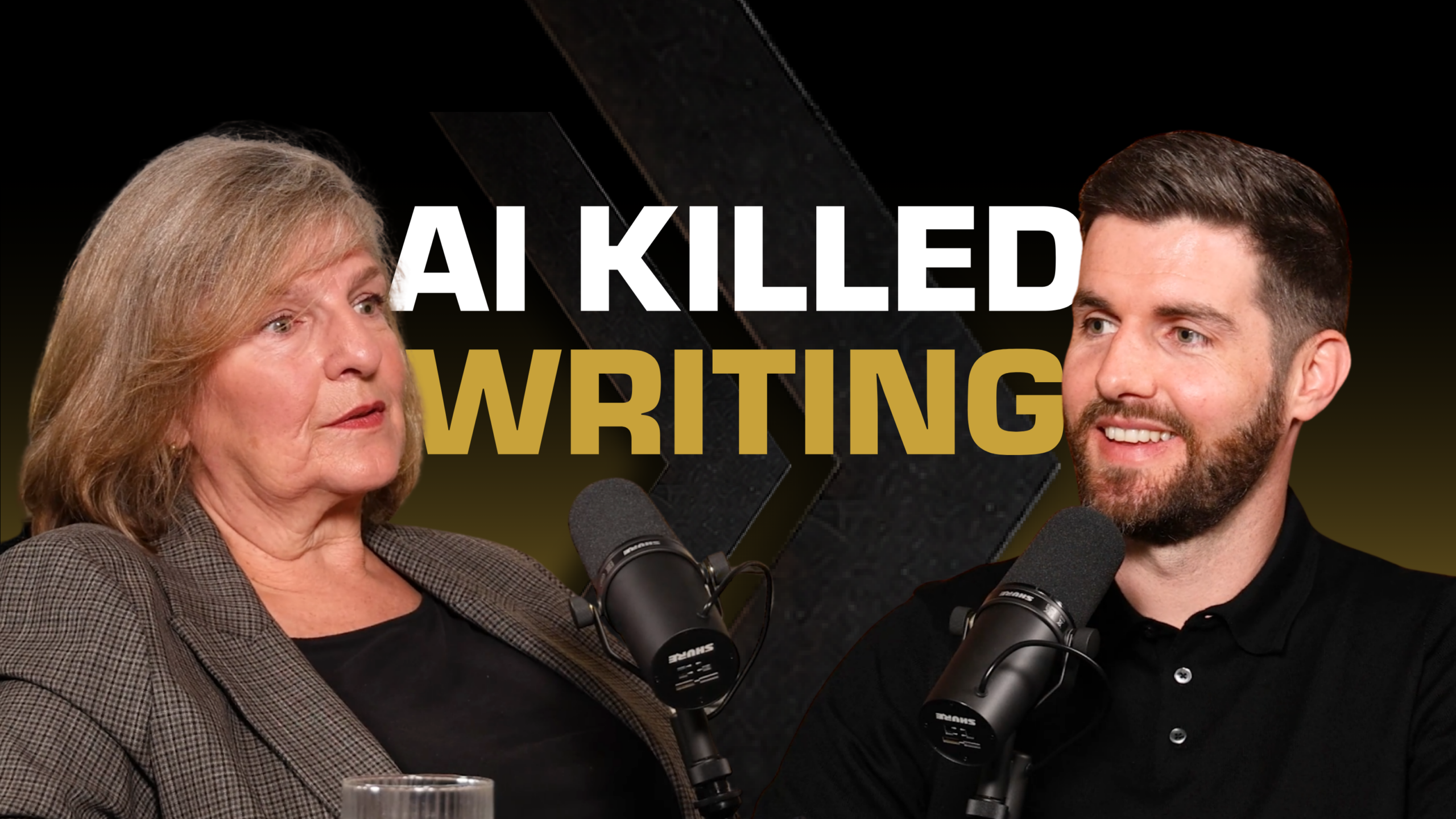
Kane Tyler Smith and Sarah Mitchell on an episode of Unlocking Business | Click image to watch
Here’s what I’ve learned after many years running my own business. Modern marketing, also called content marketing, isn’t one thing. It’s three, working together:
- Content: original, genuinely useful, and owned by you.
- Distribution: getting your content to people you know and who already know you: your email list, your socials, your print database.
- Amplification: reaching people who don’t know you yet and who you don’t know either: search, AI, and yes, good old-fashioned advertising.
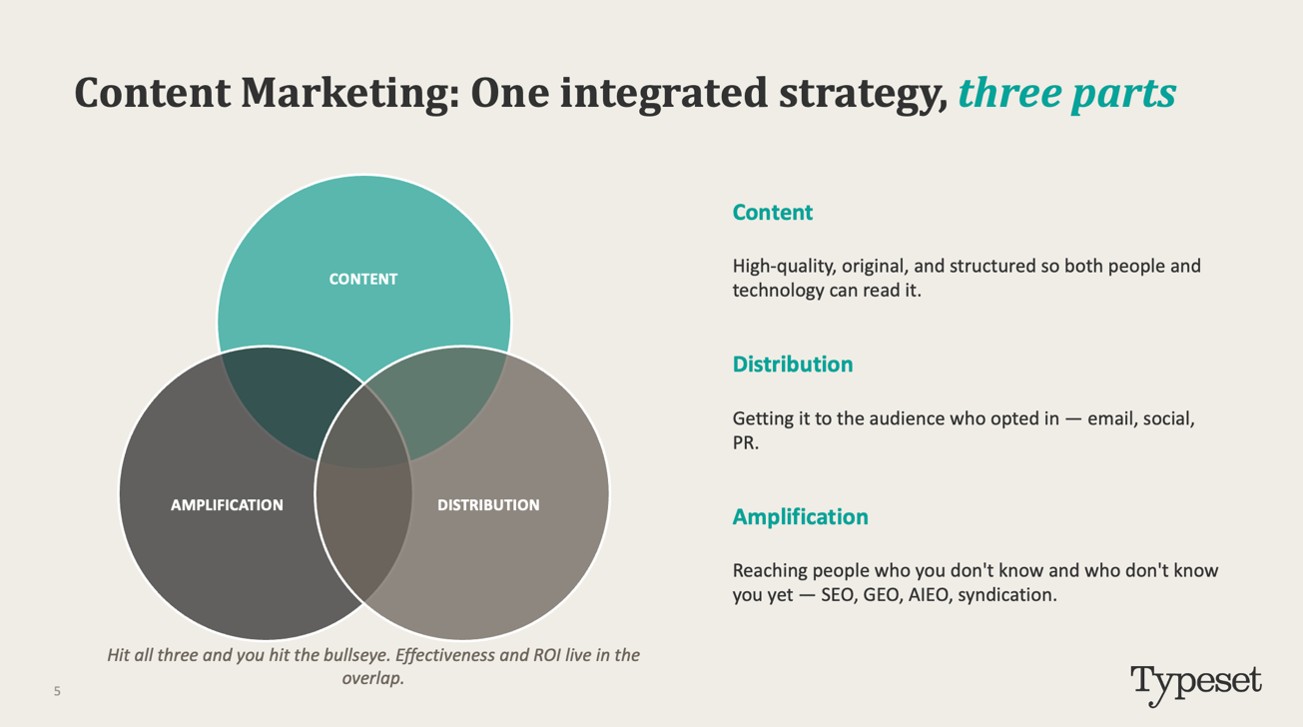
Ads are only one slice of that last pillar. Shift some of that spend into content, and you start building long-term assets returning value for years after you created them. It’s a way to move an expense to the other side of your balance sheet. Kane’s already making the shift, but plenty of trades are still renting all their marketing activity.
Why you need to own your content
Content is the pillar you have to own. In my opinion, it’s the one you shouldn’t hand over. I use AI every day. It’s a brilliant assistant for research, or for synthesising a hundred pages into five themes, or for getting unstuck when you’ve been staring at a blank page for too long. But there’s a difference between using AI as an assistant and letting it do the work. Too many people ask a question, then publish the first thing the agent spits out.
The result is what I call the great blanding: everyone’s content sounds the same, because it came from the same place. All the rough edges are sanded off. It’s smooth, professional, and entirely forgettable. This AI slop has nothing to differentiate your business from all your competitors. And there’s nothing to encourage those same AI agents to use your content in their overviews and answers.
Those rough edges are your point of difference. It’s the thousands of jobs you’ve worked, the disasters customers never considered could happen to them, the honest answer to “do I need this replaced or can it wait?” AI can’t manufacture your experience. That’s your marketing pot of gold. Use AI to help you shape a webpage or write the first draft, but don’t let them swipe your competitive advantage.
Great content nobody can find is the most expensive content there is
A ‘post and hope’ strategy is a trap. You produce something with valuable information in it, you post it, and then you hope the right people see it. Great content that isn’t optimised for search and AI visibility is the most expensive content there is, because you paid to create it and it does nothing for your business in return. The good news is the fix isn’t hard. You or someone in your office can do most of it on the content you already have.
How to optimise content for AI visibility
There are several structural changes you can make to your existing content to help improve your chance of getting noticed in AI results.
- Turn your headings into the questions people are asking your team every day. Say you’re a plumber. A page titled “Hot Water System Services” does little to drive AI traffic. Unlike Google where people enter strings of keywords when they search, customers ask questions when chatting to an AI bot. Those questions cascade as they get closer to making a buying decision:
– What causes leaks in hot water systems?
– Can I fix a leaking hot water system myself?
– How long should a hot water system last?
– Which is cheaper to run, gas or electric water heaters?
– How much does it cost to replace a hot water system in [suburb]?
– Who in [suburb] installs gas water heaters?
This technique is called a fan-out query.
Make each of those questions a heading. Answer it directly in the first sentence of your answer, then give a fuller explanation. That cascade where one question fans out into follow-up queries is how people search now, especially with AI.
Keywords are important, but if you provide the whole thread of questions, you’re far more likely to be mentioned or cited in AI results. You know the questions your customers are asking and the answers they need to know. Now put them into a fan-out query format.
2. Write in short chunks of text. AI prefers short chunks of information, roughly 300 words or about two
paragraphs at most, sandwiched between headings. Long unbroken blocks of dense text often get
skipped because it’s harder to break down the information and spit it out in a short answer. Do the work
for ChatGPT, Claude, Gemini or Perplexity.
3. Add an FAQ section. Even a few real questions your customers might ask, along with straight answers
at the bottom of a page, make your content more likely to be cited. Use FAQ schema, if you can. Your
web developer will know what that means.
4. Refresh what you have; don’t rebuild. You don’t need to throw out five years of blog posts. Go back
to the ones already performing well, update them, and restructure them for AI visibility. Cut dead pages
getting no traffic. A tight, clean site is rewarded by both Google and AI search results.
5. Add definitions: Even if your readers know the topic, AI might not. Definition boxes are attractive to AI
crawlers. Put them at the top of the article or section.
These techniques work, and not just for the big players. I have a manufacturing client with a niche product going up against US giants spending hundreds of thousands of dollars a month on paid search. They buy brand-related keywords for my client’s category, a nasty way to go to market if you ask me.
I’m helping my client revise their existing content for AI by updating dozens of existing pages. They’re now regularly mentioned and cited by Claude, Perplexity and ChatGPT on questions in their category, often at the top of the results. They didn’t outspend anyone. They outbuilt them. They already invested in good content, and now they’re performing essential maintenance on it to keep it running smoothly.
This isn’t a separate “AI strategy.” The businesses winning on AI visibility are the ones already doing SEO fundamentals well.
Good marketing covers online and offline channels
Distribution is the audience you own, and your email subscriber list is a blue-chip asset for marketing. Social followers can vanish with an algorithm change but an email list can’t. Amplification is how you reach people who’ve never heard of you: search, AI, and old-fashioned print. Kane’s best-performing channel isn’t digital. It’s a printed flyer, hand-delivered to letterboxes. It works because hardly anyone does it anymore, so it stands out.
The right channel is where your customer spends time. For a lot of trades, that’s a mix and some of it is a piece of paper in a letterbox.
How to get started with AI optimisation: Begin with one page
You don’t have to fix everything this month. Pick one job you do well. Write the honest, useful answer to the question your customers ask about it. Use your own voice and structure it so it can be found. That’s one page. That’s your first long-term asset.
Pro tip: I get that writing is not everyone’s strength. If that’s you, record your answers in a voice memo and transcribe them with a tool like Rev. The AI version is good enough to get you a solid first draft, and it costs pennies. Make sure someone proofreads the text before you publish. Don’t stress about the result not being polished. Your authentic voice and experience work in your favour.
Why you need to stick with content marketing
Content marketing is a slow burn. It can take six to eighteen months to pay off, and most people quit right before it works. But every optimised page, every keyword, every subscriber is one more strand of a marketing web. The bigger the web, the more you catch. Before long, the thing you built on your own is bringing in work and you can reduce your spend on paid advertising. That’s how you stop renting leads and start owning assets to drive business your way.
The raccoon in my dad’s house wasn’t happy about the animal control people showing up. The company gave me several options for dealing with the problem, from nearly passive to highly aggressive. None of it required me to climb to the third-story peak of the house or risk getting bitten. Thankfully, the raccoon never showed up again after the first visit from my new service provider. I happily paid the invoice
If you’d like help making your business hum, get in touch with Hypotential. We’re always happy to have a chat about what no one taught you about running a trades business.
About the author
Sarah Mitchell is co-founder of Typeset Pty Ltd. She helps business owners convert marketing expenses into long-term assets. Sarah appeared on the Hypotential Unlocking Business podcast with Kane Tyler Smith to talk content marketing and AI.