How Do You Hire Good Tradies for a Trade Business?

 40under40 2026 Winner
- Hiring out of pain is how most trade owners end up with the wrong person.
- Write the role as 3 to 5 outcomes before you write the job ad.
- Your best candidates usually come from referrals and your own reputation.
- Ask every candidate the same questions and compare answers after.
- Check licences, right to work and use a simple application form before any offer.
The short answer
You hire good tradies by deciding what the role needs to deliver before you advertise, then running every candidate through the same simple process: a short phone call, an in-person interview with a set list of questions, and proper checks before you make an offer. The owners who get it wrong are usually hiring in a rush because they’re drowning.
Why is it so hard to hire good tradies?
Most trade owners hire out of pain. The phone won’t stop, the diary is full, and you needed someone yesterday. I did exactly that for years at Smartfix. The first reasonable person got the job. No proper interview, no plan for their first week, and then I’d wonder why it didn’t work out.
If you want to hire good tradies, the hard part is slowing down at the exact moment you feel like you can’t. The good people are usually already working. They’re not scrolling job boards at 10pm. And when you’re desperate, you stop asking the questions that would have told you who was right.
One of the biggest hiring mistakes I’ve made was offering someone a job on the spot. He interviewed great, and we were desperate at the time. He was late every day, disappeared off jobs for hours, and sent a really bad message to the rest of the team about who we let into the company.
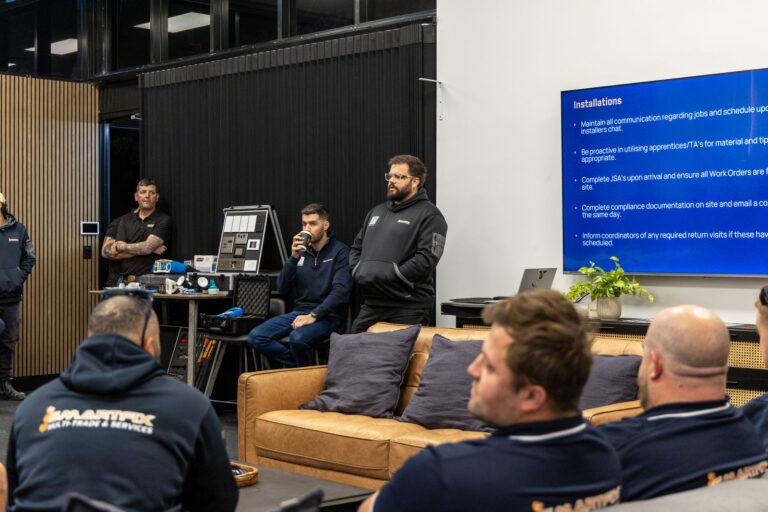
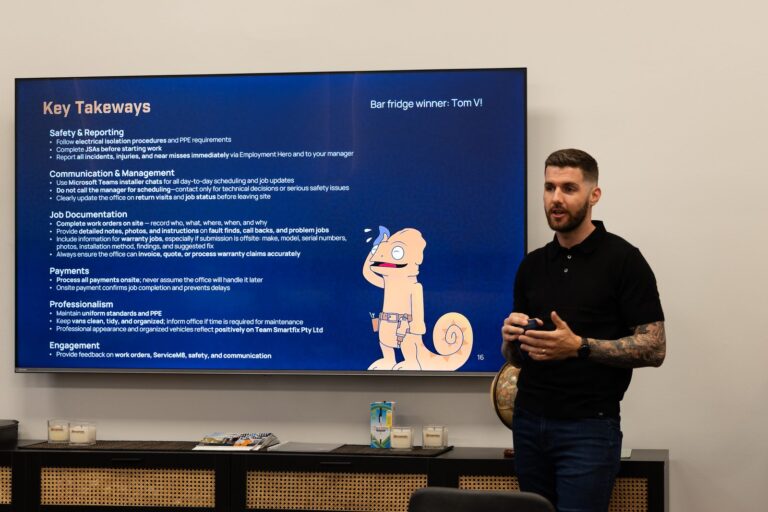
This is the process I walked through in the October Hypotential workshop on hiring and building a team. It’s five steps. This article covers the first three, the ones that get the right person through the door. Keeping them is a separate article.
What should you work out before you advertise?
Start with the role. If you can’t describe a great week in the job, you can’t hire for it.
Most job ads are a list of tasks: answer the phones, book the jobs, do the quotes. That tells a candidate what they’ll be doing all day and says nothing about what a good result looks like. So I write the role as 3 to 5 outcomes the person owns.
- Task: answer the phones and book jobs. Outcome: every enquiry is answered the same day and the diary is full of the right jobs.
- Task: help with admin. Outcome: invoices go out within 24 hours and nothing gets chased twice.
- Task: do installs. Outcome: jobs are finished to standard on the first visit, with photos and notes in the system.
Then cover the basics before anyone sees the ad: hours, pay range, where they’ll work, what they’ll need training on and who trains them.
If you’re not sure which role comes first, ask what’s costing you the most per hour of your own time. For a lot of owners that’s admin or scheduling before it’s another tech. I wrote more about that in when to hire your first admin or operations manager, and about what to sort out first in what to fix before hiring more people.
Where do you find good tradies?
The easiest way to hire good tradies is through people who already know them. Some of our best staff at Smartfix have come from referrals from existing staff. People won’t refer bad workers, because it makes them look bad too. So the first thing I’d do is ask your two best people who they’d happily work with again.
After that, tell people you’re hiring every time. Suppliers, other trade owners, your own network. Hypotential members do this for each other in the Foundations network, and it works because trade owners know who’s good and who isn’t.
Write a job ad that tells the truth
Say what the work actually is. Show the pay range and the hours. Make it one clear step to apply. And don’t make things up to make it sound better, because the good candidates will find out in the first week and leave.
Your reputation does half the work
Candidates check your Google reviews and your socials before they apply. If they see your team, your vans and your jobs, and it looks like a place they’d want to work, they show up already half sold. That’s one reason the work in building your reputation pays off in hiring too. Google your own business this week and see what a candidate sees.
How do you interview tradies properly?
In the early days I hired based on what looked good on a resume. Now Smartfix starts with a brief phone interview, and we rule out about 50% of candidates from that call alone. Then it’s an in-person interview with a set list of questions.
Skills are easier to train than attitude, so the interview is about how someone thinks. The best way to find that out is to ask about things that have already happened. These are the kind of questions I’d use:
- Tell me about a job you’re proud of. What made it good?
- Tell me about a time something went wrong on site. What did you do?
- How do you handle a customer who’s unhappy with the work?
- What do you do when you’re running behind?
- Why did you leave your last job? What would your last boss say about you?
- What do you want your job to look like in two years?
Ask every candidate the same questions, write your notes straight after, and compare the answers. Gut feel is how I ended up offering that job on the spot.
My two favourite interview questions
Why did you leave your last employer? This always tells me if the person is honest, and how they talk about other people. If every past boss was the problem, I take note.
What pay rate are you looking for? It shows me if they’re confident and actually want a new career, or if they’re just chasing a higher paycheck and don’t care where they work.
What are the red flags when you hire tradies?
Watch how they act, then check what they told you. The interview starts the second they arrive.
Green flags:
- Turns up early, or messages if they’re running late
- Specific about what they did on a job and why
- Asks good questions about the work and the team
- Speaks fairly about past bosses
Red flags:
- Late with no message
- Blames every past boss and employer
- Vague about what they actually did
- Only asks about pay and days off
What should you check before making an offer?
Before any offer, check their licences and tickets, confirm their right to work in Australia, and get them to fill in a simple application form. One page is enough: their details, licences, their last two employers with referees, and why they want this job.
The form sounds like overkill for a small business. It’s what stops you making the offer on the spot when someone interviews well and you’re under pressure. It gives you a day to check what they told you.
Pay, awards and probation are worth getting right from day one. The Fair Work Ombudsman is the place to check your award and minimum terms, and an HR advisor is worth a call if you’re unsure. This is general information from my experience, not legal or HR advice.
How do I hire good tradies at Smartfix now?
At our peak Smartfix had more than 130 staff across four offices. Today it’s about 30 people and one office, and it’s a better business for it. More people doesn’t mean a better team. The team we have now came through a process, and we’re still improving it.
If you want to hire good tradies, here’s the order I’d do it in this week:
- Write 3 to 5 outcomes for the role, plus the hours, pay range and who trains them.
- Ask your two best people who they’d work with again.
- Rewrite your job ad so it says what the work really is.
- Write 5 interview questions and ask every candidate the same ones.
- Print a one-page application form and do your checks before any offer.
Getting the right person through the door is half of it. The other half is the first 90 days and keeping them once they’re good. If you’re a plumber working out your very first hire, I also wrote about who to hire first in a plumbing business.
The role scorecard, the full list of 12 interview questions and the application form are all in the Hiring Toolkit inside Hypotential membership. If you build your own version, send it to me and I’ll give you feedback.
I work with owners across every trade, from sparkies and plumbers to builders and landscapers. If you want to see what that looks like for your trade, start with my trade business coaching pages.
FAQ