About this episode
Connective Services Group was three months old when its founder sat at her computer doubting whether she even knew what she was doing. Then an email landed telling her she’d won an award, and she nearly deleted it as spam.
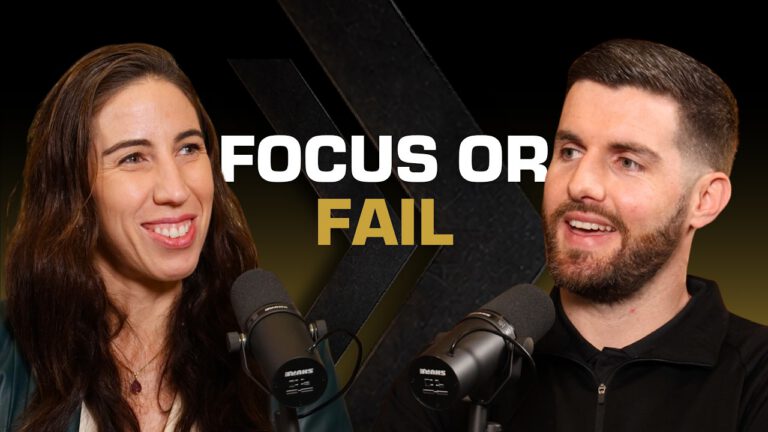
In Episode 23 of Unlocking Business, I sit down with Christina Papafilis, founder and director of Connective Services Group. Christina went from employee to business owner in three weeks, with around 15 clients following her out the door. Now coming up on three years in business, she’s working with 42 families, running a team of contractors, hiring two more, and expanding into social work services and advisory.
We talk billable hours, capped rates, contractors, advocacy and the shift from doing the work to running the business.
Who is Christina Papafilis?
Christina didn’t plan a career in disability. After leaving school she worked in reception and administration, which she says she hated. At 23, as a single mum, her mum suggested the special needs education assistant course through TAFE because it was school hours. On her first placement she worked with a little boy with autism and, in her words, she fell in love with it. She went on to work in schools and education support units, then picked up weekend support work, which is where she learnt how the NDIS works.
Clients kept telling her their support coordinator wasn’t getting things done, so she started doing it for them. That led to a team leader role overseeing at least five supported independent living houses, and then into support coordination. In 2024 she founded Connective Services Group, which specialises in level two and level three complex support coordination for people with disability, their families and organisations. She was recognised as the 2025 City of Joondalup Community Citizen of the Year for her contribution to people with disability and the wider community.
Key takeaways from the Connective Services Group story
1. When the door closes, be ready to walk through it
Christina’s previous employer shut its support coordination arm because it wasn’t profitable. She moved to another organisation, and within a couple of weeks they made the same call. She had three weeks to write every policy, service agreement, consent form and progress note template, and to work out invoicing, having never run a business. When she told her clients she was leaving, they asked where she was going, and about 15 of them followed her.
2. If your rates are capped, your cost structure has to fit
Support coordination is billed by the hour, like a lawyer, but the NDIS caps what can be charged. That’s why so many organisations have closed their support coordination teams: once you cover wages, super and tax against a five billable hour daily KPI, the numbers don’t stack up. Christina runs a contractor model instead. Her team gets a higher rate, she keeps more margin, and they work flexible part-time hours around school runs and after-hours report writing. She had the contract reviewed by a lawyer first.
3. Billable hours are never the whole day
This one hit close to home. In a trade business you can never bill seven or eight hours a day, because there’s travel, wholesaler runs and gaps between a morning job and an afternoon job. Christina’s old employers expected five billable hours a day. Set targets on the hours that can realistically be billed, not the hours on the clock.
4. Small leaks add up faster than big ones
Christina’s view is that the biggest losses aren’t the large, obvious charges. They’re the small ones: a shift billed that wasn’t worked, travel time charged that shouldn’t be, a two-hour invoice for a five-minute visit. Her fix is a system that locks in the agreed hours up front and flags anything over before it’s paid, rather than investigating after the money’s gone. We’ve seen the same thing at Smartfix. Once we put trackers in the vans, time sheets stopped being a problem, and the 15 minutes here and 15 minutes there that used to slip through now saves us a lot of money every year.
5. Bring solutions, not just noise
Christina has written at least ten advocacy pieces to ministers this year and hasn’t had a reply. Her takeaway is that one person’s letter is easy to ignore, but a group of organisations coming together with practical solutions is much harder to ignore.
6. Step back so your team can step up
Moving from doing the coordination herself to running the business has been the hardest shift. An email comes in and she wants to jump in and fix it, but she knows her team has to learn. Networking outside her industry, with business owners further down the track, is what’s helped her build that director mindset. She’s honest about what she doesn’t know, and she’s found people are happy to help.
The award email she almost deleted as spam
Three months into the business, a couple of days before her birthday, Christina was at her desk asking herself whether she was even good at her job. An email arrived saying she was the winner of something. She assumed it was spam and nearly deleted it, but rang the office to check. They’d been trying to reach her for two months. A former colleague had nominated her without telling her, based on an advocacy case study she’d submitted to the Health Minister through her local member, and she was being presented the 2025 City of Joondalup Community Citizen of the Year award at the Australia Day ceremony.
She says that without that award, she isn’t sure she would have kept going. It told her she did know what she was doing, and it set the pace for how fast the business has grown since.
“Making noise is important, but I think actually putting forward solutions is the thing that’s missing from a lot of conversations.”
Christina Papafilis, founder and director of Connective Services Group
Where to find Connective Services Group
Connective Services Group works with people with disability, their families and organisations across complex support coordination, advocacy and advisory, and is expanding into social work services. You can find Christina and the team at the links below.
- Website: connectiveservicesgroup.com
- Instagram: @connective.services.group
- Christina on Instagram: @christina_csg
More episodes you might like
- Building a Trade Business That Doesn’t Rely on the Owner | Peter Craft
- Stop Chasing the Newest AI Tool | Sam Fielding
- What Trade Businesses Can Learn From the Corporate World | Paul O’Neill
Want help building a business that grows without burning you out? Work with me.
In this episode
- 00:00Intro
- 01:20The award email she nearly deleted
- 02:30The case study behind the award
- 05:20What Connective Services Group does
- 06:20Expanding into social work services
- 08:30The support coordinator's role
- 09:30Hiring and her "secret weapon"
- 10:30Private support workers and compliance
- 12:40How NDIS invoicing works
- 14:50Falling into the disability sector
- 18:00Clients who followed her
- 20:00Three weeks to set up a business
- 22:10Contractor model and capped rates
- 23:30Billable hours vs travel time
- 26:20Why is business so hard?
- 31:30Person first, not profit first
- 32:40Small billing leaks add up
- 40:30Advocacy: solutions, not noise
- 42:10One change: lock budgets, flag invoices
- 48:20Networking and the director mindset
Full transcript
Read the full transcriptAuto-generated from the episode, lightly edited for clarity
[00:00] Cold open
Christina: It's when a support worker doesn't turn up to shift, walks up to the house, is there for 5 minutes, and bills for 2 hours.
Kane: You can never have 7 or 8 hours billable because there's travel time, there's wholesaler visits, time between jobs. If there's travel, like if you've got a client in the morning and a client in the afternoon.
Christina: I went from being an employee to all of a sudden running my own business, having to now manage the admin, the finance, everything.
Christina: You don't know anything about business, so you either wing it and learn the hard way, or network with other people.
[00:20] Introduction
Kane: Hey, I'm Kane Tyler Smith, the founder and CEO of Smartfix and Hypotential. This is Unlocking Business, where we have real conversations around business, leadership, mindset and personal growth. If you've been getting value from these conversations, please take a second to subscribe and follow our channels. It helps us reach more people, bring on more guests, and share more stories. Now, let's get into this episode.
Kane: Today, I'm joined by Christina, founder and director of Connective Services Group. Christina has spent years working within the disability sector, starting on the front line before moving into leadership, advocacy and complex support coordination. In 2024, she founded Connective Services Group, which now works with people with disability, their families and organisations across support coordination, advocacy, and now advisory. She's also been recognised as a 2025 City of Joondalup Community Citizen of the Year for her contribution to people with disability and the wider community. Thanks for coming on the podcast.
Christina: Thank you. That makes me sound so professional. [laughter] It's not often you get your story read back to you.
Kane: Yeah. I'd be like, "Wow, that's really cool." So, how did you win the Community Citizen of the Year?
[01:20] The award email she nearly deleted
Christina: That's a really funny story. I was 3 months into the business and it was a couple of days before my birthday. I'm a December baby. I was sitting at my computer literally having a meltdown one day because I was like, "What am I doing? I don't know what I'm doing. Am I even good at my job?" And I had this email come through that said, "You are the winner. Congratulations," or something. And I'm like, "What, is this spam?" I clicked it and it was like, "You're the Community Citizen of the Year, City of Joondalup."
Christina: I was like, "Oh, this is spam." I almost deleted it, and then I thought, "Oh, give them a call." So I rang the office and they said, "We've been trying to contact you for like 2 months about this. You were nominated months ago. You're being presented the award at the Australia Day ceremony. Come in." And I was like, "Oh, okay. This is actually legit."
[02:30] The case study behind the award
Christina: It was in recognition of a case study I had submitted to the Health Minister through the Hillarys member, about some participants I was working with at the time. I was at an organisation and essentially they were patients who had cancer that had resulted in acquired brain injuries. So there was a massive gap, because the NDIS were saying that because they had cancer they were palliative, but the cancer wards and things at the hospital were going, "No, they've still got an expected period of life, or at least another 10 years, and they've got a disability now." So they were just getting passed back and forth.
Christina: So I wrote this case study highlighting this to the minister, going, "Honestly, both services should be supporting these people." One of my colleagues at the old organisation submitted the application. I didn't know about it, and it was supported by the local member that I put the case study through. So yeah, that was really cool.
Christina: I always think about the fact that if I hadn't got that award, I don't know if I would have continued with the business, because I had so much self-doubt. When I received that, it really affirmed to me, "Oh, I do actually know what I'm doing with my job." I think it really set the trajectory of my career now, and the pace of the business as well. I do think if I'd continued, I would still be on the path I am now, but maybe not to the scale that I have, if that makes sense.
Kane: Yeah, that's so cool. So, what made you send the case study to the minister in the first place?
Christina: I was just frustrated. I was looking at this woman, and the organisation closed years ago, and I actually ran into the owner of another organisation who still supports that woman recently. So she ended up getting all of the services she needed. She was just the most beautiful woman. She was of Burmese background, just the most kind woman, and she had just coped, you know. She had the breast cancer that metastasised to the brain, had the surgery that left her with a brain injury, and she wasn't asking for the world. She just wanted a bit of support. I was so frustrated that I had these two services that both should be inputting to her healthcare who were just going, "No, not our problem, not our problem." And I was like, someone has to do something about this.
Christina: So my case study went in, and I think it ended up having some weight on her case. She was going through what's called tribunal at the time. It's where you go through for NDIS plans that aren't appropriate, and she ended up getting the plan that she needed. So that was really cool.
Kane: Yeah. [laughter] So that gave you the motivation to move forward with the business and keep smashing it.
Christina: Yeah, it did.
[05:20] What Connective Services Group does
Kane: So what is it your business does specifically?
Christina: We specialise in complex support coordination. We do level two and level three support coordination, so there are two tiers. We're also going to be expanding into social work services, because I've identified that there's a really big gap in having a key person in someone's case who actually liaises with all the external agencies. Whether that's mental health, child and adolescent services, child protection, housing, I deal with all those agencies in support coordination. It's really hard. We're meant to only coordinate the disability services, but because a lot of the time there's not a key person to do all that advocacy in those other organisations, we end up falling into that role.
[06:20] Expanding into social work services
Christina: So that's why I've thought there should be a dedicated person who is the key between all those services, and that's why we're going to expand into social work services now.
Kane: So would that tie in, because I know NDIS funding is quite a common topic at the moment, I think, since the budget's made changes.
Christina: Yeah.
Kane: It sounds like a very hard system to navigate.
Christina: Yep.
Kane: Is it?
Christina: Yep. [laughter]
Kane: So your job is trying to navigate that system for the person that requires all of the services. Are there trades and cleaners and all kinds of services that people can get through the NDIS?
Christina: Yeah, so it's a bit of a grey area. You can get cleaners. Services are meant to be related to your disability needs. So if you are living in your own home and you are, I suppose, wheelchair bound or have ailments that inhibit you from cleaning and maintaining your home, then cleaning services would be funded. That's something the NDIS is really cracking down on now, that whatever services you have, they have to be related to your disability needs.
Christina: It's not incorrect that since 2013 when the program came out, there have been a lot of services and things that have gone through that really weren't what the scheme was meant to be for. I think a lot of the uproar is from people who have had certain things covered in the past that have now been cut, and they're like, "Well, why?" I don't disagree that the NDIS does need to put tighter restrictions on what can and can't be accessed, for sure. But the way they're going about it, I don't agree with.
Kane: So is that what you're trying to do? If the NDIS is providing the funding, instead of it going to the businesses that provide the services, I assume they would try and rort the system potentially. So you're saying maybe there needs to be a middle person, and is that what you guys are doing? You say, "Okay, these guys need it, this person doesn't actually need it." Is that kind of what you do?
[08:30] The support coordinator's role
Christina: No. If you imagine you've got your person, your participant, so they're called a participant of the NDIS. We are the mediator, for lack of a better word, between their disability services. I will work with that person to identify what services they think they need and what kind of goals they want to work towards with that budget. They might say, "Yeah, I need help accessing the community. I want to learn independent living skills." So I'll work with them and identify providers that can help achieve those goals.
Christina: Therapists. A lot of my goal work is liaising with therapists and making sure that they are working to the goals that need to be achieved. A lot of my role is chasing up support workers on their shift notes and their incident reports. I'll read all those and highlight patterns and observations that need to be reviewed by the therapy team. So for lack of a better word, I think I'm the person that basically keeps it all together. [laughter] So yeah, it can be quite complex sometimes.
[09:30] Hiring and her "secret weapon"
Kane: Do you need a qualification to become a support worker, or can anyone do it?
Christina: For a support worker, there is no qualification. For support coordination, there is no formal qualification. However, as a hiring director, I do lean towards staff who are either studying counselling or social work, or have some sort of background in that space. In saying that though, one of my recent staff that I just hired, she's from Argentina and she actually had a career as a federal lawyer in Argentina. [laughter]
Christina: The NDIS is really interesting. It's an insurance scheme, but the way you have to word your reports, there is very much a legal component to it. So I thought, "Oh, I can teach her the NDIS, but I think she'd be a really good little secret weapon to have." Whilst it's not necessary to have a qualification as such, it is something I lean towards. Not to say that people can't still be trained in the role, but it's really interesting to me that support workers don't have to have a formal qualification to provide care on the ground. They'll do things like manual handling training, and first aid obviously. I think there's a short certificate too for providing care services. I'm not actually too sure what it is, but there's no...
Kane: Still not a requirement.
Christina: Yeah.
[10:30] Private support workers and compliance
Kane: Would that be a TAFE course?
Christina: Yeah. There are a lot of people that go into private support work who haven't even done that course, and there's no regulatory body on that.
Kane: How common is private support work then?
Christina: It's so common, and honestly it does my head in. It's the biggest headache for me as a coordinator, because this is what people don't understand. The NDIS is an insurance scheme. If you think about it, if you go overseas and you've got your travel insurance, my friend actually just went through this. She broke her foot in Poland and had to go through her travel insurance claim, and insurance companies don't want to give you money. They don't want to give it to you.
Christina: With the NDIS, I absolutely agree that there are a lot of things that people should be receiving that they aren't. But it's also that you're not providing the evidence that that is what you need. For private support workers, a lot of the time I'll have a case come to me and I see a private support worker and I'm like, "Okay." So I'll get in touch with them and say, "Are you doing your shift notes? Are you doing incident reports? Are you doing progress reports?" And they say, "Oh, I didn't know I had to do that." That is such a huge part of NDIS compliance, and it is wild to me that the NDIS isn't even putting out regulations on that for private support workers. Agencies know that they have to do it, but even with a lot of the agencies I've worked with, I get those shift notes and I go, "This is appalling. This is not a satisfying note that could be sent into the NDIS for evidence."
[12:40] How NDIS invoicing works
Kane: So with private, does that not mean they charge the people directly, or they still get funding?
Christina: So how it works, you have an NDIS plan and you have budgets. You put your invoice through to what's called a plan manager. They're like an accountant.
Kane: And they're within the NDIS.
Christina: Not.
Kane: Employees.
Christina: No. There can be external ones. So you send your invoice there, and it's so convoluted. [laughter] You send your invoice to the plan manager, your plan manager still sends it to the NDIS for approval, and then the money comes back and then pays us, and you kind of go, "Why aren't we just sending it straight to the NDIS?" There are some parts of an NDIS plan that are called NDIA managed, which means the funding is managed by the NDIS. I don't know who designed this system. It is so convoluted to remember all these things. I've been in it for 10 years and it still boggles my brain sometimes.
Kane: Does sound confusing. Sounds like there's no rule book. There's no "this is what it is."
Christina: No.
Kane: Seems like there's a lot of things like that with the government.
Christina: Yeah.
Kane: Licensing and...
Christina: Regulations.
Kane: A lot of things. You call them up, they say, "Oh, you've got to find it online."
Christina: They don't tell you. They won't email you. It's "No, it's written here in this document."
Kane: Go find it.
Christina: And honestly, for a lot of my participants, and even myself, I go on the NDIS website and it is not easy to find information. You've got to click this link and then this link and then this link, and then it brings you back to this link, and I'm like, this is the worst website I've ever seen.
[14:50] Falling into the disability sector
Kane: What made you get into the disability sector in the first place?
Christina: I'm full of funny stories. I kind of fell into it, for lack of a better word. I have a 10-year-old son, and prior to having him, when I was really young and left school, I used to do administration in various organisations, like reception work, which I hated with my soul. Anyway, I had my son, I think I was off work for a year and a half, and then I left my ex, and when I left him I remember saying to Mum, "What am I going to do? I'm a single mum. I'm 23. What am I doing?"
Christina: And she said, "Oh, you should do the special..." I don't know if it's still called this now. It was at the time, 10 years ago, but it was called the special needs education assistant course through TAFE. Basically to work with children with disabilities in schools. And no joke, I remember going to Mum, "Me, work with people with disabilities?" I'd never had any interactions with people with disabilities in my life. There was a boy in my primary school, and I still remember his name, sweetest, sweetest kid, but he was probably the only person up until that point that I'd had an interaction with who had a disability. So I was like, "Oh, I don't know about that. That would be really intense." And Mum was kind of like, "Well, what else are you going to do?" And I said, "Okay." She said, "It's school hours." And I said, "Okay."
Christina: So I did the course and I went out to my first placement. I was so nervous, and I remember speaking to all the teachers and then I went into the class, and this little boy, oh my god, he had autism and I just fell in love. I loved it. They'd achieve their goals and they'd be like, "Miss P, Miss P, I did this." And I just loved it. I then started working in primary schools, high schools, education support units, so with children with more complex needs, a lot of non-verbal kids and things like that. And I just loved it.
Christina: Then my son started doing every second weekend at his dad's, so on those weekends I started doing support work, and that was where I started learning about the NDIS. I remember working with a few clients and they'd say, "Oh, we have this thing called a support coordinator and they're meant to be doing this and nothing's being done." And I said, "Well, I can do that for you. Let me sort it out." So I ended up doing the support coordinator role as a support worker for the clients I was working with. And then I went, "I can do this job."
Christina: Then I ended up getting a job in what's called SIL, supported independent living, as a team leader. I was in charge of managing, I can't remember how many houses, at least five. My role was to coordinate the staff in the houses to make sure all the therapy plans were being put in place by the staff and things like that. Then I ended up going into support coordination, and here I am.
Kane: Haven't looked back since.
Christina: Yeah. Love it. [laughter]
[18:30] Clients who followed her
Kane: So with what you're doing now, you wouldn't be hands-on with the participants anymore. You're managing the people that are hands-on with them.
Christina: Yeah. So I will, well, yeah, I liaise with them. I still go and see the families for meetings and reviewing their plans, but the day-to-day isn't my role anymore.
Kane: So I suppose you'd still get that kind of gratitude from meeting those clients when you do that.
Christina: Yeah. There are some people I've been with, and it's really nice. So when I started the business I probably had about 15 people follow me when I left the organisation I'd been with, which was really nice. Some of these families I've been working with for 3 or 4 years. So I know their life story. I know about their partner's illnesses. I know when their mum passed away. I know when they're going to Vegas. I know everything about them, and I know the client's little habits. I went and saw someone yesterday, and this person has dementia, and it's like, "Oh yes, so does the salmon and the air fryer, and we've got to watch the air fryer because she'll burn herself." My brain is full of everything about 42 families I've been working with for a really long time.
[20:00] Three weeks to set up a business
Kane: So when you said they followed you, that was the participants, they wanted to work with you.
Christina: Yeah.
Kane: So you started your own business from doing that?
Christina: Yeah, I went to an organisation, was there for a couple of weeks, and then they said, "Oh, we're not going to do support coordination anymore because it's not profitable." And I'm like, "Oh my god, are you kidding?" I think the universe kept trying to push me to go out on my own for a while, because I'd been with one organisation for about a year and a half and then they shut because the company deemed that they weren't profitable. Then I went to this other organisation, and the same thing. I feel like the universe just kept saying, "Girl, you've got to go out on your own." So this one was doing that, and I basically had three weeks to pull together all my policies, all my service agreements, all my consent forms, get everything sorted. I wrote to all my clients and said, "Look, I'm going to be leaving." And then they all reached out to me privately and said, "Where are you going?" And I said, "Oh, I'm actually starting my own." And they followed me.
Kane: That's so cool.
Christina: Yeah, it is.
Kane: So you had to set up all that stuff within 3 weeks. Is that because from regulations you have to have all those things in place?
Christina: Yeah. So that was a slog.
Kane: I was going to say, was AI helping at that point in time?
Christina: No, I wasn't on to AI then. I didn't really start using AI properly until like mid 2025, I'd say. I think I was slow onto the bandwagon. [laughter] But no, I just did it all myself. Granted, a lot of the templates are already on the NDIS site and stuff, but it was just researching and being like, "Okay, I've got to have this policy in place. I've got to have this policy in place." Making sure I had good templates for my progress notes. Learning how to set up invoicing. I'd never run a business. I went from being an employee to all of a sudden running my own business, having to now manage the admin, the finance, everything, within 3 weeks. It was wow.
Kane: And you had clients straight away. [laughter] Which doesn't normally happen when you start a business.
Christina: No. But at least I knew the job, so that was good. It was just, oh my god, there's so much to doing this. But I'm at least proud to say I'm still here. Coming up 3 years soon.
[22:10] Contractor model and capped rates
Kane: So, two, three years, which is good. That's so cool. And you mentioned you now have staff.
Christina: Yeah.
Kane: Full-time.
Christina: They are on a contractor model. At the moment we are in a growth period, so I've got three contractors and I'm hiring two more. With support coordination, we work off billable hours, kind of like a lawyer. The NDIS limits what we can charge. I don't really know how it works for other trade businesses, but you can charge to your qualification value, that sort of thing. We are completely bottlenecked on what we can actually charge, so it makes it difficult to build revenue in when you have wages. I think that's where a lot of organisations have shut down support coordination before, because of the amount you're having to cover for superannuation, tax, all that sort of stuff, for what we earn.
[23:30] Billable hours vs travel time
Christina: And then bringing in KPIs for 5 hours a day, I can see how it's not profitable. So the contract model works better for me. They get a higher rate, but it also brings me in more profit because I'm not paying all the other stuff.
Kane: You mentioned a 5 hour KPI. What do you mean by that?
Christina: When I've worked for previous organisations, they would set KPIs. We would have to do at least five billable hours a day, which I found interesting because I thought, well, if you're not making enough profit, maybe you should make it a 7 hour working day. I don't know. But they would say in a day we'd have to bill at least five hours to meet our KPIs to make sure we were getting paid.
Kane: Yeah, it's interesting. That sounds very similar to something we're going through at the moment, because we obviously have trades. But there you can never have 7 or 8 hours billable because there's travel time, there's wholesaler visits.
Christina: Yeah.
Kane: Time between jobs if there's travel, like if you've got a client in the morning and a client in the afternoon. It's an hour travel plus lunch.
[24:13] Setting targets on available hours
Christina: Yeah.
Kane: So we're trying to figure out the percentage of available hours. And it's such a hard one. But what you just said is very interesting, because if it's capped to what you can charge, it would be risky taking on full-time employees, because you're limited to what you can...
Christina: Yeah. And especially when we work off billable hours, it's like, well, yeah. So the contractor model works really well for me, and I know a lot of organisations are doing that in the NDIS. There are other areas, like we have a therapist style called positive behaviour support. They work with people with really complex behaviours, and I know a few organisations who are doing that contractor model even under therapies and things. So I think it works better.
[24:50] Contractors and flexible hours
Kane: We can cut this if it's not good to talk about. But are there limits in place where if they're working for you full-time hours...
Christina: With the contract model you are still liable for super and holiday pay and all that kind of stuff. So yeah, I looked into this. I've had my contractor contract looked at by a lawyer. My staff, I've said to them, flexible time. Two of them have kids, so they're not working every day the same hours, 9 to 5. Some days they might do 9 till 3. They might have a day off. They might do 2 hours in the morning. Sometimes they're doing a lot of our report writing after hours, so they might do it at night. It works for me because I don't have set hours.
Kane: Yeah. Right. That's cool. That's something we've been looking at for years and with what we do, from what I understand, we can't really do it. I know it's different between industries, because if more than like 80% of their working time is through you over 12 months, you're then liable for everything else.
Christina: Yeah. No, so I've got them all on part-time. None of them are full-time, which works.
[26:20] Why is business so hard?
Kane: Why is business so hard?
Christina: It's so hard. [laughter]
Kane: You've got to figure it all out.
Christina: Yeah. And no one gives you a manual. Everything I'm learning is through networking and making connections, and I just sit there and I'm like, "Tell me your secrets, let me soak it in." Because no one explains this. There's no book.
Kane: No, there's not. Even like you saying about the NDIS website, we have the same issues with building and energy websites. It's so confusing, and sometimes I'll just call them and they just point you back to the website.
[26:50] Banks, websites and needing a human
Christina: Yeah.
Kane: Everyone's the same. I tried to open a bank account the other day with Macquarie, and they don't speak to you on the phone. They're like, "You have to do it online." I don't know how to do it online. I've tried it. It's a self-managed super fund. There's a bare trust, corporate trust, all this stuff. I don't know how to do it.
Christina: And that's something that's bothering me with AI. I feel like, is there a person now to do that? Because they're obviously cutting people's jobs because AI can do it for cheaper. But sometimes you actually need to speak to a human, because your AI is not helping me. And I think about older people. I think about some of my clients with disabilities. I'm like, they need to speak to a human. It's annoying. I hate it.
Kane: This took me two days and it's still not active. I tried to do it online, it was too hard. Sat on the phone for an hour on hold. Gave up. Called again, and said to someone, "I need to open up this account." They said, "You can't do it on the phone. You have to do it online." Done it online. It just said it was pending. Went through, opened the account, said the application was pending, left that for a day. I had no confirmation. So I called them again and they said, "I can't see the application. It's not there. You have to do it again." For goodness' sake. [laughter] I said, "Can you stay on the phone with me while I at least start it?" And they said, "You should have told me how to do it." I was like, well, this isn't how I did it. Yeah, which is why I called in the first place.
[28:00] The NDIS and the missing attachments
Christina: That happened to me too, but with the NDIS. When I do my reporting, we have to do what's called a change of situation if someone has had a decline in their health or something. So I've got to email in all these reports. I emailed this guy his reports like 3 months ago, and I'm like, "Where is this plan?" So I ring the NDIS and I sit on hold for like 2 hours, and the lady says, "There are no attachments to the email." And I said, "I'm looking at this email that I sent on this date at this time. I've got it right here and there are the attachments. You need to go find them." Anyway, she circles back to me after an hour. "Oh yeah. So when the system sent it up to the department it needs to go to, it just didn't send the attachments, and no one thought to call me and let me know." No worries.
Kane: It was blame the system.
Christina: Yeah. But I was like, "No." I like AI and stuff, but sometimes I think some of it still needs to be human while we're working out these technical difficulties.
[29:00] Why the NDIS is so hard for families
Kane: 100%. So frustrating. Why is the NDIS so difficult for families to navigate? I know we sort of touched on this, but what's the most common issue?
Christina: It's an inequitable system. I get frustrated by this, and I might be saying something a little controversial here, but there are people I've worked with over the years who will have an NDIS plan for what they need, and the budget is just ridiculous.
Kane: High.
Christina: Yeah. They do not need that much funding. Sometimes families have said to me, "I don't need this much. Can we give it away?" And I'm like, well, if you call and say that, they might just slash it too much. Versus someone who actually needs it. This is a prime example. I was at a forum with the minister on Monday. There was a woman there. She's actually an occupational therapist, and I think she had MS from memory. She's in a wheelchair. She's been declined access to the NDIS, and they would not give her a wheelchair because they deemed it an everyday item. I'm not sure how a wheelchair is an everyday item that everyday people use. So it's a very inequitable system, because you have someone over here who's got hundreds of thousands of dollars that they don't need, and you've got someone like that who can't even get access to the scheme who definitely needs to be on the scheme.
Christina: You get some people who get certain things funded, but then the same thing for someone else doesn't get funded, and you're going, "Who's behind the scenes making these decisions?" Because it's completely inefficient and it just doesn't make sense. I think that's where a lot of the frustration comes from, because if it was a really clear system, I don't think we'd be having all these problems.
Kane: I wonder if there is someone behind that system, as we spoke about before, or whether it is automatic and it just pings and says, "No." If there's a person behind there, you would think that they would be, well, yes, this person obviously does need it.
Christina: Yeah, you'd think. [laughter] I'm not sure.
[31:30] Person first, not profit first
Christina: There's a lot of frustrations as well, and I know this is really hyped in the media at the moment, but there are a lot of people who are not in it for the right reasons. There are a lot of consultants out there now who are really pushing a profit first message in this space. Whilst I as a business owner understand you do need to make profit to be sustainable and keep your services going, these are human beings. We're not talking about selling coffee cups online.
Christina: It should not be a profit first message. It should be person first, a sustainable business where profit comes in organically, because if you have good sustainable services, you're going to get referrals. Your business will build up organically. I think there are a lot of people who've come into the space who potentially are business consultants who've helped people scale their businesses very quickly. And I'm going, okay, so you're helping these people scale their business. So you're giving them an influx of clients who are really complex, who have really specialised care needs, and then it's "I'll figure it out." And this is why people are going to hospital. This is why people are dying. I think that's a really big problem.
[32:40] Small billing leaks add up
Christina: And then obviously the fraud, it is happening. It's definitely...
Kane: That's people over-claiming when they don't really need it.
Christina: No. The fraud is more, everyone keeps thinking about it, and even the NDIS are saying, "Oh, we're reviewing high-risk charges." And I'm like, okay, but a lot of the fraud isn't the big obvious high-risk charges. It's the little things. It's when a support worker doesn't turn up to a shift but still bills for it. It's when a cleaner rocks up to the house, is there for 5 minutes and bills for 2 hours. And then we see people copying and pasting reports and billing that for 5 hours.
Christina: It's really simple things that are slipping through. Fair enough, I'm not sure how they have oversight on that, but they seem to be focusing on the big charges trying to slip through. But it's not the big charges that are adding up. It's these little things.
Kane: It's the little ones, but probably lots and lots and lots.
Christina: Probably lots and lots and lots of them. And think about someone who is unable to check their invoices online to see what the providers are charging. They've got no oversight on it and things will just run through. As a support worker you're not actually meant to charge for going to work. A lot of them are charging for leaving their house to go to work, and you're not meant to charge for that. It's once you're at work, at the person's house, and you take them out somewhere, that you can charge for travel time, but you don't charge for going to work. There are a lot of them that do that. Whether that's a lack of understanding or intentional, I don't know.
Christina: But that's where I'm going. These are the things the NDIS needs to be looking at. I think there's a lot of frustration for participants as well, because the NDIS is getting a really bad rap at the moment because it is blowing out taxpayers' money, but it's the people who genuinely need it that are suffering. I think that's where a lot of frustration is coming from as well.
[36:50] Genuine need and the media
Christina: That's what's really frustrating about all the media on the fraud and stuff. Yes, there's fraud, but there are genuine people that I'm working with who need help desperately, and now everything's just being cut and slashed because of groups of people not doing the right thing. And then the whole scheme is just getting this bad rap. There actually are people who genuinely need help that aren't getting it.
Kane: It's almost like those are the stories we need to hear about as opposed to...
Christina: Yeah. There's one just about the funding stuff.
Kane: Well, this is a reason why, like a case study, like you mentioned earlier, why this needs to be fixed.
Christina: I've genuinely been thinking about doing, not necessarily a podcast, but almost some YouTube videos with some of my clients to actually get their stories out there, because I don't think people who aren't in the industry understand the reality of what's going on sometimes.
Kane: Yeah, definitely. I only hear bits and bobs on the radio or on the news.
[38:56] Is the system working?
Kane: I had a question written down. Do you think the system is currently working? I think I know the answer. [laughter]
Christina: No, but it's not just the NDIS system. It's our whole health system. It's our mental health system. They're underfunded. We've got something called Child and Adolescent Mental Health Services here in WA, and there's meant to be a program that they were developing called Touchstone, which was meant to sit above them. From my understanding, it's a program that specifically works with children with mental health issues but also neurodivergence, so autism and all those underlying neurological disabilities, and that's just been put on hold. No one knows why. And I'm like, well...
Kane: It's like a two, three year wait for autism and ADHD and things like that.
Christina: Yeah. You've got to wait years through the public system, that's Child Development Services, or fork out thousands to get your kid assessed privately, which can't...
Kane: There are still wait times for that as well, I believe, aren't there?
Christina: Yeah. Weeks, months. I think a lot of people have actually closed their books because they can't take on referrals.
Kane: Yes, I have heard the same.
[40:30] Advocacy: solutions, not noise
Kane: How do you, obviously you mentioned in the introduction about advocacy, how do you think you can make a difference in the big picture?
Christina: I think, through mentors I've been working with and conversations I've been having, and through my own experiences, I've always been "I've just got to sort things out myself." [laughter] Especially this year I've really gone, change isn't going to happen by one individual person. I think it's going to take a collective of us coming together. It's not just about making noise. Making noise is important, but I think actually putting forward solutions is the thing that's missing from a lot of conversations. There is a lot on Instagram just bashing the NDIS and people complaining about it, which rightly so, but it's like, where are the solutions?
Christina: The NDIS does put out, what would you call it, group sessions for people to give feedback and stuff. I don't know how much they actually take that into account, but I think pulling together more organisations to come together and go, okay, what are the things we can do as a collective, because we're probably not going to get change from there. So we've got to start operating as if we're just going to have to make a difference in what we can do in our capacity, but also the more of us that come together, I think, is going to be the way to make a difference, not just each individual person. The government can ignore letters by one person, but when you have multiple people coming together, it's a little bit harder to ignore.
[42:10] One change: lock budgets, flag invoices
Kane: If there was one thing you could change tomorrow in the disability sector, what would it be?
Christina: I would want to see an AI system, and I'm a bit sick of AI, but I would want to see an NDIS internet sort of AI system that people have to use. It's a mandated system where if you have a budget, you work with your client and go, "Okay, so your support worker hours are 10 hours a week," so the AI locks that in. And then if anyone tries to submit an invoice that's over or anything, it gets flagged, and then we stop fraud. Seems quite simple.
Christina: I'd want to see the government actually looking at ways to stop the fraud, not just putting in all these measures that investigate the fraud after it happens, because then we can actually stop cutting funding to people that need it. I'd want to see the government actually prioritise improving these systems, because we're just going to end up with more tragedy on our hands, and we're in 2026. We can do better than this. It's ridiculous how backwards we are in reactive care. We should be operating from a proactive, preventative model and stepping in early before it gets to a crisis situation.
[43:40] Tracking time with technology
Kane: Yes. Even with a system like that, you mentioned before about the travel time to and from. Everyone's got a mobile that can track your whereabouts. So if it was an AI system that is somewhat like a CRM or even a time tracking thing, because that would probably be the biggest issue, the time, it's just pinging off their phone. We know the government can access the phones, because we went through that thing the other week where everyone's phones beeped. So we know.
Christina: Yeah. We know you're looking in them. [laughter] So why can't we do that?
Kane: If that support worker wants to get paid through the system, then cool. Just turn your notifications and location tracking on while you're at work, or have a work phone. We have the same issue with what we do. We used to get guys doing time sheets incorrectly. But now, okay, there's a tracker in the van. Don't worry about time sheets. It's not your problem. [laughter] It's all done automatically. They're happy because they don't have to try and think about it. We're saving probably hundreds of thousands a year from it, because it's the little numbers. It's 15 minutes here, 15 minutes there. And it makes such a big difference with the amount of money that goes out.
[44:50] Do ministers read advocacy letters?
Kane: I think the stories are good. Like you mentioned about the Community Citizen award, about the case study going direct to the minister. If you've already got contact with people like that, I assume that's where you could make a difference, going straight to the people that make the big decisions.
Christina: You'd think. I'd say this year I've probably written at least 10 advocacy pieces to ministers for some of the things my clients are going through, and there's no response.
Kane: Really.
Christina: Yeah.
Kane: Which is why you're saying that's not going to work. It needs to be quantity of people saying the same thing.
Christina: Yeah.
Kane: Because I think it's very easy for them to ignore. To be fair, I don't even know if they get to the minister half the time. They potentially get a lot from other people.
[46:00] Not-for-profits closing the gaps
Christina: Yeah. And this is where, my goal as a business owner, I want to get to the point where I could even start my own not-for-profit and try to close some of the gaps myself. I just think it's really great that we've got a lot of people who are doing things like that. There's an organisation I follow all the time, I think it's The Happiness Co. The founder is Julie, and he's had his own experiences, and he started this not-for-profit and it's blown up and it does amazing mental health services. We've got so many domestic violence organisations and things, like we've got the Pat Giles Centre, we've got the Spears Centre. We've got so many not-for-profits that are having to be started to close these gaps. And I'm going, it's great that we have people that want to do that, but it shouldn't be this way. We've got a government that has money to spend, apparently. So why are you not...
Kane: So how does a not-for-profit work?
Christina: So, they're a business, but I don't really know how to explain it, to be honest. It's not something I'm super versed in. They are sometimes operating like a charity. They might get grants from Lotterywest, and things like that, so they can provide services and outreach support to the community. I know Pat's is a women's refuge. I don't really know where they get their funding from, but they'll get funding from Lotterywest. I don't know.
Kane: And that funding potentially pays staff to work in the business and other costs, but obviously no profit.
Christina: Yeah. No profit based, or whatever profit they might make. There are NFPs who might make profit, but then it gets funnelled back into the business. So it's meant to be not profit for CEOs and things like that. That's my understanding. I might not be super correct in that.
Kane: Mhm. It's interesting.
Christina: Yeah.
[48:20] Networking and the director mindset
Kane: Is there anything we haven't spoken about that you want to go through?
Christina: I don't know. We've covered a lot. [laughter] Definitely covered a lot. I suppose we could talk about networking. That's how we met, through the Inner Circle. Shout out again. [laughter]
Kane: I know they get all the plugs, right? So you mentioned earlier about networking. What, in your experience, are the benefits of networking?
Christina: Professional development. As I said, I did not, and in a sense still don't, know business. I'm still learning, and I think even running a business, you never get to a point of "Oh, I know everything." I don't think that exists. So you're always learning, and as someone completely new to business, it's important for me to go networking, and also networking outside of my industry. I'm very well versed in the NDIS. I'm very well versed in all these areas. What I haven't been well versed in is business, and even the director mindset. To be honest, it's been really challenging for me going from being an employee and delivering the services of case coordination to handing things over to my staff, to move into that kind of director mindset and actually running the business.
Christina: That's not been an easy thing for me, because I keep getting emails and I just want to jump in and go, "Oh, I can sort that out really quickly." But I'm like, no, you've got to let other people learn. So that's where networking has been really important to me, being around other business owners who are further ahead in their journey and can give me that kind of advice and help me develop that mindset of "Your focus is oversight on the business now, not the day-to-day running of what's happening in people's lives anymore." I wouldn't have got that just remaining in my industry, if that makes sense. I found it really important to diversify who I'm networking with as well.
[50:30] Learning from other business owners
Kane: Yeah, definitely, 100% agree with that. That's something we've been talking about a lot recently. During your electrical apprenticeship, you learn how to do the trade. You're on the tools doing the actual thing. When people do the contractor's course, it's like a one or two week course to run your own business. You don't know anything about business. So you either wing it and learn the hard way, or network with other people. I only started networking with other people ahead of me in business in the last two years, which is crazy, because if I'd done it earlier it probably would have saved a lot of stress and money and time.
Christina: Yeah.
Kane: I love it. I love meeting other people in business.
Christina: Same. Like I said earlier, I'm a sponge and I'm like, just let me learn from you. I think you just need to be honest and humble about where you are at. I don't go into a room and pretend to have it all figured out. I'm like, I don't, and if someone's talking about something, I'll say, "Can you actually explain that to me, because I've not heard of that. I don't know that." I'd get more benefit, because people want to impart their knowledge. They actually do. They're like, "Let me help you." So that's been really good. And I think just learning, as I said, the way the NDIS and everything operates, we're all in that system. It's been very interesting learning different ways of business that I think has helped me in other ways that I didn't expect.
Kane: So true. It's all about the people. You're helping the people even with the disability sector, and then obviously other people helping you with business.
Christina: Yeah.
[52:05] Where to find Christina
Kane: Where can people find you and your business?
Christina: Instagram, LinkedIn, Facebook, website, Connective Services Group. Just type that in and there I am. My face is everywhere.
Kane: I see your face now on Instagram every day.
Christina: Yeah.
Kane: Thanks for coming on.
Christina: Thank you. Thank you for having me.
Kane: Thanks for tuning in to this episode of Unlocking Business. If you've enjoyed this conversation, please take a second to subscribe and follow our channels. It really helps us to bring on more guests and have great conversations. If you'd like to connect with today's guest, the details are in the description below. I'm Kane Tyler Smith. I'll see you on the next one.