About this episode
Nobody teaches you about running a trade business when you do your apprenticeship. You go through TAFE, you learn the skills on the tools, and then one day you’re the one answering the phones, chasing invoices and trying to work out marketing.
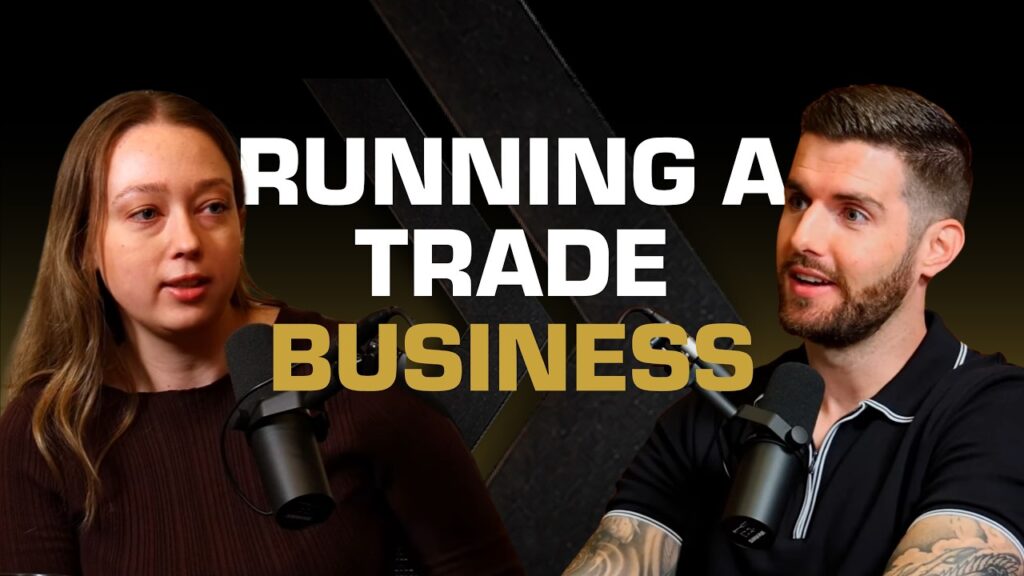
In Episode 2 of Unlocking Business, I sit down with Aisha Derrick, and this time she’s the one asking the questions. It’s the first full episode of the show, and it’s my own story: how I went from apprentice electrician to starting Smartfix in 2018 with one ute, growing it to 130+ staff and $30 million in revenue, and then nearly losing it all.
We also talk about why there was so little practical help for trade owners in Perth, and why that led to Hypotential and this podcast.
Who is Kane Tyler Smith?
I dropped out of school at the end of Year 11. I always wanted to do a trade and picked electrical because I heard it was the cleanest and best paid. It’s definitely not the cleanest. I did my four year apprenticeship with a one-man band, and when I qualified he couldn’t afford the jump to a tradie wage, which happens a lot in trades.
I moved to a bigger multi-trade business in Perth, spent two years on the tools, then became their nominee and ran the electrical team from the office. I ended up as general manager, working closely with the owner. Smartfix started from the back room and garage of my house, just me and one ute.
Key takeaways on running a trade business
1. Your apprenticeship teaches the trade, not the business
I knew how to do the job, but I didn’t know how to do marketing, advertising, sales, admin or even answering the phones. None of that is specific to trades. That’s why this podcast also talks to owners from other industries.
2. Learn the office side before you go out on your own
I was about to leave after two years. I’d bought a vehicle, stocked it and had a business name ready, All Perth Electrical. Then I was offered the nominee role. My dad told me to stay because I’d learn so much, and he was right. I learnt what to do, and also what not to do, especially around reputation and keeping staff. If I’d started back then, I don’t think it would have worked out.
3. Ask for Google reviews from day one
Staff retention and great customer service have been Smartfix’s core values from the start, and Google reviews were a big part of that. Customers rarely leave a review unless it’s bad, so you have to prompt them. Clean up first, ask if they’re happy with the job, offer to walk them through it, then ask if they’d mind leaving some feedback on Google. Happy calls from the office help too, because customers often tell office staff things they won’t tell the tradie.
4. Leave something with the customer
My first branding was harsh red and blue and I did it myself, but I knew it mattered. Every customer got a branded book with their carbon copy receipt and warranty documents, plus a flyer, a fridge magnet and a sticker in the switchboard. Next time something went wrong, our name was right there. Your website matters the same way. Most of our work is urgent, so it has to work properly on mobile.
5. Every hire adds more than a wage
Most tradies never think about needing people in the office, but if you want to get off the tools you will. Once you take on staff, you need the cash flow to pay them every week, consistent marketing, a sales process to turn leads into jobs, a team to do the work and admin to send invoices, chase payments and ask for reviews. Around five staff is when I’d start thinking about an office, just to keep work separate from home.
6. Talk to other business owners
For years I never spoke to anyone running a big business. Then the owner of a large business over east flew to Perth just to catch up, and I went to a two-day networking event they run. It was an eye-opener. Owners were open about their problems, and so many stories matched what we’d been through. As Aisha says, a lot of owners feel imposter syndrome and work it out alone.
Four buildings, a fish and chip shop and the Easter that nearly took everything
Smartfix grew fast. We went from a little rented office around the corner from my house to buying our own building, then a bigger one, then a former fish and chip shop and the bakery next door. At one point we had four buildings, with four sets of bills, rates and strata fees, and staff spread across all of them. My accountant warned me that as soon as you separate yourself from the team, things slowly fall apart. He was right.
Early in 2025 we had 130+ staff and had turned over $30 million. Then the March and April school holidays hit, Easter landed in our quiet season, and it was twice as bad as usual with twice the staff. We lost a lot of money in two months. I sold two buildings to free up cash, sold vehicles and let some staff go. We nearly lost it all, but we didn’t. I pulled Smartfix back to 30 staff and one office, with the fish and chip shop and bakery joined by a hole in the wall, and the team is stronger for being together again.
“It’s not all about revenue and the amount of people. It’s definitely more about the profit and sustainability and not having stressed out staff.”
Kane Tyler Smith, founder of Smartfix and Hypotential
Where to find Hypotential and Kane
Hypotential is the trade business coaching and networking I wish I’d had when I started. There’s free content through this podcast and social media, a paid membership, group coaching and one-on-one coaching. Aisha now works for herself as a marketing and brand consultant in Perth, trading as Aisha Rain.
- Hypotential: hypotential.com
- Kane on Instagram: @kanetylersmith_
- Aisha’s website: aisharain.com
- Aisha on Instagram: @its.aisharain
- Aisha on LinkedIn: Aisha Rain
More episodes you might like
- Marketing, Branding and What Actually Works for Trade Businesses | Aisha Derrick
- 8 Years of Smartfix, Building a Business With Your Brother | Finley Dearlove
- Building a Trade Business That Doesn’t Rely on the Owner | Peter Craft
Want help building a business that grows without burning you out? Work with me.
In this episode
- 00:00Cold open
- 00:20Why we started Hypotential
- 01:02What your apprenticeship never teaches you
- 03:20Kane's apprenticeship and first jobs
- 04:20Nominee, general manager and lessons learnt
- 05:00Google reviews from day one
- 06:20Almost starting out as All Perth Electrical
- 07:40Hiring office staff and VAs
- 10:10Where the Smartfix name came from
- 11:00Early branding, stickers and magnets
- 12:40Websites and the multi-trade rebrand
- 16:00Agencies vs working with startups
- 23:20Starting from the garage
- 24:30Family, first staff and first office
- 26:20Outgrowing offices and buying buildings
- 28:25The 2025 near miss and scaling back
- 31:40Back under one roof and team culture
- 34:50Meeting other business owners
- 38:45No trade networking groups in Perth
- 39:50What Hypotential offers
Full transcript
Read the full transcriptAuto-generated from the episode, lightly edited for clarity
[00:00] Cold open
Kane: Obviously, when you do your apprenticeship and go through TAFE, you don't really learn anything about business.
Aisha: The idea of just being off the tools and working from home.
Kane: Like, I'm a tradie, I know how to do the job, but I didn't really know how to do marketing.
Aisha: It just wasn't user-friendly or mobile responsive.
Kane: I was going to leave at the end of the second year.
[00:20] Why we started Hypotential
Kane: I'm Kane Tyler Smith, the founder and CEO of Smartfix and Hypotential. I started as a one-man band back in 2018 with just one ute. Now we run a massive multi-trade business.
Aisha: I'm Aisha. I'm the brand and marketing manager at Smartfix, and I'm also the co-founder of Hypotential. So we started this because we just found that there wasn't a lot of other trade business coaching out there that was really about real situations, or that were people currently running their own trade business as well as doing coaching. A lot of them like the idea of just being off the tools and working from home, so they leave that stuff behind. But it's about being able to connect with other people in the same situations as you, and finding that networking group of other trade business owners that really understand your stage of growth, what challenges you're facing, trying to juggle building that business while having a family, and what that's really like.
[01:02] What your apprenticeship never teaches you
Kane: Yeah, it's pretty involved. Obviously, when you do your apprenticeship and go through TAFE, you don't really learn anything about business. You learn how to do the job on the tools, you learn the skills. But there's nothing at all about business. So I find it interesting how there aren't really many trade business coaches in Perth. I don't think there's any at all. So I feel like with our experience in Smartfix, we can help people grow their business,
Aisha: Yeah, definitely.
Kane: build teams, and put the right systems and processes in place.
Aisha: It's also just generally interesting hearing, like with this podcast, we can have other people from other trade businesses out there, not just Perth, WA, but having that different landscape of other business owners. Not even just trades, but other business owners, and getting those different opinions, and how they started, and what their first hurdle was, because it's going to be completely different depending on the trade. So yours was electrical, so from electrical to plumbing to everything.
Kane: Mhm.
Aisha: So it's going to be different for everyone. For me, from the marketing standpoint, I have a genuine passion for startups, and the trade business is just one that I accidentally fell into, because of the room for growth and just how many tools and marketing avenues there are.
Kane: Yeah, that's a good point. So even with it being trade specific, when we do the podcast we'll have other businesses that aren't specific to trades, for that exact reason.
Aisha: Yeah.
Kane: Like, I'm a tradie, I know how to do the job, but I didn't really know how to do marketing or advertising or sales or admin, answering the phones. Even all of that stuff isn't specific to trades. So chatting to other people from completely other industries, as long as they're a business owner or higher up in the business, they will have other experience they can bring forward, and other trades can take advice from what they say. That'd be really cool.
[03:20] Kane's apprenticeship and first jobs
Kane: So I dropped out of school at the end of year 11. I always wanted to do a trade, but I didn't know what, and I heard that electrical was supposed to be the cleanest trade and the highest paying, but it's definitely not the cleanest. So I finished school, started with a one-man band, and did my apprenticeship for four years with him. Then as I qualified, and this happens quite regularly in trades, he couldn't afford to pay the trade wage. Going from an apprentice to a tradie, the wage is quite a big jump, so he couldn't afford to keep me on.
Kane: So I ended up going to a bigger business in Perth that was multi-trade at the time. I did three or four years with them. The first two years was on the tools as a tradie, so getting to use my trade, which was obviously good. I got a lot of experience working by myself, and then I did my contract, as I was going to leave at the end of the second year to start my own business. And then I got offered to become the nominee for that business and work in the office to run the electrical team. So I spoke to my dad, as you do, got some advice, and he said, "Definitely stay, because you'll get to learn and get experience in how to operate from the office side." And I worked pretty closely with the owner of that business at the time, so
Aisha: Mhm.
[04:20] Nominee, general manager and lessons learnt
Kane: that was awesome experience for me. I did that for about two years. I ended up being the general manager, sort of like 2IC to him. And I learned a lot of what to do, but also what not to do,
Aisha: Mhm.
[05:00] Google reviews from day one
Kane: just with regards to reputation and keeping staff. So my core values for Smartfix from day one were staff retention and great customer service, and that's why we pushed heavily for Google reviews. That for me was so important from the start, and we've kept that a really high priority for the whole eight years we're up to now.
Aisha: Yeah, you can definitely see that. When I joined Smartfix, the Google reviews were impressive. For a trade business, Google reviews aren't really a focus for a lot of businesses, or how to start gathering them, or what strategies you should be using to try and get Google reviews from people.
Kane: It is hard.
Aisha: Yeah.
Kane: It's hard to get them, because you're right, most tradies don't think it's that important. But the sooner you start, the more you can get, and there's more consistency. But customers are not quick to jump in and do a review unless it's bad, so you have to sort of prompt them and ask them, "Hey, are you happy with the job we've done today?" Make sure you've cleaned up first. "Is there anything you want me to take you through?"
Aisha: Mhm.
Kane: "Any thoughts, questions?" If they're happy with your work, then say, "Hey, do you mind giving us some positive feedback on Google or Facebook?" depending on what platform you're using. But for us it was heavy Google from the start.
[06:20] Almost starting out as All Perth Electrical
Aisha: You said you did your contract. Did you want to start your own trade business then, or was it after you got all the general manager experience?
Kane: Yes, the intention was to leave straight away and start my own business.
Aisha: Yeah.
Kane: Back then I still lived at home with my parents. I bought a vehicle, stocked the vehicle, had everything ready to go, had the original business name, which I think was All Perth Electrical. But when he offered me that position, I wasn't sure, because I did want to leave, but
Aisha: Yeah.
Kane: after speaking to the parents, Dad's like, "You're going to learn so much in there." And yeah, so glad I did. It would not have worked out if I'd started back then. And again, going back to the coaching, I would never have even thought of a business coach or a trade business coach, so there's a huge gap in the market, and that's where we're going to be able to help a lot of people.
Aisha: Yeah, definitely. I'm not an apprentice. I've never done a trade or anything. Most days I do feel like an apprentice though, trying to put my marketing knowledge into this business. Even before Smartfix, somehow I ended up in the trade field. I started freelancing for quite a few tradies, and then was at another electrical trade business, and actually was at a tradie business coaching business for a while. And day-to-day you feel like an electrical apprentice or a plumbing apprentice, just trying to wrap your head around all the technical jargon and switchboards and everything.
[07:40] Hiring office staff and VAs
Kane: Yeah, that's where it goes back to the point where we won't just be speaking with tradies. It's admin staff as well. We've had a couple of new admin staff start over the past couple of weeks, and they might not have any trade experience at all, but they have got experience in customer service, answering phones, booking jobs and scheduling jobs, so
Aisha: Mhm.
Kane: And again, most tradies, when they start, it doesn't even cross their mind that eventually they probably will need to have people in the office, especially if they do want to eventually get off the tools, which most people seem to want to do. But it's a hard step up, and where do you start?
Aisha: Even just that term, "people in the office". That's a question there.
Kane: What is people?
Aisha: Yeah, or even virtual assistants. It's massive now. There's a lot of trade businesses where it is just the tradies, and then they have virtual assistants or people working in Bali or other places. So even making that decision of do I want to build an office? Do I want to stay at home? Those sorts of decisions as well. Every person is different in what their goals are and how far they want to grow, if they want to grow, what their priorities are.
Kane: Yeah, that's a good point, because when you do start to take on the extra staff, it's more responsibility, because you have to make sure you've got the cash flow to pay them every week. Make sure the work's coming in, which obviously leads into marketing. You've got to make sure that you've got consistent marketing, a good sales process to convert those leads into jobs, a good team to complete those jobs, and then admin staff to send invoices or chase payment, or even ask for reviews or make some happy calls.
Aisha: Yeah.
Kane: That's another thing that works really well.
Aisha: Mhm.
Kane: Office staff calling the customer to try and get another perspective of how the job went for them. Sometimes the customer might not want to say to the tradie, "Hey, you missed this," or "You could have tidied that up a little bit better." Whereas if it's the office staff calling, sometimes they will give you that extra bit of feedback, which is good for the business to learn and grow and train their staff on how to level up their customer service.
[10:10] Where the Smartfix name came from
Aisha: Yeah, definitely. So what happened after you decided Smartfix is the name and you've got your values in place?
Kane: So I actually borrowed the name, or stole the name, from another business
Aisha: Yeah.
Kane: that I heard of back in the day. It just always stuck with me. I don't think they were around when we
Aisha: It's not a tradie business though.
Kane: weren't there.
Aisha: It's not tradie though.
Kane: No.
Aisha: If you Google Smartfix, it's us and then a phone company.
Kane: Oh, okay. Oh, they're phone repairs. No, it was trades. They weren't around. I just always liked the name. It just always stuck with me. So I got rid of the original name of All Perth Electrical,
Aisha: Mhm.
[11:00] Early branding, stickers and magnets
Kane: and changed it to Smartfix. My original branding that I put together wasn't great. It was pretty harsh red and blue.
Aisha: Yeah.
Kane: Back then it was just Smartfix Electrical. The tagline was "Your local electrician."
Aisha: Mhm.
Kane: To me at the start, branding was pretty important. I knew that it was important. I just did it myself, so it wasn't great. But we had a, I don't know what it's called, like a document holder. It was fully branded, red and blue, with my little line across the middle.
Aisha: Yeah.
Kane: I had magnets and stickers from the start. Again, I always sort of knew about branding, not as much as I do now, but I knew it was important to leave stuff with the customer. The book was good because back then it was paper receipts, so we had carbon copy books. I'd leave them a copy of their receipt. Any warranty documents would stay in there. I think I had a flyer as well, and a fridge magnet, and also a sticker. Every job I completed, I would put a sticker in the switchboard, just because anytime the customer has an issue, they go there, they see your sticker. So that was always important to me. And then I think that's when we started working with you. When did we start working with you as a freelancer? Must have been four or five years ago.
Aisha: Yeah, maybe 2022, 2023. Maybe the end of 2022.
Kane: Was that when we made our logo?
Aisha: It wasn't the red and blue at that stage. It was the Smartfix Electrical, Plumbing and Gas with the light blue accents. You were at the orange in that phase. But yeah, I think I had posted another trade business brochure.
Kane: Ah, that's cool.
[12:40] Websites and the multi-trade rebrand
Aisha: Yeah, and then you got in contact from there, and then we started doing some updated branding and brochures and flyers and all of that, and then having a look at the website as well.
Kane: Yeah.
Aisha: So the website's changed massively as well.
Kane: I think we're on probably our fourth or fifth website.
Aisha: Yeah. It just wasn't user-friendly or mobile responsive, and mobile is the most important for a website. That's where all your customers use it.
Kane: Especially for urgent reactive trades, which is predominantly our work.
Aisha: Mhm.
Kane: So most people on their phone will Google "electrician near me" or "plumber near me", then we pop up, so the website has to be super user-friendly on mobile. So going back to the branding, I think we changed to multi-trade services about 12 months ago.
Aisha: Mhm.
Kane: That's when we had electrical, air con, plumbing, carpentry, cabinetry, painting, tiling, ceiling fixing. So the branding had to change to reflect that. That's where we changed to Smartfix Multi-Trade and Services, which is obviously quite broad, but we couldn't list every trade in the logo, so
Aisha: We just didn't want to be known for just electrical anymore. We've grown past that. When I officially joined, we still had those core services. We tried a bit of gardening and cleaning, but then decided to just stick to what you need doing in your home. Then we had the carpentry, cabinetry. Then that got into a bit of property maintenance.
Kane: Renovations.
Aisha: Yeah, renovations. And multi-trade and services just naturally came from there, because
Kane: Mhm.
Aisha: we weren't Smartfix Electrical anymore.
Kane: Yeah, which meant then we obviously made, I know you made the original catalogue brochure for us, which ended up being heaps of pages.
Aisha: Yeah.
Kane: But the website is forever ongoing. And obviously the app's been in progress for a long time now, probably close to two years, but should be live hopefully in the next couple of weeks.
Aisha: Yeah.
Kane: Hopefully. We're close.
Aisha: Fingers crossed. But the massive difference now is, beforehand, we had limited control over our own systems, like the website and all of that. When I started, obviously I was a freelancer, then just a graphic designer, and now we've got a marketing team. So we have more control, and we can do all of those systems in-house, like the website as well, and the app, and we can control those things. So we can afford to make changes in the business and be reactive, because
Kane: Fast changes as well.
Aisha: Yeah.
Kane: Key point there is we can do them
Aisha: Yeah.
Kane: same day.
Aisha: Yeah. So I'm not saying that every trade business needs an internal marketing team. You can go on Upwork and have a freelancer, that's completely fine. But for us, to suit you and how fast you
Kane: Fast growth.
Aisha: and how fast everything moves, it's definitely been very helpful to be able to just be like, "Okay, cool. I'll just go straight onto the website, make that change, update that photo, whatever's needed."
[16:00] Agencies vs working with startups
Kane: So you mentioned before how you love working with startups. What do you mean exactly by that?
Aisha: It's more like, when I finished uni, I just imagined I'd go into agency work, and I did do a program where I went to pretty much every agency in Perth and did a day or two working with them, and went to a lot of networking events for marketing, and connected with a lot of other people that were in the same phase as me, or a lot later down their track. And I did do some contract work covering for other people in agencies, and it is great, but I just found it can be quite limiting in how much you can achieve, or original ideas, depending obviously on what agency you go to.
Kane: Is that because, when you say agency, that's a marketing business that does marketing for other small businesses?
Aisha: Yeah, so you're a small cog in a big portfolio. You'll have a client, and you're a small part in that portfolio.
Kane: Limited to, if you were doing graphic design for example, you might be the one that
Aisha: I'm only doing brochures.
Aisha: Yeah, so you just do brochures. Whereas working in small business and startups, you are more of a generalist, where you can help with the branding,
Kane: Mhm.
Aisha: the marketing, even things like Google Ads, SEO.
Kane: Yeah, mine's like
Aisha: Flyers. And I love the research and strategy as well. I've always wanted to start my own business as well, or have something that was in my own name. I've always wanted that. And starting out freelancing, which is pretty much all startups, it's all people that are like, "I have a business idea, but I have no idea what to do next."
Kane: No money.
Aisha: "I have no money. I don't know what to do. Please help me." And a lot of the time I would just have phone calls with them to talk them through it and help them, and I did love doing that. So a lot of the time it wouldn't end up being
Kane: Paid.
Aisha: Yeah. But it's referrals, or it's work down the track once they've
Kane: Yeah, once they're more established.
Aisha: Yeah. Or genuinely telling them, if they have an idea, "You might not need a whole website or a massive branding package right now. You're not ready for that. Let's start to look at who your competitors are, who your audience is. Who are you trying to target?" You need to work through all of that, and that creates a strong brand. If you can find those points of difference, those unique selling points, then you have all the backbone to build a really strong brand. Then that's where I can go in.
Kane: Yeah, to go in and do, I suppose, a longer process of a job. That's a good point, what you just said, and I think it's sort of similar to me. I do love helping people.
Aisha: Yeah.
Kane: So over the years, I speak to friends all the time about their business, and not that I'm telling them what to do, but just giving advice. I learn from them as well.
Aisha: Yeah.
Kane: A friend's got a plumbing business. He picks up on things that I do, and I obviously give him some advice. So I do like helping people. So with the business, Hypotential, a lot of the stuff we're doing through social media and free resources is free to people like that, who are just starting and don't have any idea. They can learn from our social media or some of the free resources on our website. And then in time they may eventually use our paid services and take the business further. So it sounds like you like helping people as well.
Aisha: Yeah, definitely. I think if I didn't get into marketing, or if I was going to go back to uni, I would be teaching.
Kane: Oh, really?
Aisha: Yeah.
Kane: Like school teaching?
Aisha: Yeah.
Kane: Yeah, okay.
Aisha: Or a uni lecturer.
Kane: Lecturing on what? Do you reckon still marketing?
Aisha: Marketing still, because marketing's so broad. Literally, I tell family and friends that I'm in marketing, and they're like, "Oh, you do Google Ads."
Kane: Yeah, okay.
Aisha: I'm like, "Actually, no." That's a small part of it. But that's also the same with graphic design. A lot of people start in graphic design and then get hired for a role, and the job description is massive. Whereas you can still specialise, like you do with a trade. You can get an apprenticeship just for HVAC.
Kane: Yeah, I was going to say, to tie that to trades, it would be like an electrician that does their apprenticeship just doing solar.
Aisha: Yeah.
Kane: They might be with a big company, and it might be similar to the agency aspect. They might do their apprenticeship as an electrician, but they're only doing solar, and they would only do the rough-ins. They don't do the hard manual work on the roof. They might not learn how to do the switchboard or the electrical connections. So that's probably where, even in that scenario, a startup or a one-man band is good, because if you were an electrician and you did a solar job, you would do everything. You'd do the physical work. You'd get shown, more than likely by the owner, "Hey, this is how you do the switchboard," because in time they want you to do all the work as opposed to one thing.
Aisha: Yeah.
Kane: And even HVAC is a similar scenario, with air con and refrigeration. You can do split systems. You can do ducted air con systems. You can do commercial fridge systems.
Aisha: I was going to say you can do vehicle.
Kane: Vehicle air con. Yeah, there's such a variety, but in this day and age, I think getting experience in all the aspects of your industry would be significantly beneficial.
Aisha: Yeah, I think there's also a difference there, like you say, just getting experience in your industry. Again, comparing marketing to trades, it's still the same as when you finish school. Everyone's like, "Just go to uni. It's a safe option. Get a trade. It's a safe option." It's changed so much now. Not a lot of jobs require a degree anymore. It's a harsh reality coming from someone that's still got a HECS debt. But there's so many jobs out there now where you don't need a uni degree. Experience talks more. But for trades, that's a legal requirement.
Kane: Mhm. Yeah. I could open a rabbit hole discussion on AI, but we'll save that for another day.
[23:20] Starting from the garage
Aisha: Yeah. So where did Smartfix start? Is it a bedroom, a garage?
Kane: Yeah, typical story. Smartfix started in the back room of my house and the garage. So
Aisha: Yeah.
Kane: when I was going to start, I was still living at home, but then obviously I stayed with the business. So
Aisha: Mhm.
Kane: we'd actually built our second house at that stage. So my garage was my office. Just me and a ute.
Aisha: Yeah.
Kane: And it escalated pretty quickly.
Aisha: Yeah.
Kane: You don't need many tools as an electrician. Not really. Not for residential.
[24:30] Family, first staff and first office
Aisha: Did you have any kids at that time, when you first started?
Kane: No, no kids. Me and my wife, were we married? I'm trying to think back. Yes, we were definitely married, and then we lived in the house for maybe a couple of years, which was similar timing to when I started the business. And then we had our first baby at the same time as we bought the third house. So it was pretty wild back then. Being pregnant and moving into a house and then renovating the house was pretty stressful, and trying to run a business.
Aisha: Yeah.
Kane: We probably had maybe eight to 10 guys at that stage, I'm pretty sure.
Aisha: Were you still on the tools at that stage as well?
Kane: Yeah, it would have been maybe 50/50.
Aisha: Mhm.
Kane: Because a similar time was probably when we got our first office. We rented a little office around the corner from my house. My office being so close to my house was super important to me, because where I worked previously was about an hour's drive in the morning, and about an hour and a half home depending on traffic. So for me, having an office close to home was very important.
Aisha: Especially when you start getting off the tools as well.
Kane: I worked from home for a while. I had a home office set up. As soon as you get five plus staff, you sort of need to start thinking about an office, just for keeping the work separate from life as much as you can. Still a lot of crossover, but I loved having the office. That was awesome. Somewhere to park the spare cars and tools and stock. And then in time my brother Finn ended up coming into the office with me, so we worked together upstairs, which was fun.
Kane: We were probably two years in that office, and then we needed a bigger place pretty quickly. So that was probably a year, actually. We were there for a year. Found the second place, which we rented for about a year, then I bought that property. That was a huge step up for me. I always wanted to get into commercial property instead of residential. So we rented that, then we bought it, and we were there for maybe two years, and I bought another building. Similar area. Just growth.
[26:20] Outgrowing offices and buying buildings
Aisha: So you had eight to 10 staff for the first one. Then how many do you reckon for the second upgrade?
Kane: I reckon it would have been 15 or so. But that stage is where we were taking on administration staff. That was probably an important point there. The office was set up for maybe three or four of us. We renovated it like 400 times to make it suit, but we got to the point where there were three managers in the office, and then I think there were five administration people upstairs with us. Then downstairs we had the garage, which we chopped in half to have more office space downstairs. And then that's where we thought, "Okay, cool. We're going to have to find another place."
Kane: So we stayed, and we bought the other office, which a couple of us moved into for a while. And then again, just with fast growth, we grew out of the first place. So I bought another building, which was a massive step up for us. It's about 350 square metres. So that was a massive, massive risk.
Aisha: But it was a must move.
Kane: Yeah. We couldn't have grown much bigger without more space. So we bought that, renovated it, sold that first office that we were currently working out of. And that was really fun. That's probably one of the funnest moments, I think, because it was huge. It wasn't like we bought it with the intention of filling the building,
Aisha: Yeah.
Kane: because it was massive, so
Aisha: Yeah, especially, that's such a visual growth as well, buying a larger area. Like, "Okay, look at all of this room for growth."
Kane: Yeah, we probably filled like 30% of the building when we first bought it. So it was fun. Bought that, renovated it, moved in. I think we literally renovated that place three times while we were in there.
Aisha: Yeah.
[28:25] The 2025 near miss and scaling back
Kane: And we did fill the building. But the story continues. Obviously, we did hit a bit of a speed bump in early 2025. We had just under 140 staff. We turned over 30 million in revenue. And we probably grew too fast, too quickly. And then as we hit the March, April school holidays, Easter last year, with all the political stuff going on at the same time, we lost a lot of money in those two months.
Aisha: It's also the quiet period, the quiet off season for every trade business then.
Kane: Yeah, that's a good point. That's significantly a low season for us, and we knew that was going to happen, but this was probably twice as bad as what it usually was, and we had twice the amount of staff, so
Aisha: And it was multi-trade at that phase, where it was electrical, plumbing, air cons, hot water, property maintenance, so carpentry, tiling, cabinetry, renovations,
Kane: Mhm.
Aisha: ceiling and plastering, painting. It was
Kane: Yeah.
Aisha: all of those services preparing for what an off season looks like.
Kane: Yeah, so at that point we did have to scale back pretty fast. We grew too fast. We had a lot of people, a lot of vehicles. We actually had four buildings at that point. I forgot to mention before, we bought the second set of buildings side by side.
Aisha: Yeah, yeah. You saying four, I was counting in my head.
Kane: Yeah, I forgot to mention that. That's probably a point, so
Aisha: Yeah, just buying the fourth one.
Kane: The fish and chip shop. We bought that and renovated that.
Aisha: Smartfish.
Kane: Smartfish, yeah. Then we bought the one next door to that, which was a bakery.
Aisha: Yeah.
Kane: Again, more renovations, more cost. That's another thing, we did spend a lot of money on making our offices really nice. But with that hit, I had to sell two buildings very fast. Then we sold the big one. We had to sell that, and the real estate agent did an amazing job. He had investors lined up to buy property, so we sold that within a month or two. The main reason for selling those two is I had a lot of equity in the two buildings, so it freed up the cash to pay the bills. At the same time, we did have to sell some vehicles and let go of a few staff to suit what we could afford. We nearly lost it all, but we didn't.
Aisha: Yeah.
Kane: We survived. We made some changes for the better.
Aisha: Yeah. Okay. I can second that.
Kane: We're at a really good point now. We're in a really good place. It's not all about revenue and the number of people. It's definitely more about the profit and sustainability, and not having stressed out staff. That's super important.
[31:40] Back under one roof and team culture
Aisha: I'd say we're so much stronger now as well. Before, four buildings, that was a lot.
Kane: Four water bills, four electricity bills, four sets of rates, four sets of strata fees. It got pretty wild.
Aisha: Yeah. And you had the staff stretched across the buildings as well. So
Kane: That is a very good point.
Aisha: So now, with getting rid of those two and just having the fish and chip shop and the bakery as one building and connecting them, everyone's in the one building now.
Kane: Yeah, that is good.
Aisha: It is a lot stronger.
Kane: Yeah, that's a very good point. That's something I got told when I bought my second building. I got told by my accountant, "Be very careful, because as soon as you separate yourself from everyone else, things will slowly fall apart." I was like, "I don't know. I'm still technically only 20 or 30 metres away." It lasted a while, but I definitely feel that now that we're back all together, it's just better for company culture. So with the two we have now, we cut a hole between the buildings to make them one building.
Aisha: Yeah, it's a good point, because it's one thing to step off the tools. Sometimes you do go out and quote as well, or do some trade work, just to get a refresh in your own business and test systems, which I think is really important. But it's one thing to step off the tools, and then another to be a building's distance away from all your staff. You were still very close, but having everyone in the one building, we can just walk to each other now and have discussions. It's not all just your own ideas, or all on your own shoulders.
Kane: Yeah, a lot more collaboration.
Aisha: Yeah, we have a lot of managers here. We have a lot of admin staff. It's a lot of collaborating.
Kane: Mhm. Even just bumping into each other in the kitchen, in the hallways and stuff. Even though it's not a huge conversation, it's still just being there with the team. So that's definitely important.
Aisha: Yeah, we always try and keep staff morale and team culture pretty high here. Every Friday we put lunches on in the office, whether it's barbecues or ordering
Kane: Cheeky Nando's.
Aisha: Yeah, some cheeky Nando's or Subway. And then quarterly sundowners as well, to make sure we celebrate those milestones, and annual family days and Christmas parties as well.
Kane: Yeah.
Aisha: It's always opportunities, because I think that's also really important when you've got a multi-trade team, making sure that you do set opportunities for people to get together and meet those other trades. You can work so much on your branding and how you want people to perceive you, but the tradies are the people that talk to the customers.
Kane: Yeah.
Aisha: If the tradies themselves don't know that we've just updated our services or updated our tagline or something like that, that's not effective.
Kane: Yeah, and what you're getting at there is, if we didn't have the sundowners and those regular events, the tradies wouldn't even know who works here. I feel that's a terrible thing for business. So that's why we do regular toolbox meetings, those regular catch-ups, so they can meet each other and build their relationships, which is great.
Aisha: Mhm. Because they are the face of the business.
[34:50] Meeting other business owners
Aisha: So what was the turning point for you, from "I don't want to just run a trade business anymore" to "I want to get into coaching"?
Kane: Interesting one. So I never really spoke to other business owners, other than my friends that were at the same point in business as me. And it's a bit of a random one, but long story short, I had an owner of a big business over east fly over to meet me and just literally catch up, which I thought was definitely weird at the time, but it's probably one of the best things that happened, because he's a super friendly guy. I ended up going over to one of the events they run over there, because they have a networking group.
Kane: And that was an eye-opener for me. I was like, "I don't even understand how this isn't a thing in Perth." It was a two-day networking workshop kind of event. It wasn't salesy or anything. I met a lot of people there. I met some of the biggest businesses over east that were multi-trade as well, a lot of plumbing and handyman. That's sort of how they run them. Scott was the guy I met. He taught me heaps very fast, and it was at similar timing to when we had downsized.
Aisha: Yeah.
Kane: So he gave me a bit of advice. Just the fact that they had a networking group, I just didn't think other business owners would be open to talk
Aisha: Mhm.
Kane: as much as they were. So that was an eye-opener for me, because like I mentioned, I'd never spoken to anyone who's got a big business here in Perth. I just thought it was not a thing. You don't speak to people, so
Aisha: Yeah, it is a tricky one. I feel like there is still such an ego with starting your own business. Not just in trades, but in general. You've got that imposter syndrome, or disbelief in yourself that you can do it, or that you can ask for help. The networking part is so important. Being able to just talk to other people at the same stage as you, or from different backgrounds, from the stage you're at to someone just starting off. If those resources and those groups were out there, just think of all the challenges that you might be able to avoid.
Kane: Yeah, it's just that, with a lot of people, the amount of stories I heard, I'm like, "Yeah, right." It's just very similar to a lot of situations that we've been through.
Aisha: So that's why you wanted to start Hypotential?
Kane: Yeah, so that was it. Over there I actually met a couple of guys that were from WA,
Aisha: Mhm.
Kane: which was really cool. So I was chatting to them for quite a while. I know of people that they know. Perth is a very small place, so that was cool. And then there was talk of them bringing that network group to WA as well, but then I got told that was no longer happening. So that's where I was thinking, I don't think it'd be that hard to set up a group, or even just meet other business owners. So I have since been reaching out to other business owners and just having a chat. I've caught up with two or three, randomly, never saw them before, and they were super open as well. So I thought, okay, maybe there's
Aisha: People want this.
Kane: Yeah, people do want this. Everyone I've spoken to so far has been up for it, so that gave me the idea. But then the business coaching was sort of a separate thing as well. I have wanted to do it for a couple of years.
Aisha: Mhm.
Kane: For me, it's never really been the right time, because Smartfix has been so hectic.
Aisha: Yeah.
Kane: Since the downsize, we're a really good size of business now, and I don't have to be in the day-to-day operations, so
Aisha: Mhm.
Kane: that is why now is the time for me.
[38:45] No trade networking groups in Perth
Aisha: Yeah, like I mentioned previously, I had been in a trade business coaching business prior. But you find the issue is there's no networking groups like that in Perth. There are ones that are dedicated just to
Kane: Business in general.
Aisha: Yeah, business in general, or ones that are for referrals, or meeting property managers if you're in the residential space, and that sort of thing. But if you just want to talk to another Joe Bloggs that's starting his electrical business, and he's like, "When do you hire your first tradie? When do you get your first apprentice?"
Kane: Mhm.
Aisha: You've got Facebook forums, you've got Reddit, but a lot of people with that imposter syndrome choose to do it by themselves.
Kane: Yeah, they're scared to ask. Obviously, we had an in-person event already, and I think the human connection part is super important, especially now with AI, when most things are online, so
Aisha: Mhm.
Kane: those in-person events, I think, are super important. The one we had here was amazing. There was no awkward silence. Everyone was just chatting straight away, and there were
Aisha: Yeah.
Kane: businesses of one-man bands,
Aisha: Mhm.
Kane: and guys with teams of 10 to 15, so it was really good to see everyone chatting.
[39:50] What Hypotential offers
Aisha: Yeah. So the goal is that we'll end up growing a large, supportive networking group that supports those sorts of conversations that we want to have, and that we know other trade businesses want to have as well. Then from there, like you've shared in your story, being able to share those real life lessons and growth and challenges as well. People want to hear, "What did you do wrong? That's why, don't do it." So being able to share those as well, in monthly Q&As,
Kane: Podcast.
Aisha: the podcast as well. The podcast is just going to be all rambles about that. So we'll definitely be talking more about that for sure.
Aisha: But yeah, networking, monthly Q&As, live events, workshops, a WhatsApp group to be able to just ask questions, not only to us, but to other trade businesses. Weekly coaching sessions with worksheets, and one-on-one calls as well, so being able to talk to us directly on a weekly basis. Or partnerships as well.
Kane: Mhm.
Aisha: If you want us in your business
Kane: Yeah.
Aisha: to help you, and to sort of audit where you're at, and for us to align with your goals and help you at that next stage, whether it's a long-term partnership or just a month to get you through the hurdle that you're currently in.
Kane: Yeah, for sure. That's a good point. So as free information, a lot of that will come through the podcast or social media.
Aisha: Mhm.
Kane: Then we do have a paid membership, which is for those early stage founders that just want that group environment. Then there's another price point, which is for group coaching. Then there's a higher price point, which is one-on-one coaching with obviously one of us. Fun times ahead.
Aisha: Yeah, definitely.
Kane: If you found some value in today's episode, subscribing on your platform of choice is the best way to support the show and to make sure you don't miss anything. New episodes drop fortnightly, and we have a lot more ground to cover. These conversations don't happen often in the trade industry, and I'm not going anywhere. I'm Kane Tyler Smith. I will see you on the next one.