About this episode
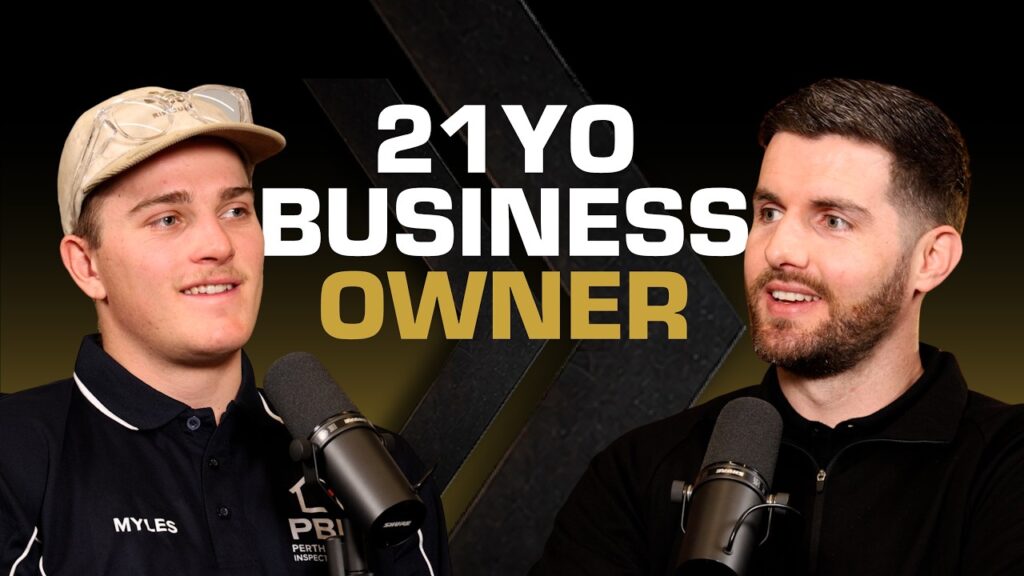
Perth Building Inspection Repairs fixes the problems building inspectors find when a house is about to change hands. Myles Gaebler started it this year, at 21, after sitting in a car park in Cannington too nervous to call his accountant and set up the company. Within months he was turning over $8,000 to $10,000 a week.
In Episode 17 of Unlocking Business, I sit down with Myles to talk about a corner of the building industry most people never think about. When a buyer’s inspector flags a major structural defect, the seller has five days to find someone to agree to fix it. That’s usually when Myles gets the call. We talk about pricing, liability, why he won’t cut corners, how he uses AI to write reports in minutes, and the big question he’s wrestling with right now: scale up, or protect the life he built the business around.
If the work is coming in faster than you can handle it, this one is for you.
Who is Myles Gaebler?
Myles is a carpenter who grew up in Dwellingup. He spent the first two years of his apprenticeship on roofing only, then the last 18 months or so building higher end homes. He’s now about two years into his builder’s registration through Master Builders, with roughly a year to go.
His long-term plan is to build quality homes in the $1 million to $4 million range down south by the time he’s in his 30s. And on 6 December he’s racing Ironman Busselton: a 3.8km swim, 180km ride and 42km run.
Key takeaways from the Perth Building Inspection Repairs story
1. A specific name and a specific niche get you found
Myles picked a name that says exactly what he does, and he was surprised it wasn’t already taken. It looks professional when he turns up in a branded ute for a defect job, and it works for search. We told him to keep it. Smartfix spent years as a multi-trade brand and didn’t show up when people searched for an electrician, so we’ve just rebranded back to electrical and air conditioning. Homeowners often want a local specialist, not a big company.
2. Be willing to lose the job rather than do it badly
Myles quoted $10,000 to fix a roof properly and lost it to someone who quoted $2,000, when the materials alone would have been about $2,000. Early on that frustrated him. Now he’s fine with it. At 21, he says, ruining his name in a small town like Perth isn’t worth any one job. If a seller wants corners cut, he’d rather walk away.
3. Use AI to do what your competitors aren’t
Myles takes before and after photos on every job and turns them into a full PDF report with explanations, his logo and his own way of writing. He set it up once as a project in Claude, and now each report takes three or four minutes. Nobody he competes with does it, and in a stressful property sale, making people’s lives easier is something they’re happy to pay for.
4. Get paid through the right channel
Most sellers don’t have $10,000 spare at the end of a sale, so Myles sends his invoice to the settlement agent and gets paid out of settlement. Apart from one disputed job, he’s been paid on everything this year. We also talked about making payment easy. PayID is instant and has no surcharge, and Smartfix uses Stripe so customers can pay on the spot, even though the surcharges cost us about $20,000 a month. When we tried going without it, cash flow fell over.
5. Set up the CRM before you hire
Myles is thinking about his first hire. My advice was to put a proper job management system in first, something like ServiceM8, simPRO or Fergus, so every job card holds the address, scope, photos and forms. Learn it yourself, then teach it to the new person. Once you have staff, you need to see their photos and check their work, and you can’t do that from a text message.
6. Make your first hire a tradesperson, not an apprentice
An apprentice has to be kept busy and supervised from 7am to 4pm, and for the first couple of years they can’t do much on their own. A qualified tradesperson costs more, but they can run jobs without you, which frees you up to quote and plan. It’s the same rule of thumb we’ve talked about with plenty of guests: don’t make an apprentice your first staff member.
Five days, a rolling roof and the $40,000 he said no to
One job in Baldivis shows why this work exists. The original inspector had popped his head through the manhole, taken a photo and climbed back down. Years later the buyer’s inspector looked properly and found the roof members rolling and the roof close to collapse, bad enough that nobody should be living in the house. Myles brought in a structural engineer, who assessed it and signed off on the fix. Myles says WA doesn’t require building inspectors to be licensed.
The other side of the story is how much he’s knocking back. In the last month Myles estimates he’s turned away about $40,000 of work, referring one or two jobs a day to another operator. He’s booked five to six weeks out, he’s training up to 25 hours a week, and he’s deciding whether to scale now or wait until he has his builder’s ticket. As he puts it, no one shies away from $8,000 a week, but you always want more.
“I’d rather not get the job than not do it properly. I’m so young now. To ruin my name in the industry, it’s not worth it.”
Myles Gaebler, founder of Perth Building Inspection Repairs
Where to find Perth Building Inspection Repairs
If you’re buying or selling in Perth and an inspection has flagged a structural defect, Myles and his team can assess it, fix it and send you a full before and after report. You can also follow his journey on social media.
- Website: perthbuildinginspectionrepairs.com.au
- Myles on TikTok: @life.with.myles0
More episodes you might like
- What Two Years in Business as a Chippy Taught Me About Growing a Trade Company | Mitch Suleau
- Stop Chasing the Newest AI Tool | Sam Fielding
- Building a Trade Business That Doesn’t Rely on the Owner | Peter Craft
Want help building a business that grows without burning you out? Work with me.
In this episode
- 00:00Intro and what Myles does
- 01:03The defects lazy inspectors miss
- 02:09A Baldivis roof close to collapse
- 04:12How inspectors refer work
- 05:16Five days to agree a fix
- 07:24Getting the builder's ticket
- 08:26Turning small jobs away
- 10:31Getting paid from settlement
- 12:39Starting the business at 21
- 15:49$8K a week vs scaling up
- 16:54AI before and after reports
- 18:59No CRM yet, too busy
- 20:00The 10-year plan down south
- 22:08Earning trust as a 21-year-old
- 27:23Losing a $10K job to $2K
- 29:29Why the specific business name
- 35:48Subbies vs employees
- 40:01Ironman Busselton training
- 45:16Saying no to big opportunities
- 51:32Kane's Smartfix timeline
- 57:54Fixed pricing vs hourly rates
- 59:00Building trust on social media
- 1:08:24Advice: hire a tradie, get a CRM
- 1:15:44Getting paid: Stripe and PayID
- 1:18:51Where to find Myles
Full transcript
Read the full transcriptAuto-generated from the episode, lightly edited for clarity
[00:00] Cold open
Myles: And I can tell you right now, it's not right and it needs to be fixed properly.
Kane: I will quote a job. We won't quote you x amount per hour, because if you tell the customer an hourly rate, like, no way.
Myles: Like, I don't know how much money you've not been paid.
Kane: Right now it'd be sitting at about 450k all the time that we're owed.
[00:28] Introduction
Kane: Hey, I'm Kane Tyler Smith, the founder and CEO of Smartfix and Hypotential. This is Unlocking Business, where we have real conversations around business, leadership, mindset and personal growth. If you've been getting value from these conversations, please take a second to like, subscribe and follow our channels. It helps us reach more people, bring on more guests and share more stories. Now, let's get into this episode.
Kane: Today, I'm joined by Myles from Perth Building Inspection Repairs. Myles works in a unique space within the construction industry. Instead of carrying out building inspections, his team specialises in repairing the defects that inspectors identify, helping homeowners, buyers and sellers get properties over the line with confidence. Thanks for coming on the podcast.
Myles: Thanks for having me, Kane.
Kane: What mistakes do homeowners make that end up costing them thousands?
Myles: I think what I've been finding lately is there's a lot of dodgy inspectors out
[01:03] The defects lazy inspectors miss
Myles: there that don't do a proper inspection when they buy the house. So then when the homeowner goes to sell and a good inspector comes through for the buyer, there's a lot of issues that come up.
Kane: Does the buyer's inspector go through before the purchase happens or after?
Myles: From what I understand, it's before settlement. They come in once the finance has been approved, then they get the inspection done before they go through with the purchase, because then they can have a clause where they can pull out of the sale.
Myles: And a lot of inspectors go in the roof, pop their head up in the manhole, because the roof is the most important part. It's the part you can't see. I see a lot of houses that are beautiful on the inside, freshly renovated, and they don't even care about the roof space at all. And the roof space is where I get all my work, because no one goes in there to look properly. So that's where a lot of the issues are coming up. The new inspector is looking properly, the old one didn't look properly enough, and
[02:09] A Baldivis roof close to collapse
Myles: now there's huge issues.
Kane: When you say the old one, is that the seller that has to have a building inspection done as well?
Myles: So when they bought the house, say someone buys a house, then 10 years goes by and they want to sell it, and the person that's buying it gets an inspection and the previous inspector didn't do a very good job. Often they do a pretty good job, but when I'm called, it's whenever there's an issue. So we find a lot of issues when a dodgy inspector has just popped their head up in the roof.
Myles: I had one the other day down in Baldivis where a dodgy inspector's gone up in the roof. He's taken a photo and gone straight back down, and he hasn't looked around the whole roof space. It's almost about to collapse. We got called because the proper inspector has gone in and looked around properly, and the underpurlins, which is like a roof member, is rolling. The roof's honestly about to collapse. The inspector's advising that no one even goes in, no one's even living in the house, it's that bad.
[03:10] Calling in a structural engineer
Kane: Really?
Myles: So in my instance, we call a structural engineer out. I have a guy that's pretty available. He'll come out and do a structural assessment of it, and then we'll rectify based on what he's advising.
Kane: So I suppose something like that wouldn't be covered by insurance, because that would be classed as wear and tear.
Myles: Yeah. No one's been able to get any insurance on this sort of stuff, and also there's really tight settlement deadlines. Where they buy the house, it might be two to four weeks to get it settled across. So obviously the insurance process is really slow, and getting someone in is just a nightmare.
Kane: Right. So when the buyer's building inspection goes through and they find defects, that's where hopefully they find your business.
Myles: Yeah, pretty much. I've got a relationship with a few building inspectors that is non-commission based, because that's not right. They would just refer me and
[04:12] How inspectors refer work
Myles: say, "Hey, I'm not getting any commission on this. If you want someone that can come and fix it, I know Myles, give him a call and he can come out." That's how I'm getting a lot of my work at the moment.
Kane: And is most of that carpentry structural, or do you get electrical and plumbing issues as well?
Myles: Not really. There are a few electrical and plumbing issues that come up, but I'm not really engaged. I see it on the report, and usually the real estate agent has their go-to person they use and they sort that out. I just sort out the major structural defects mainly.
Kane: Mhm.
Myles: Because that's the stuff that's actually stopping the sale, a major structural defect.
Kane: I see. Because other things, if they're not structural, doesn't really matter.
Myles: No. If it's just general maintenance and it's not actually a fundamental flaw in the house, then they can just sell it and get someone in later to fix it. But when the building inspector finds the issue, they go back to the settlement agent, the settlement agent lodges a major structural defects notice, and they've then got 5 days to find
[05:16] Five days to agree a fix
Myles: someone to rectify it and agree to fix it. That's when they panic and call me and say, "Hey, what do I do? I need a hand." And I'll say I'll come out and have a look.
Myles: Often this is where I'm getting a little bit unstuck in my business, because you need to be a registered builder to do the sign off on the repairs. So often I'm getting a structural engineer out, which is above a builder, because a lot of the time I'm getting the huge issues. A lot of the small issues, sometimes they just have their go-to chippy they use, and then he might have a builder. I do have a builder that I use if I need him to have a look after I've done my work to sign it off. But that's the issue that I'm facing at the moment.
Kane: So in that scenario, you'd have to get the work signed off even if it's not... I know there's rules around work over 20 grand, you need a builder to sign off on it. But in your scenario, because it's part of the settlement contract, you have to get it signed off even if it's like a $2,000 job.
Myles: Yep. As soon as it's flagged as a major structural defect, and
[06:20] Why a builder pushes the price up
Myles: sometimes they just say crazy stuff is a major structural defect, like a bit of pavers up, or a downpipe that's running onto the ground, and then it could potentially cause a major structural defect, so they'll still flag it. And you still need a builder, which is what elevates the price. No builder's going to come and do a small job, because it's a seven, eight year process to be a registered builder. So that's the issue that I'm facing at the moment.
Kane: And have you looked into getting your builder's ticket yourself?
Myles: Yeah. At the moment I'm at Master Builders and I've been doing that for almost two years, which is the theory component and the practical component, the on-site experience. I've got about another year until I'm a registered builder, which is where my business will significantly ramp up, because I can take on a lot more responsibility.
Kane: Could you use your RPL, your recognised prior learning, because you're a carpenter by trade?
Myles: You can. That is a pathway, but you still have to have the 7 years full-time
[07:24] Getting the builder's ticket
Myles: experience. They take out 20% for your apprenticeship and they take out holidays, and it's literally 7 years of, I believe it's 684 weeks, of actual on the tools experience that you can then get verified by a builder.
Kane: Which is good, like at least it's hard to get, because the worst thing we need in WA is more shonky builders.
Myles: Exactly. Exactly. That's what it is. I don't want to do anything dodgy myself, and obviously the blame's got to fall back on someone.
Myles: So that's where the building inspection repair business, in the last two weeks, I've kind of been potentially going to pivot the business towards more of a construction-based thing that falls under an umbrella. With building inspection repairs for the next year, I've just been turning the jobs away. I just say I'm too busy at the moment. I'm probably booked out for the next five or six weeks just with work. But I've been turning away the small settlement jobs. If a small job comes up, I say
[08:26] Turning small jobs away
Myles: sorry. And then there's another guy that actually does building inspection repairs as well. I haven't heard anything back, so I guess he's taking the jobs on, but I've been referring him probably one or two jobs a day at this point, because I can't get the availability now that I've started taking on the bigger jobs.
Kane: Mhm.
Myles: And it's not so much about the liability, it's more that I can control the whole process. It's not illegal, what I'm going to do. The major structural defect stuff, you have to be a builder, but if you're just doing general maintenance and a little bit of carpentry and renovation that doesn't exceed that 20k threshold, then you can obviously do it. So getting a builder involved, getting them to take on the liability, is the hard part at the moment, and that's where I'm coming unstuck with the whole business model. There is work out there, but yeah, getting the reliability.
Kane: Someone's got to take the liability, right? It's just such a short time frame, because if
[09:29] The timeline problem
Kane: the building inspector goes out there and flags a defect, you go out there and basically quote to repair the defect, and then you have to have the builder come in after you to assess the work that you've repaired and sign off on it. That's not a five-day process. That's potentially a month or more.
Myles: Yeah. So the 5-day process is basically me going out there, assessing it and agreeing to do it, and then they have the extra 2 weeks, which obviously still isn't a lot of time to get someone out.
Myles: Another thing that I'm finding is a bit of an issue is a lot of homeowners at the moment, obviously everything's expensive, they've maxed out their mortgage. So having money to spend is hard. I've done defect jobs, when there's a builder involved, up to almost 30 grand. On the low end you might be looking at a thousand, just to sort it out, but you're looking up to 30 grand for some
[10:31] Getting paid from settlement
Myles: of the defects that I've found in builds. For a homeowner that's trying to sell the property to have the cash to pay that, a lot of people don't want to do it. So they just get a reduction off the sale price.
Kane: Okay. Then the purchaser, the buyer, would have to pay that as part of the agreement. So would there be scenarios where that fund would get paid with the settlement funds?
Myles: Yes. I've been paid out in settlement.
Kane: Is that risky for you as a business owner?
Myles: I don't really know how to answer that, because I've always been paid.
Kane: Does a settlement agent deal with that? Are they the ones that pay?
Myles: Yes. In the settlement, my invoice always goes to the settlement agent, because the seller doesn't have the money and the buyer obviously wants it fixed.
Kane: That's probably a very safe way for you, then.
Myles: Yeah.
Kane: Because there could be times, like we do electrical jobs where they say it's going to come out of settlement funds, but it's not through the agent, it's through the seller. And we're like, if they've just sold their house,
[11:35] Cash flow and where the business is heading
Kane: we've then got to try and get payment off them. We don't have any form of their address. Like, it's just...
Myles: Yeah. It's a bit risky.
Kane: Yeah.
Myles: Obviously cash flow is the biggest thing, when I've got to pay everything before I then get paid. So,
Kane: So that job you mentioned at the start, the roof issue, is that the one you mentioned to me before where it needs a re-roof?
Myles: No. This is just completely separate. I've started taking on a bit of government work, and that's the job that needs the re-roof. That's where I'm pivoting at the moment. It's like, do I take the risk on and do more of the delegation and management
[12:39] Starting the business at 21
Myles: because I don't hate being a carpenter. When I was working for someone else just doing roofing day in, day out, it wasn't that mentally stimulating, just being told what to do. I kind of enjoy taking on a bit of risk and doing a bit of organising. But obviously being an employee, being a boss, there are pros and cons.
Kane: You mentioned there before that you're training for an Ironman this year.
Myles: Yeah, Ironman at the end. So the goal this year was my big one. When I started the business, because I started the business this year, I remember sitting in the car park of the Repco in Cannington, just so scared to call the accountant to start the company. I was just like, should I just do it? All I wanted to do was make more money than I would make as a carpenter and still have time to train for the Ironman. That was my goal that I've always wanted to do during my apprenticeship, to train up, because I'm quite into my health and fitness. So train up for an event. And now I'm at a point where the
[13:43] Ironman training versus the business
Myles: Ironman training's quite involved. It's 20 to 25 hours a week. By the time you get to the pools and you do your training, it's a big chunk. It's pretty much all your spare time gone. As a carpenter you could probably earn on wages maybe 16 to 1,800 a week as an entry-level carpenter, 45 bucks an hour, right? If I could make that, that was my goal. But now I'm getting to this point where it's quite easy in a business to make more than that. But obviously you're taking on the risk, and you're not working 7 till 3 and then you shut off and you're done. It's probably from the second my eyes open to the second my eyes closed, you're doing business. You're answering phone calls and emails, thinking about business, which is cool and I enjoy that. But
Kane: So do you have more time now, would be the question.
Myles: No. [laughs] There's no way. When you have a business, you don't have more
[14:46] Delegating and stepping back
Myles: time, I guess, until you can maybe get to a point where you can delegate and step back.
Kane: Obviously you're still thinking about stuff with Smartfix.
Kane: I was going to say, we're like 9 years in and I'm still more busy than what I was as an employee.
Myles: Yeah.
Kane: I think you get addicted to it. It is fun, because as soon as you can delegate well enough to make more money, then I could probably take on more of the other work now. Like you're saying, if you get an opportunity for government contracts and you have a huge opportunity with your building inspection repairs, you'll probably be like, I could probably do both, because I can delegate that and I can delegate that.
Myles: That's where I'm at at the moment. The goal was, I've pretty much reached my goal of earning more than what a carpenter would earn, because that's quite easy to do when you run a business and you take the risk. But the second goal was the training and the Ironman, to focus on that for the next 5 months for the rest of the year. That was the goal. And I'm at this weird point now
[15:49] $8K a week versus scaling up
Myles: where I can start taking on a lot of jobs and making a lot of money, but then I sort of lose the other goal. It's a bit of a conundrum that I'm facing. I've been turning away probably maybe 40 grand worth of work in the last month in the building inspection repair business, because I want to focus on other parts of life and business.
Kane: Mhm.
Myles: So you're right, I could delegate and scale the building inspection repair business, and then start a construction business and have two separate things that I'm scaling. That is definitely possible. But then it's, do I do that now, or do I step back to where I was? I was at a point where I was earning 8 to 10k a week revenue, profiting maybe 7 to 8k a week, just working by myself
[16:54] AI before and after reports
Myles: with another guy helping me out. That was really good, because I could still train, I could still work, and I could still offer people a good service. That's the difference that I'm finding a lot with AI. I use AI all the time. When I start a job, I take a bunch of photos, and I take a bunch of after photos, and I build a report up. No one's doing that that I'm competing against. So people are just blown out of the water when they see a full PDF document with before and after photos and all the explanations, and it's taken me three or four minutes with AI. It's just separating yourself from the rest of the people.
Kane: And when you make other people's life easier, they're happy to pay you more.
Myles: Especially around buying and selling property, because that's usually people's biggest investment they will ever make, and it's such a
Kane: Yeah, there's a lot of feelings for everyone involved, because it is obviously stressful. People have got to move houses. They usually potentially have families. They
[17:56] The stress of buying and selling
Kane: got to move their kids, potentially moving schools.
Myles: There's so many things going on, and if someone can make it easier, because that's the one thing that throws a spanner in the works. If you're that close to buying or selling a property, then you get the inspection.
Kane: Touchwood, I've never had an issue where there have been any major defects. There's been loads of little ones, not major defects, that I like, because we buy older houses that we want to renovate anyway through the business. But yeah,
Myles: So you could be the saviour.
Kane: Yeah.
Kane: What AI system do you use to do that, then? Because if you're taking photos before, photos after, what's your process to make that report?
Myles: I've pretty much just prompted Claude on everything. It takes a little bit of time to set up for Claude to learn exactly how you like it done. But once I've set up a project, I just create another chat off the project, plug all the photos in, and it knows exactly the format, my logo, the way I normally talk, and it just spits it out every single time without failure.
Kane: That's cool.
[18:59] No CRM yet, too busy
Kane: Do you use a CRM system as well, like ServiceM8 or...
Myles: That's the biggest part in the business that I haven't been able to nail, the customer journey and the experience. I tried to set up a CRM and run Google Ads and Meta ads, and then I just got too busy. So I got too busy working in the business instead of on the business.
Kane: Mhm.
Myles: Which I didn't hate, because with this business, my main goal was to learn business and still make a profit. I'm not going to start a business to lose money. But I wanted to really take the time to learn business, because ultimately I want to be a builder. That's the main goal, to be a builder, which I will be soon, and then start a building company and go down that route.
Kane: Mhm.
Myles: And obviously Perth Building Inspection Repairs was the step into that
Kane: through the carpentry background that I'd done.
[20:00] The 10-year plan down south
Kane: So do you think there would be enough work through the building inspection business to then feed that building company? Was that your process?
Myles: Well, I just thought I would start another company, purely a building company. The main plan is somewhere down south, if there's a gap in the market, to build maybe one to $4 million houses, a nice house, maybe when I'm in my 30s, around then. So from now to then, build up capital, build building experience, build general knowledge, then get into that market and tackle that.
Kane: How old are you now?
Myles: 21.
Kane: That's some serious planning you've done to go that far.
Myles: Yeah. [laughs]
Kane: It's good, though. I've never been one to plan far in advance, but it's pretty cool to see someone that's actually got a potential 10 year plan. Why down south? Is that where you want to live?
Myles: Yeah. I grew up down there in Dwellingup. So a bit further down south, away from the inner hustle and bustle, a bit quiet. I was doing building
[21:04] Roofing, luxury homes and the apprenticeship
Myles: nice, middle to lower luxury houses during my apprenticeship, and that was really fun, and I could see myself doing that as the builder.
Kane: Was that when you were doing the roofing part only, roof carpentry?
Myles: No. I did the roofing part only for the first two years of my apprenticeship, and then the last year to 18 months I was doing the luxury sort of work. We did a bit of everything. We would help the brickies out, we'd do a bit of slab, we would do the roof, the roof covering, the internal stuff. That was really enjoyable, seeing the whole process and seeing the money you can earn doing that. The money you can earn doing what I'm doing is good when you're in control of everything. But when you're doing building, you've just got to delegate and you're managing people as a builder, which I don't mind the idea of. But at the moment, to build the capital and the experience in business, and not just go head first and then fail, I want to ramp it up
Kane: and gain the experience.
[22:08] Earning trust as a 21-year-old
Myles: Because I'm finding at the moment it's hard to walk into someone's house as a 21-year-old and tell them, "Yeah, this is the issues. This is going to cost you 20 grand and I can get it done next week." There's a lot of trust that I've got to build with people. I don't know how it works if you're 45, but I can tell you as a 21-year-old, it's a lot harder for people to trust you and believe you.
Kane: It is and it isn't. With our guys that we've had come through the business, specifically being electrical, we've had young guys quoting electrical work, and it definitely can be an issue. But I think it's all about how you come across. I've only first met you today and I definitely would trust you straight away. I think it's the way that you come across, the way that you explain things. If you're confident in explaining the job and the process, what's involved, the customer can't really not trust you. And that's where a bit of a sales process comes in.
Kane: In your situation, it's probably different because they don't have time to gather the quotes.
[23:10] Building inspections as a business
Myles: In a lot of cases, they don't. And you're right. If I come in and just tell them that these are the issues, a lot of the time I'm finding the building inspectors will say it's a really easy fix, because they've found the issue, they'll say it's an easy fix and then they'll jump off, because building inspection is incredibly lucrative. I didn't really understand that. But I know a guy that's running a big building inspection business, and he's completely stepped back. He's doing 150,000 inspections a year across Australia and he's taking that small commission on every single one, because he's delegated the entire business around Australia.
Kane: But they're not doing the repairs. They're just doing the inspection.
Myles: Just doing the inspections. Yeah.
Kane: Yeah. Okay. What, $600 for an inspection that they're there for half an hour, maybe an hour?
Myles: Yeah, roughly what it is. And then you do your report after.
Kane: With AI now, you should be able to do it pretty fast.
Myles: Yeah. So you think, 150,000 inspections times 600.
Kane: And they don't... Just think back to when we've bought property before,
[24:15] Anyone can inspect a roof in WA
Kane: the way their reports are written, they have no real risk, because it's like, this is what we've seen, haven't been able to check right down in the cavity, this is subject to... You're not really liable for anything whatsoever.
Myles: It's pretty much like anyone can go in the roof as a building inspector in Western Australia. You don't have to be licensed.
Kane: Really?
Myles: Yeah. Anyone can go in the roof, start a building inspection business, have a look around and go, "Oh yeah, now this is an issue," or say, "It's not that bad." And then I go in and say, "Well, I have experience. I know what looks wrong and I know what looks right. And I can tell you right now, it's not right and it needs to be fixed properly." A lot of people when they're selling, they don't want to do it properly. The buyer wants it done properly because they're buying the house, but the seller wants it done as fast and as cheap as possible. So that's where the pivot out of potentially Perth Building Inspection Repairs into the more
[25:18] Pivoting towards construction work
Myles: construction-based role comes in, where I can still do them as well, because now I've got all the contacts. I can see there's work coming in every day. There's pretty much a new job where I'm just like, sorry, I just can't get to it, because there's bigger things that are going to progress my career further in a different way, or they're going to make me more money, or it's less risk. The main thing about risk for me at the moment is that I'm not the builder.
Kane: Because when you're the builder you can take on the risk, and paying other people to take risk is hard.
Kane: So just going back, I had a question about the risk and liability. If you're saying that anyone can do building inspections, how do they flag if it has a major defect? Because in theory, if you don't need a licence, they might have no idea.
Myles: That's a good question, and I think that's the part where WA isn't really regulated in that way, because from my knowledge, in the rest of Australia you need to be a registered builder. A lot of companies now in Western Australia, that is their point of difference, they do employ people with their building
[26:21] Why compliance costs shock sellers
Myles: practitioner's licence. That is a point of difference, and you are getting someone with experience. But there are still a lot of people going around that aren't registered builders, that don't have any registration. They've maybe got a bit of experience and they're doing inspections and telling homeowners that it's about to fall down and this needs to get fixed. And then I come in and say, well, it's going to be 10 grand. And they go, "Whoa, we didn't expect this. We've been living here for the last 40 years. How's this an issue?" And it's like, yeah, well,
Kane: We get that so often.
Myles: Yeah.
Kane: It's never been an issue. Now we're selling, we've got to do safety switches and smoke alarms. Yes, because you have to bring your house up to compliance to sell for the next person. Otherwise, they're buying a property that is not compliant.
Myles: That's the biggest thing, bringing things up. With this rear roof that I mentioned, as soon as I pull the sheets off, I have to bring it up to the current code with tie downs, straps, bracing, everything. To do that properly is expensive and it's not an easy job. And to explain that to people that don't
[27:23] Losing a $10K job to $2K
Myles: really understand, when Jerry down the road, this is just made up, when Jerry down the road is going to do it for half the price and he doesn't care whether there's tie downs or strapping, he's just going to slap the tin on and then never be seen again.
Myles: So that's the hard part, doing things right. I always want to do it right, and I'll just tell people I don't want to do the job if they want to cut corners. I had a job the other day where a building inspector found all these issues in the roof, and I came in and said it's going to be 10 grand to fix it, I'll get it done next week. You make a decent hourly rate on that, you charge out other people, you take liability, you get it all ticked off properly, and that was going to be 10 grand. And then the real estate agent calls me and says, "Myles, you haven't got the job. Someone's coming for two grand." And you're just like, materials alone would have been like two grand. So I don't know how these people are doing it.
Kane: Which means they're not doing the same work as what you've
[28:26] Doing it properly or not at all
Kane: quoted for. Yeah, we get that a lot.
Myles: Yeah. In the beginning I got really frustrated, because I'm like, I need the work, but I want to do it properly. And I've now gone, it's okay. It doesn't matter if I don't get the work. I'd rather not get the job than not do it properly.
Myles: That's my big thing. I always want to do it properly. I'm so young now. To ruin my name through the industry as a dodgy person, it's not worth it. I'm so happy to just walk away from a job and not make the money, because I'm not desperate for the money, rather than do something dodgy or cut a corner.
Kane: It's definitely the best position to be in. Perth is so small. If you do have a good reputation, you have no issue getting work again from builders or even real estate agents. If you do a good job for a real estate agent, they'll love you. Then if there is an issue with one of their settlements that needs someone like you, happy days. They know who to call.
Myles: Exactly.
[29:29] Why the specific business name
Kane: I just want to talk about your business name, because it's obviously very specific. Was that on purpose?
Myles: Yeah. Perth Building Inspection Repairs. A lot of people are a bit more broad, and I'm sort of realising now, with the more broad work that I want to take on, that maybe a broad name is not terrible for SEO, as opposed to being really specific. It looks very professional when I show up with my ute that's got all of the proper branding, we've all got nice shirts, and it looks very professional when you show up for the very specific job. But when I show up for something a little bit out of my scope, but it's still carpentry and renovation, it's like, oh, it's not really professional. So I think the rebranding is going to be a decent idea, but then I can still keep the website open, I can still keep the number, and I can still get those leads and look professional. I'm not sure. That's a part that I've got to work out. It's only been the last week that I've had this overflow of extra work that I'm interested in.
Kane: I think you said before about doing a separate company for that, though. Are you still unsure whether to have a separate name or merge them and have one main umbrella?
Myles: Yeah, I'm not
[30:32] One company or two
Myles: sure. The way I think, if I had my builder's registration right now, I would probably do the two companies separate. I'd have building inspection repairs on one company and construction on the other side. But at the moment, where I'm not a registered builder yet, taking on the bigger projects isn't really an option. The ones that I can take on, I'm happy to do under a different name.
Kane: Are you set up as a Pty Ltd now or a sole trader?
Myles: Set up as a company, yeah.
Kane: Is that company name the same as that business name?
Myles: No. The company name is just Gaebler Group Pty Ltd.
Kane: So you already have pretty much the foundations there for options.
Myles: Yeah. And then I just set up a business name as Perth Building Inspection Repairs, because I always knew that I was going to grow and scale the business further past Perth Building Inspection Repairs.
Kane: So then you can just branch off and it's still under the same company.
Myles: Which was the plan from
[31:35] Smartfix rebrands back to electrical
Myles: the get-go.
Kane: Yeah, I think having that name is the best name you could possibly have for SEO and AI overview purposes right now. We've just rebranded everything from being a broad Smartfix multi-trade services right back to Smartfix Electrical and Air Conditioning. We're even going to have a tagline and rebrand all the vehicles, something like "powering your home", because we are residential specialists. We've had so many issues with multi-trade, where we don't pop up in SEO or AI overview for anything.
Myles: Right.
Kane: If someone types in, in an AI platform, "electrician near me", because we don't have electrical in our name, we don't appear at all.
Myles: Yeah, because, yeah, Smartfix. It makes sense. When you had the bigger company, you can just multi-trade. I remember seeing Advance everywhere when I was still an apprentice.
Kane: What did you think it meant, the name?
Myles: I just thought it was a huge company, which looked very professional. Smartfix, I didn't really connect the dots. If I just saw Smartfix, I
[32:40] Multi-trade branding versus a local specialist
Myles: wouldn't think anything, but then when you read Smartfix Multi-Trades and you've got all the trades, you've got the gecko, that's a gecko.
Kane: Chameleon.
Myles: Chameleon. You've got a chameleon there, and it's just a bit fun, but it looks still professional.
Kane: That's pretty much the issue. Even then, you just said if you read the trades that you have. On our vehicles, for example, we don't have the trades listed, because there would have been too many. We've added and removed them, so it would have been too hard for branding and signage reasons. And even again, you saying it looks like a big company, obviously we are and we were, but for homeowners, they don't really care about that. Sometimes they don't want to use a big company, they want to use a small local specialist in that industry. So we have just completely reverted back to being super niche for electrical and aircon.
Myles: Yeah.
Kane: I would definitely suggest, whatever you do, keep that name for that business. I wouldn't rebrand that business to be part of the other one. I would definitely have them separate, for sure.
Myles: Yeah. I didn't know how that was available. I'm surprised that name
[33:43] Structural engineers and liability
Myles: wasn't taken already. That's what I thought when I started the business, because there's two other companies in Perth that do something pretty niche like what I do.
Myles: When I started, I thought it would be easy to have a registered builder on the team that signs off my work. But to get them to take the liability of the whole job is hard. And to get a structural engineer out, it's twice the price. But they're happy to take the liability, because they're professionals at understanding
[34:46] Why Myles doesn't do the inspections
Myles: structure. So I think that's the big thing with the business.
Kane: And with your offering, you won't do the actual inspections.
Myles: No.
Kane: Not at all?
Myles: No.
Kane: Any reason why?
Myles: I've done a few for people where they're like, "Hey, can you just come have a look at this?" And I give them a bit of a scope, and if I can fix it, then that would be good.
Kane: Would you charge for that service if you're doing an inspection, or is that more of a quote?
Myles: That's more of a quote. There's a couple of times where I've just said to people, "Hey, it's going to be 400 bucks for me to come out and have a look." And they've gone, "Oh well, I can get a building inspector for 450, 600. I might as well just get them." It's like, the jobs I don't really want to do.
Kane: Because it is hard to turn people away.
Myles: It's hard to say no. It's hard to say no.
Kane: Being so fresh in business.
Myles: It's a hard one. Everything's a learning experience. I want to learn as much as I can,
[35:48] Subbies versus employees
Myles: but I also don't want to burn bridges and make a bad name for myself. It's been fun though, growing a business and building a business. You had a look at my website, and I want to have this professional image with the business. The team have either helped me out or worked for me before, but none of them are full-time.
Kane: Mhm.
Myles: At the moment I'm thinking about getting someone. I'm not sure how you handled this, but with subbies, obviously they have flexibility, because a subbie wants flexibility, but then they might not want to scale a big business. And a full-time employee just wants to work 7 till 4 or whatever you guys work, get their wage at the end of the day, go home, turn the phone off and it's done. Obviously a subbie's potentially on the side still doing jobs, and the flexibility within the business is hard. I don't know how you found that with carpenters and where I'm at.
Kane: It's definitely a hard one. A friend of mine, Mitch, who's been on the podcast before, is very similar to you. He's in the process of doing his building ticket, he's got some employees and some subbies. Subbies are a hard one unless you have a really good relationship with them and they're going to be reliable for you. We basically don't use subbies. I don't like using subbies at all, just because of unreliability. If we book a job in for a customer, we go there, we quote it, we book it in. If we use a subbie and they don't turn up, or they mess the job up and make mistakes, it all comes down on us. We just prefer having the guys that will show up, because that's their job. And if we have a big team like we do, if we have an electrician that goes in sick, we've got like 15 or 16 guys, so we usually have one or two available pretty much for that reason, because it happens every day with such a big team.
Myles: With subbies, definitely in your industry, and ceiling fixing and painting is quite similar, it seems most small businesses don't have employees. They'll just have a team of
[37:54] FIFO versus working in Perth
Myles: subbies that they know quite well that are going to be reliable. It is always risky though, because if you had a sub that you're using and he manages to get a good paying FIFO swing, boom, you've lost your guy.
Kane: FIFO, yeah.
Myles: I did see a thing where you're paying people, was it 340 or something, as the retainer for the week?
Kane: Yeah. We're trying different things depending on the person. We pay like a $200 or $400 fixed bonus per week just to show up.
Myles: Yeah, I saw that. Because obviously with FIFO, I was talking to a guy this week that potentially would come and help me out, and he works a one-on-one swing, which would work well on the weeks where I have work. But if I don't have work that week and then the week he's away, I'm busy.
Kane: Which will always happen. It always works that way.
Myles: Yeah. And obviously he's earning decent money. FIFO, for people, if you want to earn decent money for a week and then have a week off. But if you look at it from a broad perspective, earning three grand for two weeks work isn't really that
[38:58] The maths on FIFO
Myles: good. You're at the same point as what you would be if you were working in Perth. But obviously you do have that week off, which I guess some people enjoy.
Kane: It's definitely a lifestyle choice. We've done the calculation so many times and it doesn't make sense to work FIFO. You could earn more money in Perth if you did the same hours at penalty rates. You could earn more money, and you're home with your family and whatnot. But I think people try it and they get addicted to it in a way. Lifestyle. You're away, then you're back. I don't know. I've never done it myself, but we've had a few guys that have left to try it, done a week or two, hated it, and come back to Perth.
Myles: But some guys go out there and never come back. They do it for the rest of their life.
Kane: I guess it is a bit of a trap when you start buying all the toys and you've got all this finance.
Myles: Yeah. You kind of think, well, if I come back to Perth I'm going to earn 90, or I can earn 200 away. But like you said, the maths doesn't really work out.
Kane: So if you worked here and did 12-hour days, 7 days a week, you could
[40:01] Ironman Busselton training
Kane: earn money if you find a place where you can work that can offer you that. The bigger companies will pay you a decent base rate, which is probably similar to FIFO, and then you work a couple of extra hours and you get your penalties and whatnot, and it does compound.
Myles: And you still see your family.
Kane: When's your Ironman? Is that the end of this year?
Myles: Yeah, in December. December 6.
Kane: Where is it?
Myles: It's down in Busselton.
Kane: Okay.
Myles: I'm pretty excited for that.
Kane: What is it?
Myles: What is an Ironman? It's a 3.8k swim, then you go into a 180k ride, then a 42k run. So I'm pretty excited.
Kane: That's huge.
Myles: Yeah. I've done quite a few physical challenges. I've done a 100k run, I've done a 500k ride, I've done the other physical challenges, but combining them all together into an event was really appealing. During my apprenticeship, I always wanted to do a physical challenge. I've always been interested in just pushing myself, whether it's physically or
[41:03] What 25 hours of training looks like
Myles: mentally. So I've always wanted to have an event that I train for, and then to have a business that I can build around it. That was my goal. So I'm pretty keen for the Ironman.
Kane: You said earlier you have to train about 25 hours a week. What does that look like right now in your schedule?
Myles: The 25 would be allowing time, like if I blocked off the time. Say I got up at 5:00 a.m. and trained for 3 hours. That's the driving to the pool, home, going on the treadmill at home, getting ready for work. And it's pretty good at the moment because I'm starting work at about 9, because these homeowners whose houses I'm working at don't really want you there until a decent hour of the day.
Kane: Mhm.
Myles: And then I might go home, and if there's training, it's usually about 3 hours of training a day. And then you obviously have to work in there and run a business. But I would much
[42:08] Sleep, food and buying your time back
Myles: rather wake up at about 5 and go to bed at maybe 9 and get that sleep, because sleep is the hard part when you run a business. There's always something more to do and you always want to stay up and do work. But if you're training for an Ironman and you're doing physical stuff, you need to sleep. You cannot recover from the training sessions and you just feel ruined if you don't sleep. So that's where the sacrifice this year has been, not just focusing on money. I had the goal of doing the Ironman, so I've got to sleep and I've got to do that, but then also trying to grow the business.
Kane: And I suppose food preparation would be quite important.
Myles: Yeah. What I've been doing is I just go to the IGA and they have their pre-made meals, maybe like 15 to 18 bucks. I'll go down there and buy like 30 at a time and stock up the fridge, and I don't do any cooking at all. I don't cook, because I've just got everything pre-made and ready to go. It's as efficient
[43:11] Buying your time back
Myles: as possible, because with cooking you just waste so much time. I'd much rather work.
Kane: I don't like cooking either and I do something similar. We get made meals and I put them in the freezer. Same thing.
Myles: Yeah, it's easier.
Kane: It is a lot better. And even though they are potentially $15, $18 per meal, which is the same as what I pay, yes, it's more expensive than food prepping. I know Riley does a lot of his own food prep. But having the time to do that, and if you don't like doing it again.
Myles: Yeah. I think it's all about, if I can earn the money and it saves me time, it's all about buying your time back. If I can buy my time back to do other tasks that I'd much rather do, then I'm happy to spend a bit of extra money, even if I'm spending two or three hundred bucks a week on food for myself.
Kane: It's pretty good to buy your time back when you can. And how are you going with your routine? Are you sticking to that somewhat with work being so busy, or are you making a lot of sacrifices with the
[44:13] Why not stay at $8K a week?
Kane: health and fitness because of the business?
Myles: Well, the last two weeks the work's probably doubled, and I'm trying to find someone and also work in with your schedule. I'm always busy. I'm sure most business owners are, but you don't get any time. I never sit down on the couch and chill and watch a video. If I want to watch a video, I'm doing it in front of the treadmill, or riding on the trainer inside. You're always doing something.
Kane: So everything you've said so far, looking from the outside in, you mentioned earlier you were making potentially 8K roughly a week just by doing the building inspection repairs. Why wouldn't you right now just not take on those big government potentials, do what you were doing and see out the rest of the year, then get your builder's licence and then look at the second?
Myles: That's genuinely what I've got to figure out. And I think when you're starting out, you don't know. If you've been in business for 10, 15 years, you know the work's going to come
[45:16] Saying no to big opportunities
Myles: and go. And in my head, I'm just like, the work's in front of me right now. I could take this on, I could make a lot of money. But the stress of doing it and taking the risk is pretty full on. I've got to, like, 8 grand a week. No one's going to shy off 8 grand a week. Most people don't earn that, obviously. So to earn that and still have time to train and do everything is obviously good, but yeah, you always want more.
Kane: It's so hard to say no. We talk about it quite a lot on the podcast. It's so hard to say no when there are opportunities, because they might not happen again.
Myles: That's exactly what I was trying to explain.
Kane: Especially as a government...
Myles: Yeah.
Kane: Like business or whatever. If you say no to them, then you close a door, and you don't know what's going to open.
Kane: That's where I do think, obviously not trying to sell our services, but with Hypotential we have the private network for trades. Whatever you're talking about, it would be so good for you
[46:19] Relying on other business owners
Kane: to have a conversation with Mitch, because he's a really good operator. Having other businesses that you can rely on and trust to bounce between, like, "Hey, I've got this big job and I just can't do it myself," you bring those guys in to help you run it. Same thing, he might then have other work later that they can help you with. So I think having those relationships is so important, especially in your scenario, where it is potentially risky taking on full-time employees, like you mentioned about looking for an apprentice.
Kane: Again, we've spoken about this quite a lot of times. Our rule of thumb is don't take an apprentice as your first staff, because even you said it before I said anything, I can't remember how you worded it, but that you're responsible for making sure they're busy.
Kane: And if they're an apprentice, they can't really do much by themselves. So now you have to do 7:00 a.m. to 4:00 p.m. every day, because you've got to pay that apprentice as a legal requirement.
Myles: Yeah.
Kane: If you get a tradie, ideally they can do the jobs without you. But then again, it's a big responsibility, because you have to make sure that they are busy.
Myles: Yeah.
[47:20] Tradie or apprentice as a first hire
Myles: That's the thing that I'm at the moment. I'm at that pivotal point. I had my mate working for me, and he lived with me, and he was training as well, so it was perfect. I was paying him 35 bucks an hour and he was happy with that. He was on uni break for two months and we were just smashing jobs out. We would wake up, train together, work together, come home, sleep. You don't have to coordinate picking an apprentice up, or your apprentice is sick, or this or that. That's where I'm thinking the tradie is a good route to go down, because then I can delegate the work orders to him, structure it a little bit and say, "Hey, this is the job, here's the scope, here's the things you might need." You're hoping that they can take a bit of the reins.
Myles: I think I'm just forgetting what I was like when I was an apprentice. Obviously I wasn't good when I first started, but you've got to learn and get better. So I think I'm maybe going to expect a lot from an apprentice
[48:23] The apprentice risk and FIFO
Myles: straight away, but that probably might not happen.
Kane: Pretty much can't do anything, from experience. Two years, they pretty much can't do anything.
Myles: Yeah.
Kane: But in 2 or 3 years time, if you've trained them your way, they should be the perfect employee. It is a bit of a risk. We've had a load of people with us where we take someone on, they do three or four years with us, sweet, they've just qualified, perfect, FIFO.
Myles: Yeah. That's why everyone from when I went to TAFE has now tried FIFO, and they've either come back or they've stayed up there. Obviously FIFO in WA is good, like what we discussed, and when you're young you obviously want that lifestyle.
Kane: It's a hard one, because earning a decent amount and also having time off to go and play on your jet ski is pretty good, right?
Myles: Yeah, go on holidays.
Kane: Yeah.
Myles: So that's the thing. I think I need someone that can... So what I was
[49:27] Skilled labourer or full-time tradie
Myles: doing with my mate, where I was getting the seven to eight grand a week, that's sitting comfortable. It's me on the tools, organising, scheduling, quoting, doing everything, and then paying him a decent rate. It's almost like a skilled labourer, which would be the best hire if I wanted to stay in that route. Whereas if I wanted to scale, then getting a full-time tradie to take off the workload, that can go and do jobs, and then I can stand back a bit off the tools and do the quoting. And I mean, yeah, I don't know. Like you said, sticking with the smaller stuff for the rest of the year and learning business more, instead of jumping in head first and potentially it not working out. I don't know.
Kane: That's a big thing.
Myles: That's been on my mind for the last week
[50:30] The builder's ticket as a gate key
Myles: or two.
Kane: Yeah, I reckon, if you're interested, I'll definitely hook you up with Mitch for at least a conversation. Because if you have the government person that you can help out, and even if it wasn't you doing the work, even if you end up passing that business on to someone else and you've helped them, they're still going to remember that, because next time the other person might be busy. And that's where having those relationships with other business owners matters. Again, Perth is so small. There's not many people that operate really well in small business, in my opinion. So if you can have those relationships with three or four other carpenters or builders, I think that would definitely be a stepping stone anyway.
Myles: Yeah. I reckon once I've got the builder's ticket, it just unlocks so much potential in what you can do in general. It's like a gate key. I can take on bigger jobs. I can delegate, quote, do all of this, and the liability falls back on me, which is fine when you're taking the
[51:32] Kane's Smartfix timeline
Myles: risk and you're getting the reward.
Kane: Charging for it.
Myles: Yeah.
Kane: You're charging for the upside, and then if there's a downside, you're obviously taking the downside as the risk.
Myles: Which is fine. It's just at the moment, do I hire someone? Because that is obviously a stressor. How did you handle that? If you had to quickly explain your timeline, how old were you when you started as a sparky, to then hiring someone, to then getting to the point where you had 140 people working for you, which is insane?
Kane: Yeah. So I did my apprenticeship, 4 years, qualified, worked for someone for another four years. Then I started my own business and started by myself. I had no plan. There was no plan whatsoever. I just found it really fun, with a website and all the clothing stuff. We literally have the exact same shirts as what you're wearing. Everything was set up. Loved it. Had an opportunity to take on my brother as my first apprentice, who was
[52:34] Starting out and hiring the first apprentices
Myles: How old were you when you started?
Kane: I can't remember. I think it would have been 21.
Myles: So you did the four years and then the other four years, then you started a business?
Kane: Yeah. Started my business when I was around that age. I think it was 21. I could be wrong. I'll have to write that down.
Myles: Yeah.
Kane: Then I started it and took my brother on within 6 months. I had no plan on doing that, but it was just so convenient and he was close to qualifying. So I took him on, and took his best mate on as apprentices. We worked together. I just found it somewhat easy. The work was easily coming in. I was always all over customer service from the start. That was super important.
Myles: Yeah.
Kane: Then customers were coming back and we were just busy. So I was like, let's just keep hiring. We hired maybe two other guys. Then we got the first office, which was fun. I always wanted an office. We rented an office around the corner from home.
Myles: Yeah.
Kane: Again, the work just kept coming in. We were paying for advertising.
Myles: So when did you sort of step back? Because obviously
[53:36] Moving into the first office
Myles: scheduling for what, four people at that point, and then you got the office. So you had four, four...
Kane: I think we had six when we got the office. It was around about six employees.
Myles: And they were actual full-time employees?
Kane: Everyone was full-time employees, yeah.
Myles: Full-time sparkies. And then did you hire an office person?
Kane: That was a long time after. At that point I wanted to work in the office, so I always enjoyed that. I worked in the office, with five or six guys on the road. Then my brother ended up coming into the office with me, and we probably ran that for maybe 2 years before we moved into a bigger office and got the first admin person, maybe when we were 10 plus staff on the road.
Myles: Gotcha. Was that full on for you, quoting and managing 10 people before you had any sort of person answering the phone calls?
Kane: Yeah, it's always been full on, but I did enjoy it. We were answering literally inbound calls. Where I work is similar to yours, but probably
[54:39] Sending electricians to quote on site
Kane: high volume, because most of our jobs are 1 hour, 2 hours long. To keep that amount of guys busy, that's a lot of inbound phone calls and a lot of jobs to manage. We just found it fun. We were in the office on the phones, booking in the quotes and getting our guys there to quote the work. That's something we do differently to most businesses. We send guys there to quote the work. Most businesses try and quote over the phone, but that was always, again, customer service and sales. We send one of our better electricians to site to see what needs to be done. If there are recommended upgrades, like safety switches and smoke alarms, we'll recommend those on site to try and obviously get more work.
Kane: Then we schedule that for the install team, they go out there, they do the job properly, make sure they clean up, and make sure they leave a brochure on site, because we want that customer to use us again, because getting leads in is very expensive for us. It costs about $350 to get one lead booked in. That's what it costs us.
Myles: Really?
Kane: Yeah. So if that customer uses us again, sweet, that's what we want.
Myles: Yeah.
Kane: So providing that level of customer service, for that reason, is everything.
[55:44] Why office staff don't explain the job
Kane: There's always a risk for me in taking on admin-specific staff, because a lot of customers want to ask you stuff on the phone. As soon as you have admin, you can't really give any advice whatsoever, because they don't have the experience. So I never wanted to do it. But you can't not do it. You can't have 10 electricians in the office on the phone, because it'd be too expensive. Licensed trades, they're not good on the phone. They don't want to work on the phone anyway.
Kane: So committing to office staff was huge. But their job is not to explain the job. It's to explain that we need to come to your house. If you want two powerpoints installed, how much is that going to cost? Hey, look, our process is we come to site, we'll check everything out. Every house is different. We need to make sure it's cavity walls. A bit of a spiel, but their job is to get them to the door. It's not to sell our services. It's, "We'll come to your door for free. No call out fee." That's their job. And literally from
Myles: So you managed to find someone that was happy to quote and get paid a wage, or was that you and your brother?
[56:49] Building a sales team
Kane: Yes, we basically have a sales team.
Myles: Yeah.
Kane: Which is again very different. Very hard. They're all qualified electricians.
Myles: Yeah.
Kane: Very hard to get people to be able to estimate and quote.
Myles: Quote, right? And then did you ever find people got jealous and said, "Oh well, I got paid $90 to go here and quote this job, and then I've gone to the next one and Kane's made a couple grand on this"?
Kane: Oh, yeah.
Myles: And then they go, "This isn't fair," or whatever.
Kane: And then you just hire the next person and move on. People always have their issues like that. That's why us being open and honest with them is important. I tell them, "Hey, it cost us 350 to get you there. So you go in there quoting it for $400, you've actually lost us money." So I explain to them, it's not just two grand for that job. We've got people in the office, paying them to answer the phone and book the job in for you, paying for Google Ads for you to go there.
Kane: A Google Ads consultant, paying him to do our Google profile for us. There's so much to get you to the door.
Myles: Yeah. Big layer.
Kane: It costs so much money to get you there. Your job is to drive there, go for the job with the customer and get a deposit, put that
[57:54] Fixed pricing versus hourly rates
Kane: job in. Then we've got to send the installer with their apprentice in their van to drive via the wholesaler to get materials. So there's a lot involved, and that's why, what is it, four out of five businesses don't work, because they don't understand the process. Most businesses don't charge enough. Most people that start out are like, 110 an hour, 150 an hour. It doesn't work unless you're a subbie.
Myles: Yeah. Charging an hourly rate, I would be broke if I just charged an hourly rate for how many hours I was there, not by the value that I provided the customer.
Kane: All our pricing is fixed pricing. I will quote a job. We won't quote you x amount per hour, because if you tell the customer the hourly rate, they don't understand either. We're like about 440 an hour.
Myles: You tell the customer that, like, no way. I don't pay my lawyer that. But the lawyer doesn't have 10 admin staff in the office.
Kane: Exactly. That's the hard thing, when people think, well, I get paid $60 an hour, and I do a job, and I'm really good at my job
[58:56] Winning jobs with a sales process
Kane: and it's really hard, and then to say, but you're going to pay me $450 to do the job. In your case, it's hard to get people to understand, but it's the value that you're providing.
Myles: Yeah. So we have a sales process. We try and do training as best as we possibly can. We win 56% of all the jobs we quote, which is quite good.
Kane: It's awesome.
Myles: It's all fun.
Kane: Yeah, it is good fun starting a business.
[59:00] Building trust on social media
Myles: So, you've started to do your social media.
Kane: I know I see more people doing it nowadays, but what pushed you to do that in the first place?
Myles: I was never on social media. I had it when I was younger and then I always got off it, because I thought it was such a waste of time being on your phone. It's obviously addictive looking at reels and whatnot. And then I thought it's actually helped me a lot, having social media and people seeing how you talk and how you handle jobs, because the new age people are
[1:00:00] Visual trust and looking young
Myles: just searching on social media, like, "Oh, this guy's coming to my house, I can actually search him up on social media and see everything about him, all the videos he's posted." It helps make the decision. I've had people say, "Hey, I saw you on social media, can you come do this for me?" And I'm like, yeah, sure, no worries. It's like a visual trust.
Myles: Obviously over the phone, a lot of people have been telling me lately, "You sound young." And I'm like, yeah, I am. But what do you want me to do? Just sit at home and not have a crack?
Kane: So funny.
Myles: I just can't let it affect me if people think you're young and you can't do it, when they can pay a 40-year-old the same price. A lot of clients will try and find problems to not pay, or to justify bringing the price down. But I've had some great clients that are just like, "We hired you because we thought you were good, and we
[1:01:04] Posting on TikTok and Instagram
Myles: want you to succeed. As long as you do a good job and you don't rip us off, then we're happy to pay." Which is what I've seen. So having social media has definitely helped. I post on TikTok on my personal account and then the business on my Instagram.
Kane: I don't have a personal Instagram, which is something that I'm considering starting. A lot of people will just run their business, and they probably don't want to talk about profits on their business profile. But then there's a lot of people that, I remember watching reels of people starting a business, and it is really intriguing. Like, "Oh, he's making this much money. This is the stresses. This is the issues he's having." When you hear your boss made three grand and it took him two hours, and you go, well, I got $80 for that, that's awesome. But then you don't know the behind the scenes, the consistent bills you're paying, the risk you're
[1:02:08] Jobs you don't get paid for
Kane: taking. You're just showing up and doing the job.
Myles: The jobs that don't go well.
Kane: Yeah. The jobs that don't go well, the jobs you don't get paid for, the thousands of dollars you're owed.
Myles: Like, I don't know how much money you've not been paid before.
Kane: All the time. Right now it'd be sitting at about 450k that we're owed.
Myles: Yeah, that's crazy.
Kane: Backlog of people not paying on time and all that kind of stuff.
Myles: And is there a process that you've found where you can pursue them and get paid where it's not expensive?
Kane: Not really. We have a process that is okay. But people just need to fairly agree to a job. Everything we do is quoted before we do anything.
Myles: But like you said, you mentioned it before, there's a lot of people out there that somehow just think they don't have to pay.
Kane: Yeah. It's crazy. "Our mate said he could do it for half the price while he was away FIFO. I'm not paying that." Like, you agreed to it. It's insane. There's nothing you can do about it. There are loads of processes you can use to try and prevent it, but there's always going to be some. You have to factor it into how you price everything.
Myles: Mhm.
[1:03:11] Where the social media idea came from
Kane: Yeah, social media has definitely been huge. Where did you get the idea of doing it? Do you watch podcasts and other people?
Myles: I've always watched business YouTube videos and podcasts.
Kane: Anyone in particular?
Myles: I watched Upflip. Have you seen Upflip on YouTube? I was actually watching it last night. They go and interview business owners. It's similar to this, but it's when they're actually at work, and they talk through basically exactly what we've talked through, but you're on the job and you're showing the job. It's more of a visual thing. I don't know if anyone in Perth is doing that.
Kane: Not sure.
Myles: It was pretty entertaining. It's Upflip on YouTube. I watch a lot of that. No business podcast comes straight to mind. But a lot of people you just see posting what they do, and it's interesting.
Kane: Especially on TikTok. That's where I saw you in the first place, those POV videos with the
[1:04:14] Handling hate online
Kane: Meta glasses. We've started doing it with our team. They're addictive to watch.
Myles: Yeah.
Kane: I don't know why. It sort of brings you back to playing games back in the day.
Myles: Literally the POV.
Kane: Yeah, I like what you're doing on social media. I think it's awesome, and I do think it gives you that trust, especially when there's so much distrust out there and people that are not honest.
Myles: That's the thing. You're putting yourself out there and I get a lot of hate, people just saying, "Yeah, stupid stuff." And I just don't even care. You hear people talking about how they get hate and it really affects them. But I literally do not care at all. If someone says, "Go back to school. Why? You're so young. What are you doing? Get a job." You get all these comments and it was like, I don't even care, mate.
Kane: We were laughing the other day. We had a POV video of one of the guys in air con and 50 plus comments of everyone trying to nitpick anything. But yeah, it's crazy how people have time to do that.
[1:05:16] Paid ads versus organic reach
Myles: Yeah. I don't know how someone in their brain thinks someone's having a crack. If you're actually doing a genuinely bad job, maybe message him or say something, like you've genuinely done this badly and you've stuffed it up. But don't put them down.
Kane: Why would you spend a couple of minutes typing up a message just to put someone down? Are you really that sad in life?
Myles: It is insane.
Kane: It is insane. But if it doesn't affect you, which is good. If you can avoid doing paid advertising, which it sounds like you probably can at this point in time, that's awesome. Like I said, it costs us so much money for a job. Just for one lead. And that 350 is not for one job. That's just any quote that comes in. Let's say we lose half our jobs. That then is $700 for a job that we do. It's already cost us $700 just for a Google ad. That includes nothing else, no time to quote, time to answer the phone, nothing.
Myles: Is that because you pay per click on
[1:06:18] How Google Ads pricing works
Myles: Google's ranking? If you search up electrician, to get to the top, obviously you're paying more, right?
Kane: Mhm. It's literally just an auction. It's a bidding war.
Myles: Because you see some really small businesses up the top randomly. Why is that?
Kane: I think people were just testing it, trying it. In certain areas, if you type "electrician near me" right here, we're in Clarkson. If there's a local business around here that's specifically targeting this area, their cost per click would probably be lower than what I would pay. So it just varies. And obviously Google has to show it. I don't know how to explain it, because I don't understand how it works, but basically Google's just making a heap of money. So whatever they're doing,
Myles: It is crazy.
Kane: Yeah. But now ChatGPT has just started doing paid ads.
Kane: AI platforms will probably all start to have their own paid ads, because Google's never had competition. Google does not have competition for paid ads. Like, who uses Bing, who uses whatever the other ones are.
[1:07:21] Paid ads on AI platforms
Myles: Yeah.
Kane: We tried Bing and it didn't work at all. Google's never had competition, but now they will start to get it. There's only like five or 10% or something small that use AI right now, but that is obviously going to change.
Myles: Yeah. Like you said, some people even use social media to search for trades, which is cool, especially people like you or us who do have a presence on there. If someone types in "building inspector near me" or whatever and you pop up and you've got your videos there of you explaining the jobs, 100% that's going to beat a paid random ad that they've seen with no face to the business.
Kane: Yeah. Some reviews on there, which is obviously good. But having people that you can trust, having a face to the name, is important. Is there anything we haven't spoken about that you think is important?
Myles: I think the biggest thing is, what would your advice be to someone in my position that's listening? I'm sure there'd be a few
[1:08:24] Advice: hire a tradie, get a CRM
Myles: people young that are listening, if you guys clip this up and put it up. What would your advice be to someone like myself, that's going to help other people?
Kane: Like in your business already, or that hasn't started?
Myles: Yeah. To me, what would your advice to me be right now? What would you advise me to do?
Kane: It's a hard one, because of the builder's ticket. But I had a very similar conversation with Mitch. Oh, sorry, not Mitch. A few people I've spoken to. I would say try and get a tradie. That's what I would honestly say. I wouldn't get an apprentice, because that just puts way too much pressure on you as a business owner, having to make sure that they're looked after for two years. Whereas if you get a tradesperson, obviously they are hard to find and you're going to have to pay a lot more than like 35 an hour for a good one.
Myles: Yeah.
Kane: But yeah, then it'll free up your time. Then you can go and do the quotes. You can plan the jobs. Obviously you'd have to sus the person out, so they would have to work
[1:09:26] A CRM before you hire
Kane: with you just so you can make sure they do know what they're doing. And again, a CRM would probably be the first thing that I'd implement, like tomorrow. Something like ServiceM8, where your Claude PDF reports and whatnot, you can put that into the job card. Then when you send that to the customer, it's all in that job card, all the photos are in that job card. As soon as you have employees you need that. You can't not have a CRM if you have employees, because you need to track their work and check their photos. Again, that whole customer service thing, I can't remember what you said earlier, but you said something about that you need to work on.
Myles: By having a CRM.
Kane: Because you can't really do that without a CRM.
Myles: So the CRM is going to... Obviously if I've got trades, that's the thing I was thinking, there's always going to have to be before and after photos.
Myles: So where do you get your trades to put their before and after photos in?
Kane: We use ServiceM8. It's sort of a CRM. That's probably what you would need, something like simPRO or ServiceM8 or Fergus or one of the job management software. So your job card would be the
[1:10:30] Job cards and Tradify
Kane: customer's information, their address, the job description, the photos, the JSA, the work order forms, the job completion forms.
Myles: Yeah, that's what I need. Exactly. Because at the moment I use Tradify.
Kane: Yeah.
Myles: Which is okay, but it's so clunky.
Kane: Is that...
Myles: I use it for invoicing and quoting, and then I attach my PDF straight from Claude into that. But there's nothing to automate the workflow, where a work order comes in. If I really wanted to, I could almost get AI to do a summary of it, if I could train AI to read it properly, because sometimes it just doesn't read it properly. If AI read it properly, then I'd build a workflow. So it comes into my email, AI reads it properly, schedules it, sorts that out and then puts it into, like you said, ServiceM8. Then the tradie, all they have to do is open their phone. Is this how you do it on ServiceM8? They open their phone and they go, "All right, work order's here, but this is where we're going today.
[1:11:32] Building workflows and forms in ServiceM8
Myles: This is what we've got to do." And then there's instructions. Take before photos, take after photos.
Kane: Exactly.
Myles: Boom. Plug it straight back in there.
Kane: Mhm.
Myles: And then if there's a way that I could get it from there into a PDF report with all the before and after photos, that'd be awesome.
Kane: You can do it in there, yeah.
Myles: Can you?
Kane: Yeah. We're in the process of making a new form at the moment. Finn's made one. My brother in Claude made a report. So he copied the template and uploaded that into ServiceM8. For electrical safety inspections, for example, it'll be like, are the smoke alarms within 10 years old? Pass, fail. The tradie will click it. Then you can't stuff it up, because you've just got such an easy process to follow. It's not like you're telling them, oh, maybe check the alarms when you're there, maybe check this, maybe check that. It's like, no, you literally check the list. Boom, boom, boom, boom, boom.
Kane: So they do that. There's like, whatever, 10, 15 questions. It spits out a branded
[1:12:35] Branded PDF reports and photo checks
Kane: proper PDF document, with the customer's information, job number, date, a bit of a spiel, pass, fail, da da da, notes at the bottom. Then we do have photos in a separate document, so that if we email them, if we want to, we can click and add all the photos in there. Usually we don't add the photos, to be honest. But if the customer wants them, we've got them all there in that job card. And that way, if you do have staff, you can check their photos. If you're like, "Oh, I'm not sure about that," you call and say, "Hey, how did you install that smoke alarm, or that pattern, whatever you do?"
Myles: Yeah. And then it's all in photos.
Kane: Yeah.
Myles: That would be cool. And what's the one you guys use?
Kane: ServiceM8.
Myles: And that's good if you're small and big?
Kane: It's not good when you're big. It's okay. We've spoken a lot about trying to change it. For us, that process is way too complicated.
Myles: Gotcha. Because
Kane: We were always using it wrong. We were always trying to make it work for us. Whereas if we had just used it the way it's supposed to be used from the start, it would have been 10 times easier. Now we use it properly. But we always tried, oh, this way will be easier, this will be easier. Just use it
[1:13:38] ServiceM8 versus Tradify
Kane: how it's built to be used, because it is a very, very good system. A lot of little annoying things, but it's built for small business.
Myles: Can you do invoicing and quoting in that?
Kane: Yeah, invoicing, quoting. You can sync it with Xero, sync it with Stripe.
Myles: That would be cool, because...
Kane: Do you know much about Tradify?
Myles: I've heard of it.
Kane: It's similar. They're all very similar. You'll be able to do all the same stuff in there if it's set up properly.
Myles: That would be a lot better, because I wouldn't even know where to start on getting the photos in, getting the report and sorting all that out through Tradify.
Kane: Really?
Myles: Yeah. And I wouldn't say I'm terrible at using a laptop, but
Kane: It should be explanatory, not like...
Myles: I'll show you ServiceM8 after, if you want, on my phone.
Kane: Now that we look back, you can't really not use it properly. It's so easy to use. We do like it. Again, you can have automations as well. Like
[1:14:40] Automations for repeat customers
Kane: we do a lot of work that's servicing. If we do an air con service for someone today, we can set an automatic flow. So in 3 months time, a bit of a reminder, "Hey, how's your air con going?" Da da da. 6 months. 10 months later, "Hey, just letting you know you're due for your air con service within the next couple of months. We'll give you a call."
Kane: We then have another automation which pings it to our office team. They then call and say, "Hey, so and so from Smartfix, we serviced your air con last year. Just letting you know it's due for its service again, which ensures your lifetime guarantee, blah blah blah. This is 440 for this service. Do you want to look at it this week?"
Myles: Yeah.
Kane: They say no, okay. Like, potentially you might void your warranty if you haven't. It could be anyone that services it, as long as you make sure you have the service and documentation. That way it keeps your warranty valid. Da da da. Again, if that customer uses us again for the second or third or fourth time, we are not paying again and again for that lead, which was the idea with the app and the subscription, but we'll get there one day.
Myles: Yeah, that's good advice. Anything else? So you said get a tradie and then
[1:15:44] Getting paid: Stripe and PayID
Myles: implement ServiceM8.
Kane: I'd probably do the CRM first.
Myles: Yeah. So learn that and then I can teach them that.
Kane: Exactly. You can't have a tradie start and not have a CRM, in my opinion. Especially with what you're doing, a lot of it does sound like it's compliance based, photo based, proper reports. So having something like ServiceM8 and billing.
Kane: I don't know, how do you get payment on completion of work? Or is it send an invoice when you leave?
Myles: In my head, the way I wanted to run it was I don't even send the report, which they need to actually go through the settlement, until I've got payment.
Kane: Okay.
Myles: But no one's going to pay me until they've seen the report.
Kane: Mhm.
Myles: So I finish the job, send everything out, and then you have your little clause in there that says this is all my property, or there's going to be interest on whatever. I send them the invoice and the report, and pretty much every time, I've been paid.
Kane: It's just bank transfer. Do you have a credit card payment method?
Myles: It's, yeah, sorry, you're right. It's always just bank transfer. I don't have a terminal that can just take payment, because a lot of the time in building inspection repairs, no one's actually there. It's just a vacant house. They've moved out, they're cleaning up their stuff. I've just gone there quickly, done the job, whatever needs to be done, boom, leave, send the invoice, job's done.
Kane: There's a few pros and cons with this. We use Stripe, which is for credit card payments. The cons are there's obviously surcharges, which is about 2%. That adds up a lot, but it's so convenient, because if you're using ServiceM8 like we do and the customer's on site, you can send the invoice on site instantly by email and SMS. They click the link and they can just pay, like Apple Pay, whatever it's called.
Myles: Yeah.
Kane: So it's super convenient, but you cop the surcharge. So yeah, pros and cons for that one. We do it. We attempted to not do it for a while and cash flow was just cooked overnight
Myles: Because you weren't getting paid.
Kane: Yeah. People were like, "Oh yeah, I'll pay it when I get round to it." They've got to go on to their bank and actually put their details in and send the payment, which sounds mental, but it is a mental barrier for people. The easier you can make things, the better.
Myles: With my stuff, it's pretty expensive.
Kane: So obviously if they're getting charged a 2% fee on 6 to 10 grand, it obviously adds up.
Myles: It adds up.
Kane: Yeah. We pay about 20k a month just on surcharges.
Myles: That's crazy.
Kane: Another thing, like PayID. PayID is good, but again they still have to do it. You can set up PayID so you can use your ABN as your PayID, or your mobile, whatever. The customer types it in and then it's instant.
Myles: That's something I could add into my thing.
Kane: That's worth doing, because it's easier as well. Easier than trying to work out, what's the business name, Building Inspection Repairs, BSB, account number. There's potentially more room for error with typos, whereas if you just have your mobile number that goes to your business, or your ABN, or your email,
[1:18:51] Where to find Myles
Kane: just type that in, verify, it'll come up with your business name and your information, then they just pay it and it is literally instant. Because with some bank transfers, customers say, "Yeah, we did the transfer," then we're waiting, checking the accounts, two days later, "Hey, it's not in there yet." "Oh, it's because I'm with this random bank that takes like three days." It's just so much more admin.
Myles: Yeah.
Kane: With PayID, like someone came and bought a trailer off us yesterday, PayID is just instant. So good. I don't think there's any surcharges for that.
Myles: Yeah, that sounds definitely like something I can implement.
Kane: I'll show you ServiceM8 after.
Myles: Yeah, sweet.
Kane: Where can people find you on social media?
Myles: On Instagram it's Perth Building Inspection Repairs, just one word. And on TikTok it's Life with Myles. That's the two things, and then just my website, which is perthbuildinginspectionrepairs.com.au.
Kane: Cool. Thanks so much for coming on.
Myles: Thanks for having me.
Kane: Thanks for tuning in to this episode of Unlocking Business. If you've enjoyed this conversation, please take a second
[1:19:54] Outro
Kane: to like, subscribe and follow our channels. It really helps us to bring on more guests and have great conversations. If you'd like to connect with today's guest, the details are in the description below. I'm Kane Tyler Smith. I'll see you on the next one.