How Do You Keep Good Staff in a Trade Business?

 40under40 2026 Winner
- The first 90 days decide whether a new starter stays.
- Plan before day 1, day 1, week 1, day 30 and day 90, and put the dates in the diary.
- Good people leave when nobody tells them what they need to do or how they're going.
- A regular 15-minute check-in is the cheapest way to keep good staff.
- When someone isn't working out, say it early, be specific and follow up.
The short answer
You keep good staff by giving them a proper first 90 days, a clear scope for the role, regular check-ins and a visible next step. Most good tradies don’t leave over money alone. They leave because nobody told them what they needed to do, nobody checked in, and they started to feel like a number.
Why do trade businesses struggle to keep good staff?
You can do everything right in the interview and still lose the person in the first month. I’ve seen it plenty of times. A great interview, then a terrible first day. No tools ready, nobody expecting them, nobody to ask. Then the owner wonders why they didn’t last.
If you want to keep good staff, the work starts before they walk in the door and keeps going for as long as they’re with you. At Smartfix we’ve lost a couple of good staff over the years from not having regular check-in chats with the guys. People don’t want to feel like just a number. It’s an easy step to skip, and it costs you.
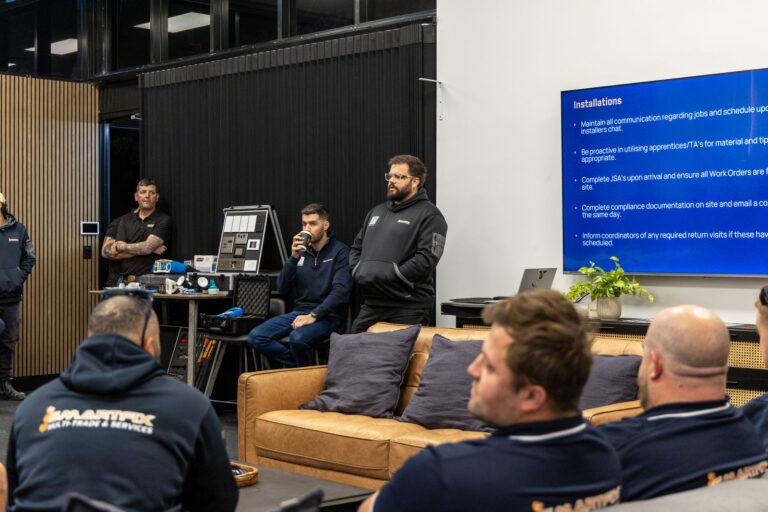
This is the second half of the hiring and team workshop I ran for Hypotential members in October. The first half, finding and interviewing the right person, is in how to hire good tradies. This one is about the first 90 days and what keeps people once they’re good.
What should a new starter’s first 90 days look like?
The first 90 days decide whether they stay, so don’t leave the first week to chance. Here’s the plan I’d write down for every new starter:
- Before day 1: contract signed. Uniform, tools and vehicle sorted. They know where to be, when, and who to ask.
- Day 1: meet the team. Walk them through how you do things. Give them one person to stick with.
- Week 1: shadow someone good. Give them an easy win early. Check in at the end of each day.
- Day 30: sit down together. What’s working, what’s not, and is it clear what they need to do?
- Day 90: formal review. Confirm they’re the right fit, or have the harder conversation now.
Put the day 30 and day 90 dates in your diary on their first day. If they’re not booked, they don’t happen. I’ve learnt that the hard way.
Check your award, contract and probation terms with an HR advisor or the Fair Work Ombudsman. This is general information from my experience, not legal or HR advice.
What does day one look like at Smartfix?
On day one we onboard, go through some documentation and do a brief run-through of how our CRM works. Then we pair them up with one of our long-term staff members, so they can go out into the field and see how it’s all done in practice.
That pairing matters more than anything in the paperwork. A new tradie learns your standards by watching someone who already does it your way. It also gives them one person to ask the dumb questions to, so they’re not ringing you ten times a day.
It only works if the way you do things is written down somewhere. If your systems live in your head, the new starter has to learn by guessing. I wrote about the basics in what systems a residential trade business actually needs, and my brother Fin talks through how we built our SOPs on the podcast.
Why do good tradies leave?
Money matters. It’s usually not the only reason. When I look back at the good people we lost, it was nearly always one of these:
- Nobody told them what they needed to do
- No feedback until something went wrong
- No path to more pay or responsibility
- They felt like a number, which usually comes from a lack of communication from managers
That last one got worse for us as Smartfix grew. At our peak we had 130+ staff and managers managing managers. The further a tradie was from someone who actually knew them, the easier it was for them to feel like nobody noticed. Today we’re about 30 staff and one office, and it’s much easier to keep good staff when everyone knows each other. That’s one reason I wrote about whether growing your trade business is always a good idea.
How do you keep good staff once they’re settled in?
Flip that list around and you’ve got the answer. None of it is expensive.
- A clear scope for the role. They know what they’re responsible for and what a good week looks like.
- A regular 15-minute check-in. How are things going, what’s getting in the way, what do you need from me.
- A visible next step. Lead hand, supervisor, a new ticket, more responsibility. Something they can work towards.
- Specific thanks when it’s earned. Name the job and what they did well. It goes a lot further than most people expect.
The check-in is the one most owners skip, because it feels like it can wait. That’s exactly how we lost people. If you only do one thing from this article to keep good staff, book a 15-minute chat with each of your team over the next fortnight.
What should you talk about in a staff check-in?
A check-in doesn’t need an agenda or a form. Fifteen minutes, somewhere you won’t get interrupted, phone face down. Keep it the same each time so they know what’s coming and can think about it beforehand.
These are the questions I’d keep coming back to:
- How are things going, on the job and outside it?
- What’s getting in the way of you doing a good job?
- Is there anything you need from me or the office?
- Is it clear what you need to do and how you’re going?
- Where do you want to be in a year or two?
Then do something with what they tell you. If they say the van stock is always short or the job notes are rubbish, fix it, and tell them you fixed it. Nothing kills a check-in faster than raising the same problem three times and watching nothing change.
Write a line or two of notes after each one. When you get to the day 90 review, or a pay conversation, you’ve got something real to go off, and the person can see you were actually listening. It also helps you spot a problem building before it turns into a resignation.
What should you do when a new hire isn’t working out?
Waiting rarely fixes it. It just makes the conversation harder, and your good people notice when someone gets away with it. I’ve had a hire who was late every day and went missing off jobs for hours, and the longer that went on, the worse the message to the rest of the team.
- Say it early. Raise it when you first notice, while it’s still small.
- Be specific. What happened, what they need to do instead, and by when.
- Follow up. Put the date in the diary and check in on it.
- Decide. If it’s still not working, make the call. Get HR advice first.
You need to make this happen. Don’t wait for it to sort itself out.
Where should you start this week?
Pick the step you skip most often. For most owners I talk to, it’s the check-ins.
- Write a first-week plan for your next new starter, so day one isn’t made up on the spot.
- Book a 15-minute check-in with each person on your team.
- Pick one person who’s doing well and tell them specifically what they did right.
- If there’s a problem you’ve been putting off, raise it this week.
If you’re still working out who to hire in the first place, start with what to fix before hiring more people.
The First 90 Days Checklist from the workshop is in the Hiring Toolkit inside Hypotential membership, along with the monthly workshops. Send me your first-week plan and I’ll give you feedback on it.
I work with owners across every trade, from sparkies and plumbers to builders and landscapers. If you want to see what that looks like for your trade, start with my trade business coaching pages.
FAQ