About this episode
The Grout Guy started as one man and a van. Today it has around 200 technicians across Australia, runs on Salesforce, and has AI agents closing about 40% of its email cases.
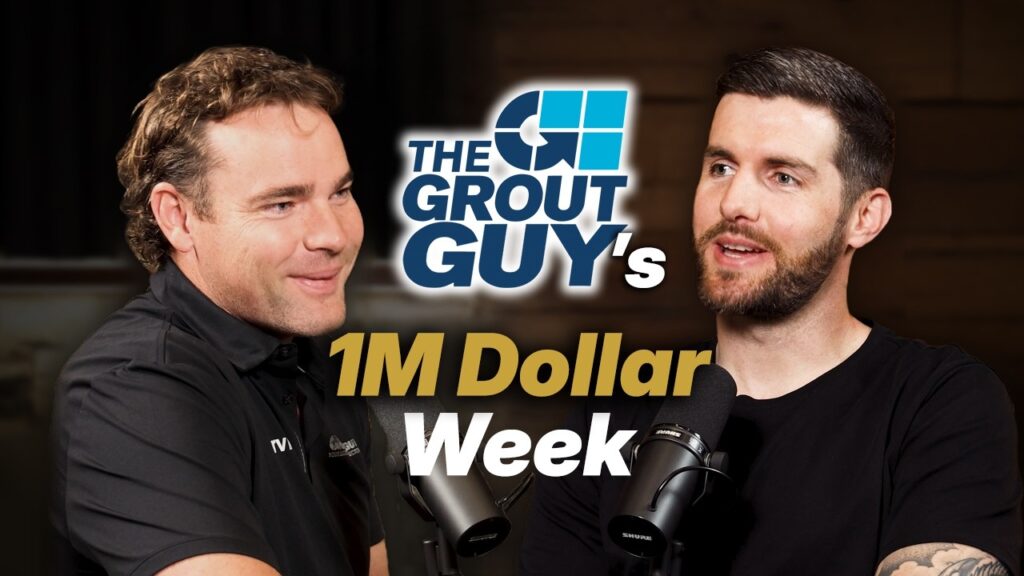
In Episode 29 of Unlocking Business, I sit down with Brad Young, founder of The Grout Guy and co-founder of Servly. We talk about running a growing trade business lean, tracking where every lead comes from, what an agency should really charge, and how Brad’s team trained AI agents that now read emails, process work orders and book jobs.
It runs just over two hours, and it’s one of the most practical conversations we’ve had on marketing, data and AI in a trade business.
Who is Brad Young?
Brad didn’t finish school. He spent a year playing ice hockey in Canada, came home with no money, and went to work with a family friend who regrouted showers under the name The Shower Man. About 18 months later he bought the business’s phone number, and by 19 he had taken the business over. It was one man and a van.
The name came from a night out with a friend. Brad was trying to explain what he did, said “we just take the grout out and put the grout back in”, and his mate told him he was the grout guy. He registered the name the next day. Today The Grout Guy has a training room in every state, around 200 technicians and a radio jingle a lot of people still can’t get out of their heads. Brad and his CTO have also turned the system they built into a second business, Servly.
Key takeaways from The Grout Guy story
1. Look through the windscreen, not the rearview mirror
Brad’s biggest lesson is that the windscreen is bigger than the rearview mirror. You’re always going to stuff up, and dwelling on it just keeps you stuck. When he and his business partner each thought the other had paid a large bill, the lesson they took from it was practical: the business could run a lot leaner on cash than they’d assumed. His advice to newer owners is the same. Keep swinging, because everyone gets it wrong early on.
2. Track every lead back to where it came from
The Grout Guy brought on a fractional CMO this year, and the questions changed. Where does each lead come from? Which channel converts better, which customers pay more, and which pay quicker? Lead source is captured automatically, then checked against a manual lead source field, so the data validates itself. Brad’s warning is that if a field relies on someone picking from a dropdown, you can’t trust it.
3. Let the data pick your customer
Everyone has a shower, so who do you target? When Brad’s team split tested Google Ads audiences, shoe lovers converted best. He calls it a stupid correlation, but the logic holds: people who spend on their interests tend to have more disposable income and look after their homes. His approach is to run two audiences or ad sets for a couple of weeks, keep the winner, and test it against something new.
4. Own your ad account and cap agency fees at 15%
Brad’s rule is that anything above about a 15% management fee on ad spend means negotiating or finding a new agency, and the fee should always be a separate line item. And own your Google Ads account outright. I compare it to wiring a house: if a customer later uses a different sparky, we can’t come back and rip out the wiring they paid for.
5. Don’t change your web address without a plan
I shared one of our own mistakes. Smartfix traded on smartfixelectrical.com.au for years, and when we changed to Team Smartfix our SEO dropped straight away. Brad watched The Grout Guy’s organic clicks slide for two years before an AI audit flagged it. They rebuilt the website so each state sits under one main site, and conversion went from about 6% to 19%.
6. Train AI with guardrails, then keep raising the bar
At The Grout Guy, an agent called Casey reads every incoming email and another called Walter turns work orders into jobs. When they started, accuracy was about 70%, and fixing its mistakes cost more time than it saved. The team kept adding guardrails until it reached 95%, and anything it isn’t confident about goes to a human. Brad says about 40% of email cases are now closed by Casey.
Speed to lead and the $15 bill behind 292 missed leads
Speed came up a lot. Brad measured The Grout Guy’s time from a new lead to a booked job at just under 90 minutes during office hours, and about five and a half hours including after hours. He’d love it to be nine minutes. We also compared notes on AI answering the phone after hours. In both businesses, a lot of callers hung up as soon as they realised it was AI.
Then I told the story of a third-party integration costing $15 a month that quietly stopped when we changed our credit card. It blocked every email enquiry from our website, and by our count we missed about 292 leads. When we fixed it, around 60 came through at once, and our AI assistant worked through them in real time.
“Just keep going. You’re going to stuff up in the beginning. Everyone does, and that’s okay.”
Brad Young, founder of The Grout Guy
What is Servly?
The Grout Guy moved from ServiceM8 to Salesforce nearly seven years ago, and Brad says it now runs lead capture, jobs and accounts receivable on one platform. Servly packages that setup, built by a trade business for trade businesses, so others can lift and shift it instead of starting from scratch. Brad says it suits businesses turning over about $5 million or more, and that moving across from ServiceM8 should be one of the simpler migrations because its fields are so rigid.
We also get into vehicle trackers and timesheets, onboarding built inside Salesforce, an AI CFO built on Claude and Xero, and how close The Grout Guy is to its first $1 million week. And Brad’s answer to how long a regrouted shower should last: longer than the house, as long as it’s done properly and you don’t attack it with harsh acids and scrubbing brushes.
Where to find The Grout Guy
Brad says LinkedIn is the best place to follow what the team is building.
- Website (The Grout Guy): thegroutguy.com.au
- Website (Servly): servly.au
- LinkedIn (Brad): Brad Young
More episodes you might like
- Stop Chasing the Newest AI Tool | Sam Fielding
- AI vs Automation, and Why Process and People Come First | Anthony Lawlor
- Building a Trade Business That Doesn’t Rely on the Owner | Peter Craft
Want your leads, data and systems working together in your own trade business? Work with me.
In this episode
- 00:00Cold open
- 00:39Meet Brad Young, The Grout Guy and Servly
- 02:09The windscreen is bigger than the rearview mirror
- 03:15The unpaid batch and running lean
- 05:53Is three months of cash in the bank realistic?
- 09:02An outrageous goal for the bottom line
- 10:09Hiring a fractional CMO and tracking lead sources
- 12:00Radio, the jingle and the name The Grout Guy
- 15:35Finding your ideal customer when everyone has a shower
- 20:26Clean data and lead source attribution
- 24:59SEO and two years of falling organic clicks
- 30:22Why Smartfix's rebrand killed its SEO
- 31:20Google Business Profile: one category or a profile per technician
- 36:30Melbourne traffic and paying for travel time
- 39:28Where the ad budget goes
- 41:50Agency fees: the 15% rule and owning your ad account
- 45:48You're going to stuff up, so keep swinging
- 46:30Letterbox flyers and growing up around his dad's airline
- 50:03Networking and the Filtered Homes lesson
- 56:28Radio creative and website conversion from 6% to 19%
- 59:35The ideal customer and a shorter sales cycle
- 1:02:11What Servly is and why Salesforce
- 1:06:35One system for leads, jobs and accounts
- 1:08:18AI agents that read emails and work orders
- 1:10:11AI quoting from job photos
- 1:13:38Testing an AI bot after hours
- 1:16:23Speed from lead to booked job
- 1:22:54Training the bot: guardrails and 95% accuracy
- 1:27:09AI now closes 40% of email cases
- 1:29:24The $15 integration behind 292 missed leads
- 1:33:38An AI CFO with Claude and Xero
- 1:37:22Built by a trade business, and the chase for a $1M week
- 1:41:00Vehicle trackers and timesheets
- 1:45:45Marketing spend from the high teens to single digits
- 1:49:48How Servly sells licences
- 1:51:42Moving from ServiceM8 to Servly
- 1:55:21Who Servly is for and what it costs
- 2:01:19Where to find Brad and the domain name story
- 2:05:17How long does a shower last?
Full transcript
Read the full transcriptAuto-generated from the episode, lightly edited for clarity
[00:00] Cold open
Kane: I upload all of my information from Xero, and that's done better than what any CFO has done for me previously.
Brad: Just keep going. You're going to stuff up. Everyone does, and that's okay.
Kane: We had smartfixelectrical.com.au for such a long time. Then we changed to Team Smartfix, and that killed our SEO straight away.
Brad: This is a stupid correlation, but we found out that shoe lovers converted the best.
Brad: When we got vehicle trackers put in six or seven years ago, that saved me millions and millions of dollars.
Brad: We haven't done a million dollar week yet, but we're close. It annoys me, because I'm like, can we just not have 15 guys sick this week? It will happen soon.
[00:39] Meet Brad Young, The Grout Guy and Servly
Kane: Hey, I'm Kane Tyler Smith, the founder and CEO of Smartfix and Hypotential. This is Unlocking Business, where we have real conversations around business, leadership, mindset and personal growth. If you've been getting value from these conversations, please take a second to like, subscribe and follow our channels. It helps us reach more people, bring on more guests and share more stories.
Kane: Today I'm joined by Brad Young, founder of The Grout Guy and co-founder of Servly. At 17, Brad came back from a year at an ice hockey academy in Canada with no money and took a job helping a family friend's small shower repair business, The Shower Man. By 19 he'd taken it over. At the time it was one man and a van. Today that business is The Grout Guy, Australia's largest shower regrouting specialist, with around 200 technicians across Australia and tens of thousands of jobs a year. The Grout Guy was on a keynote stage at Dreamforce this year, won a Salesforce customer success award, and now runs AI agents handling real jobs and real customer conversations. Brad and his CTO have since turned that system into a second business, Servly, to give other trade businesses the same setup. Thanks for coming on the podcast.
Brad: Thanks for having me. That was a very nice intro.
[02:09] The windscreen is bigger than the rearview mirror
Kane: You went from one man and a van at 19 to one of the biggest trade businesses in Australia. What's the biggest thing you've learned along the way?
Brad: There have been many small lessons. I was thinking about it on the way in, and what kept coming back to me was that the windscreen is bigger than the rearview mirror. You're always going to stuff up. Every now and then something goes wrong, and if you dwell on what's gone wrong, it's a vicious cycle. It's a very simple thing to say, don't dwell on your mistakes. But if you keep looking forward and push through, that's probably the best advice I've ever been given, and one I want to pass on to everyone else.
Kane: It's hard, because sometimes you get stuck in a rut, like if you lose a bit of money and you're trying to figure out how to get out of it.
[03:15] The unpaid batch and running lean
Brad: Absolutely. Some bill comes in that you weren't thinking about. I'll tell a story about Victoria. My business partner over there and I thought we'd paid the batch. It was a big batch payment one week, and we thought there was plenty of money still there, so we paid a dividend. A week or two later someone said, you haven't paid this bill. It was a few hundred grand. We could always put money back in, so it wasn't a terrible situation to be in. But from the business's point of view, we went, right, how lean can we run it now? And the lesson was that we can run a lot leaner than we thought. If you set yourself an outrageous goal, like can we run the business off a float of 50 grand, you find out.
Kane: When you say running it leaner, you mean the overheads to run the business?
Brad: It's just cash flow. We're really lucky. Our guys go to site and they get paid, so we get paid immediately, and we run 60 to 90 days with suppliers. We should always have a healthy cash balance, full stop. But when we made that silly mistake, I thought he'd paid it, he thought I'd paid it, no one had paid it, and it became a challenge. The cash balance went down to about 50k, in a state where we'll do about 15 million this year.
[05:53] Is three months of cash in the bank realistic?
Kane: How risky do you think that is? I've been hearing people say that if you ask AI, it'll tell you that you need three months of operating cash in the bank. That's ridiculous.
Brad: I've learned my lesson, I should say. That wasn't the first time either. I'm a bit of a slow learner on that front. It brings you back to your first question. It's always about persisting and getting through things. You make a mistake, you might make the same mistake twice, and hopefully you learn from it. Three months seems really safe in my mind, or conservative. I think our running cost at the moment is about 150k a week.
Kane: How are you going to have that much cash in the bank?
Brad: It's a crazy amount of money. Last month we were at about 96% of invoices paid, and that includes business accounts. We're strict. As soon as they come due, we're onto it. Trade businesses that go into people's houses expect to get paid straight away. If you're contracting for a builder or a bigger company, that's when you might want a larger float, because they can take their time to pay you. I'm sure you know people in the industry who've been burnt by builders stretching them out.
Kane: Then they go bankrupt and no one gets paid.
Brad: Exactly. So our goal this financial year is to build the cash balance up substantially while growing aggressively.
Kane: Usually it's one or the other.
Brad: It is, but that's the outrageous goal. Can we do it or not?
[09:02] An outrageous goal for the bottom line
Kane: What is your outrageous goal?
Brad: Last year our bottom line was in the teens as a percentage of turnover. We wanted that to be 20 plus for the six months to Christmas, then above 20% for the financial year, and above 25 the year after, which I think is doable. Especially with efficiencies, and how you can keep bringing them into the business and bringing overheads down. If you can run another five guys on the road without putting someone else in the office, you're saving money.
[10:09] Hiring a fractional CMO and tracking lead sources
Brad: From a marketing point of view, we brought on a CMO about four months ago. It's all the detail you have to do. Where do your leads come from? How much do you pay for this lead versus that lead, or this channel versus that channel? Which ones convert better, which ones pay you more, which ones pay you quicker? You put it all together and go, right, that's my ideal customer. They come from Google Ads, from that ad set, on this day of the week, and spend between 1,500 and 2,200 dollars. Understanding that side of the business was something I never knew. Jake, our fractional CMO, came along, shout out to Jake, and he just started asking questions. Then it's how do we target them better? Jake and Anthony, our CTO, nerd out on how we know what's coming in. Being able to look at a dashboard and go, right, this is the person we're going after, instead of just throwing money at traditional media. It's refining spend.
[12:00] Radio, the jingle and the name The Grout Guy
Kane: Do you do a lot on radio?
Brad: We do. Reach and brand awareness are still really important. We've got a jingle that worked really well for us. It embeds into people's brains. It's an earworm.
Kane: Can you sing it for us?
Brad: No.
Kane: I mention your jingle because it's stuck with me for something like 10 years. We take the old grout out, we put the new grout in. It's such a simple business, and it's in the name. How important do you think the name has been to your success, having what you do as the business name?
Brad: I think it makes it easier for the consumer. Let's go back 20 years. I didn't finish school. I went to play hockey in Canada, came home, tried to get a job and was useless at it. A family friend was regrouting showers. He was called The Shower Man, and I went out with him for about a year. On the first day he offered to sell me his phone number. About 18 months after that, I bought it. Anyway, The Shower Man was a good name, because it said we'll come and fix your shower. One night I was trying to explain to a friend what I did. I said, we just take the grout out and put the grout back in. And he said, you're the grout guy. It stuck with me, and the next day I went and registered it. A very naive 18-year-old going, this might be something in the future.
Kane: So that conversation came from you struggling to explain what The Shower Man did?
Brad: Exactly. It's just grout. That's the name of our weekly meeting, actually, Just Grout. Has it helped? People go, what does The Grout Guy do? Something to do with grout, obviously. I think it sparks a bit of interest in what we do.
[15:35] Finding your ideal customer when everyone has a shower
Kane: Going back to marketing and finding your ideal client. It's always been a tricky one for me, because with electrical and air con, anyone who lives in a house is in theory our customer. We struggle to get enough leads in to feed the business, and we've only got about 30 staff. You've got almost 200 across Australia, and everyone has a shower. How specific do you have to be when you're targeting that person?
Brad: Specific. It was two or three years ago, when we started looking at which channel converts better. Meta is arguably more top of funnel, more brand and awareness. Google Ads is bottom of funnel, people actively searching for someone to fix their grout. In Google Ads we had different audiences, and this is a stupid correlation, but shoe lovers converted the best out of all of them. A lot of it is trial and error with agencies. We've never had it in house. I did it myself years ago, and it's fairly simple if you're starting out. Keep split testing. This audience against that audience, or this ad set against that ad set. Run it for two weeks, see which one performs better, keep that one and test it against something else. It's a constant refinement of honing in on the right customer.
Kane: So instead of saying I'm targeting 30 to 40-year-old women in this area, you look at the data. If they're not spending with you and not converting, it doesn't matter who you think you want to target. Which leads to the question, how important is data?
Brad: Huge. Staying on shoe lovers: if you love shoes, you probably spend money on shoes, so your disposable income is probably higher than the median, and you're probably going to look after your grout more. It could be the same with people who like cars, or fishing. Fishing's expensive. It's lining up people's habits and building profiles. If I live in Mandurah and it gets hot in summer, I'm probably just going to call someone to fix my air con. In some other areas, people might not spend as quickly. And then interests differ. People near the coast might like surfing or fishing more than people who like dirt bikes. You can refine it forever.
[20:26] Clean data and lead source attribution
Kane: And to do any of that, you need data.
Brad: Yes. Rubbish in, rubbish out. Especially if someone has to click something manually, you can't trust it at all. If your admin staff are clicking through and don't get an answer, it's going to be the first option every time. So we capture the lead source automatically, then we capture lead source detail, which is a manual step, and if they marry up, we know it's solid. We're validating data within our own data set. Someone might say, I first saw you on Facebook, but then they clicked through on a Google ad. Where do you attribute it? It's really hard. Or you just leave those out of the data set. However you do it, stay consistent, and build a clean enough data set that you get decent answers out of it.
Kane: A common issue for us is that pretty much all our marketing spend is on Google Ads, but our system says a lot of customers are repeat customers. They've used us before, but this time they've just Googled it again, not searched for us specifically. So we're paying for that lead again, and in theory it should be attributed to Google.
Brad: It's a common one, and I'm not surprised, with Google Ads being bottom of funnel. Then what does top of funnel look like? Is there a big branding campaign? It's having the faith to put money into a radio or TV campaign, but with a hook that's going to work. No one remembers the first four ads we had on Nova. They were just ads. Then the jingle, which you can sing to the Hokey Pokey. We had to change it, because the people who own the song wanted money for it. Every now and then I see someone on a Facebook community page say, I need a grout guy to come and regrout my shower. That's branding in itself. People tag The Grout Guy. It's a powerful thing. And there's lifetime value. The higher you can get the lifetime value of a customer, the lower you can push your advertising spend, and it all adds to the bottom line.
[24:59] SEO and two years of falling organic clicks
Kane: And from an SEO point of view, having the guy's business name?
Brad: I think that works well. The SEO side is hugely important. About 10 years ago, a friend of mine who had a bathroom renovation company told me he was spending five grand a month on SEO. I fell off my chair. But it was the only advertising he did, and he was properly busy, starting four bathrooms a week. The SEO just builds and builds. Someone searches bathroom renovation in their suburb and he kept showing up.
Brad: We had a big marketing shift earlier this year, off the back of AI being able to audit everything. Looping back to data, if it's even half neat, it becomes super powerful, because you can go back and see what's performing and what's not. We saw our organic website clicks slowly trending down over two years. I didn't put any importance on SEO at the time, so I wasn't pushing it. We were spending big on advertising and very little on SEO, and it didn't make sense. I was naive. Then you start to understand how it works as a whole funnel. Build consistency, which is what Jake keeps hounding me about. For us, leads fall off when credit cards are due and school goes back after Christmas. Maybe 15%, but we run it really tight. So we want that consistency and the trend line moving upwards.
Kane: Have you changed what you spend on SEO?
Brad: Yes. It used to be about 600 dollars a city, and now we spend about four or five grand a month. We also have a new website. Previously we had Grout Guy Perth, and then we just tacked on Victoria and New South Wales as we expanded. Now it's a hub and spoke idea: The Grout Guy, then WA, Victoria, New South Wales, with landing pages off those. It's all the same site, just structured differently. I'm not an expert, so I hand it to the people who are.
[30:22] Why Smartfix's rebrand killed its SEO
Kane: One of the huge things we came across when we started doing multiple trades: we had smartfixelectrical.com.au for a long time. Then we changed to Team Smartfix, and that killed our SEO straight away. I'm not an expert in websites either, but from what I understand, we basically had to start again with a new domain. Then we had loads of conversations about whether to have a Smartfix aircon website, a Smartfix plumbing website, a carpentry one. There are pros and cons either way. We decided to keep everything on one website. But from an SEO point of view, it was terrible. If someone typed electrician near me, we wouldn't pop up, because Google and AI look at us as doing everything rather than just that one thing.
[31:20] Google Business Profile: one category or a profile per technician
Kane: Same with our Google Business Profiles. We have two, one up here and one in the city, and you can only have one primary category. So we had electrical, and everything else sat under that, and we weren't popping up for anything else. We considered a Google Business Profile and website for every trade, and then we were told we'd need to be more specific by area too. That's way too difficult, because you have to work on Google reviews for each profile and manage the posting. It got too complicated, and that was probably part of why we went back to electrical and air con only.
Brad: We haven't done it yet, but it's on the road map for every single technician on the road to end up with their own Google Business Profile. We're not 100% on it yet. So if John from Clarkson does a job, there's a The Grout Guy Clarkson profile that's his. The review request for each job he does gets sent to that profile, so every job near his house builds it up. Once it's set up, it's all automated. I'm excited to see if it makes a difference. Being local should still be significant with AI search.
Kane: Would you have to have that person's address on the profile? You can have a profile with no address, but that looks a bit dodgy and defeats the purpose.
Brad: Exactly. I did one recently for a house around the corner here and got it verified without the postcard.
Kane: When I registered this building for the new business, it was a nightmare. I had to film the street sign from the street without stopping, walk up to the door and the sign, unlock it, go inside and film a document with the address and business name.
Brad: I had to do that at home. Maybe it's because there were existing businesses at the address. When we bought our current place, there were nine tenants in the building.
Kane: I think the strategy would work. My only thought is staff turnover.
Brad: Then it's retention. If the profile's poor, the staff member's probably not great either. But it's also an incentive for them, and for us to look after them more. We'll pilot it with a few to begin with, and it would be a three or six month thing before a new technician gets one. It solidifies that area.
[36:30] Melbourne traffic and paying for travel time
Brad: Talking about areas, getting from one side of the bay to the other in Melbourne is a nightmare. The north and the west of Melbourne are going gangbusters for us at the moment. All the leads are there, and we haven't changed anything. We've got nine sales guys in Melbourne, and about four of them live down the southeast, so it's a hike to get north.
Kane: What, like an hour?
Brad: Easy. With traffic, it can be two and a half. I once went from South Melbourne to Kew, probably five kilometres as the crow flies, and it took me an hour.
Kane: Does that affect who you can hire? And travel pay, depending on your scheduling, if you're sending someone two hours in the morning?
Brad: It does. For everyone who's mobile, sales or crew on the road, the first half hour of travel to and from work is on them. Everyone has to commute to work somehow, so half an hour each way is fair. Anything over that, they're on the clock.
Kane: I think we do the exact same.
Brad: So scheduling and route optimisation all come into it. It's a huge rabbit hole, but extremely powerful.
[39:28] Where the ad budget goes
Kane: Going back to marketing spend, how much of it is on Google Ads?
Brad: The figure I showed you the other day was only a couple of months of Google and about three weeks of Meta. We spend across AdWords, Meta, paid TikTok ads, and we've just started on AI. Radio is a constant. Radio is more powerful than TV now, because no one watches TV anymore. YouTube is definitely top of funnel. Throw it at the wall and see what sticks.
Kane: Is that Performance Max?
Brad: Performance Max is a type of campaign through AdWords. We did it, and the data says there's not much difference. Does it work for home trade businesses? Maybe not as well as the hype said.
Kane: We did it for a while and it was horrendous, and then they optimised it and it got better.
Brad: I think if you're running normal campaigns and keeping an eye on them, they were doing just as well, if not a lot better, than an optimised Performance Max campaign. Google is a business, and we have to remember that. All these platforms are businesses. They want you to spend as much money as possible.
[41:50] Agency fees: the 15% rule and owning your ad account
Kane: And agencies charge a percentage of what you spend.
Brad: Don't get me started. A word of warning for everyone out there: never commit to a spend without having the management margin as a separate line item, so you know what percentage of spend it is. There are hidden profits people try to squeeze in, and it's a nasty way of doing business.
Kane: Most trades, and I don't want to speak for everyone, aren't the smartest bunch when it comes to that side of things. A lot of people get taken advantage of by agencies.
Brad: And tradies are very trusting people. You go into someone's house and they trust you, so you trust them too. If you've done that your whole life, that's how you do business. Then someone says you need to spend 20 grand a month, they spend 10 on ads and put 10 in their pocket. That's an extreme example, but people are getting burnt like that for sure. Anything above about 15% for a management fee, find a new agency or negotiate it.
Kane: What advice would you give trades early in business? It took us eight or nine years to find a freelancer, Jeremy, who runs our ads, and before that we had no choice but to go to big agencies.
Brad: I think the 15% rule is pretty good. Spend a thousand dollars on ads, don't pay more than 150 for management, and have it as a separate line item. And own the account. Own your Google Ads account.
Kane: That's number one. I've come across people where the agency builds the account, and when they move on, the agency says that's all our data, you lose the account.
Brad: That should be illegal. Who paid for the data?
Kane: My analogy is if we wire your house and maintain it, and you then use another sparky, we can't come and rip out all the wiring you paid for.
Brad: That's a great analogy. Six months ago I went through all of this. We'd been running different ad accounts for different areas, and who knows why. You don't know what you don't know.
[45:48] You're going to stuff up, so keep swinging
Brad: Windscreen's bigger than the rearview. Just keep going. You're going to stuff up in the beginning. Everyone does, and that's okay.
Kane: Do you ever stop stuffing up?
Brad: No. Of course not. And there's nothing wrong with that. Steven Bartlett talks about it really well: swings of the bat. If you keep swinging the bat, you're going to hit the ball one day.
[46:30] Letterbox flyers and growing up around his dad's airline
Brad: Early days, advertise and get your name out there however you can. In my early 20s I went to the Gold Coast, and it was just me on my own, so I needed regrouting work over there. We printed some flyers at Officeworks and walked around the wealthier suburbs putting them in letterboxes. We got enough work for about a year from that, and that's all I did. One of those flyers is still on a magnet on my toolbox at home. I probably learned that from my old man. He still has an old street sign with his business name on it somewhere in his shed.
Kane: What did your old man do?
Brad: He had an air charter business, a little airline. It did a lot of FIFO work and it's still going. He was a farmer, loved flying, became a pilot and got stuck into it. It was a pretty good upbringing. Talk about cash flow. I remember something went wrong with one of the planes, a maintenance issue, and it was a million dollars to fix, 30 years ago. That was a very early lesson about cash flow. I don't know if the three months rule applies to airlines.
Kane: Did you learn a lot about business from him?
Brad: By association. He's not one to sit you down and tell you to do this or that, but just being around those people. Everyone talks about getting in the room and rubbing shoulders with successful people, and there's a lot to that.
[50:03] Networking and the Filtered Homes lesson
Kane: Do you agree that proximity is power? Do you do a lot of networking?
Brad: I wouldn't say a lot, but I don't turn it down. Julia said I should meet Kane, and I already knew who you were because I follow you on LinkedIn. This was when we had Filtered Homes, a water filtration business. That was a good lesson in business. We ran it for a little while, and all we did was lose money, only because of the advertising dollars we didn't make back.
Brad: Going back to your question about starting out: get a simple job management system from day one, and capture the data. If you grow and move to another system, all that data can come across, and it's better structured than any spreadsheet or diary you're going to keep.
Kane: How did you get into Filtered Homes?
Brad: We bought a glass kettle at home, and you could see the sediment in the water. I had to fix the water. So I looked into it, and the Perth tradie world is pretty small. You can figure out what the products cost and what people are charging, and there were big margins. In the couple of months we actually made money, the margins were really good. Then we went after it harder, and we just weren't set up for it. That's the lesson: build the capacity before you need it. We had all these leads come in and not enough people to install. And speed to lead. If a lead comes in, get onto it. If you let it sit for two or three days, they've already had it done by someone else.
[56:28] Radio creative and website conversion from 6% to 19%
Kane: You still do a lot of radio. Do you still run the same jingle, or different ads?
Brad: We ran a newer campaign. The creative was great and the ads were really well done, but we didn't take it to market as well as we could have, and the jingle wasn't really in it. People didn't associate it with The Grout Guy. So we've made adjustments and we're revisiting it, and looking at new creatives. Typically our ads have been a bloke taking some grout out, putting some grout in, and it's sparkling. It is just grout. That's all we do. Maybe the jingle does the job.
Kane: When we did radio for a while, we were trying to work out how to make a jingle like yours. But we don't have the name, and we do so many different things, even just in electrical and air con. You have to choose one, like an air con ad for summer.
Brad: Marketing, calls to action and conversion optimisation need constant attention. Our website now isn't massively different from what it was. It's still very much The Grout Guy. But conversion this year has gone to 19%, against about 6% on the old site. So traffic is down, but leads are up.
Kane: So if you get traffic back up, you'll be sweet.
Brad: Get traffic up and leads go up. That's what we're pushing for.
[59:35] The ideal customer and a shorter sales cycle
Brad: Who's our ideal customer? Someone who knows what they want and doesn't drag their feet. The shorter you can make the sales cycle, the better. A backlog of millions of dollars feels warm and fuzzy, but people are waiting for work. We don't take deposits. We never have and we never will. But the longer people wait, the more drop-off there is. If you can shorten the sales cycle and employ more guys, you can still have a million-dollar backlog, but instead of three weeks it's three days or a week.
Kane: Which makes it scalable, because then you find more guys.
Brad: Exactly. Get more guys on and put them in the training room. We've got a training room in every state. Investing in training our people was a huge thing for us. Back in the day, people were basically doing their trials on customers' showers, and if they stuffed it up, you had to fix it. Get to a marble shower and you'd be watching them all day.
[1:02:11] What Servly is and why Salesforce
Kane: Let's talk about Servly. Systems, data, everything like that. What is Servly?
Brad: Servly is our system. It's almost a product, but not quite. Nearly seven years ago The Grout Guy went from ServiceM8 to Salesforce. During COVID, JobKeeper money was pouring into the account, and I thought, I can buy a fast car, or do something with the business that helps it make more money. It would have been a waste to throw it at something that wasn't going to help me build a bigger business. So we looked at how to get the biggest and best. We looked at Simpro and AroFlo at the time. When a rep came out and put his iPad down, there was a Salesforce page open. A lot of these job management platforms are Salesforce customers themselves. So I thought, right, we're going to Salesforce. I added it up the other day, and we've spent about four million dollars on Salesforce over about six years, with development, licensing and everything else. For a huge company that's not even a discovery phase, but for The Grout Guy, or any trade business, it's a huge amount of cash.
Brad: We use their field service product, and it's better than anything else I've seen. CRM, lead capture through to jobs and accounts receivable, all sitting on one platform. That's what Servly is. We lift and shift that into John's Plumbing, or whoever it may be. We have a contract with Salesforce through Servly that lets us procure licences, plus an implementation or accelerator package. We've got experience going from ServiceM8 to Salesforce. I'm not knocking ServiceM8, because I love it. But as soon as you start growing, you're just pedalling to get through. We're mapping fields from ServiceM8 now, and it's actually going to be one of the simpler ones for us, because it's quite rigid. You can't do many custom fields. Salesforce you can customise as much as you like, which is basically what we've done. We've customised it for tradies.
[1:06:35] One system for leads, jobs and accounts
Brad: So how do you go from three different systems, a CRM in front of ServiceM8, then Xero or Deputy for timesheets, to one system where no one has to look at anything else? We don't even look at Gmail. Every email comes into Salesforce as a case. The office team don't go out of it at all. It's taken us a while, but we've built something we're really proud of, so we asked, how do we take it to market? We built lead capture, verification and a booking agent on Agentforce, which is Salesforce's AI. It's on our website. It's an AI bot you can talk to, and you can book in a quote with no human contact.
Kane: And that actually schedules it into the system?
Brad: Scheduling done, no human contact. I had Salesforce engineers sitting on our calls looking at what we'd done. It was a little grout company in Landsdale. There were a few pinch-me moments.
[1:08:18] AI agents that read emails and work orders
Brad: Walter is another one. Work order processing. Any tradie out there gets a lot of work orders, and someone needs to do the data entry into their own system. We name our agents. Casey reads all the emails. If Casey finds it's a work order, a quote request or a work order request, Walter takes over and puts it into the system, ready to book in. It'll update an account or add a new job to the account.
Brad: The next step is outreach. The scenario we want: our business development manager goes into a real estate agency, talking to the senior property manager. The property manager says, we need some regrouting done, and sends the request through. Walter reads it, sees John's the tenant, and sends John a text: your real estate agent says your shower's leaking and we need to come and quote, click this link and book in a time. While the property manager and our BDM are still having a coffee, the tenant has booked it in. That's stage one, coming early next year, hopefully.
[1:10:11] AI quoting from job photos
Brad: On the back of that, there's an app we use for our photos that's native on Salesforce. It reads all the photos we ever take: how many tiles, what condition the grout's in, is it dirty, are there cracked tiles, is there a shower screen, is there a hob, is it a pan and tiles. Then it says, that typical shower costs X and that one costs Y. The next stage, and I'm really scared about this because it's going to get it wrong once or twice, is the tenant gets a take-a-photo link instead of a booking link. Click, click, click, photos of the shower. The property manager gets a quote saying this shower typically costs between this and this. Accept. Then John gets a text: we've got approval to do the work, book it in. All while they're still having a coffee.
Kane: Without the sales rep going to site.
Brad: Without anyone touching anything. For traditional business to consumer work, I don't love the idea of sending in photos of your own house. I like having a salesperson come and have a look. Our kids may think differently.
Kane: I wonder if you'd give people the option, because we get it sometimes where people don't want us to come out, maybe because they're busy.
Brad: We do phone calls now, and we definitely give them the option, but I still want to talk to them.
Kane: That's the sales process. Build rapport, go through the process.
Brad: Exactly. All these guys say they can sell you something with AI outbound calls. No one's done it with any meaningful impact or accuracy yet. It's getting close, where the latency is like a real conversation, but it takes a lot of power and smarts from the AI to get context and understand what someone's feeling.
[1:13:38] Testing an AI bot after hours
Kane: The emotion. A bit of silence throws people off, and they say, are you there? We tested an AI bot after hours, because we don't do after hours work anymore. The customer would say hello, and as soon as they knew it was AI, a lot of people just hung up. So we went back to an old school voicemail: we're closed now, leave your info and we'll call you back first thing tomorrow.
Brad: We've done exactly that, but with IVR options. They can leave a voicemail after hours, and the voicemail creates a case in Salesforce. We did have an AI after hours and took it off for the exact same reason. Now the idea is IVR, then the option to talk to an AI to book something or manage your booking. If someone needs to cancel Monday morning's appointment on a Sunday night, they can do that, which is smart, because then our guys don't drive there for nothing.
Kane: And customers probably don't want to speak to you, because they find it awkward.
Brad: Exactly, and that's fine. It gives us the opportunity to use our ASAP list, people like retirees who say come and fix my shower whenever you're free. If someone cancels at five on a Sunday night, we text everyone on the ASAP list in that area: we've got a spot at 7am tomorrow, do you want it? Yes. Booked in. The technician wouldn't know any different. It's efficiency, keeping customer data safe, and keeping business processes running smoothly. I guarantee anyone who has a real go at AI will have headaches and have to roll something back. Early adopters always will. But you build the foundations and it just gets smarter.
[1:16:23] Speed from lead to booked job
Brad: I was looking last night at how quickly a lead gets created to how quickly we book it in for a job. Including outside office hours, it's about five and a half hours. Not including outside office hours, it's just under 90 minutes. How cool would it be if that was nine minutes? I'm the most impatient person there is. If my air con's broken, just make me a time and book it in.
Kane: That's what we're trying to figure out, because most of our leads are phone calls, high intent and urgent. Some people SMS through our website bot and some email. I want our team to call them as soon as possible, but some customers get annoyed and say, I emailed you, email me back. Our process now is that we call back within five minutes, and if someone calls at 10:30am, we can usually get someone there within an hour or two to quote. We give them a quote on site, and if they want to book it in, we take a deposit, the opposite to you. And we can usually do the job the next day.
Brad: That's super fast.
Kane: People don't understand how fast we can do it. They expect a two or three day turnaround. When we call and say we can get out today, they're surprised.
Brad: Can you have channels? If they text, a text goes back: we can be there in the next 90 minutes, or would morning or afternoon be better?
Kane: My concern is the drop-off. Our website chat is SMS, and it has an AI bot that handles it up to a point. People put a request through, the bot responds, and then they drop off, and I'm like, we need to call them. This time of year is super quiet for us. It's not too hot, not too cold, nothing's urgent, so we need every lead. We chase them down until we book it in, and if they don't need anyone, fair enough. When we push like that, the conversion rate drops from about 60% to 50% across the board. But we recently won a commercial job worth 30 or 40k, which we don't normally do, just because we chased it harder than we normally would.
Brad: Trades: speed to lead, speed to quote, speed to job. Massive. I don't think many people send an email and want a reply tomorrow. Maybe it's education, or maybe it's just the world we're moving into with AI and how quickly we can access everything.
Kane: I think it comes down to trust, and I don't trust it enough yet. Yesterday I booked a work event. I got an automated email with a payment link for the deposit. We'd had an issue at the same venue where we turned up and they didn't have the booking. So after paying, I was going to call and check, but I got an automated confirmation that the payment had been received, and that helped my trust issue. So with the system you've built, it all comes down to the training of that bot. I'm a tradie, and I don't know if ours is trained well enough.
[1:22:54] Training the bot: guardrails and 95% accuracy
Brad: When we first moved from ServiceM8 to Salesforce, the minimum viable product was just to use it the same way we used ServiceM8. Let's not make it any smarter than it needs to be yet. Then you keep iterating, from what it was five years ago to what it is now. Training bots is putting guardrails in, like policies. Bunnings now sells work boots and shorts, and we had one bloke who thought it was okay to buy himself a new wardrobe there. The card is there for emergencies, like when you're miles from anywhere and run out of white silicone. So training AI bots is guardrails, guardrails, guardrails, and building on them. You get to an accuracy rate of 95% or greater, and you'll still have edge cases. It will make mistakes, but they'll be based on things you or I haven't thought of yet, which is fine.
Kane: Is that the accuracy rate you have now, 95%?
Brad: We started at about 70, and that was too low. It was costing us more time to fix its mistakes than it was saving us. That's fine. We're early adopters and we want to build a good foundation, because without it we can't get to the real estate scenario I described. So we let it make mistakes at 70%, look at those mistakes, build in the next couple of guardrails or policies to get it to 75, then 80, 85, 90. If it doesn't think it's more than 95% accurate, it won't push it through. A human backs it up. For the simple ones, it's 100%: it closes replies like a thumbs up or okay, the ones you'd otherwise have to click into just to close.
[1:27:09] AI now closes 40% of email cases
Kane: I wonder what the human accuracy rate would be.
Brad: Not 95%. We're at about 40% of email cases now being closed by Casey, which is phenomenal. Last year, and even a few months ago, every one of those was manual. Salesforce's first AI agent builder, which is now the legacy builder, was complicated. Now you just prompt it, hook in the fields and tell it where to go. Going from the legacy builder to the new builder made it much stronger almost straight away. As tech gets better, you migrate and keep iterating. Is there an enormous gap right now between us and the next regrouting company? Not yet. But as the foundation gets stronger and all those edge cases are included, the efficiency goes through the roof. If there are 10 people in the office, you can take 10 calls or answer 10 emails at a time. With an agent, a million emails can come in and it's done. That scale is super exciting.
[1:29:24] The $15 integration behind 292 missed leads
Kane: We found a huge issue this week. We cancelled our credit card about a month and a half ago to get a new one and figure out what we were actually paying for. There was one third-party integration, Postmark, about $15 a month, that we didn't update. That basically stopped every email enquiry from our website coming through. From our numbers, it was about 292 leads we'd missed. When we fixed it, about 60 came through instantly, and our AI bot dealt with them. I was watching it in real time, boom, boom, boom, and when it got to a point it couldn't handle, it escalated. We were going to sit there and call all of them to say, sorry we missed your lead, our system was down, do you still need us? Most of them had already been sorted, because speed goes out the window. But we got some booked in. Without the AI bot, that would have been hours.
Brad: That's insane. My brain goes to: someone says, my split system's broken, here's a photo. AI reads it, it's a 6kW system, typically priced between X and Y, if you're happy, pay a deposit and book it in. That's a Smartfix 2027 thing, I reckon.
Kane: It's tricky, because we try to go to site. There are so many variables. Is it compliant? Is there a safety switch? People go to a store, look at the air cons and are told someone can install it for 600 dollars. Then you go to site and there's no isolator, no safety switch, it's not back to back, it's five metres through the roof. People want a price on the phone, and now we say it starts from 1,400 dollars if it's as straightforward as possible. But we want to go there and go through the sales process. I think the human part has to stay for at least five or 10 years.
Brad: There's definitely a human element for the tricky cases in trades. But never say never. These days there are very few things I don't put through AI, even reading contracts.
Kane: It knows me better than I know me.
Brad: And it doesn't forget anything. I'm super forgetful.
[1:33:38] An AI CFO with Claude and Xero
Kane: You probably get spammed on LinkedIn the same as me by CFOs, CMOs, all these things. I literally have an agent called AI CFO. I'm no tech guy, but I upload all my information from Xero, and it's done better than any CFO has done for me previously.
Brad: Claude and Xero have a connector. It's easy.
Kane: That's the next level for me, integrating it so it reads the data without me putting it in.
Brad: The native Xero connector only allows you to connect one Xero file. If you've got more than one, Windsor.ai lets you connect as many as you want, plus Google Ads, Meta, TikTok, hundreds of connections. Windsor sits between Claude and the platforms that don't have a native connection. So I go to the Xero account for The Grout Guy Victoria and ask for the P&L analysis for the last few months.
Kane: That's what you showed me the other day on your phone.
Brad: Just type it in. Done. Claude and Salesforce now have a native connector too, after Salesforce and Anthropic did a big deal together. When you're dealing with customer data, I trust that a lot more than letting a third party into my Salesforce. I would not let that happen. We made a bit of noise on LinkedIn lately about our Salesforce setup, and we get peppered with offers of a free Salesforce health check. No thanks.
Kane: Because the data you have would be valuable.
Brad: The data, and just how we've configured it. It's not rocket science, but it's tested.
[1:37:22] Built by a trade business, and the chase for a $1M week
Brad: Going back to Servly, it's a configuration and setup of a CRM, job management and accounts receivable system for trade businesses, built by a trade business.
Kane: And a decent size trade business, not one that built it to five million and sold.
Brad: Like I said in the intro, we haven't done a million dollar week yet, but we're close. We've been tinkering around a million dollar week for months now. It annoys me, because most weeks now we've got more than a million dollars booked in. It just doesn't quite happen. It will happen soon. Speak what you want.
Brad: So we build the business and ask, how quickly and how big can we scale it? On the eastern seaboard, we could double the business tomorrow without affecting our backlog, if we doubled the guys on the road. The biggest issue is getting guys, number one. Then the management and the onboarding. One of the women in our office is moving into an HR role, which I'm really excited about. She's a stickler for detail, which you need in HR, and we're going to have our onboarding sorted.
Brad: Do you use Employment Hero? It's good for certain things, but it's just another system, another app. So we built our own, called My Work, an app on Salesforce. It's part of Servly, part of what we can lift and shift. An onboarding form a tradie can understand. We're building it out for onboarding and offboarding, and integrating timesheets and payroll, so the guys don't need the Xero Me app on their phone as well. At the end of the day, they end their last job, and that's their timesheet. They shouldn't have to go in and do it. If they want to adjust it, they can, with a reason. There's so much tech at our fingertips, and I feel like we're scratching the surface.
[1:41:00] Vehicle trackers and timesheets
Kane: One question on clocking on and off. The issue we have with ServiceM8 is the guys just don't do it themselves. It's supposed to do it automatically, but if location's off, it doesn't work.
Brad: We have vehicle trackers, which are so accurate it's not funny.
Kane: I saw a friend yesterday who uses Sam, who's been on the podcast and builds AI systems. He says they can integrate the tracking system with ServiceM8, so the AI shrinks and expands the ServiceM8 job to exactly when they arrived and left, based on the vehicle tracker, as a failsafe, because the guys don't use the app properly. That would save us so much money and time.
Brad: It's timesheet theft, basically. Guys round up and round down. When we put vehicle trackers in six or seven years ago, that saved me millions and millions of dollars in incorrect timesheets. I get it to a degree, but then it's culture and how you lead people. There's always going to be the 5% who cheat the system, no matter how good you make everything else, so you have to have it in place for them anyway.
Kane: Our guys used to have to write their timesheets down, and it was annoying for them. Now it's, don't worry about it.
Brad: It's all done to the minute. If you arrive at the wholesaler, there's a geofence there and it pings it for us. You don't have to tell us you're going to the wholesaler. We know you're there.
Kane: Do you have trackers integrated with Salesforce?
Brad: We have integrated them, yes. All of the tracker data is sitting in Salesforce as a resource against the worker. Marrying up addresses is like a spreadsheet, and AI can do that. Which brings it back to data. If the data's all there, you can ask a question and get the answer. You just have to make sure you know how it's interpreted, because it can go off on tangents pretty quickly.
Kane: I'll go down a rabbit hole, give up, turn it off and go to bed. Then the next morning I go, hang on, I should have just asked it this, and it works.
[1:45:45] Marketing spend from the high teens to single digits
Brad: I'm really big on marketing at the moment because it's front of mind. Our marketing spend was in the high teens as a percentage of turnover, and we've got it down to single digits.
Kane: That's crazy.
Brad: That's where our bottom line target is coming from. If we can hold it there, we'll get there.
Kane: That's all about efficiency and optimisation. I keep hearing that everyone's trying to over-optimise these days, and in some senses yes, but getting advertising spend down to single digits is insane.
Brad: Instead of throwing everything at the wall to see what sticks, you only want to throw the bit that sticks, because that's your money. Become a sniper instead of walking around with a shotgun, and pick off the ones you want. There's so much to be said for getting that right early, and then having the capacity to deal with what's coming. If you get it right, you'll be so busy. For anyone in maintenance or home improvements, I think that market is going to boom over the next few years.
[1:49:48] How Servly sells licences
Kane: Is there anything we haven't spoken about? What's your plan with Servly? It's a software as a service business?
Brad: Yes, absolutely. We're an outsourced service provider with Salesforce. We buy licences from Salesforce in bulk at good rates, and we can package them however we want. If John's Plumbing goes to Salesforce with 50 guys on the road and 20 people in the office, they might need about 100 licences, some integration licences and admin licences. Say that's 100 grand a year, paid annually up front, just for access. Then you have to configure it all yourself, and that's a lot of work. The best and worst thing about Salesforce is that it's so configurable. If you get it wrong at the beginning, you're in trouble. We've done discoveries for companies with existing setups and told them to throw it out and start again. The consulting company had no idea what they were doing. That's what we're trying to solve for the trade industry. You hear stories about people getting frustrated with other platforms, and the common denominator is that they're all customers of Salesforce.
Kane: Is it ready now?
Brad: It's ready now.
[1:51:42] Moving from ServiceM8 to Servly
Brad: Say a business comes along and says, get us on Servly. The first thing we'd do is a discovery of how you use your current system. That would take five minutes, because I imagine it's the same as how we used to do it. Then we'd build a migration tool for ServiceM8, mapping the fields from A to B, because that's where it needs to be 100% accurate. Once it's mapped, it's click a button. The automations are where the curveballs come, the third-party ones like adjusting the job time based on trackers.
Kane: And if you solve one of those for The Grout Guy, you update Servly and everyone potentially gets access to that solved problem.
Brad: Yes. All the things we've built, we make available to people. Why wouldn't we? We'll make a decent clip on licensing, so do we need to make money on implementation? No. Traditionally Salesforce makes the margin on licensing and hands you off to a partner, who makes the money on configuration and maintenance. Why not package it together and make it more economical? Because we buy the licences up front, we don't have to make you pay annually up front. Pay monthly. And during implementation you might only need 10 licences to build it, then add the rest when you're ready to go live.
Kane: How long would a build take?
Brad: We're looking at a big one in the US now. They've been quoted 12 months. Their workflow and process is very similar to The Grout Guy's, so there's a lot we can lift and shift, and we think it'll save about six months off the bat. We're out there to make it more efficient for businesses that want to grow.
[1:55:21] Who Servly is for and what it costs
Kane: Earlier you said one of the first things a new business needs to do is set up a CRM from the beginning. Can they do that with Servly?
Brad: Absolutely. Is it overkill for a one-man band? Yes. Our target market would be a smallest turnover of about five million. Below that, the software cost becomes a big percentage, because we can't go much cheaper than about 60 or 70 grand, and maybe half that if it's basically, this is how we run it, this is how you've got to run it. It takes a month or two to get it right, with permissions and security set up. Salesforce security is basically the best, but you have to keep it that way. That was the example I gave before, where we told someone to throw their setup out. The security permissions were dangerous for the industry they're in. If you're turning over five million, you'd probably happily spend 50 grand on a CRM implementation. If you're turning over one million, that's a big percentage. But if you're starting out and you know you're going to grow really fast, absolutely, because there's no migration and no dirty data from years ago.
Kane: I started on books. You probably did too, the paper carbon copy.
Brad: When we got the award in San Francisco, I took my 2007 Collins Diary on stage as my prop. Everyone was carrying on about the world's number one CRM, so I got up and said, this is the world's previous number one CRM. Everyone just had a diary, writing it down, scribbling and crossing things out.
Kane: The diary on the dash and the street directory on the steering wheel.
Brad: Sometimes the street numbers weren't on the map, so you just took a guess.
Kane: Especially in new estates. You'd call them and they'd say, it's opposite the McDonald's.
Brad: That wasn't that long ago. So how far have we come? We're on an accelerating curve of technology.
Kane: That's what they're saying on the big podcasts, that this is probably the biggest change in history.
Brad: They keep comparing it to the industrial revolution. This is 10 times bigger, maybe 100 times. It affects literally everything.
[2:01:19] Where to find Brad and the domain name story
Kane: Where can people find you, The Grout Guy and Servly?
Brad: Everywhere at the moment, mainly LinkedIn. We're trying to be all over LinkedIn. Just Google The Grout Guy. Our website is thegroutguy.com.au, and Servly is servly.au.
Kane: Why .au?
Brad: Because we couldn't get the others. There's a software company in the US with a similar name, but they only do plumbing. I just don't think it's that important for us.
Kane: When I started Hypotential, a domain reseller had the name and I had to pay about five grand for it. It probably made no sense, I could have just had .com.au, but I really wanted it. And I always go overkill registering business names, like Smartfix Electrical and Smartfix Air Conditioning.
Brad: I think that's smart. The opportunity is so much bigger than what you'd lose if you missed out on it. It's 180 dollars for three years.
Kane: I've got a lot expiring now, and I'm thinking I might just keep the core ones.
Brad: That's what I've done. And the domain companies' upsell process is mad. DNS protection, all these add-ons.
Kane: Do you do much personal branding?
Brad: Not really, not massively. We've built a company that we plan to make two or three hundred million in the next few years. We want to be a big trade business.
Kane: In residential trade, you'd be in the top 10 for sure, maybe top five, revenue-wise.
Brad: We do a lot, but we just do showers. There's nothing complicated.
Kane: The business model is incredible, because you get all these multi-trade businesses like ours, and they don't do the revenue you do.
Brad: It's exciting to see where we can go, because every house has a shower, or two. At the last census there were about 880,000 dwellings in Perth, so it'd be over a million now, and most have two showers. We'll do maybe 7,000 or 8,000 jobs in Perth this year.
[2:05:17] How long does a shower last?
Kane: How long should a shower last?
Brad: As long as you don't abuse it, it lasts forever. Longer than the house, if it's done properly. Number one, just do a good job, which we strive for on every job. Then don't smash it with acids, cleaning products and scrubbing brushes, and don't let it get mouldy. Someone will listen to this and say, just use epoxy everywhere. Epoxy is great until you get a bit of movement, and then it rips the tile apart. I've seen it rip the glaze off tiles, because the epoxy stays in one piece, it's so strong. It's not always the best solution. There are scenarios where you have to use it, and we use it maybe 20% of the time. There just need to be options. Use the best material for the job.
Kane: Thanks so much for coming on the podcast.
Brad: Thank you. Appreciate it.
Kane: Thanks for tuning in to this episode of Unlocking Business. If you've enjoyed this conversation, please take a second to like, subscribe and follow our channels. It really helps us bring on more guests and have great conversations. If you'd like to connect with today's guest, the details are in the description below. I'm Kane Tyler Smith. I'll see you on the next one.