About this episode
Julia Ewert once followed up a prospect 37 times over three years and four months before they became a client. The prospect was Crown, and the decision maker told her none of those follow-ups were annoying. Most trade businesses stop after one call, if they call at all.
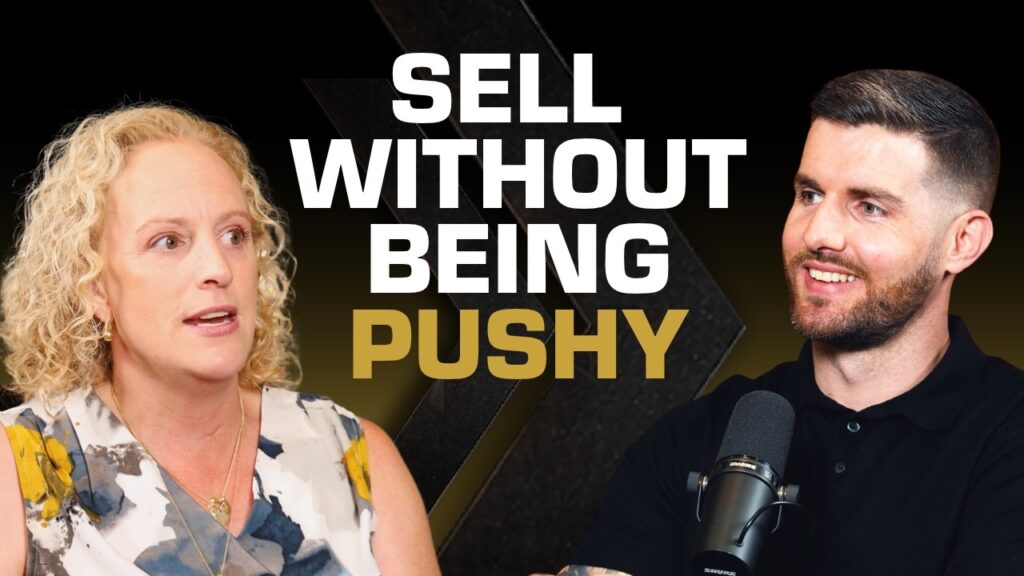
In Episode 27 of Unlocking Business, I sit down with Julia Ewert, a published author, LinkedIn Learning sales instructor and one of Australia’s leading sales strategists and professional negotiators. Julia has worked with our team at Smartfix, and she teaches the Infinite Sales System, a repeatable sales process that lifts conversions without pressure or discounting.
We talk about why so many business owners say they don’t do sales, how to handle price objections and “I need to speak to my partner”, why the fortune really is in the follow-up, and why sales training without a process doesn’t stick.
Who is Julia Ewert?
Julia has spent the best part of 30 years in sales and negotiation. She works with companies turning over roughly $20 million to $500 million a year, helping them build a sales process that is repeatable without feeling robotic. She runs a small team with national clients and caps the number of clients she takes on each year.
Her book, From Pitch to Profit, came from a publisher approaching her through LinkedIn. She wrote it in five weeks by speaking each chapter into a transcription tool, then editing it, which is why readers say it sounds like she’s talking to them. She is also a LinkedIn Learning instructor, and every Saturday morning she sends out The Donut Card, a one-minute email on sales and negotiation skills.
Key takeaways from the Julia Ewert conversation
1. Sales is just another word for revenue
When people tell Julia they don’t do sales, she asks if they don’t do revenue either. Much of the stigma is a hangover from the pushy, high-pressure selling of the 1970s and 1980s. Customers today are good at saying no, and you aren’t powerful enough to make anyone buy something they don’t want. Renaming your salespeople doesn’t help either. In her view it only tells the team that sales is something to be scared of.
2. A dishonest tradie isn’t a sales problem
Trades have a trust problem, because plenty of people have been told they need work done that they didn’t need. Julia’s answer was simple: that isn’t a sales problem, that person is a liar. Good selling is built on connection and honest conversations, and it should feel like collaboration, not a trick.
3. Welcome “I need to speak to my partner”
A household quote often has more than one decision maker, and that’s reasonable. The sale starts well before the objection, with how the booking is handled, the call on the way, how the tech greets the customer and the questions they ask. If those are done well, Julia says to welcome the partner conversation, ask what the customer would do if it were up to them, and then ask permission to call at a set time the next day.
4. The fortune really is in the follow-up
Most trade jobs are won on site, but the jobs you don’t convert on the spot are where the money is. Julia says the stats show fewer than 44% of businesses follow up at all, and very few do it more than once. At Smartfix we give the price before we leave the house and call the next day or the day after, and the work that comes from that one call is insane. Julia’s explanation: nobody else is doing it.
5. If you wing it, you won’t win it
The biggest mistake Julia sees is having no sales process at all, even in businesses turning over hundreds of millions. They are doing revenue by accident. A one-off sales workshop is like putting a band-aid on a severed limb: the team feels good for a few days, then goes back to old habits. Build the process first, then get the reps in until it becomes muscle memory.
6. A confused mind always says no
Open questions (who, what, when, where, why, how and “tell me”) show the customer you want to understand, and they surface things like a 15-year-old air con that keeps failing. Once you understand the problem, make a clear recommendation. A quote with too many options is like a menu with 35 mains: people put off the decision.
Testing salespeople with the revenue machine
Companies often bring Julia in for the third round of interviews when they hire salespeople. Her analogy: if someone sold you a shiny machine for $100,000 that they said prints money, you’d plug it in and check it works before you paid. Most businesses hire salespeople on how they look on paper and never test whether they can actually sell. At Smartfix we’ve never hired anyone in as a salesperson. Our best electricians grow into the role, and the hardest part is getting them confident with our pricing.
How 37 follow-ups won Crown
Years ago an enquiry came in from Crown, and the person on the phone only wanted a price. Julia thought they’d never work with her, so she decided to stay in the game anyway. She asked questions, recommended a proper conversation, and got the meeting. She then found the real decision maker, asked permission to connect on LinkedIn, turned down a 15-minute meeting in favour of a full hour, and followed up 37 times over three years and four months. She won the work.
“You cannot charge a premium price if your customer experience is not premium.”
Julia Ewert, author of From Pitch to Profit
Should you give the price on the spot?
Some businesses still email the quote later for the surprise element. Julia’s take is that the surprise is you’re not winning that deal. Whatever you sell, you should have the price conversation. It ties into something I’m passionate about: plenty of trade businesses don’t know what they need to charge, and that’s a big reason so many don’t last. A premium experience doesn’t mean turning up with cocktails. It means the questions you ask, the process you take people through and looking like you’re not winging it.
Where to find Julia Ewert
Julia’s website is the best place to start, and it’s where you can sign up for The Donut Card and find her book.
- Website: juliaewert.com
- LinkedIn: Julia Ewert
- The Donut Card (newsletter): juliaewert.com/donutcard
- The Infinite Sales System: juliaewert.com/infinite-sales-system
- From Pitch to Profit: juliaewert.com/book
More episodes you might like
- Running a Premium Aircon Business, Sales Process and Growing in Perth | Louis Carter
- Building a Trade Business That Doesn’t Rely on the Owner | Peter Craft
- Starting an Electrical Business and Pricing Your Work Properly | Angelo Rossi
Want help building a sales process your team can actually follow? Work with me.
In this episode
- 00:00Cold open
- 00:35Welcome Julia Ewert
- 01:13Why business owners say they don't do sales
- 02:57Where the stigma around sales comes from
- 03:24Renaming sales: BDMs, quoters and site assessors
- 05:58Bad actors in trades aren't a sales problem
- 06:48Commission, KPIs and measuring activity, not results
- 07:51Can anyone learn to sell?
- 08:47Getting sceptical tradies to try a proven system
- 10:31Price objections take courage
- 12:09"I need to speak to my partner"
- 13:23Why the sales conversation starts before you arrive
- 14:36Welcoming the partner objection and asking to follow up
- 16:15Is the fortune really in the follow-up?
- 17:02How many times should you follow up?
- 18:43Why you should ask permission to call back
- 20:14Humanise your process and double down on it
- 21:24Why trades compete on price, and how you present it
- 23:10Testing salespeople: the revenue machine
- 25:39The biggest mistake: winging your sales process
- 28:32Why sales training fails without a process
- 30:26Process first, then reps, and habits over hype
- 32:01Open vs closed questions
- 33:25Open questions in action: the broken air con
- 35:46Ask about history, then say what you really recommend
- 37:48Quote options: three choices or one recommendation?
- 40:22A confused mind always says no
- 41:58Quote fast and follow up: the trades advantage
- 43:43Should you give the price on the spot?
- 44:22Why Julia wrote From Pitch to Profit
- 45:19Giving away her secret sauce and capping clients
- 48:02Writing the book in five weeks by speaking it
- 50:34The publisher's deadline and why July
- 52:08Why every expert seems to have a book
- 55:25How she became a LinkedIn Learning instructor
- 56:44The Crown story: the caller who only wanted the price
- 59:45Winning the meeting, then 37 follow-ups
- 1:02:00Why tradies need these skills
- 1:02:48You can't charge a premium without a premium experience
- 1:04:09Where to find Julia, her book and The Donut Card
Full transcript
Read the full transcriptAuto-generated from the episode, lightly edited for clarity
[00:00] Cold open
Julia: Sales is actually the oldest profession in the world.
Kane: We've been in business eight and a half years now. We've never hired someone in as a salesperson.
Julia: The surprise is that you are not winning that deal. Keep doing that. If you don't like money, then that's a great strategy for you.
Kane: Sometimes the guys were sending a quote with three options, and I'm like, they're not going to read that.
Julia: A quote that they did that was twice the price of someone else who quoted it a couple of days before, and they won, simply off the back of how they presented the price and how they presented themselves.
[00:35] Welcome Julia Ewert
Kane: Hey, I'm Kane Tyler Smith, the founder and CEO of Smartfix and Hypotential. This is Unlocking Business, where we have real conversations around business, leadership, mindset and personal growth. If you've been getting value from these conversations, please take a second to like, subscribe and follow our channels. It helps us reach more people, bring on more guests and share more stories. Now, let's get into this episode.
Today I'm joined by Julia Ewert. Julia is a published author, LinkedIn Learning sales instructor and one of Australia's leading sales strategists and professional negotiators. Through her business, she's helped companies build repeatable sales systems that increase conversions without relying on pressure or discounting. Thanks for coming on the podcast.
Julia: Thank you, Kane. It's cool to be here.
[01:13] Why business owners say they don't do sales
Kane: I've got a good question for you to start. Why do so many business owners think they don't do sales?
Julia: As I just said to you, I've literally just come off the stage speaking at a breakfast for a couple of hundred people. One of the things I talk about all the time is that most people say to me, "Oh, Julia, you can't help us, because we don't do sales."
My response is to let them sit there for a bit, and then I say, "Oh, you don't do revenue?" They have this weird chuckle and say, "Obviously we do revenue." And I say, "Same thing. The only word you can interchange with sales is revenue. It's the same."
I'm 48 years old, and you're way younger than me, but even people way younger than me still have this hangover effect from how sales was done in the 1970s and 1980s, where people feel like you're making people buy stuff they don't want.
Consumers these days are really smart. We're really good at saying no, and the easiest way we say no is to just ignore people. No one's that powerful. Even the people who have this hang-up of "we don't do sales, we don't want to pressure people": if you don't believe in what you're selling or promoting, don't do it. But also, you're not that powerful that you can make someone buy from you. You're not that magical. People believe that if they use sales skills, they'll make people do things. It doesn't work that way.
Kane: Do you get the same effect with the word negotiation, or professional negotiator? Or is there no stigma around it?
Julia: People still misunderstand negotiating. The first line of my company statement is, "We stand out in a mistrusted and a misunderstood industry." People very much misunderstand what sales is and what negotiating is.
[02:57] Where the stigma around sales comes from
Kane: Why do you think it's such a big stigma for sales specifically?
Julia: With sales, I believe it comes from that 1970s and 1980s era, when sales was done differently. It was high pressure and really pushy. People sliding contracts and pens across the table. It's so cheesy, and that was a million years ago. If it still feels like that now, people are doing it wrong.
[03:24] Renaming sales: BDMs, quoters and site assessors
Kane: Do you think it will ever change? I know you talk a lot about people changing the word sales. We've done it before. We've changed our sales reps to quoters, site assessors, supervisors.
Julia: Yes. Yes. Yes.
Kane: Do you think it will ever get to where it doesn't have that stigma?
Julia: Well, this is one reason I know I will never be out of a job, because companies and people like this exist. My role is to help them see it in a meaningful way, and help them do sales in a more trustworthy, modern-day approach where it just feels like a really collaborative conversation.
Will it change? I remember years ago a company said to me before I presented to their team, "Would you mind taking the word sales out anywhere it appears, and replacing it with business development?" I said to the senior partner, "You know it's the same thing." He said, "Of course I know it's the same thing, but the team won't resonate with it if they know it's sales." I said, "But sales is revenue. You can dress it up however you want. Sales is actually the oldest profession in the world." It's just an exchange of goods or services for something of value. We've been trading since before time.
Kane: A common job title is business development manager, or BDM. Do you think that's in place because they don't want to use a phrase like sales rep?
Julia: Yes, of course.
Kane: So why do you bother telling them no, it's sales, instead of letting them have what they want? What does it affect when they change the word?
Julia: I feel strongly that if I get on board with "let's change its name", I'm also saying this is something to be scared of. If you do this well with a modern-day, trust-first approach, it feels like a really collaborative conversation. Kane, you and I have done work together. You should see very little, if anything, in my entire system that feels gross. The system I teach is not built on tips and tricks. It's built on meaningful conversation, great collaboration, connecting with people and having humanised conversations. If you do that, you are doing sales remarkably well.
[05:58] Bad actors in trades aren't a sales problem
Kane: You made a good point about the product having to be good enough to sell properly. I'm trying to think of a scenario where it wouldn't be. People lying is a common thing in trades: telling you things need to be done that don't. Customers don't always understand, so that's a big red flag we come across. I think that's why our people don't like the word sales, because there have been bad employees in the past, and other companies that have gotten into trouble for doing bad things. So the trust part is important, and I know one of the early things in your sales process is building that trust and rapport straight away.
Julia: What's interesting about that story is that it's not a sales problem. That person was a liar.
Kane: So true.
Julia: It's not a sales problem.
Kane: That's got to be where the stigma comes from. A lot of people talk about the second-hand car salesman.
Julia: Again, not a sales problem. That person's a liar.
[06:48] Commission, KPIs and measuring activity, not results
Kane: Do you think that issue can get created by commission schemes and incentives? Do they prompt bad people to become even worse?
Julia: That's a topic I could spend hours on. It depends on the industry, what's being sold and how the people are motivated. There are too many variables to give you a short answer. I've been doing this the best part of 30 years, and I've seen lots of different commission structures and KPI setups. It depends on how it's done. Good intentions are great. Done successfully, it should be managed through activity rather than results.
Kane: And that activity is how it's presented, as opposed to "I got this many sales today."
Julia: Yes. To make a gross generalisation, when companies are KPI-ing or measuring on outcome-based sales, sales, sales, that can drive its own kinds of behaviours. When we measure on quality conversations, that changes significantly.
[07:51] Can anyone learn to sell?
Kane: Can anyone do sales?
Julia: If they're a willing participant, yes. Sales is a skill. People talk about someone being a born salesperson. I ask what makes them say that, and they say, "They're super extroverted."
Kane: The gift of the gab.
Julia: Yes. And some of the most annoying, unsuccessful salespeople I see are those types of people. This is a skill. It's like learning to play drums. I can't just give you some drumsticks and say, "Sound like Dave Grohl." You need to learn the skills and techniques to not sound terrible to begin with. Can you even hit the beat? Sales is a skill, a technique. If someone's willing, they can learn it.
Kane: The hardest part will be finding people who are willing at the start. But if they do have the gift of the gab, is it easier, if they've already got the right attitude and are happy to talk?
Julia: Yes.
[08:47] Getting sceptical tradies to try a proven system
Kane: What about people who aren't happy to talk? In trades specifically, and I know you work with us, some people don't want to listen. They might have the right attitude, but how hard is it to get through to them about the right way to sell?
Julia: It depends who I'm talking to. There's a sledgehammer version of this and a less sledgehammer version. The sledgehammer version, which I often have with managers, directors and company owners when there's resistance in the team, is this. If what your team is doing is working, first of all, we would never have met. Let's put that out there. Second, if you've got some people in the team and what they're doing is working, change nothing. Maybe some of what I present is a menu. Pick the bits you like, but don't break the system.
If what you're doing is not working, how about we try it this way? Everything we teach is proven. It's not experimental. There are no maybes. Everything we're teaching is proven, and it works.
There are two parts to everything we teach. One part is skills, techniques and frameworks, and that's not hard to learn. The harder part is helping someone have the courage to try something new. To communicate in a different way. To ask a tough question. To say something that's on their mind when they've just heard a contradiction, and actually say, "Kane, do you mind if we go back to that? I heard you say something that sounded a bit different. Could we talk about that a bit more?" The brain goes, "I can't upset them," so they just brush over it.
[10:31] Price objections take courage
Kane: Can you give me an example of something like that?
Julia: Price objections. They're rife in the trade industry. It's a conversation you and I have talked about at length, and it comes up with everyone we work with.
You talked about trust before. This is about connection. When all things are equal, people are more likely to buy from people they like. We know this. Now remove that likability. You've got three trade quotes, they're all about the same price, and you don't know one bloke from the next. You're just looking at three pieces of paper. There's only one lever you can pull, which is price. So people discount to get attention and stand out. As we know, the race to the bottom ends in very unsuccessful businesses. That's the profit margin of the business, and businesses go broke from this all the time.
Where the difficult conversation comes in is when the prospect raises a price objection. I can teach people frameworks all the time, and I can build muscle memory in anyone who's willing to learn. The big difference between people who are okay at this and people who are remarkable is that the remarkable ones hear the price conversation come up and actively step into it in a really respectful way. That takes courage.
[12:09] "I need to speak to my partner"
Kane: The most common one we get is "I just need to speak to my partner." Customers don't always tell you the truth, obviously. It's "I need to speak to my partner" or "I'm getting other quotes". If they say they want to speak to the partner, how can you expand on that conversation? Or is that where you leave it, because they haven't given you enough? Or does it go back to asking open questions at the start to get all the information?
Julia: My answer to everything you said would be yes. All of those things play a part. There's no single thing. You can have the best process in the world, with someone who builds great connection with the prospect, and they may still have to check with their partner. Household repairs can be expensive, and if it's the first quote in, maybe they didn't know what the work costs. Maybe the agreement at the breakfast table that morning was, "I'll be home when the tradie comes, and we'll talk about it at dinner tonight." You just don't know what goes on behind closed doors, and that's not unreasonable. It's not unreasonable for a household quote to have more than one decision maker.
When it comes up, there are some things we can do to help make it a more successful outcome, maybe at the time, maybe 48 hours later.
[13:23] Why the sales conversation starts before you arrive
Julia: As we've talked about, the conversation with the prospect begins when you first cross paths with them. Who's booking the appointment? How professional were we on the phone, so the prospect feels like they're already in good hands?
Then there's the connection before the tech turns up. I know it's important to you that the tradies call on the way: "Hey Kane, it's Julia here. I'll probably be five minutes early for our 11 o'clock appointment. See you soon." That connection and customer service is really important to you, so it matters.
How I greet you when you open the door matters. The way I build connection with you for five to 10 minutes matters. The questions I ask you, which aren't selling questions, just bigger-picture questions, matter. Hypothetically, each of those things could be worth 1%, 1%, 1%, and suddenly you're 25% more likely to close on the spot. There's no single thing we can do.
[14:36] Welcoming the partner objection and asking to follow up
Julia: If those things are in place and "I want to talk to my partner" comes up, we should actually welcome it. "Yes, Kane, this is a big decision. You definitely should be doing that. Can I ask, if it were up to you today, which way do you think you'd like to go from here? Just so I can get a gauge."
"I think it sounds all right. Nothing outrageous you said today, Julia."
"Okay, no problem. You absolutely should talk about it."
Kane: And that's not you trying to go the extra mile to close it. You're just building confidence.
Julia: Especially in trades, we need to be careful, because we've all been burnt by a dodgy Dave. We've all seen quotes for the same work come in at wildly different prices. So in your industry, trust is a really important factor. When someone says they want to check with their partner, we welcome it.
"Yes, please do that. This is a really important decision. I'm going to be here, Kane, for whatever the right way is to move forward with you. I want to do a cracking job for you. At Smartfix, we really pride ourselves on doing it the right way, the first time. So please have a think about it. I wonder, though, would you be against it if I asked your permission to give you a call later tomorrow afternoon, just to see how things are sitting with you? Then we can close it off one way or another. Would it be okay if I gave you a short call around 2 o'clock?"
At least we're still asking for permission. We're showing that we really want to help.
[16:15] Is the fortune really in the follow-up?
Kane: I wanted to talk about follow-up, because we've spoken about it a lot. "The fortune is in the follow-up." How true is that? I saw it on another business coach's shirt the other day, and you hear it a lot. But in trades, most of our jobs are won on site. If we leave site, the chances drop significantly. So I thought, the fortune isn't in the follow-up, it's in doing it right the first time and trying your best to win the job on site. But I wonder if they mean all the jobs you lose. There's so much value there if you don't follow up.
Julia: Yes, that's exactly what it means. The ones you don't convert on the spot, that's where the fortune is.
Kane: How many businesses don't follow up at all?
Julia: The stats tell us that less than 44% of people follow up at all. Very few do it more than once. They do the whole, "Oh, we tried three times."
[17:02] How many times should you follow up?
Kane: How many times should you follow up?
Julia: It depends what you're selling. It depends how much you care.
Kane: Tradies. Let's go tradies.
Julia: Okay. Rewind five minutes. Did you have good connection at the start? Did you ask good questions? Is this an opportunity you think we should actually get? Did you build good connection and relatability? Do you genuinely feel you can solve this for them better than any other tradesperson, and have you conveyed that in a concise way and built confidence around it? If you've done those things and they want to check with the partner, fine. There should be follow-up.
It also depends on the urgency. You're unlikely to get called out by someone who's just thinking about getting their air con serviced in case something happens one day. They're calling you because there's a problem that needs solving, so the urgency is high.
[18:43] Why you should ask permission to call back
Julia: The follow-up should be done in a really meaningful way, with lots of permission asking. "We've had a great conversation today. I just wonder, out of respect, would you mind if I gave you a call tomorrow afternoon? Just let me know what you're thinking, and then I can tailor my communication with you accordingly."
Kane: What's the downside if they don't book in that time and just call anyway? Does that look bad? Is it annoying for the customer?
Julia: Say more about that.
Kane: If they leave the job, and the customer is going to speak to their partner overnight, but the tech doesn't say, "Do you mind if we call you back?" They don't do that one piece of preparing for the next call, but then they call anyway. What's the downside?
Julia: It's not a crime. I think it's less effective. A lot of people these days don't answer calls from numbers they don't know. Even if by chance they know it's the number of the tradie who came yesterday, they know why you're calling. So just tell them, and explain why it's important.
"I want to help you get this done so you don't have to think about it again, whether it's getting the air con serviced or the taps fixed. I appreciate you're going to get some other quotes. That's a good idea, there are lots of people around these days. I wonder if you'd mind if I gave you a call tomorrow? We've had a good conversation today, Kane. Just out of respect, could I give you a call tomorrow at some stage, so I can see what your intentions are? That will let me tailor my communication with you. Would you mind if I did that?"
And could I go as far as asking for a specific time to chat? That way it's efficient for your time as well, so you're not looking at a random number wondering who it is, because it'll be me. It's all about always trying to humanise the interaction.
[20:14] Humanise your process and double down on it
Kane: It sounds super informative. This is what's happening, this is the process we're following. We're not just winging it.
Julia: Yes. As you know, I say if you wing it, you won't win it. For the businesses we work with, when we put a process in place, we say you shouldn't hide behind the fact that you're following a process. Double down on it. Tell people:
"At Smartfix, or whatever your business is called, we're not like every other tradie you'll see. We don't want to just transact with you. We want to actually solve this for you, so you say this is the best tradie that's ever been to my house. I'm going to work hard today, Kane, to show you I can do this differently, and I'd love you to give me a chance to fix your air con or install this for you. Would it be okay if I took you through some questions? They'll help me understand what you're trying to solve, then I can make some recommendations and we can talk about next steps."
Kane: It sounds so easy, but I think for a lot of people it's not.
Julia: It sounds simple, not easy.
[21:24] Why trades compete on price, and how you present it
Kane: Why do you think so many businesses compete on price? It's all trades.
Julia: Lack of skills. They haven't been taught otherwise.
Kane: And lack of confidence. I've said to you before that we've tried to hire people from the trade specifically to do sales, and it's never worked. We've been in business eight and a half years now, and we've never hired someone in as a salesperson. We've always had our better electricians who want to do it grow into the role.
Julia: I think this is a better model.
Kane: But the biggest problem we find, even with them, is understanding our pricing and why we have to charge what we charge, because we're not the cheapest out there. Sometimes they're not confident saying it to the customer, and the customer thinks, "If you're not confident, I'm not confident."
Julia: That's right. As we said at the start, you've got to be able to back in what you're selling, and it's very important how you present your price. One of your team told me a cracking story about a quote they did that was twice the price of someone else who quoted it a couple of days before, and they won, simply off the back of how they presented the price and how they presented themselves.
Some people are going to buy from us anyway. Some people are never going to buy from us, no matter how great we are. If you look at the bell curve, the ones in the middle are the ones we can actually influence, if we have a great process, great techniques and great skills.
[23:10] Testing salespeople: the revenue machine
Julia: I'm often hired by companies to interview salespeople. If they're growing their team, they'll do a first or second round of interviews, then I'll come in for the third round and test for skills. My job is to find out whether this person can actually sell.
If you're hiring someone in sales or business development, whatever you call them, their job is to produce revenue. So let's call them the revenue machine. Let's say we're going to pay them $100,000, just to make it a round number. If I said to you, "Kane, I have a machine. Look how shiny it is. It will cost you $100,000, and it will print revenue for you. I know you've never seen this machine before, but look how shiny it is." What would you want to do with it?
Kane: Use it correctly.
Julia: You'd want to know if it works. You'd want to plug it in. You tell me it prints money? You're going to pay me $100,000 for a shiny machine you've never seen before, so you'll probably want to plug it in and see if it actually works, or if I'm just talking a big game.
That's what people do when they hire salespeople or BDMs. They see the shiny person, but no one plugs the machine in to see if it works. So with some clients, I come in for the second or third interview, when they already know the person is nice, they're a team fit and the credentials are there on paper. My job is to see whether the revenue machine can actually print. I take them through very specific questions, and I can work out very quickly whether this person can sell or whether they're an order taker.
Kane: Do you look at whether they're teachable, or is that too simple?
Julia: I test for that too. I tell them up front what I'm going to do. "I'm not going to play tricks on you today. I'm just going to test you. This is like buying a machine. They don't know how you work, so I'm going to plug you in today and see if it works."
Kane: So you don't just say, "Sell me this pen."
Julia: I do not tell them to sell me a pen. But if I did, I could tell in under a minute whether they're going to cut it or not.
Kane: That's so funny. We'll do it later.
[25:39] The biggest mistake: winging your sales process
Kane: What's the most common mistake people make in their sales process?
Julia: Can I only pick one thing? I'll have to give you two answers, because your question was very specific. If you'd asked about sales skills, I'd give you a different answer. But you said process. They're winging it.
Let me give you some commentary. Most of the companies we work with are doing all right. None of them are struggling. Traditionally, we work with businesses turning over between $20 million and $500 million a year. They bring us in for repeatability and scalability.
When I talk about a repeatable sales process, for listeners, that doesn't mean it's mechanical and robotic. People hear it and think it must be like McDonald's. It's not "Would you like fries?" It's none of that. This is a highly humanised process that we customise for every client, so it feels like a great conversation.
Most of these businesses don't have a repeatable sales process to begin with. They're effectively doing revenue by accident, making it up as they go. They're winging it, and they're still doing all right. So if they don't have a process in place, they're doing sales by accident, by default. Just imagine for a second if they tried to do it by design, and put some best practice in place on top of what they're already doing. It can't not work. The worst you're ever going to do is the $20 million or $500 million you're doing now. Putting a process in place can't lose you revenue.
So the biggest mistake when it comes to sales process, and the reason I'm never going to be out of a job, is that loads of businesses are just winging it.
Kane: Is there a percentage you know of, for how many businesses don't have a process at all?
Julia: Everyone we work with. Everyone I'm talking to, everyone in my pipeline. Most people who follow me on LinkedIn. People who have read my book.
Half my marketing is spent educating the market. Did you know a sales process is even a thing? People say, "What do you mean there's a process? Don't we just go out and talk to people?" No. There's a rhyme and a reason, and a methodology you can follow that can be highly humanised.
[28:32] Why sales training fails without a process
Julia: Sales training is a giant waste of time and money. Sales training is a workshop here and a workshop there. It's like putting a band-aid on a severed limb. It might feel good for five minutes, but it's not sustainable. A sales process is where change gets made. If a business doesn't have that in place and is just doing sales training, they will never get sustainable change.
Kane: Can you explain that more? How is sales training different from having a process?
Julia: If we think back to what we all think sales is, it's the closing question, asking questions, overcoming objections. Sales training would be, "Julia, could you come in and spend 60 minutes running a workshop with my team on objection handling?"
"Hi everyone, my name is Julia. We're probably never going to speak again after today, but we're together for the next hour, maybe two." I exaggerate. For five minutes the team says, "That was really good. That's so interesting." Within five minutes it's, "Julia who? That was good, but I don't really remember much of it."
If sales training is the vehicle, you're taking a group of experienced professionals who might have been working that way for 10 years, and expecting me to change their complete way of thinking and operating in 60 minutes. Maybe two hours. Maybe half a day. You're asking me to undo 10 or 20 years of experience and learning in a workshop.
[30:26] Process first, then reps, and habits over hype
Kane: So if you come in and put the sales process in place, I assume you'd then have to do continuous training on that process to get the reps in. Training comes after, as part of it, but if you don't have a process there's no point doing the training?
Julia: The way we roll it out, it goes together. We front-load the engagement so we're building the process to begin with, so it feels like that business. Then we teach the team how to do it. We've done the what, now we're teaching the how. And, as you'd know, lots of reps. Repetition is the mother of all learning. Reps doesn't mean writing lines like you were in school. Reps is about trying lots of different scenarios with lots of practice, so we can actually build it into our muscle memory.
Kane: Going back to sales training, at the previous company I worked at, they had people come in and do sales training every now and again. Our experience was the guys would do great for a day or two, maybe three, and then it went back to what it was.
Julia: It's a band-aid.
Kane: Do we just do it every couple of weeks? But then it gets repetitive, because the guy who comes in is like a big hype machine. He hypes you all up, put a picture of a boat on the wall, manifest it.
Julia: People ask me how much of our work is based on mindset, confidence and motivation, and I say maybe half a percent.
Kane: Would you say it's more based on habits and routine?
Julia: Yes, and that builds the confidence, which builds the motivation. That's a by-product of getting the process right.
[32:01] Open vs closed questions
Kane: Why is asking open questions so much better than closed questions?
Julia: Closed questions are any question that starts with is, are, can, do, does, have, has, had, could, should or would. When we ask those questions, we get yes or no. They're quick and fast, and they play for speed. They also give the impression you're trying to take something from someone, so they don't build connection. They're very self-centred and very transactional.
When we shift to open questions (who, what, when, where, why, how, and my favourite, "tell me"), we're showing someone that we really want to listen, learn and understand. It makes for a far more effective conversation, and we learn things we didn't know.
Leaning on closed questions isn't a crime. You just have to get the balance right. Loads of tradies ask lots of closed questions. "How do you want this done today? Have you tried to fix this yourself? Are you looking to do this whenever? Can you see how this would work? Does this have an impact on A, B and C? Are you willing to get this done?" Those are very sales-based questions, and as we've talked about, some people don't like to talk about sales. We know it's seen as a dirty word. So we shift the questions to be more open.
[33:25] Open questions in action: the broken air con
Julia: I'll rapid-fire it. Give me a tradie example. Make it hard for me.
Kane: Electrical.
Julia: So I'm a sparky turning up to someone's house. What's the problem?
Kane: Broken air con.
Julia: Okay. I've turned up to your house, Kane. Closed questions might be, "Has this just broken recently? Do you want to get this done straight away? Is it impacting everything around the house? Can you do this for me?"
If we change to open questions: "Tell me the reason you called me out today. What impact is this having? How many people live in the house? Two kids, three kids? It's 30 degrees today. What's the plan when the kids come home from school? They'll be hot and bothered. Tell me how this machine has been operating in the past. Tell me what you know about servicing it."
And if I asked some questions about tradespeople: "What makes a good tradie for you? How can I show you I can do a really cracking job for you today? What's the difference to you, Kane, between a good sparky and a great sparky? I can give you a quote shortly, but I want to show you I can do a great job today. Aside from doing it for free, what's something I could do today that would have you raving about what we did?"
Kane: So you're giving them opportunities to give you more information, as opposed to "Yes, it's broken, that's why you're here."
Julia: And I'm also sharing that I want to do a good job. I very much want to work with you and help you with this. "If you don't get this done, what would the impact be? If you put it off because the temperature drops for the next few weeks, what would the impact of that be? How would you feel if you called us a month from now, in peak season, and had to wait six weeks?" Asking better questions lets people stop in the moment and have more effective conversations.
[35:46] Ask about history, then say what you really recommend
Kane: It's important in trades to ask about the history of the product. We get it all the time. We go out to fix an air con and they've had it fixed again and again. Every summer it stops working. Asking brings up the memory of the problems they've had, like last Christmas when it stopped working on Boxing Day and it was 45 degrees. That's where we come in. The unit's 15 years old. Maybe it doesn't need a service, maybe it needs a replacement. It's about explaining your recommendations and the reasoning behind them, as opposed to "Let's just service it for 300 bucks."
Julia: That's a great scenario, and we see it in all types of businesses. Especially in trades, you turn up at the person's house and they've already decided: "I just want you to do this one thing." You're the expert turning up at the house. If you get a sniff that what they're asking for isn't what's going to solve it, a really good question to keep up your sleeve is:
"Hey Kane, I'm curious. It sounds like you just want to get this serviced again, and this is the third time someone's been out in the last year or two. What happens if what you think you want isn't what I feel you need?"
At the very least, that question should make people stop in their tracks and say, "What do you mean by that?"
"The reason I bring it up is I'm hearing you feel the solution is just to fix it. I've just learned this machine is 15 years old. I've been fixing air cons for 25 years, and I'm conscious we're coming into peak season. There might be some alternatives worth considering. I don't want to put you off by having you feel like I'm here to sell you something else. I want to fix the problem for you the first time, the right time."
[37:48] Quote options: three choices or one recommendation?
Kane: That leads me to another good question. What's your opinion, in trades specifically, on giving options for jobs? It's been a thing for us for a long time. A lot of sales trainers I've seen and listened to say you have to give three options. Under no circumstances do you give one, because the customer needs to have options. We don't really give options, to be honest. I do think there are some scenarios where we should and could, like that example. "Yes, we can fix it for this. We would recommend this, and here's the reason."
Julia: That would be a very logical recommendation. In that conversation I'd probably ask, "While you're here, what would it cost to get a new one?" So that would actually be helpful for me. Then there's the good, better, best approach.
I come from the view that if you're the expert in the room, and you've asked the right questions to properly listen, learn and understand what the challenge is, you should be able to give a recommendation. Some of you listening are thinking, "It's just tradie stuff." It's not just tradie services. If you think it is, you're in a world of vanilla where everyone's doing the same thing. Imagine if you had a bit of process that helped you stand out. You'd win far more than dodgy Dave.
If you spend a bit more time listening, learning and understanding, you should be able to set yourself up to give a recommendation that completely fixes the problem. Part of that is what we've already spoken about: your level of confidence, and backing yourself in on what you're selling.
"Kane, from everything I've heard you share with me today about your air con, for you to fix it once and for all, I'm actually going to take servicing off the table. For you to fix this the right way, the first time, and never have to think about it again, my recommendation is X, Y and Z." Now, I might have three brands of system I can quote, fine. "But for everything you've told me you want to solve, with Christmas coming and family coming to stay near the spare room where they'll be spending their time, my recommendation is a new system. That's what I recommend for you today."
[40:22] A confused mind always says no
Kane: What you just said made me think of something. Even if there were options, like the brands you mentioned, that's where it gets difficult. There's potentially an option to service it or fix it, then an option to replace it like for like, or with a cheaper or more expensive one. That's too hard, because a confused mind always says no.
Julia: I love it when people quote my stuff back at me. Yes.
Kane: It's so true. Sometimes the guys will send a quote with three options, and I'm like, they're not going to read that.
Julia: Back to the sales process: part of it is built to help you be easy to partner with and easy to buy from. The analogy I always give is a restaurant. Say we're having our yearly catch-up and the menu has 35 mains on it. How many times do we say to the wait staff, "Sorry, can you come back? We'll look now." And then, "What are you going to have? I don't know, what are you having?"
Kane: I'm just going to revert to the parmigiana, because I'm not reading that menu.
Julia: Exactly. That's a classic case of a confused mind always says no. Don't offer me 45 mains. Give me a choice of seven really great things. Keep it simple. Part of being an expert in your craft as a tradie is being easy to buy from. One reason people don't buy is that you made it too hard for them, with too many options.
[41:58] Quote fast and follow up: the trades advantage
Kane: That reminds me of a scenario we've been talking about in the last few days. This time of year is usually very quiet for us. It's expensive to get leads in, people seem quite price-oriented, and the economy doesn't help. But with the process we have now, I feel we have a really good one. The customer calls the office, speaks to the office team, then we get a site assessor out the same day or the next day. It's a fast turnaround. We tell them the price on site, and most of the time we send them the quote before we leave their house.
We're trying to get something done at home at the moment, and I've been waiting over a week for the quote. On another job, we've been trying to get a contractor to give us a price for probably three weeks. Why don't people just send the quote? It really annoys me. We pay so much money for advertising. We want to get out there as soon as possible and give them the price as soon as possible. If they don't accept it, our process at the moment, as we get ready for the hot season, is to call them the next day or the day after. And the amount of work we get just from doing that is insane.
Julia: Do you know why?
Kane: Because no one else is doing it.
Julia: And also, the fortune is in the follow-up.
Kane: The positive thing for us is we go out there, we do our job properly, and we do the follow-up. Then the customers say, "We're trying to get other quotes, and no one's giving us a price." It blows my mind.
[43:43] Should you give the price on the spot?
Julia: This can be a really great competitive advantage. I get asked a lot, whatever the industry, but especially in trades: should we give the price on the spot or not?
Kane: Who wouldn't?
Julia: You'd think that, Kane. But some people like to go for the surprise element.
Kane: The surprise element?
Julia: Yes. "We'll email it." And I always say the surprise is that you're not winning that deal. So yes, keep doing that. If you don't like money, that's a great strategy for you. It doesn't matter what you're selling. We should have the price conversation. We should absolutely be talking about it.
[44:22] Why Julia wrote From Pitch to Profit
Kane: There's a lot of what you teach in your book. What made you write the book in the first place?
Julia: The publisher approached me. I got a publishing deal.
[45:19] Giving away her secret sauce and capping clients
Kane: Maybe a better question, then. There's so much of what you teach in the book. Did it cross your mind that people would just read the book instead of getting you?
Julia: All my secret sauce is in the book.
Kane: All of it?
Julia: All of it. And if you feel I have more secret sauce than what's in the book, follow me on LinkedIn, because I share all my secret sauce there too. The book is static, it's already done. If I have new ideas, I share them on LinkedIn.
I had people warn me off doing that. "You should hold stuff back." Why? The beast of my business is very different to the beast of yours. I have a small team and we run national clients. I don't want or need a billion clients. I cap how many clients our program takes each year. That's it.
I'm targeting companies with turnover roughly between $20 million and $500 million, and there are always outliers. I don't think the CEO of a company turning over $150 million is going to buy 40 copies of the book, hand them to the team and say, "Read this and just do the things." That's never going to happen. The book is also designed for people who are never going to hire me or work with me. I believe we should all have access to a trust-first, modern-day way of having sales and negotiation conversations that isn't weird or gross. That book is for everyone.
Kane: I suppose you can reach a lot of people with a book. Your time is limited to the number of people you can look after, whereas anyone in the world could buy the book and read it.
Julia: Yes. Just yesterday, a friend of mine in the United States, one of the people I've learned negotiation from, texted me. He said, "Julia, funny story. I'm on a plane from Chicago to New York, and I'm playing the 'so what do you do' game with the woman next to me." She said she teaches sales and works in an enterprise team at LinkedIn. He said, "You should talk to my friend Julia in Australia." And before the words were out of his mouth, she said, "Yes, I've read her book, From Pitch to Profit." I texted him back saying that story didn't happen, and he said, "No, it did." So it's cool to have something anyone can access, with all the secret sauce in there, that people can use today.
[48:02] Writing the book in five weeks by speaking it
Kane: That's awesome. Was it hard to write?
Julia: This might polarise people. It took me five weeks.
Kane: Five weeks?
Julia: Very quick. The reason it was so quick is that the book was already in my head. I'm teaching a repeatable process. Unlike a tradie business, I have one product at one price. I don't have a menu, and I don't slice up the program, because I know it won't work. People ask if there's a shorter version, and I say, "This is the short version. It's only got in it what you need. If you want me to slice it up, it's not going to work." Because it's repeatable, the same thing over and over again in a really humanised way, it was already written.
Kane: That's so cool. I think you said to me once that you spoke it?
Julia: I talked it. When my editor read the book, they contacted me and said, "There's something weird about your book." I thought, I've never written a book before, what's weird about it? They said, "When you read it, it feels like you're talking to me. How did you write it like that?" I said, "I didn't write it. I spoke it."
I spoke each chapter, because I've done this a billion times. It's a bit like song lyrics to me. The chapters on asking open questions, strategic silence or closing techniques, I've done them a million times. So I spoke each chapter into a transcription tool, then edited out all my ums and ahs, and that was the chapter. Then I did the same for the next one.
People who know me say, "I can hear you talking to me as I read it." People who don't know me say it feels like I'm actually talking to them. I love that.
Kane: That's so cool. Except I listened to the audiobook.
Julia: Unless it's that one. When you get a publishing deal, the right to read your own book is a different contract. I didn't get that part, and I didn't fight for it or ask for it. I was just stoked to have a book. Maybe at some point I'll read my own book. But if you listen to it on Spotify, it's an American narrator.
Kane: Would you do it yourself if you could?
Julia: Sure, if I had the time.
[50:34] The publisher's deadline and why July
Kane: So five weeks. Did you lock yourself in a room?
Julia: No. I said to my EA at the time that I needed time to do this. When the contract came through, around October I think, they said my first manuscript was due on something like January 7th. I started laughing and said, "For a moment I thought you said January the 7th." She said, "I did." I said, "Not this January 7th?" She said, "Yes, this one." That was a very short time away, and I hadn't even signed the contract.
From memory, because it was about two years ago, it was either a January manuscript for a July release, or a July manuscript for a December release. Given the book is about revenue, releasing it in Australia in December is the worst possible time of year, and releasing it in July is the smartest. So I just had to do it. My EA found blocks of two and three hours and filled them with writing.
Kane: Most people would take a long time to write a book.
Julia: That's why I hesitate to share that it took five weeks. It was already written in my head. Some people take many years to write a book, but mine was a repeatable system that was already done. It just took time to get it out of my head and onto the pages.
[52:08] Why every expert seems to have a book
Kane: I watch a lot of podcasts, and the experts in their field all seem to have a book. On Diary of a CEO, almost every guest is an expert in their field, and they've all written a book. Why is that? Is it a high-converting lead generator for most people?
Julia: If you're very famous and you write a memoir, you can make truckloads of money off a book. Most people who write a business book refer to it as an expensive business card. It depends.
I wrote the book because the publisher came to me, and the approach came through LinkedIn. I've never compared myself to other people who have books. I've just thought, "I've got a book." There's no prerequisite of expertise to write a book. Would I have done it without a book contract? Possibly. It was on my mind before, but maybe it would have taken me three years, because I would have kept putting it off without a deadline from the publisher, and I would have had the self-doubt of thinking no one was going to read it. There was definitely an element of feeling a bit special that the publisher asked me, and that was good.
So I don't think experts have to have a book. A book is also an ego thing.
Kane: Is that because it gives you authority? "I've got a book, I'm an author."
Julia: Yes.
Kane: It's awesome. I'd love to do it one day.
Julia: You have words people should hear, Kane.
Kane: If I can talk it. I couldn't write it, and I wouldn't want to type it.
Julia: If you know your topic well enough, you can talk it. But I've only written one book, one time, about one thing, so I'm not an expert in writing books. People ask me about my experience writing a book, and I say I've done one book on one topic, one time.
Kane: One piece of advice: talk it. I reckon that's all you need to say.
Julia: Talk it in. As long as it sounds like you. Anything public that people will see of me is never AI. It's always me.
Kane: Yes, we saw that before. No AI slop on your LinkedIn.
[55:25] How she became a LinkedIn Learning instructor
Kane: How did you become a LinkedIn Learning instructor?
Julia: People have asked a similar question about how I became friends with some FBI and NYPD hostage negotiators and some authors. The answer is very underwhelming: I asked.
I knew a guy, a good friend of mine, who was a LinkedIn Learning instructor. I asked for an introduction, and then, as will come as no surprise to anybody, I used my sales process to get an audience with the right person at LinkedIn. Then I used my follow-up methodology to show it would be a valuable partnership and that I could bring value to learners. Sales process.
Kane: If you don't ask, you don't get.
Julia: It's so unremarkable. People just don't ask. There seems to be a fear of asking, and the cut-through you get when you have a clear ask is wild sometimes.
Kane: It's so interesting. I'd like to say I live my life by that, but there are definitely some things I don't ask for that I probably should.
[56:44] The Crown story: the caller who only wanted the price
Kane: Can you tell us the Crown story, and how you got that deal?
Julia: Many years ago I had an inbound opportunity, a lead that came through my website or email. We need to talk to prospects fast and strike while the iron's hot, as you've said. So I picked up the phone, and this person played hardball with me. This was many years ago, when my business was smaller.
I thought, this is Crown, as in Crown Hotels and Resorts. They're never going to work with me. I'm a nobody. So I decided I'd just have a crack for sport. I called and spoke to the person. They were not the decision maker, which became clear pretty quickly through the questions I asked. And she hounded me. She was fierce. "I know you have a repeatable process, Julia. I just want to know how much the program is. Can you just tell me the number?"
I was in two minds the whole time. On one hand, no one's going to buy me off a number. That's like sending someone a fancy brochure. They need to meet me and talk to me, because I'm the thing that sells me. And if I just give the number, what does that show about my skills and techniques? It shows I'm poorly equipped. On the other hand, they were never going to buy from me, so why not just put my number out there?
But because I was playing for sport, I stayed in the game. I asked questions and challenged back. I said, "I'm curious what it is your team is selling. How important are these sales? My recommendation is that we get together and have a conversation, so we can do this the right way, not the fast way."
She pushed me. "No, I just want to know the number." It got to the point where she said, "Julia, you can tell me your number. We're Crown. I'm not scared of your number." And I said, "I'm so glad you said that. I'm not scared of my number either. I just want to bring good value to the conversation."
Then I thought, I'll throw a Hail Mary, because Crown are never going to buy from me. I said, "I'm going to take a risk here. If you're hell-bent on the number, I'll give it to you. But something tells me that if you take this transactional approach with me now, that's how your team is selling, and that's not going to work. It's also an indication of how you might work if we were working together. I'm recommending we have a conversation, because I want to listen, learn and understand what's important to you. But if you genuinely just want the number, I'll give you the number. What would you like to do from here?"
[59:45] Winning the meeting, then 37 follow-ups
Julia: And you know how this ends. She said, "All right, let's book a meeting."
We had the meeting. She wasn't the decision maker, but again, I was playing for sport. In the meeting I found out who the decision maker was, and I asked her permission: "Would you be okay if I connected with this person on LinkedIn? I'm not going to pitch, I just want to say hi." She said that was fine. I connected with him, and the director of sales came back and said, "No problem, send me some information." I thought, no one's going to buy me off that either, because now I've been asked for the fancy brochure. So I said, "If this work is important to you, I recommend we get together for a conversation."
It's no different for your team or any trade business listening. If you're just banging out quotes from the office, you don't need a field team of salespeople or BDMs, whatever you call them. You can offshore that. But if human connection is something you value, and we know it makes a difference in the sales process, you need a meeting. You need a conversation, because people buy from people they like.
The very short version is that I built a connection with him. He sent me a meeting invitation for 15 minutes. He was a busy guy, and I knocked it back. I said, "I can't do justice to the conversation and respect you in 15 minutes. Let's find a time when we can do an hour." We did that. Then, over the next three years and four months, there were 37 follow-ups, none of which he told me were annoying. I converted it. We worked with Crown, and we graduated them a month or two ago.
Kane: That's awesome.
Julia: Long game. Long game.
Kane: Follow your process.
Julia: Just do the things.
Kane: It would have been so easy, so many times in that scenario, to just give them the number. But you stayed persistent.
Julia: I just played for sport in the end.
Kane: What do you mean by that? Because you thought you weren't going to win it?
Julia: There was an element of: I'm not going to win it, so why shouldn't I just have a red-hot crack? I'll have a shot at goal, and if it goes in, it's dumb luck. And then I thought, I'll back myself in, because I know my process works.
Kane: That's such a cool client to have.
Julia: They're great. Really good.
[1:02:00] Why tradies need these skills
Kane: I think we've covered so much. Is there anything we haven't covered that you want to talk about?
Julia: I feel very strongly that people and professionals in tradie businesses should be armed with these skills. It's not enough to be a great sparky, because you can get weighed up on paper against the next sparky. Anyone can install an air con. Anyone can service my air con or fix a short circuit. It's vanilla. These skills can make a real difference. They can lead to great customers, great partnerships and great self-confidence. You can ask for what you want, get paid what you're worth and have a really profitable business.
[1:02:48] You can't charge a premium without a premium experience
Kane: That's what I was going to say. As I mentioned earlier, we're not the cheapest out there, and I think a lot of trade businesses just don't understand what they need to charge. That's why most businesses don't last and fail. They go around charging $110 or $150 an hour, and they earn less money than they would as an employee. We're trying to educate them, which is what we're doing with Hypotential, as a business coach for tradies, and with the podcast, to put information out there. I don't have a book, but the podcast is my way of giving out the information.
Julia: The phrase I've used with your team before, Kane, is that you cannot charge a premium price if your customer experience is not premium. A premium experience doesn't mean you rock up at someone's door with cocktails. It's how they feel, the questions you ask, the process you take them through. Do you actually look like you're not winging it?
There's absolute data to suggest that those who follow a process are wildly more successful than those who wing it. In every industry, whether you're a tradie business or selling cups, someone is priced the highest and people are paying for it. So why shouldn't that person be you?
Kane: So true.
[1:04:09] Where to find Julia, her book and The Donut Card
Kane: Where can people find you and your business?
Julia: They can find me at juliaewert.com, that's E-W-E-R-T. Every Saturday morning I send out a one-minute-read email to help improve your sales and negotiation skills. It's called The Donut Card, and the story behind the name is on the website too. That's the best place to learn these skills and techniques passively. I'd love to help more tradies be armed with these skills, because they're for everybody.
Kane: And can they find your book on your website?
Julia: Yes. The book is called From Pitch to Profit. I recommend you buy it so you can read it yourself, because if you listen to the audio version, you'll get the American narrator, and that's not me. Not a lot of tradies are on LinkedIn, but I'm very active there. Mostly, head to the website and sign up for The Donut Card. Every Saturday morning at 6am Western time it'll land in your inbox. It's a one-minute read, and there's always some fun sarcasm in it about how you could unsubscribe.
Kane: Thank you so much for coming on.
Julia: Thank you, Kane.
Kane: Thanks for tuning in to this episode of Unlocking Business. If you've enjoyed this conversation, please take a second to like, subscribe and follow our channels. It really helps us bring on more guests and have great conversations. If you'd like to connect with today's guest, the details are in the description below. I'm Kane Tyler Smith. I'll see you on the next one.