About this episode
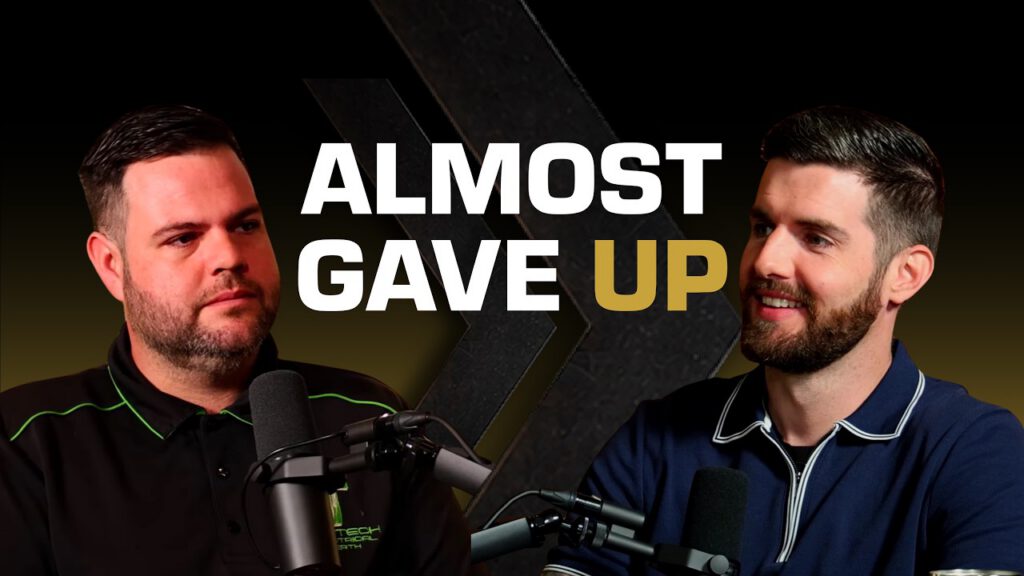
TopTech Electrical is a Perth electrical and air con business that Angelo Rossi started in June 2024, after almost three years on the tools at Smartfix. Two years in, he’s become the go-to sparky on his local Caversham community page, he’s done the hard yards with an apprentice, and he’s about to hire his first tradesman.
In Episode 8 of Unlocking Business, I sit down with Angelo to talk about what really happens in the first two years of running your own trade business. He went out on his own for more time and flexibility, and he’s honest that he has neither yet. We cover the six-month mark where he nearly gave it all away, why real estate work didn’t pay off, his Meta ads experience, and how his hourly rate has changed since his first quote.
It’s a practical conversation for any tradie thinking about going out on their own.
Who is Angelo Rossi?
Angelo did his apprenticeship on commercial new builds, then moved to a small business doing real estate maintenance and smoke alarm checks. He then joined Smartfix, where he spent almost three years doing electrical and a lot of air con.
Running his own business was always something he wanted to do. The push came in his last week at Smartfix, in peak summer, on a rough air con install in an apartment. That was the moment he decided to give it a go himself. Today TopTech Electrical does residential electrical and air con work, plus maintenance for a school, a camp and a hotel, and Angelo’s wife handles a lot of the Facebook side of the business.
Key takeaways from the TopTech Electrical story
1. Give yourself a deadline before you make a rash call
About six months in, Angelo had just hired an apprentice, was still subcontracting on new builds, wasn’t doing any private work and wasn’t making money. He was ready to throw in the towel. What kept him going was a promise he’d made to himself at the start: give it a full year before making any big decisions. Not long after, the private work started to come in.
2. Own your local area first
Most of TopTech’s work comes from word of mouth and local Facebook community pages. Angelo and his wife used to tag the business whenever someone asked for a sparky. Now other locals tag TopTech for them, so he’s stepped back from the Caversham page and is focusing on the surrounding suburbs. That kind of local reputation is hard to buy.
3. Think hard about hiring an apprentice before a tradesman
Angelo’s first hire was an apprentice, and he kept him for about a year and a half. Looking back, he’d hire a tradesman first. An apprentice is an extra pair of hands, but you can’t send them out alone, so Angelo felt he had to be on the tools eight hours a day just to keep him busy. A tradesman can go out on their own and bring in money without needing to be taught.
4. Real estate work is harder and cheaper than it looks
When he started, Angelo thought he could ring every real estate agency in Perth and pick up work. He couldn’t get past reception, and even walking into offices didn’t help. The only property work he got came from agencies he’d dealt with at previous jobs. He also found it very competitive on price, because agencies get approached constantly and tend to go with the lowest quote.
5. Cheap leads often ghost you
Angelo has run Meta ads twice. Both times he got two weeks of good, consistent leads, then it dropped off. A lot of people messaged asking for a price on a power point, got a number, and were never heard from again. He’d rather quote on site, and so would I. You win far more work in front of the customer than over Messenger.
6. Know your numbers so you can charge properly
Angelo quoted his first job at $100 an hour, quickly realised that wasn’t enough, went to $130, and kept raising it until the business could pay its bills and buy a van. No one teaches you this at TAFE. At Smartfix, I only started doing a proper budget in the last two years, and we know we lose about $35k a month on average across the year just from public holidays. If you’re undercharging, you have no buffer when a hire doesn’t work out, and the customer ends up with a rushed job from a stressed tradie.
“Have you ever paid for electrical work?” The question that changed how Angelo prices
Early on, Angelo was talking to another electrician who charged $330 an hour. Angelo thought that sounded expensive, and the sparky asked him one simple question: had he ever actually paid for electrical work? He hadn’t. The only trade he’d ever paid for was an air con installer, before he knew air con himself, who charged $650 labour only for a back-to-back install. At the time Angelo thought that was cheap. That job takes a couple of hours, so it works out at well over $300 an hour.
“I knew from the beginning that I didn’t want to work by myself. I was scared, but I think now I’m at that point where I need to do it, just to see how it goes.”
Angelo Rossi, founder of TopTech Electrical
In five years, Angelo wants to be off the tools, running five or six vans from a small workshop. Next year, when his son starts school, his wife will help with admin and social media. I also share how I started out: a Holden SV6, then my brother Finley as an apprentice and a $1,000 Toyota Townace from Freo with tie-dye curtains. The engine caught fire on the freeway. From there Smartfix grew to $30M a year and 130+ staff, before I pulled it back to 30 staff and one office.
Where to find TopTech Electrical
TopTech Electrical does electrical and air con work across Caversham and the surrounding suburbs in Perth. You can get in touch through the website below.
- Website: toptechperth.com.au
More episodes you might like
- Starting a Plumbing Business from Scratch | Rhys Booth
- What Two Years in Business as a Chippy Taught Me About Growing a Trade Company | Mitch Suleau
- Running a Premium Aircon Business, Sales Process and Growing in Perth | Louis Carter
Want help building a business that grows without burning you out? Work with me.
In this episode
- 00:00Intro and meet Angelo
- 01:01Chasing time and flexibility
- 02:04Hiring the first tradie, and his background
- 04:10The job that pushed him to leave
- 06:16Subcontracting on new builds
- 07:19Winning work on Facebook community pages
- 09:22Quoting on site vs over the phone
- 11:28What happened with Meta ads
- 13:34Nearly throwing in the towel
- 15:41When it started to work
- 16:46Apprentice or tradesman first?
- 19:50What's holding him back from hiring
- 23:01Why real estate work didn't work
- 26:10Five-year plan and working with his wife
- 28:17Kane's start: the SV6 and the hippie van
- 33:31Advice for going out on your own
- 37:42Pricing: from $100 an hour
- 41:53"Have you ever paid for electrical work?"
- 44:00Customer-supplied air cons and warranty
- 46:03Where to find TopTech
Full transcript
Read the full transcriptAuto-generated from the episode, lightly edited for clarity
[00:00] Cold open
Angelo: I was drilling and hit the power cable. That was a kicker for me.
Angelo: I was ready to throw in the towel probably after six months, to be honest with you.
Angelo: Nervous, I guess. Scared.
[00:10] Introduction
Kane: Hey, I'm Kane Tyler Smith, the founder and CEO of Smartfix and Hypotential. This is Unlocking Business, where we have real conversations around business, leadership, mindset and personal growth. If you've been getting value from these conversations, please take a second to like, subscribe and follow our channels. It helps us reach more people, bring on more guests and share more stories. Now, let's get into this episode. Our guest today is Angelo from TopTech Electrical. How you going?
Angelo: Yeah, good, mate. Thanks for having me.
Kane: It's all right. Thanks for coming on the show. What does your business do, and when did you start?
Angelo: Just electrical and air con, and I started in June 2024.
Kane: Yeah, okay. And what did you do before that?
Angelo: Worked for you. Worked for Smartfix.
Kane: So, what is the reason you wanted to start your own thing?
[01:01] Chasing time and flexibility
Angelo: More time and flexibility. And now I've got none of that.
Kane: So, do you have more time and more flexibility?
Angelo: No.
Kane: Yeah, sorry.
Angelo: Not yet, anyway. That's what I'm building towards.
Kane: Yeah. So, what is your plan then? Are you looking at getting staff?
Angelo: Yes. Looking at hiring my first tradesman, like now, and then take it from there.
Kane: And how are you finding it, trying to find that first person?
Angelo: Bit hard. I could probably try a few more avenues to get someone, but I haven't really.
Kane: What have you tried so far?
Angelo: Just Facebook and ringing around people, but I haven't really tried.
Kane: Do you feel exhausted? Because we always say referrals for us have always been the best way, and I think we spoke before and you've tried that. You've almost had someone, like you were close to getting someone from a referral.
Angelo: Yeah, but then it didn't work out. So I'll keep on.
[02:04] Hiring the first tradie, and his background
Kane: Yeah, hopefully Seek works. Obviously we're looking for two electricians at the same time, and we've spoken beforehand, but we did actually manage to get a referral, a guy that left a while ago, and we managed to get him to come back. And we did get one from Seek, so hopefully if we get some more through Seek, we can try and help you out.
Angelo: Yeah, no, sweet.
Kane: So, I think you worked for us for, was it two years?
Angelo: Two, almost three, I think.
Kane: Yeah, okay. Was it 2021?
Angelo: Yeah, it would have been almost three.
Kane: And what kind of work did you do before that? Was it a bigger business as well?
Angelo: Nah, it was a small business doing real estate maintenance, checking smoke alarms. That's about it.
Kane: Yeah, okay. Is that where you did your apprenticeship?
Angelo: No, I did my apprenticeship at a commercial company.
Kane: Oh, yeah.
Angelo: Yeah, new build commercials. I quite enjoyed it, but...
[03:07] From commercial to domestic, and air con season
Kane: So after that, was that the real estate kind of work, or was there something else in between?
Angelo: Nah, that was it. From there straight into that. Big shock coming from commercial to domestic. It's a bit of a learning curve.
Kane: And air cons.
Angelo: Yeah, and air cons as well.
Kane: Throw air con in the mix. Do you enjoy doing the air con side of work?
Angelo: It breaks it up, I don't know. It's funny, because all through summer you are doing air cons, and I don't know if I enjoy it as much as electrical. During summer, when you're hot and sweaty and you're doing them day in, day out, it can get a bit repetitive. It is a shame that it's not consistent throughout the year, so you can do a bit of both. It's like air con, then there's no air con, because you guys don't do it throughout the rest of the year, pretty much.
Angelo: Funny how that works, hey? Because they do heating as well, but you don't get as much for the heating side. It's more during summer with the cooling side.
Kane: Yeah, we do get a bit more now through winter, to be honest, but nowhere near the level that happens through summer. December, January just goes insane, then it just drops off a cliff. Then it starts to peak up a little bit through winter, especially now that it seems like it's getting colder, or I'm just getting older. I don't know.
Angelo: Definitely feels colder. I feel like every year it gets colder and colder, and same with the heat as well. It gets hotter and hotter every year.
Kane: Climate change.
Angelo: I don't know. What is it? El Niño or something? Whatever it is.
[04:10] The job that pushed him to leave
Kane: So, what pushed you to actually make the jump into your own business?
Angelo: It's always something I wanted to do. I think the push was that last week at Smartfix. Stuff wasn't going right, and I thought, I might as well give it a go myself, pretty much. That was it.
Kane: Peak summer?
Angelo: Peak summer. It was a really bad air con install in an apartment. I was drilling and hit a power cable. That was a kicker for me. I was like, yeah, I'll give it a go myself.
Kane: Air con does that to people, hey?
Angelo: Yeah, it does.
Kane: It does, because we've obviously had issues with other people as well. They don't want to do ducted all the time, which is fair enough. Now we try to share the load. Okay, cool, you can do one or two ducted a week. We'll try and share it around, because it's genuinely an issue. It's hard manual labour, and I think it's usually 10 degrees hotter in a roof space than it is outside. So 50, 60 degrees in a roof, that's pretty hot.
Angelo: Especially running all those ducts.
Kane: Yeah, because most of the work's inside the roof for ducted.
Angelo: Is that right?
Kane: 80% of it, I'd say.
Angelo: Too hot. Too hot for me.
[06:16] Subcontracting on new builds
Kane: What was the hardest thing for you when you first started?
Angelo: First started? Trying to generate my own work, I guess, because I started off subbing on new builds. I quickly realised I didn't want to do that.
Kane: Is that like communications? Cables?
Angelo: Coms, but power, lighting, coms, everything. But I think just being on site and doing new builds, it's a whole new ball game.
Kane: A little bit repetitive, hey?
Angelo: Repetitive, and none of the trades care for each other. You'll pre-wire your house, you'll come back to fit off, and you realise a plumber's ripped out all your cables to get to his spot. That would happen constantly. It was a bit of a nightmare.
Kane: Ceiling fixers just slap ceilings up and don't pull the cables through.
Angelo: Oh, yeah. Getting cables stuck underneath beams. Nightmare.
Kane: Because then you've got to do the fault finding, hey?
Angelo: Yeah. Or just rerun the wiring. And because it was a subcontract, it wasn't really worth the time and money to go back and fix it.
Kane: I thought you'd have to, though, hey?
Angelo: You'd have to go and do it.
[07:19] Winning work on Facebook community pages
Kane: So, how do you get your work now?
Angelo: It's word of mouth, and a lot of the Facebook community pages.
Kane: Okay, yeah.
Angelo: That's about it, hey?
Kane: Do you do that all yourself? Are you on there monitoring that?
Angelo: My wife is the one that does most of it. Tagging, monitoring and stuff. And it all comes through the business account on Messenger.
Kane: Is that because you have a business page on Facebook, and then that's what you use to respond to the messages?
Angelo: Yeah. I don't bother with the local community page in Caversham anymore, because I feel like I've built up a bit of rapport. Me and my wife aren't the only ones tagging TopTech in it anymore. There's a lot of other people. So I'm trying to focus more on the surrounding areas. It's a bit close to home.
Kane: So, would you call yourself the king of Caversham?
Angelo: Yeah.
Kane: And the title?
Angelo: Yeah. Well, it's good, because I'll get a phone call and they're like, "Oh, they love you on that page, mate," blah blah blah.
Kane: Yeah, it's really your local area.
Angelo: Yeah, good as that. I wish there was enough work to keep me busy there. Wouldn't have to travel.
Kane: So, when you do find that electrician you're looking for, do you have enough work to keep them busy as well?
[09:22] Quoting on site vs over the phone
Angelo: Probably, me and him, definitely two or three days each, I would say. Not booked out booked out, but probably steady enough.
Kane: So then I assume you would just make sure they're fully booked five days a week, and then that would free up time for you to figure out how you're going to get the extra work in. You'd have to go to site to do more quotes and stuff like that.
Angelo: Yeah. That's it.
Kane: Do you go to site to quote at the moment? For everything?
Angelo: When I can. What I usually do is I'll be on the tools throughout the day, and then I'll try and book the quotes at the end of the day, like on the way home or something. Sometimes I just can't get there. And I find a lot of people would prefer a price over the phone. I don't know if they're price shopping or not. I do get a lot of kickback when I ask to come to site to quote.
Kane: Yeah, okay. We do too. I think people either price shop around, or they don't want to waste their time, or they think it's easy to just price on the phone. So we just have a bit of a spiel where we explain that we need to come to site. Every house is different in terms of where you want the power point, where you want the air con. I had one literally yesterday, because we usually turn them away completely.
Kane: But obviously with the slow time of year, our new process as of this week is if they call us and they flat refuse us going to site, we'll make a job booking, get all the information, then task it to me, and I'll call them. I had one exactly yesterday. It was an air con install he wanted. I think it was a townhouse that was side by side, so there was no access. There was an outdoor area, there was a pool, and he didn't want the outdoor unit there. Is it going on the roof? How are you supposed to quote that over the phone? So I gave him an approximate, subject to us coming to site, because I don't know where your switchboard is. I did have a look on realestate.com to see the photos, but...
Angelo: That's handy, that site.
[11:28] What happened with Meta ads
Kane: Very handy. Because of measurements as well, because he said, "I was thinking about that location, but I don't know if it'll fit," and I was like, me neither. That's how we ended up going to site. For him it was a rental, so it was a little bit difficult.
Angelo: Ah, okay. Yeah, so it's a workaround.
Kane: Ideally, going to site is the way to go.
Angelo: Yeah, I think so too. You win a lot more on site, I think.
Kane: Yeah, definitely. We spoke about this before with Facebook, hey? I think when you did some Meta advertising, you priced a lot over Messenger. How did that go?
Angelo: It's funny, because that was the second time I've used Meta ads. I don't know what happens. The first two weeks you get good, consistent leads, and then it just drops off. Like you said, they'll message you, "How much would it be for a power point?" You'll tell them a price, and then that's it. You'll follow up and they won't reply to you. So I feel like it worked really good for the first two weeks and then just dropped off.
Kane: I just had a thought then. It's always like Marketplace, where it's, "Is this item still available?"
Angelo: That's exactly what it's like.
Kane: Yeah, they just disappear off the face of the earth.
Angelo: Yes, that's so annoying.
Kane: It is. I don't know, I think bots do it or something, but I don't understand what it's supposed to be.
Angelo: Maybe. It's a bit strange. But then I was talking to an appliance guy I do power points for, who installs dishwashers, and he does a lot of Meta ads and he gets a lot come through. So I don't know if it's got something to do with his little niche market of dishwasher installs, which might be a bit different compared to electrical work.
Kane: Maybe. Maybe it's a little secret. It's how to deal with them. How to deal with the leads.
[13:34] Nearly throwing in the towel
Kane: Was there ever a moment where you thought it wasn't going to work, having your own business?
Angelo: There was a point where I'd just hired my apprentice. I still wasn't doing any of my private work. It was still subcontracting. I wasn't making any money or anything, and I just thought, is it really worth doing this? I was ready to throw in the towel probably after six months, to be honest with you.
Kane: Yeah, okay.
Angelo: But then I started generating a bit more work.
Kane: It probably wouldn't have helped me calling you every few months to see if you wanted to come back.
Angelo: Yeah, that's it. But I did tell myself I'll give myself a year before I made any rash decisions.
Kane: You have to, hey? The first year is always going to be hard. No one knows what they're doing. It's just winging it. That's pretty hard. So as long as you've got people to speak to, to get advice when need be, or when you have those moments. Do you have people you can call and just have an honest conversation with, and they can push you back into what you want to do?
[14:37] Having people to call for advice
Angelo: Yeah, a little bit. My wife's pretty good like that. And now I've got you and stuff like that.
Kane: Ryan?
Angelo: Ryan. Yeah, he's good. And that's the other thing. When I first started out, I felt like I was alone. No one to talk to, no one to ask questions. Because obviously coming from Smartfix, it's quite a big team, and then leaving and you're by yourself. It's a bit hard.
Kane: Not that you really need it, but even for tech advice and that kind of stuff. Call Keely if you've got a Keely job, or roof mount, welding, gas. Do you speak to anyone like that? When you left, did you still speak to the guys for anything like that?
Angelo: Really, mostly. And then Bromley for the other air con stuff.
Kane: I think that's good, because we have a solid team, so no one's going to get funny when people leave. I find that really weird when people go wild when someone tries to leave. Perth's so small, and there's enough work out there for everyone, hey?
Angelo: Yeah, that's it.
[15:41] When it started to work
Kane: Tons of work out there. Was there a moment where you thought everything was going to work?
Angelo: Recently, probably Christmas just gone. Workload picked up tremendously. The apprentice left, so I didn't have to pay for him. Good quality leads, good paying jobs. Probably up until, like I said, the start of April, when it started slowing down for me. But I built enough money in the bank. I can finally see the light at the end of the tunnel, kind of thing.
Kane: Why do you think December picked up for you?
Angelo: I honestly have no idea. I remember last summer I had no air cons really. My name wasn't really out there. So maybe this summer it was a bit different, because I was legit doing air cons for three months straight.
Kane: I was going to say as a joke, was it air cons?
Angelo: Yeah, it was all air cons, but I had a good couple of leads come through. That was good.
[16:46] Apprentice or tradesman first?
Kane: And obviously we had the workshop Q&A last night. We were talking about how April every year for us, statistically, is just terrible. Public holidays, school holidays, and I think everyone in the call had the same effect.
Angelo: Yeah, everyone I speak to is like, "Yeah, it's a bit casual."
Kane: Leads slow down, conversion rate drops off, and you've still got your overheads to cover. Obviously, like you said, you didn't have the apprentice, so you managed to save there. It's another thing we've been speaking about recently. I know you hired your apprentice as your first employee, and we've been speaking about this with everyone. What do you think is the right way to go? If you were to start again, would you hire an apprentice first or a tradie first?
Angelo: Definitely a tradesman.
Kane: And what's your reason?
Angelo: The apprentice is good for an extra hand on site and stuff, but with a tradesman you don't have to teach him or baby him, and they can go out on their own and actually generate you more money, essentially. It didn't work out for me, the apprentice straight away.
Kane: You had him for a while, though, hey?
Angelo: Yeah, about a year and a half.
Kane: Yeah, okay. So you said you started in 2024. Is it almost two years, or have you just gone over two years?
Angelo: Two years now, yeah.
Kane: Yeah, okay. So that's a decent amount of time to still keep an apprentice.
Angelo: Yeah, it was good, but I don't know.
Kane: Do you feel like it forced you to be on the tools all day, every day, because you had to? Because you had that responsibility of, I need to make sure he's busy full time?
Angelo: Yes, that was another big thing, actually. I felt like I had to be busy eight hours of the day on the tools.
Kane: You couldn't have a random day off here and there.
Angelo: Yeah. Say tomorrow, if I really wanted to, I could not do any jobs and spend a day on the computer and do stuff like that, which I couldn't do when he was there. Because, like you said, you're not supposed to send apprentices out on their own. If I wanted to do that, I couldn't be like, "Here's a van, you go do that."
Kane: And they're not too happy when you ask them to just come into your garden and give you a day while you're inside in the air con doing your work.
Angelo: Yeah, no.
Kane: At what point did you realise you wanted more than just working by yourself?
[19:50] What's holding him back from hiring
Angelo: I knew from the beginning that I didn't want to work by myself. Hence why I hired the apprentice. But then I hired him, and I think that was a bad idea. And now I'm by myself, and I realised it was a good idea. And now, obviously, I'm trying to find the tradesman to help out a bit more.
Kane: So other than being able to find someone, is there anything else that is holding you back from hiring that tradie?
Angelo: Probably myself. Nervous, I guess. Scared. But I shouldn't be scared, because what's the worst that could happen? I've already got a car for him. It's not like I'm forking out hundreds of dollars, thousands of dollars to get him on the road. But yeah, it's probably mainly myself. I think I'm a bit scared.
[20:54] A new van and kitting it out
Kane: So if someone applied today and they seemed good, what would you do?
Angelo: I would give it a shot, I think. I was scared, but I think now I'm at that point where I need to do it, just to see how it goes.
Kane: And you've got a van. Hopefully you're in a new van in the next couple of weeks, hey?
Angelo: Yeah, hopefully. Well, it was meant to be this week.
Kane: Right. Bring the goods in.
Angelo: That's it. So once that comes in, I'll try to find someone and stock the van up.
Kane: You'll go into the new van, and then you're going to keep your ute, potentially?
Angelo: Yeah. So like you said, I've got to buy all new ladders, all new...
Kane: Oh, actually, if you need ladders, you let me know.
Angelo: You've got ladders?
Kane: We've got tons. Hook you up.
Angelo: Yeah, okay. Ladders. Roller cases.
Kane: Roller cases as well.
Angelo: Okay, sweet. And testing. Do you send the vans out with any testing equipment as well?
Kane: Pretty much the only main tool we supply for sparkies is a tester, like a Metrel or something, because they're like two to three grand, I think, for a good one. Everyone should have their own tools, but that's the one thing that for some reason no one ever has their own, so we do supply them. And then you've got to recalibrate them and service them every so often, so we're responsible for doing that. We just have to make sure we do that. I can't remember what the brand is of the new ones that we use, to be honest. It's very similar to the actual Metrel one.
Angelo: Oh, he's not using the Metrels anymore?
Kane: Don't think so. I'll find out what he uses.
Angelo: Is it pricing?
Kane: Obviously pricing, and it needs to be good enough, because you go out there and look at the big brands and they're obviously double, triple the price. Because we have to buy so many, sometimes we're like, nah, we're just going to buy the cheaper one that doesn't last as long, and we'll just replace it. But so far so good. Most guys look after them. There's nothing worse than getting false readings and getting your job stuffed up, so the guys look after them.
[23:01] Why real estate work didn't work
Kane: What didn't work for you that you thought would have?
Angelo: What didn't work for me that I thought would have? When I first started out, I was trying to go down the real estate avenue, which didn't work out for me. I thought it would be as easy as picking up the phone and ringing around every real estate agent in Perth.
Kane: I reckon every single person that starts on their own thinks the same and does the same. So I think real estates just get absolutely blasted.
Angelo: Yeah. It didn't work out. The main issue was trying to get past the receptionist to actually speak to a property manager or something like that. At the start, I'd leave my details with the receptionist and wasn't getting anywhere. And then I'd try to get to the next step, actually speaking to a property manager. I'd even go into the real estates and try to introduce myself, but it never really got anywhere.
[24:04] School, camp and hotel maintenance
Kane: I do think a lot of people do the same thing. So I assume for them they would just use other referrals, or people they know of previously. Obviously they're very price orientated, because they have to be, because of the home owners. But I think you said before you've got a good contact. You don't have to name what school, but within schools, where you might be able to get another school that needs maintenance.
Angelo: Yeah. So I am doing maintenance for one school and a camp as well, and I was doing it for two schools, but I haven't had anything. They got a new BDM and stuff, so it's a bit up in the air, and I'm hoping to get another school. And also there's some hotels that I'm doing a bit of maintenance work for. It's just one at the moment, but I'm hoping to do a couple more.
Kane: Is that right? I suppose that is a risk factor as well, what you just said then. They got a new BDM, and then you could lose everything. I think that's the same with real estate. If you do get a lot of work from one or two, as soon as that property manager leaves and goes somewhere else, and they bring someone else in that's got their own sparky, you could lose everything overnight. So there's obviously pros and cons to doing real estate work. Try not to put all your eggs in one basket.
Angelo: Yeah. Like I said, the only real estate work I got was from ones I'd previously worked with at previous companies, that I've had a relationship with before. So that didn't work out for me.
Kane: Do you feel like you have to charge less when you do real estate work?
Angelo: Yes, I feel like it's very competitive on pricing. I think, again, for the same reason, they get so many people approaching them. They have the pick of the price, pretty much, and they always go for the lowest price, I think. Based on my experience.
Kane: Until they use someone and they stuff up, and then...
Angelo: Yeah, and then they move on to the next one.
Kane: Do you think they should just pay more and get a better sparky?
Angelo: Maybe. Pay more. Maybe build up a bit more of a relationship. Don't know.
[26:10] Five-year plan and working with his wife
Kane: What do you want your business to look like in five years?
Angelo: In five years, hopefully me off the tools, maybe in a little workshop somewhere, just managing the business.
Kane: How many vans do you think you'd need on the road to be able to do that?
Angelo: Maybe five, six, probably.
Kane: Are you happy doing the administration work yourself, or do you think you'd have someone that would help out in the office as well?
Angelo: Next year, when my son goes to school, my wife will be helping with the admin side of things.
Kane: Yeah, okay.
Angelo: Which will take a bit of a load off me. It won't be much. I think it's mainly going to be to get the branding out there on social media. That's what she really wants to do. I'm not doing it, so I guess she can give it a go.
Kane: How do you think it'd go, working with your wife? This is going to go live. Say the right thing.
Angelo: No, we usually work together pretty well. At the start, she was helping out a lot. But we'll see how we go.
Kane: Does she have a marketing background?
Angelo: She really just enjoys it. But she's thinking of actually doing a marketing course, which will hopefully help the business.
Kane: Definitely. We've been talking a lot about social media recently, and I think you know of the carpenter. He's with us. He started his own and he's getting really good results. A lot of it's him being filmed. Would you have to get someone to come to site and film your videos? Walk-through videos?
Angelo: Yeah, I might have to get a photographer out. I don't know. Maybe eventually. We'll see how we go.
Kane: Yeah, we'll get there.
[28:17] Kane's start: the SV6 and the hippie van
Angelo: All right, should we turn the tables?
Kane: Yeah.
Angelo: Why did you start out on your own? Any particular reason?
Kane: Pretty similar to you. I was a bit over the company that I was working at beforehand. And I just thought it was really fun. I bought my own vehicle. I bought a Holden SV6. I think that was the best work vehicle. It was a nice car to drive. I'm pretty neat, so I had all the boxes and the little ladder drawers, and I built a shelf and everything. So it was good fun. I just loved the change.
Kane: I had no plans on growing a big business. I just had no intention of hiring anyone.
Angelo: Yeah, that was going to be my next question. Did you just wing it at the start?
Kane: Yeah. I definitely winged it. I think I'm still winging it now, to some degree. It was good, and then my brother Finley was an apprentice at the time, so it was super convenient and easy for me to just bring him on. And it just escalated from there.
Angelo: Yeah, okay. What was the reasoning for hiring? To make your life easier, or was it just...
Kane: I don't really know.
Angelo: You just thought, I think I'm going to do it?
Kane: Yeah. I think the biggest thing for me was it was super convenient, and from memory Fin was in new builds. I think he was a little bit bored of doing the same thing over and over again. So it just worked out.
Kane: I remember when we first started, I had my car, which was quite a nice ute, and we always joke about it. We found a van online. I can't remember what year it was. It was old. It was a Toyota Townace.
Angelo: Oh, yeah. Ancient.
Kane: So we went down and actually picked it up from a car park in Freo. It was like a thousand dollars. It had tie-dye curtains in the back and everything.
Angelo: Like a hippie van.
Kane: Yeah, it was like a hippie van. So we left the tie-dye in there, and then obviously we did all the stock around it. It was pretty funny. It didn't last long, that vehicle.
Angelo: Broke down or something?
Kane: Yeah, broke down on the freeway. I thought the thing was just trying to get out of working that day. But no, the engine was on fire.
Kane: So yeah, it was more of a convenience thing for me, being able to hire him. But then I was like, oh, this is actually fun. Then we hired the second person, and I think we were between four and six, and I could spend a lot more time in the office at home. We didn't have kids at the time. I love working from home. Setting up all the systems, like ServiceM8 and the phone system and advertising and that kind of stuff. I really enjoyed that.
[31:26] Running a business with kids
Angelo: Oh, that's good. Have you noticed it being a bit harder now that you have kids?
Kane: Yeah, definitely. I worked from home, and then we did get an office, I think maybe in the second year. I definitely couldn't work from home with kids now, all the time, because for me you have to separate sometimes. Running a business in general with kids, as you know, can be interesting. But having that flexibility of working for yourself as well is helpful.
Angelo: Yeah, definitely. You can do the school drop-offs and pick-ups.
Kane: Sometimes, or kids' carnival days. I know there were day stalls we went to last year. My daughter went to one the other day.
Angelo: Yeah. I feel like they like seeing you there as well.
Kane: Yeah, and she's good.
Angelo: Was there a moment where you thought, ah, I'm just going to throw in the towel?
Kane: Not really. No. We had a point, obviously, at the end of last year, where we had to scale back significantly, so there were points where I thought we might have had to, just from a financial point of view. It got quite scary for a while, but I managed to turn it around, and now we're in the best position we've been in, with like a third of the stress.
[33:31] Advice for going out on your own
Angelo: Do you have any advice for people that are looking to maybe go out on their own?
Kane: I'm trying to think. There's obviously advice I sort of try and give to people going out on their own. We obviously have guys that sometimes leave Smartfix because they want to do their own thing. It happens on a regular basis, maybe a couple of times a year, where we'll have a good person who's been here for so long leave to go out on their own. I would never burn any bridges, so we always say no worries at all. If you want to come back, let us know, and we'll keep in touch. That obviously happens a lot.
Kane: Advice would be just make sure you're all over the customer service point of view, because that's everything. If you don't have customers, you don't have a business. So just do the right thing. Don't undercharge. That's a massive one that we've spoken about a few times, and we actually did some videos yesterday of me reading through some Smartfix comments, and it's just embarrassing. I think people don't understand how much they need to charge to cover costs. People don't know their numbers.
Angelo: Yeah.
Kane: Did you learn that at TAFE? Did you learn how to check your P&L, your balance sheet, and make a budget?
Angelo: Still trying to learn all that now.
Kane: I honestly have only really started doing a proper budget sheet in the last two years.
Angelo: Yeah, okay.
Kane: And we're like eight, nine years into a decent size company. No one teaches you.
[34:34] Knowing your numbers
Angelo: Yeah. I did have a little rates calculator at the start, but even still, trying to put all that information into the spreadsheet, that's where I'm at. It's figuring out, like, you'd have it somewhere if you use Xero or whatever, but it's figuring out what is the recurring cost, and why does that change? There's so many things you have to think about. And like you were saying the other day, when you're on Xero, you check it after the month, talking about net profit and stuff like that, and it's not always really accurate till it comes to the end of the month where you're paying all this money out.
Kane: Right. So for us now, we know at the end of the month, if it's the 30th or whatever that date is, we normally need to leave it one or two weeks after, because you need to wait for the wholesalers' invoices to come in, or the statements, and all your other bills. Make sure that's put in there correctly. It's got to be in Xero correctly as well, so you understand where it's sitting. And that can take time, and obviously if you don't have any experience in accounting, it's hard.
Angelo: Yeah, definitely. Obviously having a good bookkeeper.
Kane: You need a good bookkeeper, and then an accountant as well. But you have to understand it yourself to be able to then think about, can I make that next hire? Can I actually afford that?
[35:38] Public holidays and cash flow
Kane: That's another thing. In our Xero, for some reason it doesn't calculate the vehicle repayment costs. It only calculates the interest, which to me is mental. You need to know and factor that in. So now we add that in manually. We call it, this is what it costs us weekly to repay our vehicles.
Angelo: Yeah, okay.
Kane: Public holidays as well. That's another thing that I think people seem to miss out on. You need to factor in that there's like 10 public holidays each year. That's 10 days of no money coming in, unless you do call outs, which we don't do anymore. That's a lot of money. For us, I think it's about $35k a month on average over a year that we have to cover, because we know we're going to lose that because of public holidays.
Angelo: Oh, really?
Kane: Yeah. And that's why April's so hard, because I think there's three, Anzac Day and two for Easter.
Angelo: Yep.
Kane: And every three months there's a five pay cycle period, and April is one of those months as well.
Angelo: I can imagine that being a bit of a cash flow issue.
Kane: 100%, for businesses your size. So now we have a better idea. We can forecast ahead. We know April's coming up, what can we do about it? Like we spoke about last night, we now do a lot more email campaigns. I've done a bit of SMS marketing. We'll reach out to existing clients to say, "Hey, it's just been through summer. It's a good time to get your air con serviced before it comes into winter and you use it for heating." Because air cons do fail when they've run them through summer. If the air con's old, it often happens that when they go to heating, it doesn't work.
Angelo: Yeah. Again, had one yesterday. She used it all through summer, went to go to heating, and it just doesn't work at all.
Kane: Yeah, okay. Do you know why? Why does it happen?
Angelo: I don't know why it happens. Ask Joey.
[37:42] Pricing: from $100 an hour
Angelo: Yeah, that's a big one, the undercharging. When I started, I had no idea what to charge on anything. So I was just kind of winging it.
Kane: What was your hourly rate when you first started?
Angelo: When I first started, I remember the first job I quoted was at $100 an hour.
Kane: I was going to say, it's like a thing, like $110 an hour. It's the thing everyone thinks you've got to charge, but that's just crazy. That's ridiculous.
Angelo: Yeah, I quickly realised that's not the way to go about it. But even then, you raise your prices a bit. All right, not 100, it's 130. Still not enough, and you're still raising it. I gradually increased it to now, where I've got good money coming in. Pay the bills, buy a van and stuff like that.
[38:46] Why undercharging holds you back
Kane: I think what people think is, if I was charging $300 an hour and I'm telling customers that, the customer's thinking, you're charging me $300 an hour, and that's how much money you're making. That's the whole mindset. But you've got to understand there's a whole business behind it. I'm not taking that home. That's crazy. And that's what most tradies would do that don't understand that. Again, you don't learn this stuff through TAFE or as contractors.
Angelo: I think so too, because you're setting them up to fail, really. It might be good at the start, but it's not going to go anywhere.
Kane: It's like a feel good. And then it won't last. You might get through a year, maybe two years undercharging. Then you get your tax bill at the end of the year, which is another thing.
Angelo: Yeah, that's the biggest.
Kane: Again, that's why I'm starting Hypotential. Just to try and help people out, with a lot of experience through the highs and lows of running a business. Once you know all these things, I think there's a lot of things that are unteachable lessons, so there'll be things that we tell people. And pricing is a hard one. I've spoken to a lot of people that charge like $80 an hour, $110 an hour, and it works for them. Sometimes if they've got consistent work from certain places, you can survive, but you can't really grow. You definitely can't grow.
Angelo: No growth, yeah.
Kane: There's no opportunity. I've talked about this before. It's risky taking on a tradie, but if you're charging $110 an hour, that's even more risky, because you have no surplus cash in case you hire him, he's terrible, you keep him for two weeks and have to pay him out a week's notice. That's a lot of money, and you have no surplus.
Angelo: That's fair.
Kane: Then it flows onto the customer. They get a bad service because you're now stressed and panicking, rushing through their job because it's cheap and you need to get to the next job. So their job is rushed. Obviously customers wouldn't really understand that if you tried to justify it that way. But again, we win 50 to 60% of all our quotes, which is quite good. So people have no issue paying for a good service.
Angelo: Yeah, that's important.
[41:53] "Have you ever paid for electrical work?"
Angelo: So at the start, I think, was it you I was talking to? No, I don't think so. I was speaking to another electrician, and we were speaking about rates, and he goes, "Oh, I charge $330 an hour." And I thought that's a bit expensive. And he's like, "Have you ever paid for electrical work?" That's what he asked me. I'm like, no, not really. So then he's like, how do you know what's expensive and what's not? And I'm like, yeah, that's true. I never really have. So I don't really know what something's worth if I've never actually had to go and shop around.
Kane: Have you had a plumber come out that you don't know?
Angelo: No.
Kane: So what have you had? Any trades ever in your house?
Angelo: Air con people, before I knew air con. That's the only one really.
Kane: Do you remember that? Do you know what you paid and what for?
Angelo: $650 for a back-to-back.
Kane: Labour only?
Angelo: Labour only.
Kane: Is that expensive?
Angelo: Cheap.
Kane: But back then, did you think it was expensive?
Angelo: No, not back then. I thought that was cheap.
Kane: How long did it take him? Couple of hours?
Angelo: Oh, I wasn't there. My wife was there, but probably, yeah.
Kane: You know now you could do a back-to-back in two hours. That's $330 an hour. Obviously I don't know whether that's inclusive of materials, but I assume not.
Angelo: Yeah, no.
Kane: So then obviously the big retailers sell air cons from their shop, and then they'll use subbies or contractors to do the installs for like $440, $660 for a back-to-back, hey? Which to me is crazy, because not all the jobs take two hours. So we obviously charge more than that.
Angelo: Not even that. There's quite a bit of materials that you still need. The copper pipe, that's expensive. Isolators, brackets and all that stuff.
Kane: The cover.
Angelo: By the time you buy all that, what's left in the job? Like 400 bucks? You know what I mean? There's not much money in there at all.
[44:00] Customer-supplied air cons and warranty
Kane: I had one this week, when I went out. It was the same air con I mentioned before. I gave her a price, and they've obviously gone into a shop, I can't remember which one, and found a similar air con, the same size. They've obviously just seen the price of the unit. And I'm like, "Yeah, but there's still all the rest of it." Like you said, it's the copper pipework between the indoor and the outdoor. It's the isolation switch. It's the RCD in the switchboard that we needed to replace. New wiring, because we don't really like using old interconnects. It's not really worth it.
Kane: They said, "Oh, how much is that?" And it's still going to be like $400 just for the consumables that are needed. And then, if we install that air con that you supplied and it stops working in two months' time, then what? Obviously we will go out there and check it and test it. If we supply the unit, which yes, we do have markup on, like we do with that whole process, you've got the warranty, our workmanship guarantee. Whereas if they buy their own and then they come to us, we're like, "You need to deal with the warranty. You bought the unit." That's why we have markup on that unit, because we know that happens. You have these issues.
Angelo: Yeah, true. And that's not even disposing of their old unit as well. You can't just let the gas out into the atmosphere. You've got to do it properly. That's time.
Kane: Yeah, that's right. Do you get scrap anymore for old units? Like a split system?
Angelo: Oh, yeah, it's not much though.
Kane: Like 20 bucks?
Angelo: I don't personally do it anymore, because I don't have the room at my place anymore.
Kane: What, so you try and leave them on site?
Angelo: Literally, after that job, I'll take them to whatever's closest. If the recycling centre's close, I'll take them straight there. I'm not keeping them. I'm literally getting rid of them straight away, because obviously before, when the garage wasn't set up as a workshop, I had the room, but not anymore. So I try to get rid of them straight away.
[46:03] Where to find TopTech
Kane: All right. Anything else you want to go through?
Angelo: Nah, I think that's about it.
Kane: Wrap it up. Where can people find you online? Do you have Insta, socials or a website?
Angelo: I've got a website. It's toptechperth.com.au.
Kane: Nice. Thanks for coming on.
Angelo: No worries, mate. Thanks for having me.
Kane: Thanks for tuning in to this episode of Unlocking Business. If you've enjoyed this conversation, please take a second to like, subscribe and follow our channels. It really helps us to bring on more guests and have great conversations. If you'd like to connect with today's guest, the details are in the description below. I'm Kane Tyler Smith. I'll see you on the next one.