About this episode
Design Studio Perth is built around one man called Steve. He doesn’t exist, but every service, every post and every page on the website is made for him. Tracy Fryer, who owns the agency, thinks most business owners skip that step entirely and go straight to the website and the ads.
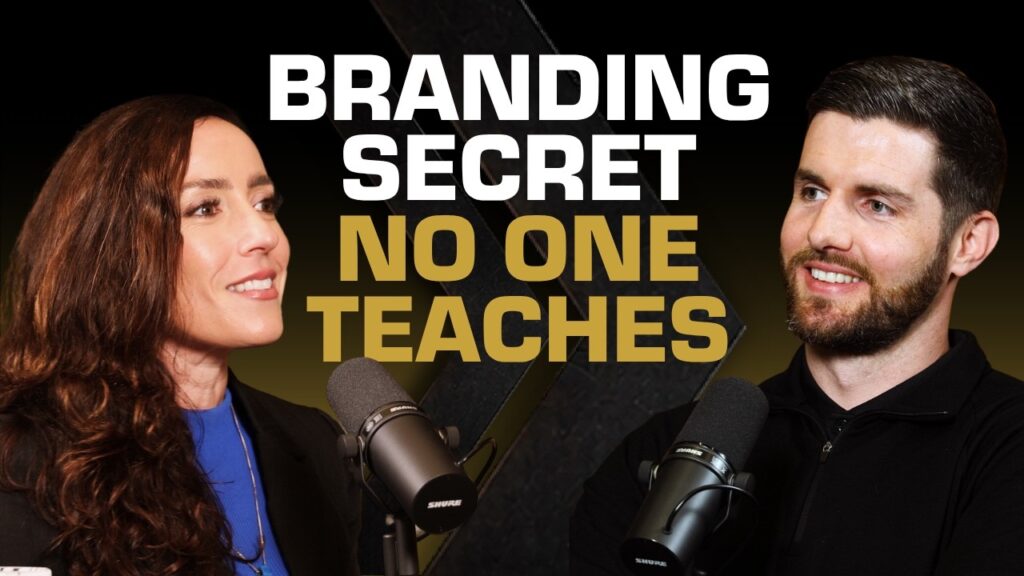
In Episode 25 of Unlocking Business, I sit down with Tracy Fryer, owner of Design Studio Perth, a branding strategist and the host of the Real Biz Life Chronicles podcast, where she has recorded more than 150 conversations with business owners. Tracy usually sits on the other side of the microphone, so it was great to have her in the guest seat.
We talk about what most owners get wrong about branding, how narrow your ideal client really needs to be, why so many websites, vans and taglines look the same, how a lead magnet does more than a new logo colour, and why you should post it before it feels perfect.
Who is Tracy Fryer?
Tracy has a visual arts degree and a graphic design diploma, and she says neither taught her anything about running a business. She started Design Studio Perth six years ago thinking she was replacing a wage. Working with a business coach from her first six months changed how she saw it, and the agency now covers brand strategy, the systems that carry a brand to market, digital PR and demand generation.
Three people close to her told her to start a podcast before she finally said yes. The Real Biz Life Chronicles ran online for a year, then from a sponsored studio, and now from her own studio. She has recorded more than 160 episodes so far. She also runs a personal brand and a jewellery label, Trace Designs Bespoke, and uses her personal website to link all three without confusing anyone.
Key takeaways from the Design Studio Perth conversation
1. Lay the brand foundation before you build the house
Tracy’s analogy is a house. Brand is the foundation, and your website, socials, SEO and ads are the house that sits on top. She estimates around 75% of businesses go straight to the website without defining their positioning or their ideal client, then wonder why the marketing doesn’t produce results. Her other way of putting it: marketing is asking someone on a date, and the brand is the reason they say yes.
2. Build everything around one ideal client, and give them a name
At Design Studio Perth that client is Steve. He’s ambitious, time poor and reads everything on his phone between jobs, so the website has to work properly on a phone. Tracy points to the son of the Ferrero Rocher founder, who tested every new recipe against one imagined woman. If you’re not sure who your Steve is, she suggests asking AI to interview you with questions until you’ve built out the profile. Her rule: if you market to everyone, you’re an expert to no one.
3. Say what problem you solve
“Perth’s best” and “most trusted” say nothing, and being licensed is a legal requirement in most trades, so it doesn’t set you apart either. Tracy wants owners to describe the problem they solve, like a doctor listening to symptoms. If you serve different audiences, give each one its own landing page. A strata manager who lands on “Perth’s best residential electrician” will assume you’re not for them and leave. Case studies help too: the situation, how you solved it and the outcome.
4. Make your website a lead generation machine
Instead of changing your logo from green to blue, Tracy would rather you write a lead magnet. Her example is an electrician offering a free guide for women who live alone on what to do when the power goes out at night. The visitor leaves a name and number, the details go into your CRM, and they enter your sales process. Then someone has to follow up, or the lead magnet just collects names. She also rates newsletters, because most people can’t remember what they did yesterday.
5. Look active everywhere a customer checks
Before anyone calls you, they check Google reviews, your website, LinkedIn and Instagram. If they find nothing recent, your credibility drops. That’s why I keep our Google Business Profile posts current at Smartfix. Tracy says you don’t need every platform. Pick one or two where your client actually spends time. Posting to Instagram can share to Facebook at the same time, and LinkedIn suits trades that serve strata and commercial clients.
6. Post it before it’s perfect
I told Tracy I wish I’d started my personal brand years earlier, because I’m only now building followers nine years into Smartfix. Her answer was that she’d rather have 300 followers who care than 3,000 who don’t, and that everyone has to start somewhere. She left her own nervous first podcast episode online so people can see where she started. The best advice her coach gave her was to lean in to being more Tracy Fryer.
Fifteen trades, one call centre and a brand that got diluted
Tracy’s point about niching hit home for me. Smartfix started with electrical and air conditioning, then spread into 15 other trades. My theory was that a customer who found us for an electrical job would see our brochure and use us for everything else. In practice they already had a painter or a cabinet maker, and our call centre had to know a little about every trade without knowing enough about any of them. We’ve now gone back to electrical and air conditioning.
Tracy is going through a big change of her own. Six years in, Design Studio Perth is rebuilding its website, its services overview and its tagline. Her advice for anyone rebranding is to think it through properly first and roll it out in stages. Uniforms and vehicle graphics alone can take three to six months to change over.
“If you market to everyone, you’re an expert to no one.”
Tracy Fryer, owner of Design Studio Perth
What 160 podcast episodes taught Tracy
Asked what successful owners have in common, Tracy says they’re fiercely driven, willing to take big risks, and almost all deal with imposter syndrome. Her own biggest lesson is to know your numbers. She avoided them for two years because she didn’t like how they made her feel. Now, on a bad day, she opens the balance sheet and usually finds the recurring clients are still there. Her coach also taught her to treat every new idea as an experiment and to stop and celebrate a goal when she hits it.
Where to find Design Studio Perth
Tracy says LinkedIn is the best place to reach her with a branding question. Her personal brand links to the agency, the podcast and her jewellery label.
- Website: designstudioperth.com.au
- Instagram: @designstudioperth
- LinkedIn: Tracy Fryer
- Podcast: The Real Biz Life Chronicles
More episodes you might like
- Content Marketing, AI and Why Your Story Is Your Best Business Asset | Sarah Mitchell
- Getting the Phone to Ring When Work Dries Up | Steve Leigh
- Buy a House or Open a Shop? He Put Everything Into the Shop | Edward Maradona
Want help building a business that grows without burning you out? Work with me.
In this episode
- 00:00Cold open
- 00:40Introduction
- 00:59Welcome Tracy Fryer, Design Studio Perth
- 01:37What owners misunderstand about branding
- 03:19Brand is the foundation, marketing is the house
- 03:53Meet Steve, the ideal client
- 06:20Market to everyone and you're an expert to no one
- 07:59Using AI to build your ideal client profile
- 09:02Why Smartfix went back to electrical and air con
- 10:21Why "Perth's best" and "most trusted" say nothing
- 12:19Can you change your branding as you grow?
- 13:52How long a rebrand really takes
- 15:11Why a lead magnet beats a new logo colour
- 16:45What customers check before they buy
- 18:26Why newsletters are underrated
- 19:24What is a lead magnet?
- 20:53Case studies vs testimonials
- 22:04Google Business Profile posts and consistency
- 25:41When to start a personal brand
- 27:16Kane's regret about starting late
- 33:27Polished or just post it?
- 36:44"Lean in to be more Tracy Fryer"
- 37:39Why owners won't put themselves online
- 44:38How to actually retain what you learn
- 46:46Say what people need to hear
- 48:18Why you need a brand style guide
- 49:47Using AI as a tool, human first
- 51:57How tradies can stand out without being creative
- 54:05What a brand discovery workshop looks like
- 55:09Do you need a business coach?
- 59:54Why Tracy started her podcast
- 1:02:41Common traits of successful owners
- 1:04:04The biggest lesson from 160 episodes
- 1:05:43Know your numbers
- 1:07:05Treat everything as an experiment
- 1:07:36Why you need to celebrate the wins
- 1:09:12Where to find Tracy
Full transcript
Read the full transcriptAuto-generated from the episode, lightly edited for clarity
[00:00] Cold open
Kane: We spend 45 to 50k a week on Google right now. If they go to our profile and our last post in there was two years ago, if I saw that, I'd be like, they're probably not in business.
Tracy: People say, "Oh, Trace, you're always so polished and well presented." And I was like, "Well, actually, no, I'm not. When I'm running, when I'm chasing a goal, I look a mess."
Kane: I wish I'd started my own social media personal branding earlier on, because I feel like right now I'm losing credibility because I don't have any followers. I've just started.
Tracy: Business has certain principles that can apply across the board, and as long as you're prepared to work really hard, you can make it happen.
[00:40] Introduction
Kane: Hey, I'm Kane Tyler Smith, the founder and CEO of Smartfix and Hypotential. This is Unlocking Business, where we have real conversations around business, leadership, mindset and personal growth. If you've been getting value from these conversations, please take a second to like, subscribe and follow our channels. It helps us reach more people, bring on more guests and share more stories. Now, let's get into this episode.
[00:59] Welcome Tracy Fryer, Design Studio Perth
Kane: Today I'm joined by Tracy Fryer. Tracy is the owner of Design Studio Perth, a branding strategist, and the host of the Real Biz Life Chronicles podcast, where she's now had more than 150 conversations with business owners and leaders. She's spent years helping businesses understand what actually makes them different, how to communicate that properly, and how to build a brand that connects with the right people. And because Tracy normally sits on the other side of the microphone, I thought it'd be great to have her in the guest seat today. Thanks for coming on the podcast.
Tracy: Thank you, Kane. I'm looking forward to our conversation.
Kane: Me too. There's so much to talk about.
Tracy: Absolutely. I love branding and marketing, as you do. And I love your studio. It's beautiful.
Kane: Thank you. It's been a lot of work.
[01:37] What owners misunderstand about branding
Kane: What do most business owners completely misunderstand about branding?
Tracy: When it comes to branding, the big misconception is that brand and marketing are the same thing. The analogy I love to give is that it's like dating. Marketing is asking someone on that date, and the brand is the reason they say yes.
What I find is that a lot of business owners, sometimes not by their own choice, maybe because the marketing agency they're working with doesn't understand brand as well, go straight to the website, straight to SEO, and they don't lay the foundation of that brand. What happens is the marketing activities don't produce the results they're hoping for, because they haven't built out their brand, which is essentially built around who their ideal client is.
Kane: For a lot of small businesses, and we were the same, I didn't really know what branding was until years and years on. So why is it that most small businesses don't understand branding from the start? Is it not taught early enough?
Tracy: I think there's a few things. There's a lack of solid education out there, like what is a brand and how can you leverage it in your business to generate more leads, more high-intent leads as well. But I also think business owners start with a passion, and they don't take the time to educate themselves on the different things that can really help them grow their business, brand being one of them. I know there's a lot going on, especially when you first start a business, but you speak brand and people's eyes just glaze over. It goes in the too-hard basket and they park it.
Kane: I think it does get put in the same basket as marketing and advertising. It can all get mixed up.
[03:19] Brand is the foundation, marketing is the house
Tracy: Brand is that foundation. If you think of it like a house, if a house doesn't have a foundation, that house is going to come tumbling down. So brand is the foundation, and everything else marketing-wise that you do on top of that is the house that sits on that foundation.
But I see it must be about 75% of businesses that go straight to the website. They haven't got clear on their positioning. They haven't defined who their ideal client is, which is the main thing when it comes to a brand. Who is it that you serve? Sometimes you might have two ideal clients, but most of the time it's one, and then you build everything in your business around that person.
[03:53] Meet Steve, the ideal client
Tracy: At Design Studio Perth, we have Steve. I think about Steve a lot. Everything we do is for Steve. Where does Steve hang out? What are Steve's pain points? Does Steve have time to faff around with his own brand and marketing? No, because he's an ambitious owner. He's highly driven. He wants to bring on an expert who can help him in that area.
So get very clear on who that person is for your business, and then build your website, your socials, your collateral, everything around that. Even if you're doing a podcast, who is the ideal client for that podcast? Because it's a tool to help you generate more leads with that ideal client.
Kane: So how broad can that ICP be? I definitely understand the importance, but for Smartfix, for example, a trade business, in my eyes anyone who owns a property or lives in a house is our client. Can it be that broad, or does it need to be more honed in?
Tracy: The more you can niche down, the better. There's mixed opinions on this, but this is my opinion from my expertise and what I've seen over the last, I won't say how many years, I'll give away my age. The more specific you can be about that person, the better. What is their age? Where do they hang out? How do they spend their spare time? Are they on YouTube? Are they on LinkedIn? Do they spend most of their life with their phone glued to their hand?
If you're creating your website, yes, it should work on desktop and mobile. But if your Steve is on his phone most of the time, you need to make sure that website is beautiful and user friendly on a phone. If you build it for desktop and Steve's an ambitious man who doesn't have time and is literally texting between toilet breaks, you need to make sure that website looks the part.
Kane: Can you explain your ICP? Can you explain Steve?
Tracy: It's an ideal client profile. Other words you might hear are avatar or target audience. For us, it's Steve. What's funny is that from defining that audience for Design Studio Perth, the same audience has replicated with the podcast as well. Yes, the podcast can help many business owners, but from being very clear on who our ideal client is at Design Studio Perth, it's the exact audience on our podcast too.
There's different ways you can define it, but one of the biggest is the age demographic. That isn't zero to 100. I find a lot of business owners get very scared of niching, because in their mind they can market to everyone.
[06:20] Market to everyone and you're an expert to no one
Tracy: In my mind, if you market to everyone, you're an expert to no one. Say you're an accountant and you want to focus on the mining industry. Everything would need to be geared for that industry. Then I get people saying, "Oh, but I can still do mum and dad accounting, and I can still do this and that." The thing is, you water down your service offering so much. So many business owners have this Chinese menu of all the things they can do, everyone starts to look the same, and unfortunately it becomes very price-point driven instead of a value sale.
So the more you can niche, the better. "We're an accounting service for the mining sector, and this is the problem we solve." Think about Steve or Stephanie, whatever their name is. I say give them a name, because it makes it so much more real.
There's a great story from the Founders podcast about Ferrero Rocher. It was the founder's son who took over the business, and every single recipe was created for one woman. I can't remember her name. We all know that brand, it's luxury chocolate. Every recipe he tried, he would consider how she would feel about it. He'd try the chocolate and say, "Would she like this? Maybe not. Let's try a caramel." He built everything for her, and she didn't exist. But everything he did was for that person.
[07:59] Using AI to build your ideal client profile
Tracy: AI has its place here. Ask it to prompt you: "Who is my ideal client? Ask me questions to build out my ideal client profile." That's a great starting point to build a brand that's going to set you apart in an AI-driven world, where we're all going to start to look and sound the same. Get clear on that ideal client and look at their pain points. We've got a form I can share with you on how to define your ideal client, and then you start building everything around that person.
Kane: It is so scary. It's such a mental barrier. Even you saying that, I'm thinking about how I saw a vehicle parked and it was the ant guy. Did I talk about that on your podcast?
Tracy: I think you might have, yes.
Kane: Pest control just for ants. How niche is that? We spoke about how scalable that could be, and whether he even wants to be scalable. So it is scary. And a big part of it is saying no, because in that scenario you can't just say yes to everyone, or you'll be diluted.
[09:02] Why Smartfix went back to electrical and air con
Kane: My story on your podcast was that we had electrical and air con, then we went to 15 other trades, and it was so diluted. My idea was that if you find us on Google and get us out for an electrical job, we give you our brochure with the other services we do, and in theory you should use us for all of those things. It just didn't work, which I still struggle to understand. Some people might already have a painter or a cabinet maker. It diluted everything, and it was so hard because we had a call centre with loads of people on the phones, and they had to understand little bits of every single trade without knowing enough about any one. Now we're back to electrical and air con only. It's still quite broad with what we do in-house, but it's one trade.
Tracy: You can offer different trades, but you have to be very particular about how you do it and how your website is set up. For example, if you're an electrician who does commercial and strata management, have your pages set up for each. If you're trying to target strata managers, don't have "Perth's best residential electrician" on the first page they land on, because that strata manager is going to think, "Oh, they're just residential," and off they go. Or if you're trying to target commercial and you've just got residential on the front page, and I've seen this happen, you're going to lose half your audience.
[10:21] Why "Perth's best" and "most trusted" say nothing
Tracy: So think about your tagline and really give it some thought. The most common ones I see are "Perth's best" whatever it is, or "the most trusted". Really sit down and think about what makes you different. There are a lot of graphic designers, accountants, plumbers and electricians, but what makes you stand out is what makes you different. You might be changing a plug, changing lights or rewiring a house, but think about the problem you solve for that client and how you can articulate it in a way that isn't those clichéd "most trusted in Perth" lines, because I see so much of that.
Kane: That reminds me. When everyone starts their electrical business, they usually have residential, commercial, industrial, 24/7, free quotes, no call-out fee. We have some of those in ours, but everyone's the same. I look at vans now and I see industrial, commercial, residential and a mobile number, and I think, that's probably a one-man band. How can you do all of that?
Tracy: My thing now is focus on your niche and invest in it. In saying that, I do think you have to be realistic. When you first start your business, you might have to say yes to everything, because it's expensive to be alive and you need to pay staff. So sometimes you have to say yes to things you might not say yes to one day. But once your business is at a certain stage, and so many business owners don't do this, you need to stop and review. They start, and 10 years later they're still doing the same stuff because they haven't stopped to look at what's working and what's not. Maybe after five years you don't need to do residential. That was bread and butter for a while, but now cash flow is stable and you can focus on just doing strata. Once your capital and cash flow are more stable, you can go further in that direction of niching.
[12:19] Can you change your branding as you grow?
Kane: That's a good point. So can you change your branding as you go?
Tracy: Absolutely. A brand is organic. It's a great question, because a lot of business owners think that once they've created their brand, and some people think it's just a logo, it's set in stone. As your business grows, you have to review your brand at every stage. Generally a brand's lifespan, depending on how fast your business grows, is two to five years. That doesn't mean changing the logo. If your ideal client changes, you'd then have to change the logo, the messaging and the positioning. But provided your ideal client profile is still the same, it's about asking whether the brand has evolved to a stage where you need to tweak the messaging.
Design Studio Perth is at that stage. We're going through a massive transformation. We've been in business for six years, and if I don't transform my business, I might not be here in two years' time. So we're looking at whether Steve is still our man, and how we can better serve Steve. Steve is time poor. He doesn't have time to go to 10 different places for his branding and marketing. So how can we keep Steve in one place and work with him in that regard? With that comes a total revamp of the website and our services overview. Our tagline is changing.
But when you make these choices, make sure you've given it deep thought. Don't just see a reel where someone said to change your tagline and decide that one change is going to transform your whole business. Think about what you're doing, then slowly make those changes.
[13:52] How long a rebrand really takes
Tracy: It's a rollout. It doesn't happen overnight. A rebrand rollout can take three months, sometimes six. If you're in the trades, you might have uniforms with your old logo on them, or vehicle graphics, and it's a big expense, because you have to make sure it's consistent across the board. So you do it in stages so it's not overwhelming.
Kane: Another good question on that: can it damage your business if you change your branding too often? And what would the timeframe be?
Tracy: I see this common thing where people think that if they change their logo colour, it's going to completely change their business, or they keep redoing their logo. And I'm like, there's nothing wrong with your logo. How about you sit down and work out who your ideal client is, or do some cold outreach on Instagram? Invest your time there. So yes, if you're chopping and changing too much, it can definitely be damaging. That's why building out your ideal client, your Steve, really helps you stay on track. If you find yourself wanting to change your green to blue, is that really going to impact Steve's life? Probably not.
[15:11] Why a lead magnet beats a new logo colour
Tracy: What might impact Steve a lot more is a great lead magnet. If you're a sparky, it could be the top five things to think about before rewiring your house. I think there's a gap in the market for an electrician to target women who live alone. We're terrified to engage any trade. So have a lead magnet on there: if you're a single lady living alone, these are the five things you need to be mindful of when something happens at home with your electricity or your plumbing.
Create that lead magnet, put it on your website, have a form that captures the information, and plug it into your CRM. If you're still using spreadsheets, please get a CRM. There are trade-specific ones. We use GoHighLevel. Then Tracy goes onto your website, sees this lead magnet that guides her when her power has gone out and she's alone at night. To get that bit of value, she gives her name and number. It's a no-brainer. She then enters your CRM and your sales process. You might give her a call, you might have a coffee, whatever the case may be. You can track that lead through your sales process, which is a lot more useful than changing the blue on your logo.
[16:45] What customers check before they buy
Kane: From the customer's perspective then, in that scenario of losing power late at night, and I know you told me a story about a tradie at your house that was a bit scary, what does the customer look for? Is it reviews? Is it talking to them directly? What sits best with a customer when they're making purchasing decisions?
Tracy: We've all become pro stalkers. People go to Google reviews, especially in the trades. Google has also changed the way websites are indexed. It now indexes websites and social posts, so if someone searches your name or your business name, your social posts are going to rank as well. People will look you up on Google, look at your LinkedIn and go to your Instagram. If they find crickets, your credibility drops down the ladder.
For some reason, people think they have to be on every single social media platform. You don't. Choose one. Instagram and Facebook are linked through Meta, so when you post to Instagram, your posts can go onto Facebook too. If you're a time-poor sole trader, that's great, because you're leveraging one platform and being seen on both. So make sure you've got an organic social media presence. I cannot stress this enough. Have your Google reviews, have your website set up properly, and have a lead magnet on your website, a bit of free value. Give away the candy.
I think a lot of business owners are scared to do that because it's their IP. To be frank, there's nothing really new in the world. We all rinse and repeat and put our own spin on it. So put that lead magnet on there and get leads coming through from your website. If it's just sitting there looking pretty, or not looking pretty, as some I've seen, it doesn't serve its purpose. Your website is supposed to be a lead generation machine.
[18:26] Why newsletters are underrated
Tracy: Set it up with a newsletter pop-up and your lead magnet. Newsletters are so underrated. They're a great way to get in front of your audience. The feedback I get is that people are scared they'll bug everyone. Most people can't remember what they did yesterday. A fortnightly newsletter is a great way to share a case study. "This is Tracy. She had a power outage, and this is the problem we solved."
That's a big one. Speak to the problem you solved and what was in it for your customer. Don't go on about how great you are. That's what your reviews are for. It's like going to a doctor. You say your nose is running and your stomach is sore, and they prescribe something. So think about the symptoms your person had. Tracy was alone, her lights were out, she was terrified and imagining all sorts of things. Speak to that problem instead of "we do commercial, residential, strata, mining", this menu of stuff that overwhelms people until they start to price shop.
[19:24] What is a lead magnet?
Kane: So what is a lead magnet? Is it a landing page, or is it different?
Tracy: There's a few ways you can do it. You can have it as a free value piece, like your top five tips on how to do something, and it sits on your website. The person clicks the link, it takes them to a landing page, they fill out their details, and they get the free PDF. It could even be a behind-the-scenes podcast. Either way, they have to give you their details. The landing page is linked up to your CRM, your customer relationship management tool. Their details go into the CRM, they're tagged with the lead magnet they downloaded, and they enter your sales process.
But if you've got that set up, make sure someone, if it's not you, is actually following up on the leads. A lot of the time the leads come in and no one follows them up, or someone refers a person to you and they never get a call. It's a lead magnet because it attracts leads, but make sure someone is picking up the phone or sending a text: "Hey Tracy, I saw you downloaded our guide. What stood out for you?" And I might say, "My power was out, I didn't know what to do, and I still haven't got it sorted." Great. How about I send someone out to have a look and give you a free quote, whatever the sales pitch is. But genuinely try to serve and help that person.
[20:53] Case studies vs testimonials
Kane: Something I've heard a lot recently is case studies. Is a case study different to a testimonial or a review?
Tracy: A case study is more in-depth. A testimonial might be a paragraph thanking the business, whereas a case study is the actual story of what happened and how it was resolved. This was the situation, this is how we solved the problem, and this was the outcome.
Kane: But you wouldn't have that as a downloadable lead magnet?
Tracy: I highly recommend having a resources page or a case study page, listing the different companies you've worked with, so people can go and read those case studies, because it builds credibility. If you've got a blog post from 1994, people are going to wonder whether the business is still around, or whether the owner is still alive. So if you have a blog or a resources page, make sure it's dated and recent, so people know you're still in business and actively trying to serve that audience with free value.
[22:04] Google Business Profile posts and consistency
Kane: That leads us onto consistency. You mentioned social media has to be consistent to make it look like the business is still operating. Would you say the same about Google Business Profile posts? We've always been quite heavy on doing those. I don't know what benefit they have, but to me, we look active. We spend 45 to 50k a week on Google right now. If someone goes to our profile and our last post was two years ago, I'd think they're probably not in business. So reviews are current, posts are current, social media is current. And like you said, you don't have to be on every platform. I'm pretty OCD. I want to be on all of it just in case, but the time that goes into it is pretty hectic.
Tracy: Absolutely. With Google Business Profile, if you're already creating content for social media, just post it there too. You might reach a stage where you have one strategy for socials and one for Google Business Profile, but if you've already got the content, post it, because it shows you're relevant. People can look at the photos and your testimonials and see that you're still in market and operating.
Kane: So can you copy and paste the same content across all the platforms?
Tracy: You can, but it's not ideal. Then again, there's only 24 hours in a day. If you're a small team or a sole trader without a full-time in-house marketing person, it's a very time-consuming affair to try to do all of that. Generally, Instagram and Facebook are great for trades. If you serve strata and commercial, LinkedIn is where you need to hang out. If you're a sole trader, you might just share the same content to start building a profile on each platform. Then you might get to a stage where you've got enough income for a VA, and you can create content specific to LinkedIn and content specific to Instagram and Facebook. If your residential ideal client is family homes, target them on Instagram and Facebook, and if you work with big commercial businesses, LinkedIn would be your main focus. But I'd still say choose which way you want to go.
Kane: It's hard to be everywhere. At the moment I'm posting most of the same content on each platform, and we try to vary it a little. I don't know if LinkedIn is good for what we're doing. Your ideal client is almost the same for Design Studio Perth and your podcast, but mine is a bit different. We've got the trade business, and we've got Hypotential, which is the podcast but also trade business coaching. I could get good podcast guests on LinkedIn, but probably not my ideal client for the coaching network.
Tracy: It's almost like you've got three different things happening. You have to be careful that all those social media platforms don't start looking the same. I've got Tracy Fryer, Design Studio Perth, the Real Biz Life Chronicles, and Trace Designs Bespoke, which is my jewellery brand. I have to be very particular about which content I add Tracy as a collaborator on, because if I start posting everywhere, it all looks the same. People will think, "Does this lady do jewellery? Is she a podcaster or a branding expert? I'm so confused, it's too hard, I'll go somewhere else."
[25:41] When to start a personal brand
Kane: That comes back to what we spoke about earlier with focus and niching. This is probably the perfect point to start talking about personal brand. You're obviously mindful of not putting too much on your personal brand socials for that reason.
Tracy: Whether it's business or personal, a brand will be formed whether you like it or not. So I'm of the mindset that you should be intentional about how you form it. What I did was get Design Studio Perth to a certain stage, then the podcast, and then I launched the Tracy Fryer brand, because people got to know Design Studio Perth through me. Trying to launch both at the same time is really hard. It's like having two different businesses, and your business's ideal client isn't necessarily the ideal client of your personal brand.
So I'd always focus on the business brand first, because that's your bread and butter money. When your business is at a certain stage, focus on your personal brand. The reason I started mine is because I have a few different things happening: the podcast, my jewellery brand and my branding agency. If I put all of that onto one website, it's very confusing. A personal brand lets you showcase all the different things you're doing without creating confusion. On my personal website there's a drop-down with the podcast, Trace Designs Bespoke and my branding agency.
[27:16] Kane's regret about starting late
Kane: It's such a hard one. I don't know whether it's contradictory, but I've had Smartfix for, I think this is our ninth year now.
Tracy: Amazing.
Kane: It's kind of a long time to be in business. And now I'm thinking, I wish I'd started my own social media personal branding earlier on, because I'd have followers. Right now I feel like I'm losing credibility because I don't have any followers. I've just started. On the other hand, those followers might have been the wrong followers anyway, and I know there's this whole thing about vanity metrics, but it's true. If someone looks at my podcast or my social media and I've got 300 followers or no subscribers, it doesn't look great. Getting bigger guests over time is going to take me longer. So what stage do you think a business has to reach before you should start thinking about a personal brand?
Tracy: If you've got capacity, do it from the beginning. But I felt more equipped to do it when I did, which was about two years ago. If you want vanity metrics, yes, people unfortunately do look at them. But I would rather have 300 solid followers who care about what I'm saying than 3,000 who don't really follow what I'm doing. Things have also changed with Instagram and Facebook. It used to be a lot easier to build a following. I had an architect on my podcast who's got around 27,000 followers on Instagram, but it was easier back then. Now it's harder to get traction.
All that to say, if you've got capacity, start both. But sometimes you have to choose where your focus goes. If your focus is split, and I've been there a few times, it's very hard to do one thing well. So choose one thing, and then do the other.
Kane: And the number is never perfect, whenever you start. With the podcast, a higher-calibre guest will always ask how many followers you have.
Tracy: I had one of those. I pretty much said, "Look, we're starting out. If your goal is just vanity metrics, it's probably not the podcast for you. But if you'd love to have a chat..." I never heard from him.
Kane: It is hard, because at a higher level, I've got a friend over east who's now had his second billionaire on his podcast. For them, their time has to be worth it. Unless they're a friend doing you a favour, they want eyes on what they're doing. If your average viewership is 500, is it worth their time?
Tracy: There's no harm in asking. They can always say no or not respond. But I also think that if that person genuinely wants to help people and serve, the numbers shouldn't play a big role. If someone contacted me and said, "I'm trying to build my audience, would you be a guest?" of course I would, because that's where I started. If someone is so fixated on a number and what they'll get out of it, they're probably not the right fit for me. I'd rather not have them. If they genuinely want to serve, who knows, someone could hear that conversation and it could change the entire trajectory of their life. That speaks volumes for me.
Kane: You've got to start somewhere. I was watching Alex Hormozi on a podcast the other day, and I've heard this from him before. He'll repost a screenshot from years ago when he started and only had a few followers, and someone commented about him having no followers. He said everyone has to start somewhere. And now look at him.
Tracy: That's the hardest part. Sometimes people procrastinate. Like you said, you wish you'd created your personal brand earlier. There are a few things I wish I'd done earlier too. People procrastinate and don't start. So just start. If you're focused on serving people, the rest will follow eventually. It might take a while.
My mentor and I often talk about how people want a one-shot fix. If I do SEO, it'll change my life. If I do organic social media, it'll change my life. They do SEO for a while and it doesn't work. Then they do organic social media for a month, it doesn't work, and they chop and change to something else. "Let me make my logo blue instead of green." They just jump from one thing to the next. You have to be consistent and keep at it. It gets boring and tedious, but if you focus on the mission and where you want to go, eventually something changes. And it all compounds. A great website, social media, SEO and paid ads all add together. I think there have to be around 21 touch points before someone even thinks about engaging you.
One person told me, "I post once a quarter, but I don't really get anything out of it." If you post once a quarter, you're not going to get anything out of it. Deep down, if you feel like things are inconsistent and not working, it's probably because they're not. So take a step back, get a VA for four hours a week, and get things up to speed so you can reach that $5 million goal. I come across a lot of business owners with big financial goals who don't want to do the hard yards to get there.
[33:27] Polished or just post it?
Kane: Two things come from that. The first is that everyone wants things to happen really fast. I mentioned to you outside that I didn't think it would take this long to get followers or traction. We still haven't got much yet, but I thought it would be a lot quicker. The other question, and I think I know the answer: be polished, or just do it? That's a big procrastination point for me. I'm quite OCD with the 1 percenters. I want everything to be perfect before it goes out. But some of our first social media posts were horrific. I watch them back and think, that's awful. But that's your journey. You have to start somewhere. You can't start with an amazing post that goes viral.
Tracy: I'd say just go for it. I was the same. I'd try to make everything perfect, overthink it and procrastinate. Now my mindset is that if I have an idea, I make a video, and if it's not great, I post it anyway, because there might be one thing in it that helps someone.
With the world going where it is with AI, the human element is going to be very popular. A lot of feedback I get, especially from women, is that they think they have to look a certain way to work out. I'm a runner and I'm at the gym a lot, and people say, "Oh, Trace, you're always so polished and well presented." And I say, "Actually, no. When I'm running, when I'm chasing a goal, I look a mess. I've got a man bun and I'm sweaty." So I did a post sharing some of my race photos, and somehow they always take the worst ones. But it keeps it real, because we're human. Nobody is perfect. Perfection doesn't exist, and you'll drive yourself crazy trying to chase it. Trust me, I've been there.
So share the photo, do the post, do the video. If you mess it up, just do it again and keep going. What's nice is that when someone looks you up and scrolls back through where you started, it can inspire them. "Tracy was here with a man bun and a sweaty face, so maybe I can put on my gym gear and run to my letterbox." That's how I started running. Or it could be, "Kane started his podcast here, and look at him now." It's good to showcase that brand story. A lot of people skip that part because they think they have to look a certain way and just list out their services. They don't take the time to articulate their brand story, which is essentially what differentiates them from someone else in their field.
Kane: That resonates so much. When we started the podcast, we built the studio because I wanted it to look good, and I wondered whether I had to wear the same shirt every episode, like Steven Bartlett does. But now I hear people like Chris Williamson talking about how behind-the-scenes, unpolished content is working better. Graphic designers might hate it, but with AI anyone can make their content look really polished. Video brings the human connection. Anyone can do cool-looking graphics and fake pictures, but raw behind-the-scenes content, like your videos talking to the camera while you're running, is real. You still need the polished stuff as well, but you need both.
[36:44] "Lean in to be more Tracy Fryer"
Tracy: One of the best things my business coach ever said to me was, "Tracy, lean in to be more Tracy Fryer." And I was like, "Oh my gosh, that's great advice. Why haven't I done this?" He said that about three years ago, and ever since then I've stopped looking at what everyone else is doing. Comparison robs us of stepping into our power and doing what we were born to do. If you want to wear five different shirts or a floral shirt, just go for it. You'll find your own vibe and your own brand through doing that. In my experience, trying to present a certain way is exhausting. If you want to wear Ugg boots, go for it, because that's the stuff that resonates with your tribe, and that's what builds your audience.
[37:39] Why owners won't put themselves online
Kane: We've answered so many of these questions already. Why do you think some business owners are uncomfortable putting themselves online? In trades specifically, you often never know who the business owner is. We used to have my name on the website ages ago, and everyone would call wanting to speak to Kane. So I got rid of my name, because we've got a customer service team for a reason and we send a site assessor to quote the job first. We removed it for a long time and only recently put it back on.
Tracy: I think a lot of people doubt themselves. They look at what everyone else is doing and think they're no good at what they do, the imposter syndrome thing, and that stops them putting themselves out there. Or they ruminate on stories they've told themselves since they were five about why they shouldn't be doing what they're doing, even though they've been brave enough to do it. And then there's the practical side. What do I say on camera? Should I have a photo of myself on my website? Should I have my name on there?
I had Jim Penman from Jim's Mowing on my podcast, and he's quite open with his number. Especially in Perth, people deal with humans and love supporting local. As a business owner, I think you need some presence on your website. Maybe your business gets to a stage where your brand has surpassed you and that's what people know. But for small and medium business owners, at least have a photo of yourself on there and a bit about you. People are giving you their time, energy and money, and they'd like to know who you are. Whether you put your mobile number on there is up to you. You've got a business to run and can't be on your phone all the time. But have a photo and a short intro video: "I'm Tracy from Design Studio Perth, and this is how we make our clients' lives easier." Some of that psychological trust is already established when someone sees you on your website and on Instagram.
To answer your question, people don't know what to post about, and they don't want to put themselves out there because of fear of judgement, criticism and comments. Haters are going to hate, but think of all the people you can help by putting yourself out there. I've invited a few guests onto the podcast who said, "Not a chance. I can't put myself out there." I work on them for a year or two, they finally come on, and they're so relieved afterwards because it wasn't as bad as they thought. Sometimes we psych ourselves up so much that we put ourselves off doing the thing. So don't overthink it. Just do it.
A great way to get used to being on camera is to put your phone on a tripod at your desk or on a job and talk to it like a crazy person. Take a selfie. Just start somewhere basic.
Kane: With those people who didn't want to come on the podcast, do you think they watched your stuff and realised it's just a conversation about them and what they do? I was so nervous. Your podcast was the first one I ever went on. Even though I'd done some episodes myself, I thought it would be easier to ask the questions, which I think it is. Telling your own story made me so nervous, but it's literally just telling the story of what I've done, with you asking great questions. Then I watched it back and realised how much has happened in eight years.
Tracy: Totally. And it's a really good tool to coach yourself, because as a business owner you have to put yourself out there a lot. If you want to grow and you're ambitious, you can't hide behind the curtain. Sometimes I'll watch a podcast back and think, "Tracy, maybe vary your tone a bit here," or, "Slow down and have a breather." I had an engineer on about three years ago who still hasn't watched his episode. I spoke to him yesterday and told him to watch it.
Kane: I try to watch all of ours, and you learn so much. Certain words you say, and you wonder why you always say that word. I've been working with a public speaking coach and getting him to watch the podcast too. I still think I can improve.
Tracy: I think you present very well. Even on my podcast, I wouldn't have said you were nervous at all.
Kane: If there was a way to stop the nerves, I think I'd be more casual. I'm okay now because I've done a couple, but I know I could improve.
Tracy: I find four deep breaths really help. Tony Robbins talks about psyching himself up before he presents. Then I make it about the person I'm serving. Who's the Steve whose life I can change or help by showing up today, nervous as anything? It's not about me. It's about the audience I'm trying to serve, and that takes the edge off. I probably still get a sweaty mo, but I think about the person who needs to hear that one thing about social media, and that's who I show up for.
[44:38] How to actually retain what you learn
Kane: There's always something in an episode. There's so much content online, and I'd love to know how many hours of podcasts I've consumed. I don't use social media much, but I watch a lot of podcasts, and the amount I retain is minimal. Maybe five percent. How can people retain it? Are you supposed to write it down?
Tracy: Pick one thing. If it's this episode, choose one thing. "I'm going to set up my tripod and talk to myself today." Or, "I'm going to book a brand photo shoot and get a nice headshot." Guys, please, no fish and no sunnies in your LinkedIn or Instagram photos. It's not a dating app. I see it so much. Or wedding photos.
So whether it's a Hormozi podcast or a reel you've seen about marketing or health and fitness, choose one thing and do it. If you watch content regularly, you could say that for September, you'll take one thing from an episode and get a headshot taken. If you're ambitious, maybe one thing a week. One episode, you write one cold outreach message. The next, about marketing, you get a lead magnet created. It's humanly impossible to remember everything. I use the notes on my phone. If I hear something I love, I pause the podcast and capture it, and if I'm driving, I pull over first. Or I've got a journal where I write down a quote I love or something my mentor says, and then I focus on that.
The other thing I wanted to say about people not putting themselves out there: I've met some of the most incredible minds who refuse to put themselves out there. Self-doubt gets the better of them. But they deprive other people of seeing how great they are and of learning from them.
Kane: There's so much content being put out there right now, more than ever. How does a business or a person stand out? My opinion would be to be real and not over-polished.
[46:46] Say what people need to hear
Tracy: Yes. And say the stuff people need to hear but don't necessarily want to hear. I think we all try to say the right things to please people all the time. Say things that cause a bit of dissonance and make people stop and think, "Does my website really look like that?" People say, "Change your logo from blue to red." Stop. Lean into being yourself and put out content. The very thing you're fearing to say is what the world needs to hear you say.
So don't just create the same content everyone else is creating. People look at what someone else in their field is doing and try to rinse and repeat it. Fine, but put your own spin on it. Say what you're thinking. There are reasons people start a business. There's a problem that needs solving. So call it out. If you want to reach a $3 million revenue goal, are you taking the steps to get there? Or have you just got a logo and a website, and you haven't defined your messaging? You're trying to attract commercial, but your website says residential.
Kane: And if you're going to use AI to build your website, at least put your own wording in there. There's a lot of that at the moment.
[48:18] Why you need a brand style guide
Tracy: Absolutely. A lot of people are using AI, so everyone starts to look and sound the same. One way to stand out is content that says what people need to hear. Another is a visual identity. You've got a logo, but do you have a brand style guide? What are your brand colours? What are your fonts? What are your visual assets? I had one client who'd been in business 35 years and done everything right, but had a logo and no brand style guide. That means every supplier, every team member and anyone working with the brand has no idea what the colours are. They pull colours from here and there, it becomes a dog's breakfast, and then the business wonders why it isn't reaching its goals.
At Design Studio Perth we have the brand compass. In layman's terms, it's your words and your visuals. How are you presenting to market? How do you look across social media and your website? Is there a cohesive message and a cohesive look? That's another great way to stand out. You mentioned the shirt earlier. Have a cool shirt you wear in your videos, or graphics that look different. Don't do the norm, because there's so much generic stuff out there at the moment, especially with AI. You have to know how to prompt properly, but there's a lot of generic content out there. Think about how you can actually be different, and have a beautiful website that's a lead generation tool, instead of something you've knocked out with AI without much thought. Otherwise you'll sit there wondering why it isn't working.
[49:47] Using AI as a tool, human first
Kane: Have you integrated AI into your business much?
Tracy: Yes, absolutely. It's a tool, like a hammer in your toolbox for hitting a nail into the wall. Our content is still human first, because platforms have started penalising AI copy. So we create the content as humans first and use AI as a tool to strengthen it. I believe if you post copy created in AI on socials or your website, it can be flagged, because it has a digital footprint. Even if you just get AI to proofread it, I think it gets marked. Hopefully that gets rid of some of the slop we've been seeing.
Kane: But if you are human first, with AI helping and then a human checking at the end, and it still gets that mark, is that going to be an issue?
Tracy: There are tools that humanise it more and take the mark away. I think it's pretty extreme to mark everything, because if we've created a strategy human first and then used AI to tweak it here and there, that's quite severe. But I understand why, because a lot of people are pumping out random content. Will people care? Maybe not, because there are only so many hours in a day for someone using AI for their website and content. For us, we pride ourselves on custom, human-first work. Even our logo started as a sketch before it became a digital graphic, because templates and AI are generic, and you won't look any different.
The best way to check is to open your website and your competitor's website side by side. Are you actually different? Because when someone's shopping, that's what they do. It's like buying shoes. You line up all the pairs and compare. Make sure you look and sound different. If you've got "Perth expert" and it's the same thing repeated, you're no different, and they'll start price shopping.
[51:57] How tradies can stand out without being creative
Kane: How would a tradie who isn't a creative make it different? So many businesses have the same branding and wording: same-day service, free quotes, no call-out fee, 24/7, trusted, licensed, which is a legal requirement. If I was just starting and didn't have some of those on there, would I miss out, because everyone else has them?
Tracy: Some of that you will need, like the calls to action you mentioned. But from a visual point of view, think about the most productive use of your time. If you're a plumber or a sparky, is it the most productive use of your time to design a logo? No. Is it the most productive use of your time to write your messaging? No. Branding is an investment to help you grow your business. If it's done properly, I find you'll get about 25 to 40% high-intent lead generation.
So I'm of the mindset that you engage an expert to do the creative. If I tried to do the wiring in my house, I'd probably electrocute myself. So who's the expert in that field? Do your research, because there are a lot of cowboys out there. Then get that agency or person to come up with your creative. Maybe they'll change your name, or give you a mascot. You've got Colin, which is a great differentiator. Look at your messaging. Remove "Perth's best expert" and "reliable trades", think about the problem you solve, and come up with a tagline that's unique to you. Certain things work in some industries, like a free quote. But get your messaging, your positioning and your visuals right from a differentiation point of view, and you'll naturally stand out in market.
Kane: And if someone's just starting to work with that expert, the expert can pull the information out of them. If I was working with you, you'd ask me the questions to learn about me, and then it's your job to translate it.
[54:05] What a brand discovery workshop looks like
Tracy: Yes. We run a brand discovery workshop, and it's intense. We do the hard yards for two or three hours. We've got a framework we go through to gather all the information we need to build a brand strategy: how you're going to play in market, what your service offering is, and how you make your ideal client's life easier. At Design Studio Perth we've got brand, then tech, which is the systems that carry that brand to market. Then digital PR, which is where you're going to show up. Are you on LinkedIn? Are you on a trade-specific podcast? Where are people going to see you? And then demand. Where is the next client coming from? What's your marketing plan? Are you just spraying and praying and hoping for the best? Getting clear on those four pillars is the system. Most business owners start their business with a passion but no idea how to turn it into the lifestyle and financial freedom they set out for. Having a system in place helps you reach the goals you set at the very start of your business journey.
[55:09] Do you need a business coach?
Kane: You've mentioned a business coach a couple of times. How important do you think it is for people to have one?
Tracy: Oh my word. If you don't have one, it's like you're missing a limb. I've got a visual arts degree and a graphic design diploma, and they taught me nothing about business. I've always had a coach since the first six months of my business journey. I had a very different view of what my business was going to be. I think I was looking to replace my wage. Working with a coach opened my mind to a whole other world and the opportunity a business allows me. So it's an absolute must. People say it costs so much money, but it's worth every dollar, provided you've done your research and found the right person. There are some cowboys out there who've done a four-week course and now call themselves business coaches. Unless you've had a business and run it successfully, you're not a business coach.
Kane: That leads to a question I think is important. I would assume that to be a business coach you'd need to have done it yourself. But I've heard people say some of the best sports coaches in the world never played the game. What's your opinion on that?
Tracy: There are probably some similarities between sport and business. But I chose my current coach because he's been where I want to go. My previous coach was great for startup. She got me to a certain point and then said, "Trace, I've taken you as far as I can. You need to find someone else." It's important to note you won't necessarily have the same coach throughout, depending on their area of expertise. For business, I think someone has to have been where you want to go.
Kane: In the same industry?
Tracy: Not necessarily. Business has certain principles that can apply across the board, and as long as you're prepared to work really hard, you can make it happen. So find someone who's achieved what you're trying to achieve and has the right mindset. Do you gel with them? For that person to help you grow, they have to know you inside out. Otherwise, from a psychological point of view, they can't help you push past the stuff that gets in your head.
A lot of people say they don't have time. I've always had my meeting with Paul every Friday from 12:30 to 1:30, and I don't miss it. If I'm overseas, we do it on Zoom. That's time I invest in myself and my business, so I can help my clients and achieve what I want in life. It's non-negotiable. It goes in my calendar for the year. If I look at Design Studio Perth when I first started compared to now, they're two completely different businesses. If you'd told me six years ago I'd be doing what I do now, I'd have said, "No way."
Sometimes Paul says stuff I don't want to hear, and it's hard to swallow. But I think about it and realise he's right. You need that trust with someone who tells you what you need to hear. Then you go away, think about it and slowly implement it. It's challenging. There are times I don't like what he says, but I know it's what I need to hear to get to the next level.
Kane: They have to challenge you.
Tracy: Yes. If they just sit there agreeing with you, don't waste your time. I had a different coach for the startup phase, reached the ceiling, met Paul through a leaders group, and it's a completely different approach, but it's what my business needs now.
Kane: I've never really had a business coach. I think things would have been different if I had. I never knew much about it, and I used to talk to a lot of people who hadn't done what I was doing, so I never believed anyone.
Tracy: I think a lot of people are like that. But I can hand on heart say Paul has helped me become a better leader, a better business owner and a better human. I don't think my business would be where it is without his guidance. Someone can advise you until they're blue in the face, but unless you're doing the hard yards and you're open to it, you're not going to reach those goals. I highly recommend it.
[59:54] Why Tracy started her podcast
Kane: Let's talk about your podcast. You've recorded more than 150 episodes.
Tracy: We did 162 this week.
Kane: Why did you start the podcast in the first place?
Tracy: I have this thing where if I hear the same thing three times, the universe is speaking to me. I'd been a guest on a few podcasts, and three people close to me, my advisor being one of them, said, "Tracy, you should start your own podcast." I thought, not a chance. Too nerve-racking. I don't put myself out there, all that stuff we tell ourselves. Then I heard it the third time and thought, okay, there's something here.
I love chatting, and I'd met some incredible business owners along my journey who shared great stories with gold nuggets in them. I wondered whether I could bring those conversations to light to help others in the way those people had helped me over a chat at a networking group. So that's why I started. We were online for a year, then the podcast studio was sponsored by Horizon Digital for a year, and then I had a studio built. This year we've been recording in my studio, which has been great.
Kane: Do you think it's changed your business or your personal brand?
Tracy: Absolutely. You get a much clearer perspective on what business owners go through, and you become more confident in yourself. The first episode I did was with my advisor, and it was terrible. I was so nervous and sweating, and I think I got his business name wrong. But I've left it up so people can see where I started. I still mess up. I wanted to show that things aren't always polished. It starts somewhere and grows from there. What I love about the podcast is that it hasn't only helped my profile and my business, which was never the intention. It's helped our guests too. They've got business from it and other podcast opportunities, and someone reconnected with an old school friend. I get a lot of messages saying it was exactly what they needed to hear, and that fills my soul. It made putting myself out there with my sweaty mo worth it.
Kane: Do you find you hear so many similar stories? Even though the businesses are completely different, the business struggles and life struggles are so similar.
Tracy: Like I said before, business has certain principles that apply across the board. The conversations have similar threads: imposter syndrome, self-doubt, taking too long to make decisions.
[1:02:41] Common traits of successful owners
Kane: What are some of the common traits of successful people?
Tracy: They're fiercely driven. They're relentless. They're obsessed with being the best. They're often the oldest sibling, though I'm not sure that has anything to do with it. They have really bad imposter syndrome. They're willing to put themselves through a lot for their passion. They seem to have a very deep calling for what they're doing, and they persevere. And a lot of people don't realise how great they are. They put themselves down all the time.
Kane: With the insanely driven part, is that the same as taking big risks?
Tracy: Yes, they take big risks. They're very ambitious and they try things. I remember from our podcast that you said you'd taken a few big risks as well. They don't fit the average mould. They're willing to go the extra mile, try new things and risk it all, even put their house on the line, to create a business that serves their Steve. They have a very different appetite to someone who's employed.
[1:04:04] The biggest lesson from 160 episodes
Kane: What's the biggest lesson you've learned from your podcast?
Tracy: So many. For me, it's always taking responsibility in my business. As a podcast host, I didn't realise how much I'd grow to enjoy helping people get exposure and come out from the shadows. There are so many great business owners, especially in Perth, who aren't known about and need to be. It's been a great platform to give them that opportunity.
The other big lesson is that you have to work really hard. There's no way around it. If you've got big goals, you have to work really hard. If you're happy with two clients and earning whatever, I'm happy for you. But if you've got big goals, there'll be days where you question everything. I often do. You have your bad days where you think, "Maybe I should just get a job and throw in the towel. What are you doing, Tracy? You're mad to think you can do this." Then I think about Steve, and I think, no, Steve needs me. The podcast needs me. It's not about me. So you go through this cycle.
My running buddy and I were talking about this just this morning. She's in the startup phase and I'm six years in, and she'd spoken to another business owner who's been in business for 30 years and still has the same self-doubt, that it's all going to fall apart. I think we often live on that edge, toggling between what's working, what's not working and feeling like it's all going to fall apart.
[1:05:43] Know your numbers
Tracy: One of my biggest lessons in business is to know your numbers. I avoided it for two years because I didn't like how it made me feel. How silly. Know your numbers. Know what's working and what's not, whether it's your balance sheet, your Google Analytics or your CRM. Otherwise you're just throwing things at a wall and hoping for the best. On the days when I'm all doom and gloom and being a bit dramatic, I go into my balance sheet. Thank you, Paul. I look at it and think, "Okay, Tracy, we've got this. You might not have closed three proposals, but you've got a really great base of recurring clients. You can calm down now." It helps moderate the stress, because you open yourself up to a lot of rejection and you have to navigate that.
Kane: On that business owner who's been in business for 30 years and still has those feelings, do you think that's because business owners and entrepreneurs can never settle with what's working? With our business, there were times when it was working really well, and I'd say, let's keep going, keep hiring, keep spending more on Google Ads, keep growing. Hindsight is a great thing, but how do you know when to stop?
[1:07:05] Treat everything as an experiment
Tracy: I think your goals constantly change. Once you reach a certain goal, you think maybe you can do the next thing, so you slowly climb the ladder. Something else Paul said to me that was great: view everything in life as an experiment. That took the edge off, because I'm a perfectionist. We've got this far with the experiment, so let's try Google Ads, or whatever it is, and see what happens. If it didn't work out how we thought, it's an experiment. It's okay, as long as no one died. Let's take the experiment in another direction.
[1:07:36] Why you need to celebrate the wins
Tracy: And as entrepreneurs, we're never satisfied. We reach a goal and look for the next bar. I've had to really slow down and say, "Tracy, you actually reached that goal. Enjoy it. Celebrate." Take the time to enjoy that moment. I had someone on my podcast yesterday who'd reached a massive goal, $160 million in loans written as a mortgage broker, and he said the feeling lasted a day. What he said is that it's not about the number, it's who you become getting there. So I'm really trying to enjoy the journey more and not be so hard on myself. You might not have hit forecast this month, but look at all the other months you did. Be a bit kinder to ourselves. We can be a bit relentless.
Kane: You're a special breed. That's so important, and it comes up a lot on the podcast. Celebrate the wins, because life is the journey, not the end point. You hear about athletes and sports stars who struggle after they retire, because they've won all the titles and now they're finished. So then what?
Tracy: And some people won't even stop to celebrate a win, which I think is a bit sad, because what's the point then? You're flogging yourself working 22-hour days on two hours' sleep. You've put everything on the line and potentially lost relationships because of what you're doing. If you can't take even two hours to have a drink and celebrate, or treat yourself to lunch because you've reached that goal, what are you doing?
[1:09:12] Where to find Tracy
Kane: So true. Before we wrap up, is there anything we haven't covered that you want to talk about?
Tracy: No, I think it's been really great. Thank you so much for having me, and I hope everyone has found it really useful.
Kane: I didn't ask where people can find you and your business. You sent me a huge list of links, and we'll put them in the description, but where can they find you?
Tracy: The best place is probably LinkedIn, or my personal website, where there's a contact form. You're welcome to message me on LinkedIn if you've got any questions about branding. Please feel free to reach out, because I'd rather you message me and ask the question than park it and think about it for two months. One question and one answer can change the direction you're going in.
Kane: Awesome. Thanks for coming on.
Tracy: Thank you so much for having me.
Kane: Thanks for tuning in to this episode of Unlocking Business. If you've enjoyed this conversation, please take a second to like, subscribe and follow our channels. It really helps us bring on more guests and have great conversations. If you'd like to connect with today's guest, the details are in the description below. I'm Kane Tyler Smith. I'll see you on the next one.