About this episode
Jacob Blight found out he’d been drafted by Richmond at about 6pm on a Wednesday night, and he was on a plane the next day. It was the dream he’d chased since he was a kid in country WA, and it didn’t last as long as he hoped. Getting delisted is what led him to start BLYT Development.
In Episode 26 of Unlocking Business, I sit down with Jacob Blight, founder of BLYT Development, an athlete development and mentorship platform for young athletes. Kids get taught skills and drills constantly, but almost nothing about the mindset, character and habits that decide whether they make it or fall away. Jacob built his business around that gap.
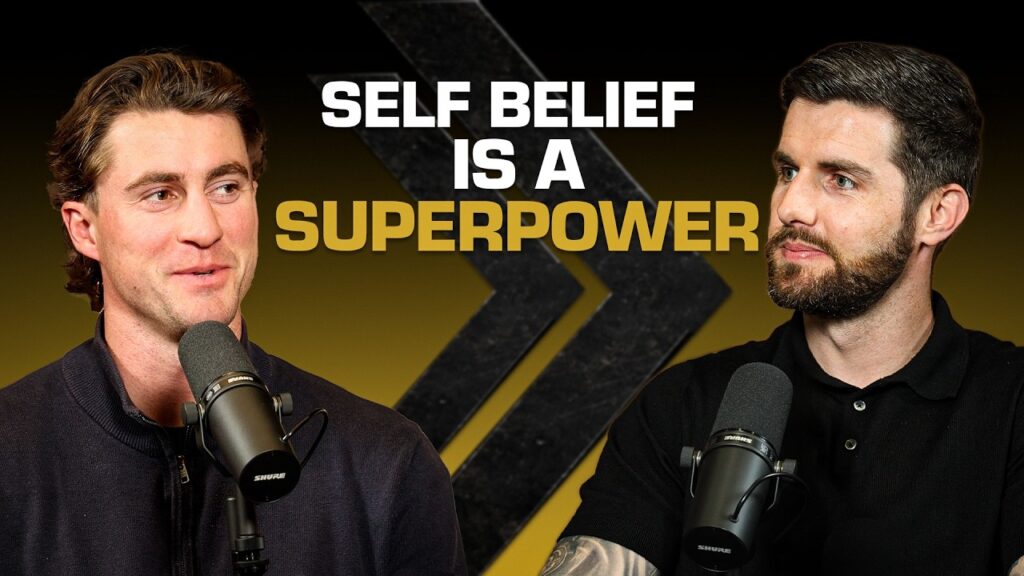
We talk about how someone actually gets from a country town to the AFL, why the average career only lasts a few years, why so few players have a plan B, what it’s like selling to parents when the kids are the ones doing the work, and why self-belief is your superpower.
Who is Jacob Blight?
Jacob grew up in a farming family in country Western Australia, moving between small towns before spending most of his high school years in Albany. Where he grew up, playing AFL was the dream, but it was treated as unrealistic because so few people from the area had ever done it. He says he was ambitious and driven but never the most talented, and he had almost no one around him who had walked the path.
He missed the junior development squads, worked his way into the WAFL Colts, then built himself up through reserves and league football. A move to Peel Thunder turned his career around, and at 22 he was picked up by Richmond in the 2024 mid-season draft. After being delisted, he started BLYT Development on 9 December 2025. He still plays semi-professional WAFL football with the aim of getting back on an AFL list, and he’s finishing a teaching degree.
Key takeaways from the Jacob Blight conversation
1. Character carries you when the results don’t
The biggest lesson Jacob took from Richmond had nothing to do with football. Sport rides big highs and big lows, and what pulls you through is resilience, knowing how to pick yourself up after a setback, and staying humble when things are going well. That’s the base he builds every program on.
2. All your eggs in one basket can crush you
In year 12, Jacob was all in on football and nothing else mattered. When he was dropped for a WAFL Colts grand final at Optus Stadium, it hit him like a ton of bricks. Balancing his life with uni and work is what finally got his football moving. He tells his athletes to have something else to chase for their wellbeing and their performance, because you can’t be an athlete 24/7.
3. The kids are the audience, the parents are the buyers
Jacob’s content is made for young athletes, but the people who pay are their parents. He now has a rule that anyone under 18 needs a parent on the call. He’s also careful about what he promises: he can’t guarantee a kid plays AFL, but he can guarantee they’ll learn more, grow as a person and have better tools for whatever comes next.
4. Your first offer probably won’t be your last
In his first year, Jacob changed his services two or three times, from strength and conditioning to player welfare to the mentorship program he runs now. He took a role that wasn’t the right fit and put himself in a financial hole to keep the business going. His take: the more you learn about your industry, the more you realise how much you don’t know.
5. Discipline is the vehicle, motivation is the petrol
Jacob gets his clients to set short, medium and long-term goals. The long-term goal is the top of the mountain, the medium ones are a few months out, and the short-term ones are the daily habits and routines. Focus on the process, but keep the outcome in view so you know where you’re heading.
6. Practise what you preach
Jacob still plays at a semi-professional level because he doesn’t want to tell young athletes how to eat and train while he plays local footy on the side. People gravitate to someone they like, respect or relate to, and a personal brand only works when it’s a true reflection of who you are.
Turning a dropped player around
One story stood out to me. One of Jacob’s clients in Melbourne was playing well at the top junior level when he was dropped with no feedback and sent back to a local team. Most kids in that spot either lash out at the coaches or quit. Jacob worked with him on how to handle it, he finished the season strong, and he’s now signed on for another six months with a plan for work and study as well as football.
It reminded me of trades. You learn the job at TAFE, but nobody teaches you how to run the business, and most owners only learn when something goes wrong. Jacob’s whole program is built to give young athletes that guidance before they need it.
“Your self-belief is your superpower.”
Jacob Blight, founder of BLYT Development
Why the average AFL career is so short
Jacob says the average AFL career lasts about three or four years. Clubs have to change between three and ten players on their lists every year to keep the draft moving, and some players simply can’t reach the level needed. When he arrived at Richmond, a senior player told him he’d be surprised how few people in the room had a plan B. Jacob sees that as one of the biggest gaps in the game, and it’s where he wants BLYT Development to help.
Where to find BLYT Development
Jacob says Instagram is the main place to reach him, or you can enquire through his website.
- Website: blytdevelopment.com.au
- Instagram: @blyt_development
- LinkedIn: Jacob Blight
More episodes you might like
- He’s 21, Making $8K a Week & Turning Work Away | Myles Gaebler
- Nutrition, Training and Staying Healthy as a Busy Business Owner | AJ Sloan
- Men’s Mental Health & The Hidden Crisis Facing Aussie Blokes | Jevyn Myers
Want help building a business that grows without burning you out? Work with me.
In this episode
- 00:00Cold open
- 00:24Introduction
- 00:40Welcome Jacob Blight, BLYT Development
- 01:17What the AFL taught him beyond football
- 01:21Drafted on a Wednesday, flying out the next day
- 02:42How someone gets into the AFL
- 02:47Growing up in country WA
- 03:49Why the AFL dream felt unrealistic
- 04:23Lacking guidance and mentorship
- 05:10Getting drafted at 22
- 05:44Moving to Perth and boarding at Wesley
- 06:29How the WAFL pathway works
- 07:14Moving clubs to Peel Thunder
- 07:47How AFL clubs scout and draft players
- 08:22Why 18 is the draft year
- 09:10The odds of getting drafted
- 10:28Colts, reserves and league explained
- 11:31Being a late bloomer
- 12:47What BLYT Development does
- 13:39Who the program is built for
- 15:17What support AFL clubs already have
- 16:08The support gap below the AFL
- 17:13No physios, and $20 to run the line
- 17:54The gap in the market
- 19:17Who the ideal client is
- 20:49What players do when their career ends
- 21:22Why so few players have a plan B
- 22:17All your eggs in one basket
- 23:05Dropped for the grand final in year 12
- 24:07Balancing football with uni and work
- 24:35Why state league can be harder than the AFL
- 26:13Why the average AFL career is so short
- 27:22Life after football
- 29:22Working with the AFL Players' Association
- 30:07Coaching as a way to give back
- 32:37Reframing plan B as wellbeing
- 35:10A client who got dropped
- 39:19Where parents fit in
- 42:44Why kids listen to their teachers
- 43:24Selling to parents, coaching the kids
- 46:31Online now, an academy one day
- 48:47Starting the business and changing the offer
- 51:27Nobody teaches you the business side
- 53:28Best advice: self-belief is your superpower
- 54:53Discipline versus motivation
- 55:51Short, medium and long-term goals
- 56:55Staying motivated without an event
- 59:16Getting back into the gym habit
- 1:01:46Do coaches need to have done it?
- 1:03:08Practise what you preach
- 1:05:10Getting back on an AFL list
- 1:06:55Uni, teaching, football and business
- 1:08:02Where to find Jacob
- 1:08:36Outro
Full transcript
Read the full transcriptAuto-generated from the episode, lightly edited for clarity
[00:00] Cold open
Kane: What did your time in the AFL teach you that had nothing to do with football?
Jacob: To cut a long story short, it did end a bit prematurely and it definitely didn't go the way I thought it would. The idea to design this actually came from my delisting from the AFL. I got cut, which was out of my control, but I'm still very much pursuing it.
[00:24] Introduction
Kane: Hey, I'm Kane Tyler Smith, the founder and CEO of Smartfix and Hypotential. This is Unlocking Business, where we have real conversations around business, leadership, mindset and personal growth. If you've been getting value from these conversations, please take a second to like, subscribe and follow our channels. It helps us reach more people, bring on more guests and share more stories. Now, let's get into this episode.
[00:40] Welcome Jacob Blight, BLYT Development
Kane: Today, I'm joined by Jacob Blight, founder of BLYT Development. Jacob played AFL for Richmond before starting a business built around a gap he saw in youth sport. Kids get taught skills and drills constantly, but almost nothing about the mindset, character and habits that determine whether they make it or fall away. Your tagline is "Develop better people, and the performance follows." BLYT Development now works with individual athletes, sporting clubs, schools and even businesses, all built around the same six pillars: leadership, performance, character, confidence, education and mentorship. Thanks for coming on the podcast.
Jacob: Thank you very much for having me.
[01:17] What the AFL taught him beyond football
Kane: Taking it back to Richmond, what did your time in the AFL teach you that had nothing to do with football?
[01:21] Drafted on a Wednesday, flying out the next day
Jacob: It's a great question. I was drafted in the 2024 mid-season draft. I remember the day very distinctly. It was the 29th of May, and at about 6pm I found out I was drafted. This was on a Wednesday night and I flew out the next day, so it was all very quick and very abrupt. Obviously it was a dream come true for me, something I'd been chasing my whole life. For it to happen the way it did, and to go to a club like Richmond, was incredibly exciting and incredibly humbling.
To cut a long story short, it did end a bit prematurely, and it definitely didn't go the way I thought it would. But the biggest takeaway I took from that time was the importance of character development. What I mean by that is being prepared for all situations, because in a game like football you ride the ebbs and flows, the highs and the lows. Character is what pulls you through: having resilience, knowing how to navigate certain situations, picking yourself back up when you get knocked down, and also humbling yourself when things are going right. From a non-football point of view, it was the importance of character development and personal development.
[02:42] How someone gets into the AFL
Kane: So how does someone even get into the AFL? Are you from Perth originally?
[02:47] Growing up in country WA
Jacob: I grew up in country WA. I started in a small country town, and my family were farmers. I moved away from there pretty quickly to Pinjarra, about an hour and a half south of Perth, and I also lived in Albany, where I spent most of my high school years. That was essentially where the pathway to the AFL was outlined to me.
Each country zone in WA is affiliated with a WAFL club, which is the semi-professional level in WA. Our club was Claremont. As a young junior, when all you want to do is play footy and hopefully one day get drafted, the pathway was through Claremont. When we had carnivals, or people from Claremont came down to watch us train and play and hopefully select us, that was where our pathway was outlined and where you could see yourself one day getting into the AFL.
[03:49] Why the AFL dream felt unrealistic
Jacob: From where I grew up, the dream of playing AFL was tagged as unrealistic. I don't like using that word, but that's essentially what it was, because very few people from that area had done it before. There were a few, but not many. Playing AFL was always the dream, but it was certainly not smooth sailing. Growing up I went through a lot of adversity, and my career didn't go the way I wanted when I was younger. I was very ambitious and very driven, but certainly not the most talented.
[04:23] Lacking guidance and mentorship
Jacob: I didn't have the physical attributes, and I didn't have many people to lean on who had already played footy at a high level. So I really lacked guidance and mentorship, and an influence from somebody who had walked the path I wanted to walk. Growing up I remember being quite frustrated and angry, and I always had a chip on my shoulder, because I really wanted it but it wasn't quite clicking. I had a few moments in my life where I was able to turn it around and put myself on a path to getting to Perth, getting into the WAFL system and building my way up through it.
[05:10] Getting drafted at 22
Jacob: I was 22 years old when I got drafted, and the draft age is 18, so my journey was quite a unique one, to say the least. The mid-season draft is also a much smaller draft than the end-of-year one, so the likelihood of making it is still very low. But it eventually clicked for me. I got where I wanted to be, and through perfect timing and great form I was able to find a way onto a list halfway through 2024.
[05:44] Moving to Perth and boarding at Wesley
Kane: When you moved to Pinjarra, was that with family?
Jacob: Yeah, all family. I was still very young. I moved around quite a bit in primary school, and from about year seven or eight onwards I was settled in Albany until I eventually got to Perth.
Kane: When you moved to Perth, was that also with family or by yourself?
Jacob: Family as well. Actually, I did board for a little bit. I was a boarder at Wesley College for a couple of terms, and then my family moved up for my last year. That's where I finished off school. My younger brother was a very good cricket player at the time, so it was an incentive to get him up as well. That's how the journey to Perth eventuated.
[06:29] How the WAFL pathway works
Kane: So with that Claremont program you mentioned, do you have to play for Claremont to go through it?
Jacob: When you're in that system, that's what you do. Ideally you go through the 14s, 15s and 16s, and eventually to Colts. I never got any opportunities in the younger development squads, which is why the character development side had to come in for me, because it wasn't happening at a young age. Through hard work, a bit of resilience and willpower, I found a way into the Colts system, established myself from there and built the career I have today.
[07:14] Moving clubs to Peel Thunder
Jacob: I didn't play for Claremont when I got drafted. I opted to move clubs, and funnily enough it was a bit of a full-circle moment, back to Peel, which is in the Pinjarra zone. That was a real point of difference in my career. That's where I went from being someone fairly average with a bit of potential to someone good enough to jump to the next level. It was the best decision I made in my career.
Kane: Moving to Peel Thunder?
Jacob: Yeah.
[07:47] How AFL clubs scout and draft players
Kane: I don't know how it works. Do you get poached, or do you get drafted? Do people come and watch your games and pick people from there?
Jacob: Essentially, that's how it works. If you're fortunate enough that there are AFL clubs interested in drafting you, they'll watch your games and potentially interview you if they're serious. Then once a draft comes up, that's the opportunity for you to go onto a list. It's certainly not easy.
[08:22] Why 18 is the draft year
Jacob: Being 18 is the draft year, so that's probably the best chance for most.
Kane: What do you mean by that? They're looking for that age specifically?
Jacob: Most of the time. Once you're older than 18, you're starting to get a bit too old, so you start to worry a bit more at 19 and older. It definitely doesn't mean it's over, but 18 is usually the best chance to get on a list, because clubs can take more of you at the same time. If you're a mature-age player, you have to do a lot of good work at the state league or semi-professional level to get a look in. It's a funny system. I quite like the NRL; I think they do it a lot better. But it is what it is. You just have to do the best you can with what you've got.
[09:10] The odds of getting drafted
Kane: Before the podcast you mentioned something about the percentage chance of getting drafted.
Jacob: I did this research for my business, actually. Each year there's only a fraction of a percent chance of getting drafted if you're an 18-year-old who wants to get into the system. That's the statistic for the likelihood of doing it.
Kane: Which goes back to your point about "unrealistic". It's not unrealistic, but the chances are so slim that it feels that way.
Jacob: 100%. I don't like the word "unrealistic", because I feel like it limits your beliefs and kills a dream before you can even really have it. The reality is the likelihood is low, but that doesn't mean it's impossible. When I was younger, I always heard these statistics and likelihoods, but internally it never deterred me. I always sincerely believed I'd find a way one way or another, and to my credit I did. I wish I was still there, but that's okay. I got the opportunity and did well with what I was given, and that's the main thing.
[10:28] Colts, reserves and league explained
Kane: Going back to Colts. As you go through the 14s, 15s and 16s, is Colts the highest level before you get drafted?
Jacob: Colts is basically the state league level for the younger guys, the 18-year-olds. Once you transition out of that and don't get drafted, you can either drop to amateurs or stay in the WAFL system and play in the senior program. Each WAFL team has Colts, reserves and league, and reserves and league are open age. When you're younger you go through the Colts system, because it's basically an introduction to the standards and physical demands of WAFL footy. If you're good enough, and you stay persistent and work hard, senior WAFL football is an option from there.
[11:31] Being a late bloomer
Kane: You mentioned before that you didn't play in the Colts, you played outside of that?
Jacob: I didn't play in the junior pathways, the 14s and 15s. I never got those opportunities. I was a bit of a late bloomer in my sporting pathway. I eventually got to Colts and played Colts footy, but I never made the jump from Colts to the AFL. I had to do my time in the WAFL and build myself up through reserves and league football, and eventually AFL football. It's quite a difficult pathway, but one I relished.
Kane: That leads to a question. I can only relate this to soccer, because I played soccer, not at a high level, but I saw the process of getting to NPL. It's easier if you're already in those teams around those people, because the mindset is different and the coaches are at a higher level. Because you missed out on the 14s, 15s and 16s, you wouldn't have had the experience those guys had. You probably missed out on a bit of coaching and mentoring.
[12:47] What BLYT Development does
Kane: That leads into your business in a way. Can you explain what you do with BLYT Development?
Jacob: 100%. BLYT Development is an athlete development and mentorship platform. The idea actually came from my delisting from the AFL. When I came out of the system, I was obviously dealing with the emotions of that, and my biggest thing was to find something that would match that feeling and that sense of purpose. I'm still pursuing playing AFL again and trying to get back on a list, but there are never any guarantees with that. So I wanted to create something that would give me a purpose far beyond football. I'm working through a teaching degree, and I mixed that with my football experience and background to create what it is now.
[13:39] Who the program is built for
Jacob: Basically, it's a mentorship platform for younger athletes, around 13 or 14 up to 21 or 22, to help guide them to where they want to go in their sport, their particular goals and the journey they want to take to get to the top. It's a designed program built to cater for all the scenarios you'll face as an athlete, especially setbacks and building confidence back in yourself. Then it goes into performance routines, training standards, how to structure your week, how to recover, and all the finer details it takes to be a high-performing athlete. That's one half of it, created specifically for that age group.
When I reflect on my time as a footballer, I was very discontent and had a chip on my shoulder, because I wanted it so badly. The reason I created this business is to help that particular person. It's something I really needed when I was younger, but I never had a role model or mentor I could look at and say, "That's the person with the credentials to help me." That's why I created it. I believe it's a unique business, and there aren't many, if any, doing it. It's still early days, but I can see it having a massive impact on many athletes.
[15:17] What support AFL clubs already have
Kane: You'd assume the clubs would have those kinds of people if they're playing at that high level. They obviously have coaches who teach the skills. Would they not have people like that within the clubs? It's obviously not counselling, but more of a mindset thing?
Jacob: 100%. At AFL level you have an array of resources: psychologists, wellbeing staff, your coaches who teach you how to play, and external resources you can tap into. The AFL is really great for that, and the whole association is built to help with that side of things.
[16:08] The support gap below the AFL
Jacob: But as you know, not many get to the AFL, and so many play footy at the lower levels. The state league side is definitely getting better, but there isn't as much funding or as many resources as the AFL. Clubs do the best they can, but there are definitely gaps, and in amateurs, junior footy and below, it's almost non-existent. That's why I designed this, to have an impact and share my experiences. I don't try to portray myself as someone who knows it all or had the most decorated AFL career. But I've lived a very unique life, had a very difficult journey to get there, and learned many life lessons along the way. What I've designed is there to equip my clients and my broader audience to help with their pathway and where they want to go.
[17:13] No physios, and $20 to run the line
Kane: That's a good point. Relating it to soccer again, it's a huge drop going from NPL or state league to reserves and then amateurs. You don't even have physios, or linesmen for some games. You're giving a guy off the side 20 bucks to come and run the line. The standard drops off hugely, and they wouldn't have the funding for psychologists, or sometimes even proper coaches.
Jacob: 100%. Especially at the younger ages, where your mate's dad is running the team and may never have played himself.
[17:54] The gap in the market
Jacob: That's the gap in the market I've identified. There are a lot of great training programs out there, and a lot of online fitness people doing their own thing. There are plenty of resources, but what there really isn't is people who have the credentials, have walked the path before, and are willing to help you on your journey. I feel that's a huge gap, not just for young athletes but athletes in general: people who can guide you through every step of the way.
When you're an athlete who's ambitious and wants to play at a high level, there's so much that goes into it from a mental standpoint, plus everything you're doing through the week, not to mention the distractions of school, work, study and socialising. There are so many finer details that really matter. If there's anything I learned from jumping up the levels, it's that the higher you go, the more the small details matter. That's the 1%, and it's what separates average from good and good from great. That's why I've created what I've created.
[19:17] Who the ideal client is
Kane: With your ideal client, are they people trying to get into the AFL, or people looking to play at a high standard generally?
Jacob: Not all my clients are going to be AFL prospects. Some are more talented than others, so it's individual: how we get them from their situation up to the level they want to reach. It's not just football either. I'm a footballer, so that's my area of knowledge, but eventually I want to have mentors in different sports doing the same thing for those athletes.
For me specifically, ideally clients are ambitious and want to get there. Not everyone will, and that's totally fine, but I like working with the ambitious ones because they're usually hungrier for knowledge and they really listen. That's who it's designed for. I try to propel them from where they are, give them perspective, develop the person just as much as the athlete, and give them the blueprint for where they need to go.
[20:49] What players do when their career ends
Kane: A lot of people who go into professional sport don't have a teaching degree or a trade, because they got drafted at 18. From your experience, what do people with long careers at a high level usually do when they retire? AFL is hard on your body. You can't play until you're 65. Is there an average age where people drop off?
[21:22] Why so few players have a plan B
Jacob: The average career, I believe, lasts about three or four years, and the majority of kids are drafted straight out of school. When I first arrived at Richmond, without naming names, a senior player came up to me and said, "You'll be very surprised when you look around the room how few have a plan B." It's not really something you think about, because you're so entrenched in trying to be a high-level footballer. For those 18 and 19-year-olds who've been told how good they are for years, they haven't needed to think about anything else, because they trusted it would happen. That's great if they make it, but the majority don't, and even if you do, the likelihood of making a long career is still very low.
[22:17] All your eggs in one basket
Jacob: I also think it's so much better for your overall wellbeing to have something else to put your time and focus into. When you're so driven on one thing and you put all your eggs in one basket, especially in a situation you can't fully control, because there are coaches, selectors, injuries and setbacks, it can hurt you. I've seen it time and time again, and I experienced it myself. When I was all in with football and nothing else mattered, it was actually more detrimental to me and got me further away from where I wanted to go than having another ambition to chase.
[23:05] Dropped for the grand final in year 12
Jacob: I learned that lesson the hard way in year 12. I was finishing school, trying to get drafted and playing WAFL Colts. I played in a WAFL preliminary final and got dropped for the grand final, which was at Optus Stadium, and it hit me like a ton of bricks. I'd had a year where it wasn't really happening for me. I wasn't playing state footy and wasn't on any radar to get drafted, so I was already worked up and upset. That was the last straw, and it broke me in half as a young kid. That's where I learned the hard way that you need to balance your life out in different areas, not just for your wellbeing but for clarity as well. Because football is football, you can't control a lot of what happens other than your small habits and routines.
[24:07] Balancing football with uni and work
Jacob: That's when I started going to uni and working different jobs to balance myself out, and that's when my football started to progress considerably.
Kane: That would be such a hard one. If you're being told you're very good from 16 to 18, that's the time you usually finish school and go to uni, get a trade or do something else. I assume if you got drafted you'd potentially move states. Could you do uni or a job at the same time?
[24:35] Why state league can be harder than the AFL
Jacob: They do it at the state league level. The majority of players, if not all, work full-time or study at uni. I actually believe it's harder to play state league footy than AFL, because at least in the AFL it's your full-time job, you get paid for it and you dedicate your time to it. In the WAFL, VFL and SANFL, it's a really hefty schedule. You're still essentially training at an AFL standard, but with fewer contact hours, and you're not getting enough funding to live off a wage. So I feel it's even harder at the state league level. When those guys get the opportunity, more often than not they make the most of it and do quite well, because of their hunger, drive and appreciation for it once they're in the system.
That's why, now more than ever, there are more success stories of mature-age players in the AFL. It's that character development, and seeing what the real world is like outside of football. For the ones who don't experience that and then it all ends overnight, it's a real reality shock, and it takes some guys quite a while to navigate through it. That's the reality of the industry. If you can survive and have a 10 or 15-year career, you're one of the winners, but the majority don't.
[26:13] Why the average AFL career is so short
Kane: Four years sounds like a very short career. Why do you think the average is so short?
Jacob: I think it's mostly the rules of the AFL. There's high turnover, and each year clubs have to make certain list changes. It's a requirement of the AFL.
Kane: Is that to bring youth through?
Jacob: Yeah, to keep the draft going. It's a bit of a revolving door. Each year clubs can delist three to eight, sometimes even ten players to rebuild the list, so the list is always changing. That's a big reason why. The other part is that some players have potential or talent but can't find themselves at the level or reach the standards. If you're not good enough to be there, you won't be there for very long. I'd say those are the two main reasons.
[27:22] Life after football
Kane: For the people who drop off after four years, or even later, how do they cope? If you got drafted young and played for four to eight years, that's been your whole life, and you potentially don't have a degree or anything to fall back on. What can they do?
Jacob: The AFL Players' Association, which I'm hoping to work with in the near future, is doing a lot of work in that space to build resources and build urgency in players to go and seek that out. But you can lead a horse to water and you can't make it drink. If the resources are there but the players aren't using them, that's on them. I think the issue is that players don't really understand what life is like away from football. They may think they do, but they really don't. So there's no sense of urgency to have something just in case. Their whole identity is being a footballer, so why would they want to think about being a bricklayer, a teacher, a lawyer or a doctor? That's where it gets lost. The AFL presents resources and guidelines for other career paths, and clubs can facilitate study, whether it's certificate courses, trade courses or university. But it's there for players to use of their own accord.
[29:22] Working with the AFL Players' Association
Kane: Do you think that might be an opportunity for you? You mentioned potentially having people in each state doing what you're doing. That could be something ex-professionals do.
Jacob: I have something in the pipeline for that. I don't want to talk it into existence just yet, but I've been planting some seeds and having some conversations about a potential area with the AFL and a few other organisations. So there are plans in place. We're just hoping the seeds that have been planted come up and do well. It's a bit of a watch-this-space, and I don't want to get too excited too early.
[30:07] Coaching as a way to give back
Kane: I watch a lot of UFC, and you always see the big names who've done it their whole lives end up coaching, mentoring or managing other people.
Jacob: I love UFC as well.
Kane: It's a great thing to do, because like you said, it's been their whole life and they probably don't know anything else. They can give back to the younger guys and still jump in the ring and do their thing, obviously not at the level they were before, but it still gives them a purpose. They're bringing these guys up and living it through them in a way.
[32:37] Reframing plan B as wellbeing
Jacob: What I say to my guys is, a lot of people say you need a backup option, a second plan. That's true, and you definitely do, but you still need to be super driven at the one thing to make it. So I actually reframe it and say it's more for your wellbeing. As I said before, I was one-dimensional. At school I didn't care about studying or homework. I went to school so I could kick the footy at recess and lunch. That's how I was wired at 14, 15 and 16. But putting all your eggs in one basket doesn't quite work out.
Kane: And when that basket gets crushed, it crushes you, doesn't it?
Jacob: Exactly. So I tell them it'll actually help you perform better to have an outlet or another purpose to chase, because you can't be an athlete 24/7. You need to rest, recover and take your mind off the game so you can rejuvenate and feel motivated for the next one. It's from a wellbeing and performance standpoint, not just a life skill or a second option. That's how I frame it, because I never want to plant seeds of doubt in my clients about what they want to do.
I grew up in a very small country town, and the likelihood of playing AFL from there was extremely low. That was ingrained in me early, but I found a way and achieved it, despite the probability and the lack of people before me who'd done it. So I never want to make my clients feel like they can't. But there's a bigger perspective behind it, and I think that's one of the main things.
Kane: That's a good way of putting it. I can't remember who said it, but on a podcast a high performer said not to think about plan B at all, because plan A is everything. The way you've put it is a good perspective. It's not "in case you don't make it". You're going to push hard for that thing either way.
[35:10] A client who got dropped
Kane: Can you give me an example of one of your clients and what their other thing would be? Is it a job, or just another hobby?
Jacob: I have clients who are still in high school, and a couple who have finished school. Right now I've got one in Melbourne who's graduating from year 12. His football season didn't go to plan. He's very talented, works really hard and is very diligent, but there was a situation he couldn't control that really swayed his season. He was playing at the semi-professional level, the Victorian equivalent of WAFL Colts, and doing really well. Then all of a sudden he was dropped, with no feedback or guidance. He was basically neglected, and he had to go and play for a local team and find his way.
This is where the program flourished, because this was a situation he couldn't control. In most cases, if that happened to a kid, you'd probably never see them again and they wouldn't have a career. But I caught him at a time when I could help with the mental side and how to approach each situation, so he didn't blacklist himself with the coaches. We're all emotional and nobody wants to get dropped, but you can't lash out and give your opinion all the time. It's also about how you approach it. Do I quit now? Do I just play local and dominate? We were able to rewire his thinking. Although it was a really tough situation for him, he finished the year strong, and now we've made a plan for what it looks like going forward. He feels rejuvenated and more motivated than ever.
We did that by giving him perspective and clarity, and also other things to focus on. He's graduating from year 12, so he's got his studies to finish, but also what he's doing next year. I told him he's not finishing school and sitting around doing nothing for three months waiting for preseason. So now he has a plan for work, what he's going to study and what he's going to try outside of football. It's a bit of coaching and a sports business course. All of that has kept him on the straight and narrow, motivated and engaged. He's re-signed with me for another six months, which is a great sign that what I'm helping these guys with is really relevant and is propelling him towards a bigger and better future. He's one of several examples, but a prime example of a young athlete who could get caught in that trap if they went down the wrong pathway.
Kane: That's a great story, because so many kids would just lash out and say "I'm done with this." But it's normal at that age. You don't have the life experience of a job or a career, and school is very different to working life and its responsibilities.
Jacob: It's not the end of the world if you do it, but now that he's gone through that, and he's got perspective and more clarity in what he can do, it'll set him up for the rest of his life hopefully. That's why I promote mentorship so much. Those are the exact reasons it's so important, not just for young athletes in my niche, but for all industries, businesses and organisations.
[39:19] Where parents fit in
Kane: I don't know how to ask this, but where do parents come into it? A kid at that age probably isn't going to listen to their parents, even if they're perfect, helpful, motivating parents. Have you ever come across a situation where you're telling a kid one thing and their parents are telling them something different?
Jacob: That's a great question, and it's an element of the business I'm refining now, especially in how I post content and how I communicate with leads and people who might come into the program. It's very common, as a teenage boy or girl, to feel like you know everything and don't need advice or help. I was once like that, my siblings were, and most people I know were. You don't realise how much help you need until something goes wrong or the chips are down.
The best parents I work with are the ones who see the value in what I do and support it. That doesn't mean they don't have input, but they trust that what they're investing in will help their child get where they want to go. Early on you're still building a relationship, rapport, trust and respect, and that doesn't take five minutes. Over time, as you break down the walls and understand the individual, their character, what they're used to, their potential limiting beliefs and their perspective, that's where the teacher side comes in. You can bring in different approaches and different perspectives, and that's where the guidance piece comes in.
The parents are an element I need to target more in my business, because essentially they're the buyers of my programs. I need to show them I'm not trying to tell parents how to parent. That would be very arrogant from someone who doesn't have kids, and I don't even have a partner, so I'm a long way off that. My position as a mentor is to use my skills and experience to help with their situation, and collaborate with parents on what I see and what's feasible. Sometimes the best form of care is telling the truth, even the hard truth, to make things very clear for the client or the parents. But it all comes from a good place, because all we want is to help them get where they want to go. It can be hard to navigate at times, but there's a lot more collaborating with parents now, and that's only going to build from here.
[42:44] Why kids listen to their teachers
Kane: I think it's a really good thing that you have the teaching background. We have a five-year-old daughter who doesn't really listen ever, but when we see her in the classroom and the teacher tells her something, she's the best listener. I don't know if you'd have the same effect, or what the psychological side of it is with kids.
Jacob: I don't know either, but I think part of it is that they're so comfortable with their parents. That's their safe place, so they feel nothing's going to happen. Whereas in public or at school with other people, they do listen. It's a bit of an authority thing.
[43:24] Selling to parents, coaching the kids
Kane: With what you do, I assume the parents are the ones paying. So when you explain what you offer, is it always to the parents?
Jacob: That's been a bit of an adjustment to make. My content is for the kids to learn from, engage with and enjoy, but who I'm actually selling to is the parents, because they're the ones who can buy it. The marketing side can be tricky, because you need engagement, interest and a following to grow the brand, but the people who actually invest in the program are the parents who feel it would be best for their young athlete. I've put a rule in place: if you're under 18, you need a parent on the call. If you're 18 or older, it's a bit more up to you.
As I said, my business is unique and different, and when you're unique and different, you have unique and different challenges. So the systems always take refinement and adjustment. The parents need to see the value, but the kids also have to want it. That's why ambitious athletes are the best to work with, because they're going to want to do it, whereas some parents have a child who doesn't want to do it but would really benefit. So it's about finding the balance, where I can present what I do and say, "This is where your son is currently at. This is where I can take them, and this is the outcome they can get to. I can't guarantee they'll play AFL, but I can guarantee they'll learn a lot more. They'll be a better person and a better high-functioning athlete because of it. They'll have perspective, confidence, and the tools to navigate any scenario in life, not just in sport."
That's why I feel the mentorship piece is a unique standpoint and an incredibly valuable one. I'm only human, and this is my first business. I'm doing okay, but I've still got a lot to learn, and these little refinements could lead to much bigger success. As you'd know, business is a learning curve, and there's always something new to work through.
Kane: That's really interesting, because you almost have to sell the service to the prospect, the kid, and then to their parents, because the parents are paying but the kid is the one who has to do the program with you. They have to want to do it.
[46:31] Online now, an academy one day
Kane: You mentioned earlier that most or all of it is online?
Jacob: Pretty much all of it's online at the moment. I'm working towards an in-person element. I love the idea of building a training academy in Perth one day, probably more of a football academy, and there are plans in place to announce something in that space soon. I really enjoy the coaching and training side. I did have some experience at the start of the year in a strength and conditioning gym. I won't go into details, but it was quite a learning experience, and it held me back considerably in my business. I do really like the idea of running sessions and football-specific sessions, and I think that could be a great part of the program down the line. But the majority is online at the moment, because I want a scalable business that helps more athletes around Australia, and hopefully one day the world. For now, it's one foot in front of the other.
Kane: You say around the world. AFL is only Australia, but you did mention other sports earlier. Could you imagine America with basketball, or UFC?
Jacob: UFC would be cool. I love UFC. A lot of what I teach is athlete development and performance, and like you said, it's not specific to the sport. It's the personal development side before the sport. That's a long way down the line, but it's important to have bigger visions. Football is my niche, and it's a massive part of who I am and what I've done, so I like the idea of a footy academy in Perth. But I've got a few more hurdles to jump first.
[48:47] Starting the business and changing the offer
Kane: When did you start the business?
Jacob: I started on the 9th of December last year. Early on I was probably a bit sporadic. I had a lot of challenges getting it going, and to be completely honest, I probably didn't really know what I was doing. I knew what I was targeting, but the real specifics, the actual clients and what the brand would look like, took a while to refine. It went from strength and conditioning training, to player welfare, to player development, and then to the real mentorship side. Early on I had a pretty low-ticket offer, more of a training program with a little bit of mentorship.
Kane: A bit like personal training?
Jacob: A little bit. Then I moved into a gym, which, without wanting it to sound bad, wasn't a good decision for my business, because I essentially became an employee working for somebody else, and we weren't aligned at the time. Great people, very good at what they do, but we weren't aligned. By then I'd already changed my services two or three times. When I left, I was at a bit of a crossroads again, because I was making content and videos, but I still didn't have a distinct plan for what I'd offer. Once I worked out what it would look like, how I'd make money, what my strengths are and what makes Jacob Blight who he is, it got more refined. What I offer now is pretty distinct and set in stone. Other things will be added and refined over time, but that's my little pathway in business so far.
There's always another hurdle to jump and always something to learn. Early on I was super stressed, and I put myself into a financial hole to try to make it work. It was a sink-or-swim moment, and I managed to do okay. Now I'm making a little bit of money, but I could be doing a lot better by refining a few things and working through a few bottlenecks in the business. I feel the potential is there. I just need to keep on top of the little things.
[51:27] Nobody teaches you the business side
Kane: That's the thing with business. Going back to trades, which we talk about a lot on the podcast and with our new business coaching for trades, you learn the trade at TAFE and how to do the physical job, but when you start your own business, you don't get taught any of that stuff. You wouldn't learn what you're going through now anywhere.
Jacob: Early on I had an assumption, not an arrogant one, that this would work. No other AFL player had done this, or so I thought, so I'd have a few programs, get as many clients as I needed and I'd be fine. But reality hits you sometimes. It's that old saying: the more you know, the more you realise how much you don't know. That was a wake-up call for me. I thought I knew a lot about what I was doing and about my industry, but the more you find out, the more you realise how much you don't know. It's something I had to navigate early on, and I'm better for it. It's developed me into a better business owner, and when things are more scaled and there's more to consider, I'll be better equipped. So I embrace each step of it and trust that what I'm doing will be successful and have a great impact. Sometimes you just have to put your head down and keep going.
Kane: You just have to keep going. You can't wing it. Make it work, and then you can systemise it.
Jacob: By nature I'm very impatient too, so that's a problem for me. You're not going to be a millionaire overnight. You just have to tick along and do all the right things. I can see the vision and the potential, and where it could lead, but it's one day at a time, one foot in front of the other.
[53:28] Best advice: self-belief is your superpower
Kane: What's the best piece of advice you've ever been given, on or off the field?
Jacob: I should be more prepared for this one. It's a good question. I'll say this: your self-belief is your superpower. At the end of the day, there'll be a lot of times when you feel like you only have yourself, fighting against doubts, insecurities and external noise. But if you know who you are at your core, there won't be much that sways you. As you get to know people at a deeper level, you find not everyone is as sure of themselves as they appear, and not everyone has it all figured out. As I've climbed through the ranks and met people of status, people who have accomplished great things, you realise they're just human beings as well. It's about not putting others on a pedestal and not getting caught in the comparison trap. Personal development, self-esteem and belief in who you are and who you want to be is a great lesson I learned early. If you can believe in yourself and what you can do, there isn't much that should be able to stop you.
[54:53] Discipline versus motivation
Kane: That ties into motivation and discipline. I can't remember which podcast it was, but they were talking about the difference between motivation and discipline. Discipline is doing the same thing every morning, the same routine, and motivation is more, what was the word you said? Fleeting.
Jacob: Mike Tyson says discipline is doing something you hate to do, but doing it like you love it. Discipline is the vehicle you need to get where you want to go, and motivation can be the petrol for that vehicle. I feel like you need a combination of both. You need to be process driven, so I think discipline and habits are more important, but every now and then you need a spark of motivation and a reminder of why you're doing things.
[55:51] Short, medium and long-term goals
Jacob: I use this analogy with my clients. When we set goals, we set short-term, medium-term and long-term goals. The long-term one is the peak, the top of the mountain, the dream outcome. For me that was playing AFL. The middle tier is things achievable within a few months. It may not always be in your control, but it's something to work towards, whether it's getting selected in a team, a PB in the gym, completing part of school or passing a uni unit. The short term is the process-driven stuff: the habits and routines you can put in place today to help you get there. You need to be process driven, that's the focus point, but you always need the outcome to motivate you and give you something to chase. If you fixate on the outcome, you miss the process to get there. But if you only focus on the process, you're not sure what direction you're heading. They both work together.
[56:55] Staying motivated without an event
Kane: A question that comes from that. I know people who do HYROX. When they have an event coming up, they get into a great training routine, then they drop off afterwards. What would you say to someone who needs to stay motivated to stay fit and eat healthy when they don't have a date, a wedding or an event to work towards?
Jacob: David Goggins has touched on this. I can't remember his exact words, but it's basically to work regardless of the outcome. I think it really comes down to self-esteem and self-respect. We all need a goal, something to chase. It's amazing when people do their first marathon or HYROX and say, "I'm just doing one and that's it." It's never the case, right? They always end up doing more, because of that feeling of elation when you go through something difficult, persevere and achieve something that feels really great inside. A lot of people get caught chasing that feeling, and it can be a good thing, because it's healthy, ambitious and good for your overall wellbeing. But it can go the other way too. You could be chasing a high or living a hedonistic lifestyle, and that can lead you astray.
It comes back to your internal dialogue, your own perception, and the self-esteem and respect you have for yourself. I'd imagine when people become parents, you live more for your children, your family and your legacy. But the same rule applies. If you're always chasing a better version of yourself, I feel like you'll be reasonably content and in a good headspace most of the time, because at least you're on that path, always looking to improve and be better overall.
[59:16] Getting back into the gym habit
Kane: The reason I asked is that sometimes I get into a habit of going to the gym every morning for a few months, and then it just drops off and I can't be bothered. How do you get remotivated to do the thing you've always done when there's no end goal, even though health is obviously an ongoing goal?
Jacob: I feel like it's a case of taking two steps back to go three steps forward, and reminding yourself why you do it and what the purpose is. That's the deep philosophical side. On the health side, you can have a million problems until you have one health problem. Health is your wealth. I know it's a bit of a throwaway line, but it's very true until something goes wrong. So it's a prerequisite to keep yourself in order. If you're not your best version physically, mentally and spiritually, how are you going to be that for other people, your business and your family? Just because you don't go to the gym doesn't mean you won't be successful. I know a lot of fitness people say that, and people choose to prioritise other things, which I completely understand. But at the same time, what would David Goggins say?
Kane: What are you doing these things for?
Jacob: I'd imagine when you become a parent, you live a little less for yourself and more for your children and family, so priorities change. But if you want to be a great father, a great athlete or a great business owner, you can't do that if you're not at your best personally. You're not going to be your best if you're not your best self. Whether it's energy levels, physicality or cognition, it all ties into one. That's why I think personal development is the answer whether things are going wrong or going right. If you win a grand final and a best and fairest, still look to get better. If everything goes wrong and you hit rock bottom, personal development. It's always the most logical answer to get where you want to go. It sounds simple, and applying it isn't easy, but it's a great answer.
[1:01:46] Do coaches need to have done it?
Kane: So true. There are a lot of coaches out there, especially online. It's about finding one you can trust who has done it before. I think that's an important point you made earlier, because a lot of people offer business coaching, or any kind of coaching, without having done it. I asked someone about this the other day, and I've heard both sides. Some of the best sporting coaches in the world never played the game, which is a fair point. But I always say, if you haven't built a big business or done what you're coaching, how can you show others how to do it? I'm on the fence with that one, to be honest.
Jacob: I look at it like this: are you being hypocritical? If I want to go to the gym and get in shape, and my PT is out of shape, I'm probably not going to go with him. I'm more likely to go with the one who's in shape. The other one might have more of an educational background, but does he have the physical representation of it? Probably not. Naturally you gravitate towards people you like, respect or relate to. I feel like those are the pillars of content and online stuff. If you can hit all three, you'll be in a much better position to attract more people.
[1:03:08] Practise what you preach
Jacob: I'm a big believer in practising what you preach. I was an AFL player, I got cut, which was out of my control, but I'm still very much pursuing it. I play at the semi-professional WAFL level. I didn't quit and go play amateur or country footy. I'm still entering my prime years and I've got a lot more to give. So who would I be as an ex-AFL player to go and play local and mess around, while preaching that you need to eat like this and train like that? It's a bit contradictory, and I don't want to live a life of hypocrisy and pretend to be something I'm not.
A lot of my business is a personal brand, so it's a direct reflection of who I am and what I do. I have to show my personality sometimes, and show that I'm not just a straight arrow who does everything right. I have charisma and other sides to me that people want to see and relate to.
Kane: The truth and honesty.
Jacob: That's another part of my content that needs to improve: having a bit of a laugh on social media, showing more of who I am behind the scenes, and being vulnerable and authentic at times. We're all human beings. I position myself as an authority, trying to teach and guide and mentor, but there's also the other side. Do I have charisma? Am I relatable? I have my own struggles and situations I've had to navigate. I'm a real human being. And as I said, are you going to take advice from a PT who's out of shape, or go to a dentist with bad teeth? I'm very much on that side of the fence.
Kane: I definitely agree.
[1:05:10] Getting back on an AFL list
Kane: Before we wrap up, is there anything we haven't covered that you want to talk about?
Jacob: I feel pretty happy. My business has been explained in depth. This is a new venture for me, and with the AFL, I'm far from giving up. I'm still very much pursuing it and very hell-bent on getting back to the top level. I feel like I have the capability, the talent and everything I need to thrive at that level. Opportunities present themselves, and I can promise anyone out there that if it comes again, I'll take it with both hands. But I don't live my life in hope. I don't like to live on chance or probability, especially on an outcome I can't control. My business is my new venture and my new ambition, and it gives me a lot of purpose and drive. I plan for it to far outweigh my footy career, but it also really helps my football.
For me personally, it's about making the most of the next few years, playing really good footy and getting back to my best. I had a bit of a troubled year with injuries and setbacks, but my capability and talent are still there. The next steps for me are to get back on a list and build the business. You asked me before what would happen to the business if I got back on a list, and in all honesty, I think it would build even more credibility and make it bigger, better and more respected. So if there are any clubs out there that need a key back, I'll be ready to go.
[1:06:55] Uni, teaching, football and business
Kane: Do it all.
Jacob: For the time being, I've got uni for the next few weeks, so I need to lock in and get that finished.
Kane: And you're still working as a teacher? Is that part-time EA work, or relief teaching?
Jacob: A combination of both.
Kane: So semi-professional football, a business, content creation for your business, and teaching. You just do it all. No days off.
Jacob: Footy's done for now, it's the off-season, and hopefully uni's done in the next month and a half, and then I can go all business and all training for a bit. But it's like anything: we're all busy in our own right. As I always say to my friends and family, there's no such thing as having no time. You use the time you've got, make sacrifices and do what you've got to do. I still prioritise my mates and socialising, but when it's time to work, it's time to work. When things need to get done, you get them done and manage yourself accordingly. That's my approach, and I make sure to make the most of it.
[1:08:02] Where to find Jacob
Kane: For sure. Where can people find you and your business online?
Jacob: On Instagram, it's BLYT Development, so blyt_development. LinkedIn is Jacob Blight, and I've got a TikTok account under Jacob Blight as well, which is a little more personal. Instagram is the main point of call, or my website. If you want to make an enquiry or find out more about what I do, visit the website and you'll get all the info from there.
Kane: Sweet. Thanks for coming on.
Jacob: Thank you very much for having me.
[1:08:36] Outro
Kane: Thanks for tuning in to this episode of Unlocking Business. If you've enjoyed this conversation, please take a second to like, subscribe and follow our channels. It really helps us bring on more guests and have great conversations. If you'd like to connect with today's guest, the details are in the description below. I'm Kane Tyler Smith. I'll see you on the next one.