About this episode
E-Maintain is a Perth electrical and split system business that Steve Leigh started just under two years ago, after a career that took him from commercial construction to mining, oil and gas, facilities management and a stint at Smartfix. Right now, like a lot of small trade businesses, his phone has gone quiet.
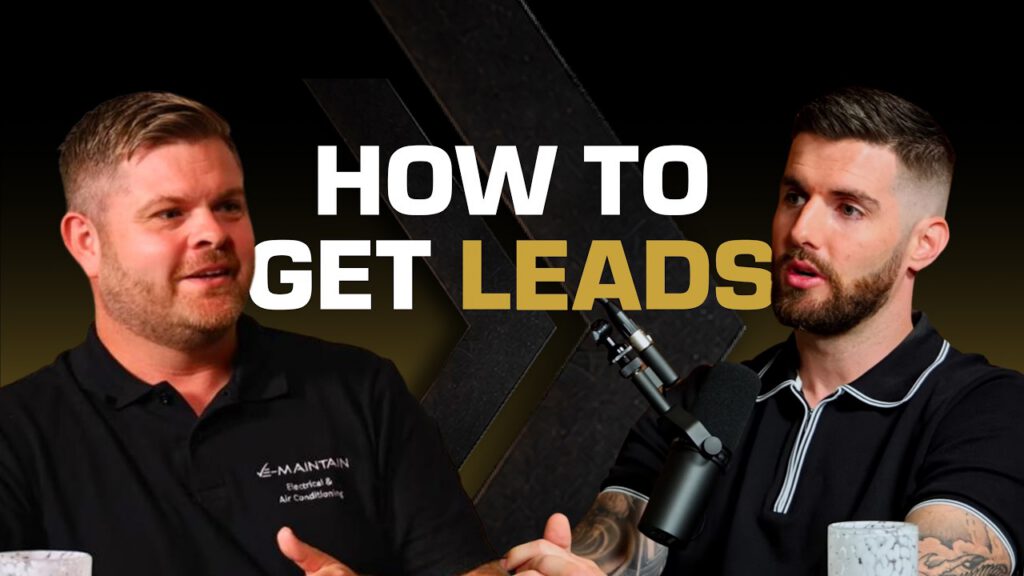
In Episode 4 of Unlocking Business, I sit down with Steve Leigh to talk about what happens when residential work dries up, why his property manager and commercial clients kept calling when mum and dad customers stopped, why he hired a VA in the Philippines before he hired an admin person locally, and whether an apprentice should ever be your first hire. Then Steve turns the tables and asks me how a one-man band should actually get the phone ringing.
It’s an honest look at the early years of a trade business.
Who is Steve Leigh?
Steve did his electrical apprenticeship in commercial construction, then worked in industrial maintenance, mining, oil and gas and commercial maintenance. In his early 30s, after a year back in England with his wife, he stepped off the tools into facilities management and then commercial projects in a shopping centre environment. A friend then brought him into a small Perth hazardous area electrical business, where he became operations manager.
That job showed him every part of running a company. Before going out on his own, he spent time at Smartfix to see the residential side. Today E-Maintain does residential electrical, split system installs, property manager work and some commercial service and maintenance, with Steve, an electrician and two apprentices, running out of a small office in Clarkson.
Key takeaways from the E-Maintain story
1. Great margins don’t help if the work stops
Three months earlier, Steve would have said he wanted more mum and dad customers. The margins are fantastic and the team loves the work. But new downlights, power points and split systems aren’t essential, and when fuel prices jumped and people tightened up, that work virtually stopped. His property manager and commercial clients stayed consistent because owners and employers have to keep lights, power and taps working. The lesson he took: you need variety in your customers, including the ones who call you every week.
2. Stand out in the comments by messaging directly
Steve keeps an eye on local community Facebook groups where people ask for an electrician. When a post has 20 or 30 comments tagging someone’s husband, he comments too, then sends the person a direct message. He’s honest that he stopped doing it for about three months when they were busy, and stepped it back up when things went quiet.
3. Think hard before hiring an apprentice first
Steve’s first hire, about 12 months in, was an apprentice. It didn’t free up any of his time, because an apprentice has to be with you and you’re training them all day. Looking back, he thinks an electrician might have been the better first hire, and the only reason he didn’t was the bigger financial commitment, including the vehicle. The upside: when he did hire the electrician, the apprentice already knew Steve’s standards, ServiceM8 and the wholesalers, and helped settle the new tradie in.
4. A VA might be the best first hire for a sparky who loves the tools
Steve’s VA is based in the Philippines. His first attempt through an agency went badly: of five candidates, the best one didn’t turn up to the interview. So he went to LinkedIn, searched for terms like ServiceM8 VA and ran his own interviews. A friend who manages VAs gave him one rule: every time you show them a task, they record it, and from that video they write the SOP. They should never have to ask twice.
5. Be the one call your client needs to make
For his main property management client, Steve has started handling general maintenance too, like towel rails, toilet roll holders and broken security doors. For roof leaks or ceiling repairs he calls subcontractors he trusts from his years in the industry. It’s built on a relationship that started the day he opened. When a new property manager came in with her own electrician and it didn’t work out, the owner of the agency told the team to use E-Maintain.
6. Spend small and spend smart on getting the phone to ring
When Steve asked me what I’d do as a one-man band, my answer was a small Google Ads spend with a tight radius around your own suburbs, a low budget, and ads switched off after hours and on weekends if you won’t answer the phone anyway. At Smartfix we used to staff the office until 9pm and on weekends, and the cost was never worth it. Find a good freelancer rather than a big agency, and try a letterbox drop in one suburb of around 8,000 houses before you spend more.
From oil and gas to Smartfix, and telling the boss he was leaving
Before Steve joined Smartfix, he told me straight out that he planned to start his own business. He didn’t want to blindside me, partly because our families already knew each other. What surprised him was how open business owners turned out to be once he was one. He’d assumed everyone guarded what they knew. In his time with us he also brought in safety habits from oil and gas, like JSAs and compliance paperwork, which aren’t common in residential work and were good for our guys to see.
The Clarkson office came from the same kind of relationship. Friends of his built a mezzanine above their workshop with spare offices to lease, and Steve rents a 10 square metre space on a handshake, paid weekly. It gives him somewhere to hold interviews and meet people.
“The downturn recently has taught me that you do need to have more of a variety in your customers. You do need to have the customers that are going to call you on a consistent basis.”
Steve Leigh, founder of E-Maintain
Where to find E-Maintain
E-Maintain handles residential electrical, split system installs, property manager maintenance and commercial service work in Perth’s northern suburbs.
- Website: e-maintain.com.au
- Instagram: @e.maintain_wa
- Facebook: E-Maintain
- Steve on LinkedIn: Steve Leigh
More episodes you might like
- Starting an Electrical Business and Pricing Your Work Properly | Angelo Rossi
- What Two Years in Business as a Chippy Taught Me About Growing a Trade Company | Mitch Suleau
- Marketing, Branding and What Actually Works for Trade Businesses | Aisha Derrick
Want help building a business that grows without burning you out? Work with me.
In this episode
- 00:00Intro and meet Steve
- 01:01Why Steve started his own business
- 02:02From oil and gas to residential work
- 03:06A detour into facilities management
- 05:11What facilities managers actually do
- 08:16Working at Smartfix first
- 09:18Being upfront about starting a business
- 11:25Why business owners share openly
- 13:30Early challenges: Xero and back on the tools
- 15:36Balancing the tools with quoting and admin
- 16:39Should your first hire be an apprentice?
- 19:47No five-year plan
- 21:51When work dries up
- 24:59Hipages and community Facebook groups
- 27:05Hiring a VA in the Philippines
- 32:17A small office in Clarkson
- 37:29Mum and dad margins vs consistent work
- 39:35Google Ads and after-hours spend
- 42:43Property managers and general maintenance
- 46:50Steve asks: how do you get the phone ringing?
- 48:54Finding the right Google Ads consultant
Full transcript
Read the full transcriptAuto-generated from the episode, lightly edited for clarity
[00:00] Cold open
Kane: It's so addictive. It is so expensive to get the work in.
Steve: Yeah. That was the first time I'd ever seen the residential side.
Kane: Yeah, we don't do that at all anymore.
Kane: I'm pretty confident saying now, if you've got five or six vans on the road, you should be able to afford...
[00:10] Intro and meet Steve
Kane: Today our guest is Steve from E-Maintain. How you going?
Steve: Yeah, good. Thanks, Kane. Thanks for having me on.
Kane: So good. What is your business and when did you start?
Steve: So we're predominantly an electrical business. We do split system installs as well. It's a new business, so we're actually coming up to the two-year mark in the next couple of months.
Kane: How's it going?
Steve: It's been going well. Obviously, like with any start to a business, there's that initial "what am I doing" phase.
Kane: The scary risk factor.
Steve: Risk factor, yeah. Like, what have I done? But there's been no point in the journey where I've actually thought to myself, I shouldn't have done this. There's obviously the days where you're like, oh, it would be easier working for someone, but by the end of every day, I'm still so glad that it's something I started.
[01:01] Why Steve started his own business
Kane: What was the reason? Did you work for a big company beforehand?
Steve: Yeah, so I did my apprenticeship at big companies, then worked for international companies pretty much my whole career. It was only really in the last few years before I started a business that I'd actually worked for a small business in Perth. It was such a learning curve for me, not just going in and doing the role that I was employed to do, but actually being involved in more facets of the business, which I found fascinating. And I suppose from that, it took me back to a point where I thought to myself, I've always wanted to start my own business. Now I feel like I've had some experience and I've learned a few more tools to help me in that process.
Kane: Mhm.
Steve: So yeah, I think seeing that small business environment and learning a bit more gave me the confidence to think, you know, I can try this myself.
[02:02] From oil and gas to residential work
Kane: And was that residential maintenance work?
Steve: No, funnily enough, it was in oil and gas and hazardous area work, which is completely different to what we do now. At E-Maintain we focus on residential work. We do some real estate property manager work within that sector, and we do a little bit of commercial work. Not construction, still service and maintenance. So it was a completely different sector. It was still electrical, but it was like chalk and cheese to what we do now.
Kane: So had you ever worked in a company that just did residential electrical work?
Steve: No, no. During my apprenticeship, it was in commercial construction. I finished my apprenticeship and went into industrial maintenance. I actually did a little bit of oil and gas work during that time, did some mining work, then went back to commercial maintenance. So I had a very varied electrical experience, I suppose.
Kane: Mhm.
[03:06] A detour into facilities management
Steve: But not in residential. And then from that point, me and the wife went back to England for a year. When we came back, I decided I wanted to try something different. I was in my early 30s at the time, maybe 32. Working in and around facilities managers during my time as an electrician in commercial, I thought, look, that's something I could do and I'd enjoy. So that's something I pursued, and I was fortunate enough to get a role. Then from working in facilities management, I moved into the project side, so I was doing commercial projects in a shopping centre environment. That was maybe four years out of the electrical industry, or out of working specifically with electricians. Then a friend of mine got a job at that SME, the small business in Perth, as a general manager, and he was looking for someone to come on board as a coordinator to help him in the office and coordinate the guys.
Kane: Was that electrical, or was that different?
Steve: Oh yeah, sorry. That was jumping back into the electrical field, but into the oil and gas, industrial, hazardous area work. It's not an area I'd had a lot of exposure in, but obviously I wasn't going out into the field. I was coordinating, scheduling and managing the guys from the office.
Kane: And that was working with your mate in the office, so you had him to help you.
Steve: So I felt secure, I suppose, because he's a mate and I knew he had my best intentions at heart and he would support me through that transition.
Kane: Yeah.
Steve: Also, the owner of that business, who wasn't electrical, he was more of an investor, I suppose. He was very open and very encouraging for me to come in. And I was very transparent with both of them that this isn't really where my experience is, but I think they probably saw enough in me where they thought, look, we can help you on that side, because you bring other values to the team.
Kane: Transferable skills.
Steve: Transferable skills, yeah. And obviously being an electrician by trade helps, and then having that facilities management and project management experience definitely helps.
[05:11] What facilities managers actually do
Kane: For people that don't know, what is facilities management?
Steve: Yeah, good question. It's the built environment, so you've got office buildings, shopping centres. It's basically being the custodians of that property. So it could come down to soft services like cleaning and security, physical security. And then there's the hard services, like your electrical and your air conditioning. There are definitely different parts to it, and depending on where you are, I suppose, depends on how varied that role becomes.
Kane: Mhm.
Steve: But if I was going to put it in a nutshell, and some facilities managers might say I'm underselling it, it's basically just making sure that building runs.
Kane: It sounds like it could be quite broad, and there could be so many other things that you look at. It's not just electrical, it's all the services, like HVAC.
Steve: HVAC's obviously...
Kane: Electricity, lighting. And there's a lot of health and safety in a job like that as well, if it's in shopping centres and commercial.
Steve: For sure, yeah. And depending on the environment, that depends where a lot of those needs are. If it's a shopping centre, obviously you're dealing with the public.
Kane: Yeah.
Steve: So cleaning is actually a huge thing, because you can imagine a kid walking through a shopping centre with an ice cream.
Kane: Mhm.
Steve: Drops the ice cream on the floor, someone walks behind him and slips over it. Okay, now we've got a lawsuit on our hands.
Kane: Mhm.
Steve: But through your cleaning processes, where you can say, look, every 10 or 20 minutes we have a cleaner walking down that aisle that does the clean or does the visual checks, you can say we took as much care as we could to prevent those incidents from happening. But occasionally things are going to happen.
Kane: Yeah.
Steve: There's definitely a lot to it. I'm quite curious as a person, so when I had the opportunity to work with contractors that were electricians or HVAC or plumbing or cleaners or security companies, learning little bits about their trade and how they do things, and the importance of how they fit into the big picture, was really interesting for me. And I think gaining that understanding and exposure is a transferable skill as well. I know a little about a lot, whereas obviously the main contractor, say a plumber, knows a lot about a little. So I'd say that's where the interests are.
[08:16] Working at Smartfix first
Kane: So it sounds like maybe quite a pivot, going from that kind of background into residential maintenance.
Steve: So when I was working in the oil and gas company, I ended up being the operations manager there. When I left there after a couple of years because I wanted to start my own business, I actually came to work with yourself at Smartfix, and that was the first time I'd ever seen the residential side. It was just something I wanted to learn, and I'd seen what you'd done at Smartfix. So we had the discussion about how I was looking to start my own business. I wasn't quite ready at the time to make that move, but I wanted further exposure and learnings, and you were happy to help facilitate that, which is something I'm definitely grateful for. And again, I brought those transferable skills into that role at Smartfix, so it was a great...
Kane: Yeah, definitely.
Steve: ...great learning opportunity.
Kane: There's definitely things we learned from you as well. Obviously the other managers around you would have learned a lot from you, especially with dealing with people. I think you're really good at dealing with people and talking to them. And obviously the health and safety factors. I have to say it's not really common in residential work, but I know a lot of stuff that you brought in, like, I can't remember exactly, but like JSAs, the health and safety and the compliance paperwork. That was good for our guys to see, from the other experience that you had.
Steve: Yeah, yeah.
[09:18] Being upfront about starting a business
Kane: I think a good point you mentioned then is about being open and clear when you started about starting your business eventually. That's super important to me as a business owner. I feel like some people would be scared and they would want to hide the fact that they're trying to do their own thing on the side, but obviously they need to still work somewhere and have income. I do feel like a lot of people aren't very transparent with what their plans are.
Steve: Yeah, definitely. And look, I'll be completely honest now, looking back, the main reason I did that is because we already knew each other.
Kane: Yeah.
Steve: And I definitely didn't want to blindside you, and I felt like I owed you that honesty.
Kane: Mhm.
Steve: That was probably more born out of personal connection. Our friends are friends with each other, and we might see each other at kids' birthday parties and things like that. So that was my main motivation at the time. What I also didn't realise then, which I've learned now, is how open and transparent business owners actually are.
Kane: Can be.
Steve: Can be. Yeah, can be. And probably should be, because it's down to themselves. At the time, not being in business, I probably didn't realise how open people are to sharing and cross-learning.
Kane: Mhm.
Steve: I thought it was very much, this is mine and I wouldn't want to share it. And you were one of the first people that kind of broke that conception for me.
Kane: And I think if people are different to that, and they're quite closed off and hiding, that definitely raises red flags as well. Like, why? What are you hiding that's so good?
Steve: Yeah, that's right.
Kane: What are you not telling me?
Steve: Yeah, what you're not telling me. Maybe that's the way it used to be a lot more as well. Maybe it's more of an old-fashioned attitude to business and learning.
[11:25] Why business owners share openly
Kane: It's interesting you say that, because in the last podcast I had, with Anthony, I mentioned that I'd never really spoken to anyone that was sort of at my level in business that had done it before. Then when I did go over east to the seminar and met big business over there, there were old school people there that were super open. So I don't know. I think maybe now that social media is a lot more common than it used to be, a lot more people are actually happy to talk.
Steve: Yeah, yeah.
Kane: Like you came to the live event that we had here. The guys from the other businesses, they're all happy to chat about what they're going through, because as soon as you go, "Oh yeah, I had a similar issue," boom, you have an instant connection with that person, because you're in the same boat.
Steve: And also, sometimes it's not what you take out of it. Sometimes it's just if you can help someone, or say, yeah, I was in a similar boat. You might be passing that information on, but then at least you walk away feeling like, oh look, maybe I've helped someone, maybe I've had a positive impact in some way.
Kane: You have to give, for sure. You can't just take information, you have to give it.
Steve: Yeah. And people notice that, don't they?
Kane: Well, I learned that from the guy, Scott, I met over at his event. I said, and he said they don't really let anyone come in that doesn't give, because they've had it before where people come in, they don't want to tell their story, but they'll take all the information. And he's like, that's not really fair, it's not what we're about. It's about giving and taking and learning from both sides.
Steve: When that happens, do you think sometimes it's not just because they want to keep all the goodies for themselves? I don't know if embarrassed is the right word, but maybe they want to give a perception of pure success, so if they're not quite up to the mark in a certain area, they don't really want to disclose that.
Kane: Maybe, but I think a lot of the stories that people share are usually a lot about the bad side as well. Like, oh, we had a downfall and this is what happened. So I think if someone is explaining that to you, that's a good opportunity for you to say, oh yeah, we're actually going through that now. We just lost this money. So I do think it's the way it comes across to the person, as long as they're normal and they're not being cocky or whatever.
Steve: Yeah.
Kane: If they're explaining it to you, you can just tell them the problem. That's why you're there in the first place, really. You need to explain your story. They might say, "Oh, have you thought about this?"
Steve: Yeah.
Kane: I don't know, like, you can actually get a business loan or a credit card, or they might give you advice that you need.
Steve: I suppose that's a really good point. To be in that room, whether it be a networking event or a discussion with business owners, you have to put yourself in that position. And if you think you know it all and there's nothing you can learn, and nothing for them to give you, you're probably not going to be there anyway, right? So you're right. If you're at these events, it's because you're open.
[13:30] Early challenges: Xero and back on the tools
Kane: Literally, it's for that reason. What were some of the biggest challenges you faced in the early days of starting E-Maintain?
Steve: I think it was the things that I hadn't had exposure to. Obviously I had the electrical experience. For the facilities and the projects, my roles were very operational-based. So there's the...
Kane: Back on the tools.
Steve: Back on the tools. Yeah, the back on the tools was tough, but probably the financial stuff as well.
Kane: Yeah, okay.
Steve: Using Xero. At the small businesses that I'd been at, we hadn't used Xero, but that wasn't my role. The businesses weren't one, two, three, four, five guys. They were 20 people plus.
Kane: Mhm.
Steve: So my specific role wasn't to do the consolidating, the reconciling, or even producing the invoices through Xero. So that was one thing that came to mind. But definitely, like you said as well, at that point I'd been off the tools for about six years. So getting back on the tools, that first day was horrendous.
[15:36] Balancing the tools with quoting and admin
Kane: Are you on the tools now?
Steve: Yeah, so I've got another electrician working with me and we've got a couple of apprentices, so definitely still very much on the tools. The way I try and balance it is, if there's a job that's going to take us a full day, or multiple days, or sometimes even half a day, I'll get the other electrician and the apprentice to do it.
Kane: Mhm.
Steve: I'll go round doing more of the service calls, the quoting, things like that. Just because I find if I'm tied up on one job for eight hours a day, then all the calls, all the admin, everything gets built up.
Kane: You have no time.
Steve: Well, that's it. Obviously at first when you start and you're by yourself, you're going out and working eight or 10 hours a day, then you're going home, then you're chasing up your phone calls, your emails, doing your accounts, getting back to suppliers, things like that. That just happens at night. And then the first hire I did was an apprentice, and that didn't help that at all.
Kane: Because they have to work with you.
Steve: Yeah, they have to be with you all the time. You're obviously providing training as well. So I don't know if I would always recommend hiring an apprentice as your first hire. Maybe the electrician would have been the best to hire. But at the time it was a new business. At this point it was only 12 months old when I hired the apprentice.
[16:39] Should your first hire be an apprentice?
Kane: A lot of people do that, hey? I've been coming across that recently with a few other people as well, hiring an apprentice at the start. To me, I would say that's definitely not the right thing to do, now that I know. And I know you've said it and a couple of people have recently said the same thing. It's hard because they've got to work with you.
Steve: Mhm.
Kane: You can't just send them to do big jobs by themselves, because legally you're not allowed to. So then it's all on you, and you've got to work with them all the time. You pretty much have to do 30 hours a week on the road with them, otherwise they're not doing anything, so you're not getting the value. But if you have the sparky, obviously you'd probably want to work with them for a little while to make sure you're confident in their work, because they're representing your business.
Steve: Yeah.
Kane: I do think that hiring a trade at the start is worth it.
Steve: I think so. And look, I think the reason I didn't is probably the same reason everyone else didn't. Probably just the fear factor.
Kane: It's way more expensive, isn't it?
Steve: Yeah, it's a lot more of a financial commitment, obviously.
Kane: There's the vehicle as well.
Steve: The vehicle, it's the whole thing that goes with it. Obviously finding a good electrician is hard as well. With an apprentice, even if they're a first year, mine definitely did work experience with me anyway, so I kind of knew what I was getting and knew where he was up to, and I knew that I could train him. I wanted to train him. So it's probably that. But I'd say the financial commitment is the main reason I didn't, and I'd imagine that's the same for most people.
Kane: I think so, 100%.
Steve: But when I did hire the electrician, I could put the apprentice with the electrician. The apprentice knew my expectations, knew how to use ServiceM8, knew how I spoke to customers.
Kane: Yeah.
Steve: Because I'm very clear on those types of standards. So then I felt that he could pass some of that on to the tradesman as well, and almost help him settle into a new company by going, oh yeah, these are the wholesalers we use, this is...
Kane: Yeah. Sort of like onboarding.
Steve: Yeah, onboarding. I mean, obviously I had some conversations with him. He might not have remembered everything, but at least he's got an apprentice there that had been one on one with me for six months.
Kane: Mhm. That saved a lot of phone calls to you, if the apprentice can answer those questions, hey.
Steve: Yeah, definitely. So getting back to where things are now, I've got an electrician and the apprentice in the van, and we've got another apprentice as well now that works with me.
[19:47] No five-year plan
Kane: So what was your plan? In an ideal world, what would be your goal amount of staff?
Steve: Do you know what? It's hard to say. Rightly or wrongly, I don't really have a plan as such. I don't have this five-year plan of, these are the financial targets, these are the targets. I do enjoy coming to work, so I would always want to be involved in some way. If I moved back into more of a support office role, purely like I'd done previously at other companies, I would comfortably fall into that, because I've done that and I know I like it.
Kane: As in, for yourself?
Steve: For myself, yeah. But since having that break from the tools and then getting back on the tools, after the initial first three months of being sore, I've actually enjoyed that as well.
Kane: Because I suppose if you were going to fall back into a full-time office role, you'd have to have X amount of employees to be able to financially support that, plus you're not physically earning the money.
Steve: Physically out doing stuff, yeah. And look, we're not close to that, and that's not really what my end goal is, so I've not done that calculation. And I suppose I could do that calculation now with the overheads we've got in the business. But by the time you do get there, you may find your overheads have changed because of business needs.
Kane: Yeah.
Steve: So if that was my end goal, it's probably something I'd have to recalculate as an ongoing process.
Kane: I'd say it's about five or six people. I'm pretty confident saying now, if you've got five or six vans on the road, you should be able to afford having the owner and his wage not on the tools.
Steve: Yeah.
Kane: But obviously you're still working it out. Same with me. I never had a business plan. I never said, okay, I'm going to get to this revenue, this amount of staff. I didn't know.
Steve: Yeah.
Kane: Before that, I started my own thing. It was me by myself. I wasn't sure.
Steve: Yeah.
Kane: And I had the opportunity to hire my brother and his mate pretty quick, so I was like, okay, cool, I'm going to do that. Which was apprentices as well.
Steve: Yeah.
Kane: Similar thing to what you just said. Then I've got to make sure that I'm on the tools with them.
Steve: Yeah.
Kane: It'll be interesting to see what you decide on doing.
[21:51] When work dries up
Steve: Yeah, 100%. And things change. I might turn around in a couple of years going, that's really what I want to do, or not, and I may want to always keep it small. But I think it's got to be around the right people as well.
Kane: Yeah, that's everything, hey. Everything.
Steve: It's got to be the people. It can't be growth for growth's sake because I've got a target. It's got to be finding the right people, and then if it's not the right people...
Kane: What's the point?
Steve: Yeah, what's the point? You've got to keep...
Kane: This is always a good question. I really want to talk about getting work in, because I know that's a huge topic, especially right now. In our experience, this time of year is horrific.
Steve: Yeah.
Kane: April, May, school holidays, Easter public holidays, people go away for extended periods of time. For us, usually the revenue almost halves from summer. I don't know about you, because you do air con as well. We're heavy air con through summer.
Steve: Yeah.
Kane: Which is our highest revenue time of year. And literally month on month it just halves, and we're like...
Steve: Yeah.
Kane: What are we going to do?
Steve: Yeah, look, our revenue has definitely dropped the last few months. Obviously we've got the war factor as well. Fuel prices through the roof.
Kane: Has it affected you?
Steve: Yeah, massively. Massively. So we've got residential property manager clients, and we've got some commercial service work clients as well. They've been fairly consistent throughout.
Kane: Is that because they have to be? They have to maintain what they've got?
Steve: Yeah, I think so. Obviously on the commercial side, they've got an obligation to their employees to provide a safe workplace, whether it be lighting or power points that have failed or whatever. Same with investment property owners as well. They're contracted to the tenant to provide taps that work, lights that work, power points that work.
Kane: Do they have, not a KPI, but time frames where they have to fix certain things?
Steve: I'll be honest, I imagine there is, but I do know through my own experience, even with the same property manager, some of the owners... because the owners obviously have the final say on the spend.
Kane: Yeah, I got you.
Steve: Some owners are quicker to act than others. Let's just say a door was hard to operate, so it's not a life safety issue.
Kane: Yeah.
Steve: Sometimes I feel like an owner might wait until the tenants complain three times about it before they action it.
Kane: They get a couple of quotes, because they do have time.
Steve: Yeah, that's right. They've got the time. They've probably had a quote from two months ago that they've sat on, and they've only actioned it once the tenant's really acting up. Maybe threatening to stop paying the rent, maybe, I don't know. So they've been fairly consistent. But we don't really focus on emergency call-out work. A lot of our B2C work with mums and dads will be installing new splits, replacing splits, installing downlights, power point installs. So they're probably things that aren't essential. So the last couple of months, that work has virtually stopped.
[24:59] hipages and community Facebook groups
Kane: So how would you get those leads in normally? Is that through paid advertising?
Steve: No, so we use hipages, which we hadn't used for about four months up until a couple of months ago, so I had a lot of credit built up.
Kane: Yeah, okay.
Steve: I've probably lost some credit as well with them. We're pretty keen on keeping an eye on the community Facebook groups, so people that actually want an electrician will post on there. And you've probably seen it before, 20 or 30 people posting their husband's name.
Kane: Mhm.
Steve: "Oh, he'll do the work." We obviously do that, but then where we can, we actually reach out directly to that customer as well.
Kane: Like direct message?
Steve: Direct message, yeah. Sometimes it works, sometimes it doesn't. But if you looked and there were 30 comments on a post, I think directly messaging makes you stand out. It makes it easier for them to reply to us than to go through all these people and send them a message. So that's just something that we do to try and, I suppose, make our chances better of winning that job or getting the quote.
Kane: So how would that work for consistency? Because I assume with something like that, you would only do that if you need work. Or would you do that on a regular basis, where you go on and check those channels?
Steve: Yeah, look, there was a period of about three months where I didn't really do that. Obviously it's a small business, so it's all on me, and we were busy. There's only so many hours in a day, and I probably didn't have time to go through and do that.
Kane: Yeah.
Steve: Probably because we couldn't really be taking on too much more work. And then obviously when it gets quiet, you step up those efforts.
[27:05] Hiring a VA in the Philippines
Kane: Yeah. Do you have an admin person, or have you got a VA?
Steve: Yeah, I've got a VA. She's based in the Philippines.
Kane: Yeah, okay.
Steve: So again, she started before work had dropped off, so I've actually recently reduced her hours.
Kane: Yeah, okay.
Steve: And that's probably because I'm able to do some more of that work now, because I'm not as busy myself. I think it depends what type of business you want. I was happy to do some of the admin work as well as the on the tools work. If you are an electrician who wants to start your own business and you're really passionate about the tools, probably the VA would be the best first hire for you, I'd say.
Kane: Mm.
Steve: Because then they can answer the phone when the customer calls, not when you've finished at 8:00 at night. And then they can help support you on the invoicing side, the reconciling in Xero, things like that.
Kane: How did you go with, A, finding a VA, and then B, training them and onboarding them to work how you want to operate? Because I assume that's all online.
Steve: Yeah. The first thing I did, I saw a Facebook ad for overseas VAs that specialise in ServiceM8, which is what we use. So I thought, well, look, that's a great place to start. I reached out and spoke to a guy, an Aussie guy in Sydney. He was like, "Yeah, we'll line up some candidates," and got a little bit of understanding of what I wanted. Unfortunately, the candidates he provided were terrible.
Kane: Yeah, yeah.
Steve: He hadn't really put much effort into listening to what I wanted and going and finding that. He said, "We've got 700 VAs."
Kane: 700?
Steve: Yeah. "You only want one part-time, so we'll get one of our other part-timers and bring them into a full-time contract, and you can have them half." So I thought, that's great, because if they're already with that business, there's not as much risk to me of them not being up to scratch.
Kane: Yeah.
Steve: That wasn't the case. He presented five new people. The best one of the CVs I got didn't actually turn up.
Kane: Yeah.
Steve: Some of them were way off the mark. With some of them, you really struggled with the language as well.
Kane: Mhm.
[29:50] Training a VA with videos and SOPs
Steve: So after that, I spoke to a friend. She manages a couple of VAs for a business that she works for, and I got a bit of an understanding through her about certain ways to do things. One of her things was, "Look, when you do get the VA, everything you show them, get them to create a video while you show them how to do it. So in theory, they should never have to ask you twice. They can go and watch the video, and from that video they can actually go and create an SOP for that process."
Kane: That's why I say, if you've got to say something twice, they're going to leave you. We've only just started pushing that quite recently, to be honest, hey.
Steve: Yeah, yeah.
Kane: It's amazing.
Steve: Yeah.
Kane: Watch the video again.
Steve: Oh, 100%. And it stops her asking the same question twice, but also, if she ever moves on and you bring someone else in, the video is there already, right? And then I suppose, putting that small business hat back on, and when I worked in oil and gas I did a bit of recruiting for the company I was at, I just thought, look, I can find better VAs than this recruitment agent anyway. So I just hit LinkedIn, used a few keywords like ServiceM8 VA and things like that, and then just went through the profiles.
Kane: So with having the VA at the start, I think that would be quite uncommon in trades, I would assume. We've only just started using VAs in the last couple of years, a little bit.
Steve: Yeah, yeah.
Kane: I assume there's a lot of reasons why you would do that rather than take on an admin person, either casual or part-time. Why did you go for a VA? Is that because you had dealt with them previously in other companies?
Steve: No, no. It's purely because I knew people that had VAs, and just through speaking to those people, it seemed like for where we were financially in the business, to go and hire someone locally would have been a greater expense. When I went onto LinkedIn, I reached out directly, had some conversations over LinkedIn, and then actually did an interview process as well, so I got to speak to them on multiple occasions. And they had a lot of experience. So I think to find someone in Perth that was available, that you didn't need to give so much training...
Kane: There's office space as well.
[32:17] A small office in Clarkson
Steve: Office space.
Kane: If you did find someone in person, you'd probably then have to think about office space, or let them work from home, I guess.
Steve: Yeah. Obviously the VA works from home in the Philippines, so that wouldn't be a problem. I think if they were based in Perth, they'd probably be a bit more familiar geographically with the local area. You're going to have a local accent answering the phone, which is probably, well, not probably, I'm sure that is more reassuring to customers calling, especially in a residential setting. I think if you're a commercial business it doesn't really matter, because commercially everyone uses VAs.
Kane: You have an office now, hey?
Steve: Friends of mine have got a small premises in Clarkson, and they actually built a mezzanine level in the workshop, so they've got a shop down the bottom and offices at the top. They actually built a couple of extra offices purely to lease out.
Kane: Perfect.
Steve: Yeah, it worked out great. We actually do some work for them, and we lease some equipment off them as well, so the relationship's there. There's a good personal relationship there as well, so it's a good environment to be around.
Kane: That saves you having to go through a real estate and have a 12-month lease contract in place.
Steve: Yeah. Because we're friends, it's on a trust basis. It's a handshake. I pay the rent weekly, but there's no lock-in contract.
Kane: Mhm.
Steve: I think where that started from was when I had the electrician. I was working out of my garage, so if I'm not home and he needs to pick up the chaser or the vac, then it's like, oh, well, is someone in?
Kane: Bump into kids on the driveway.
Steve: Things like that. So I was actually going to hire a storage unit and just keep...
Kane: Oh, yeah.
Steve: ...all the gear in there, and then we'd all have access to it. That still would probably have been the slightly cheaper option. But the office gives us the opportunity... It's a 10 square metre office. It's got one desk for me and a small table, so I can meet people in there, and we store our equipment in there. And it's actually closer to home for me and the electrician than the closest storage place to me.
Kane: It changes it, hey. It makes it more professional.
Steve: Yeah.
Kane: Having people in there. I know you're close to the wholesaler and it's a commercial area. I do feel like sometimes, as you try and grow, if you work from home it does get a bit awkward, like with interviews. Sometimes you've got to go to cafes for interviews. It makes it feel a little bit less professional.
Steve: Yeah, definitely. Even interviews, or MEGT, who do the apprentices, they come to the office. I've even had a few business opportunities that have come into the office as well, which obviously looks more professional.
Kane: Mhm.
Steve: So that's definitely been a big plus. But I do realise there was a great deal of luck in there as well, having a friend that had those offices available that he wanted to lease out. That was great.
[35:25] Working close to home
Kane: Mhm. I suppose that's just about having conversations with people, hey. You probably would have chatted to him before about being in business.
Steve: Yeah, yeah.
Kane: Do you still work from home sometimes?
Steve: No, not really. During the school holidays maybe I might do an hour or two, or if I pick the kids up when it's not school holidays, I might do an hour afterwards. But because the office is so close to home, it's like five minutes in the car. If I really wanted to walk, if the car was in for a service, I could as well.
Kane: Have you ever?
Steve: No. I'm not going to lie.
Kane: You could, though. It's there if you wanted.
Steve: Yeah, I could.
Kane: Jogging.
Steve: I could. Yeah, exactly.
Kane: That was important to me when I started, having the workplace close to home.
Steve: Mhm.
Kane: Because at the previous company I had to drive an hour, hour and a half in the morning, and that's such a lot of time.
Steve: Yeah. Such a waste of time. I know you probably fill it with phone calls, but...
Kane: Yeah, phone calls.
Steve: Yeah.
Kane: Phone calls, podcasts.
Steve: Yeah. I suppose that's the perk of starting your own business, right? You get to make these decisions, so why not?
Kane: I worked from home for a while. It was before we had kids, so I loved it.
Steve: Mhm.
Kane: I loved working at home, but I also then loved getting that first office. We hired an office, set up the computers upstairs, had a bit of storage, got some old leather sofas off Gumtree, and we tried to have that culture from the early days.
Steve: Yeah.
Kane: Yeah, it was fun. Definitely fun.
Steve: Oh yeah, that's a great point. When the team comes into the office for a toolbox meeting, or even at the end of the day for picking stuff up for the next job tomorrow, it's just so much less awkward than standing on my driveway with the neighbours mowing the lawn next door.
Kane: Yeah.
Steve: It's a commercial area, a commercial property. They can come in and we can have a chat.
[37:29] Mum and dad margins vs consistent work
Kane: Mhm. Do you have issues with getting consistent work?
Steve: Through the real estate property manager and the commercial work, that's quite consistent. The level of work they put through is quite consistent as well. But a lot of our other work is B2C, the mum and dad in the residential setting, and they might not need you again for another year.
Kane: Mhm.
Steve: So I suppose getting consistency in that area is tough, because you can build a great relationship and they may refer you, but they don't have the same level of need for you.
Kane: And if you wanted to grow, get more staff, get more vans, would you try and get more real estate and commercial work, or would you go for private B2C?
Steve: Yeah, look, if you'd asked me three months ago, I would have said B2C, because the margins are fantastic. And the team actually love that work as well, because you're going into someone's home and you're making an improvement or you're fixing something. They're over the moon. You've delivered a great service, a great product, and you're getting paid well for it. What's not to love about that? But then the downturn recently has taught me that you do need to have more of a variety in your customers. You do need to have the customers, like the commercial maintenance, that are going to call you on a consistent basis.
Kane: And I assume jobs like that are a lot on a relationship basis, hey? Because there's no contract in place for them to give you all their work.
Steve: Yeah, that's right. Obviously you can go and win tenders to do government work, or large commercial, say shopping centres. You may get a contract to deliver the service there, potentially. But where we are, it's purely relationship based. We've come in, we've helped them when they've needed it, we've delivered a good service, we've followed up with them, and then they've called us back, and we've grown from there.
[39:35] Google Ads and after-hours spend
Kane: Yeah, it's an interesting one, hey? That's why I asked if you were to grow, would you do private, because like you said, it's not consistent work from that one person, and it's expensive to get that lead in in the first place. Smartfix has always been around private clients. We don't do any real estate, really, or any commercial. It's all private clients, but it is so expensive to get the work in.
Steve: Yeah.
Kane: And our whole focus this year and next year is, how do we get back in their house? Is it servicing? Is it offering other services? So it's a juggling game. It's very expensive. We do Google Ads.
Steve: Yeah, very expensive. It's something that we've not done. And I do realise that if you become the top of Google, you are going to get the calls. But we don't do a 24-hour service.
Kane: Mhm.
Steve: So I think, and you might correct me, I think you have to have that 24-hour service for electrical and plumbing. Because if people just want some downlights, they might put it on the community Facebook page, and they've got the time to look at a few quotes, maybe, depending on their situation. Whereas if someone's got a leaky tap on a Saturday, or the power's gone out to the house on Easter Sunday, they're going to Google it, right? They're going to Google it, and then that's, I suppose, where Google...
Kane: We don't do emergencies anymore.
Steve: Yeah, right.
Kane: Zero. We do no call-outs. We do no weekend work. We used to think the same thing, but if you have your Google Ads set up in a certain way, you can have them go off at like 4:00 or 5:00, so you're not spending through the night. Because if you're not going to answer the phone anyway, there's no point. So at the moment, we have no spend from 5:00pm until maybe 6:30 or 7:00am the next morning, and nothing on weekends. For us, that was a game changer.
Steve: Yeah, right.
Kane: We had office staff till 9:00pm every night. We had people in the office on Saturday and Sunday, and for us that expense was phenomenal.
Steve: Mhm.
Kane: And in my opinion, you can't charge enough money. Customers are not going to pay what you'd have to charge to cover those costs. So we don't do that at all anymore. So I think with Google, it's still expensive, but you can set it up so that it's just for, like you said, someone who wants an air con. Obviously summer's a different story, but throughout the rest of the year, someone who wants an air con might search "air con installer near me" on Google. Yes, it's probably more expensive than if someone searched on Facebook, but usually, from our experience, the quality of customers from Google would be better than Facebook.
Steve: Yeah, yeah.
Kane: And again, that all comes down to how your website is. Do you have Google reviews? Have you got the reputation there? Because people will search for that on Google.
Steve: Yeah.
Kane: Like if I'm searching E-Maintain, cool, what is that? Because, reviews. Is it five stars? Is it four stars? Are there 10? Are there 100? Has it got Facebook? Is he active on Facebook? I think people do a lot of research, especially this time of year when it's quiet. But yeah, it's expensive. Again, it's expensive. So you've got to charge enough money to make sure you're covering all costs, and that is difficult again. So then that comes down to sales. If you've got a salesperson, obviously still a qualified electrician, going out there and explaining why you might be charging more than someone else. So it depends on the business model, hey. Like you said, if you're doing the real estate and strata stuff and that's working, there's potentially no advertising cost. You might be charging a lower hourly rate. If that works consistently and those relationships are locked in... Because I suppose if you had a falling out with someone, that's potentially a lot of work for you.
Steve: Yeah. And...
Kane: That's what your job is, I suppose.
[42:43] Property managers and general maintenance
Steve: And look, it happens. The property manager moves on, the new property manager comes in, and they bring their electrician. All the work from the area that she's looking after just stops. Instantly. Fortunately, for the main property company I do work for, that happened on one occasion. The property manager didn't work out. The electrician she brought in didn't work out. And then the owner of the company said, not again. Property managers can come in, but they use E-Maintain. And that relationship was built basically from the day I started, so it's nearly two years old now, that relationship, and that's going well. One thing we have started doing for them is a bit more general maintenance as well.
Kane: Like what?
Steve: Like anything. It could be the toilet roll holder's come off. It could be that the fly screen door's broken, the security door's broken. It could be anything like that.
[44:10] Bringing in trusted subcontractors
Kane: Do you do that yourself, or do you have subbies?
Steve: Sometimes we do it ourselves. If we're going to a property to replace a light switch, and on the same work order the towel rail's come off, we'll do it at the same time, obviously.
Kane: That makes it super convenient for the real estate.
Steve: Yeah, so that's really where... And I've spoken to them about this model where we kind of in-house it for them, which is kind of like what we were doing in facilities management in commercial. They're just calling the one person and they're solving all their issues.
Kane: Mhm.
Steve: Obviously not everything we can do ourselves. We're not roof plumbers.
Kane: Yeah.
Steve: But through my career I've picked up contacts and good relationships, and I know good subcontractors. So if there's a roof leak, I know a good roof plumber to call to come out and do the work. I know a good painter to come in, do the ceiling repairs and paint the ceiling.
Kane: Yeah, okay.
Steve: So some of those jobs might not even have electrical in the scope at all.
Kane: Yeah, right.
Steve: But they're just happy with the service we provide.
Kane: Convenient, hey? Saves them running around trying to sort it out.
Steve: Oh, for sure.
Kane: It's all relationships. It's all relationship based, it's all about people, hey?
Steve: Yeah, all about people. It's all about providing a great service, a great customer experience.
[45:40] Turning the tables
Kane: Should we turn the tables?
Steve: Yeah, let's do it.
Kane: 100%. Bring your drink. I don't want you to drink. What do you want to talk about? Anything that we've missed so far that you want to chat about?
Steve: Well, I think the most important thing we need to address today is, I need to know the story behind this little guy.
Kane: A little...
Steve: The evil mouse.
Kane: It's supposed to be a Godzilla.
Steve: Right, okay.
Kane: It's a kind of collectible thing, but there isn't really a story, if I'm being honest. We just needed something back in our old offices, and we haven't finished the shelves yet.
Steve: Yeah, okay.
Kane: We're working on what we're going to put on there. I don't want to just go ahead and put business books on there. It needs to be something amazing.
Steve: You pretend you've read something.
Kane: Yeah.
Steve: I'm the same.
Kane: I think I'll put my old pliers in. Not framing them, but having them on a little stand, because that's where it started, on the tools. They're my pliers.
Steve: It's almost like a trophy cabinet of memories.
Kane: Yeah, sort of. I don't know. So he looks pretty cool and mean, and that's...
Steve: That's why he's there.
[46:50] Steve asks: how do you get the phone ringing?
Steve: One thing I do want to ask you. I know we've spoken about Google Ads today, and obviously there's a cost that comes with that. What would you advise, from your experience, for either one-man bands or very small businesses like myself? What's the best way to get those phones ringing?
Kane: It's a good question. I was talking about this yesterday on a call with a client, because he has been doing some paid advertising on Facebook recently. We did that a long time ago and it didn't work too well for us.
Steve: Yeah.
Kane: He did it, and I think he said he had beginner's luck for the first couple of weeks. It seemed like it was working really well. The cost per lead seemed really affordable.
Steve: Mhm.
Kane: I was comparing it to our Google spend, and I'm like, interesting. Then yesterday he said he's turned it off. He said he's starting to get a lot of people that are price shopping, and it's beginning to not be worth the spend. So it's a hard one. I suggested to him, and I would suggest, finding a Google Ads consultant, a freelancer. You have to be careful when you're looking for someone.
Steve: Mhm.
Kane: But I would suggest a Google spend in your small niche area. Like you were talking about before, turning ads off at certain times of day. You've got to be careful. You've got to be strategic about how you do it, and start with a low budget.
Steve: Yeah.
Kane: So if you live in, say, Dianella, a certain suburb, and you want to focus on that suburb or the ones around you, you can set your radius quite small, which will keep your budget small, and your cost per lead should be quite low. But again, you can adjust it. You can adjust it daily. It's all going to depend on the consultant or freelancer you find. Because obviously you can get guys that say you need to spend this much, and I'm going to charge you $1,000 a month, which might be more than your budget. So it all depends on the person you find. We've been through maybe three or four agencies...
Steve: Yeah.
Kane: ...as we've grown Smartfix, and we ended up on a one-man band agency, well, freelancer, sorry, and he's done a better job for us than anyone ever has. It's a hard one. So I did recommend that yesterday on the call. I said I would do a Google spend.
Steve: Yeah.
Kane: And also, flyer drops for us have been the best return on investment ever.
Steve: Yeah, okay.
Kane: But we obviously have electrical, air con, plumbing, gas, ceiling fixing, painting. So there's a higher chance someone's going to call us. But I said to him again, you could try a small area. You could do one suburb, which is about 8,000 houses, and just trial and test it.
[48:54] Finding the right Google Ads consultant
Steve: Following on from that, what would be your advice for finding the right Google consultant?
Kane: We've been through a few. I said to him that I would recommend the first business that we used.
Steve: Yeah.
Kane: So in Hypotential, my goal is to have exactly that, a list of people that work in different tiers, right? The guy that does our stuff now wouldn't work for a one-man band, because his fee would be a minimum of two or three grand a month. A one-man band isn't going to pay that, because that's not even going to be what their budget is on the spend, you know what I mean? So my goal is to have maybe three or four lower-end people for that reason, and then we'd have different tiers of referral partners, in a way.
Steve: Yeah.
Kane: Ones that I know aren't going to try and rip people off.
Steve: Yeah. I think that would be massive, because it's all right saying find the right partner, which is obviously great advice, but then for trades, where do they start? They probably start at Google or Facebook. So to have someone who's had the experience, been through different consultants, and actually knows what makes a good consultant and what doesn't, that is huge for people.
Kane: I think so. And as with everything, even with the same person I'm talking about, he needs flyers, business cards, magnets, stickers. That's stuff that we sort of recommend through our coaching model. And again, I didn't really have anyone that we could refer to straight away. I did refer him to the same business that we currently use, because I know they handle all sizes of companies. So he has been there already. But that's something we're going to offer: cool, here are maybe two or three. We're not going to get a referral kickback. I don't want that to be the model, because that again has its own complications.
Steve: Yeah.
Kane: So, hey, these are three or four businesses that we know are good.
Steve: Mhm.
Kane: They have different price points. Your job is to go and speak to them, get a consultation, get a quote from them, and you've got to go with your gut feeling. It is a lot about gut feeling, to be honest.
[51:01] Why a good consultant costs more
Steve: And look, I know it's not your business, so you might not know the answer, but the company that you're using at the minute that you're really happy with, you said there's not really a package they offer that would be suitable for a one-man band, because the spend is so high. Why couldn't they offer a more economical package to suit a one-man band?
Kane: Maybe. I haven't actually asked him yet, but he is a one-man band. He's only got, I think he said, four or five clients.
Steve: Yeah.
Kane: So for him, the workload of inducting and bringing someone on... Let's just say you went to him. He needs to learn about your business entirely. He needs to learn what areas you want to target and what budget you want to spend. So for him to do that, I think he just needs to cover his costs as well.
Steve: Yeah.
Kane: So again, it's like our business, Smartfix, going and doing a job for someone. We're going to be more expensive than a one-man band, because we have the overheads.
Steve: Yeah. Small business owners, trade businesses, they love to hear from people like that, because that's something that's completely out of their sphere of expertise, I suppose, or experience.
[52:06] Learning from experts like Anthony
Kane: Yeah, that is our goal. The one we had before was Anthony. He's our IT support guy. I've got no idea about that space, and most trade businesses won't either, but someone like him is perfect, because he gives us some insight. People might take away some key points that he said in our chat.
Steve: Mhm.
Kane: And obviously they can reach out to him, you know what I mean? He can be one of our referral partners for anyone, because he has capacity.
Steve: Yeah. Even the conversations about AI and how AI is impacting different industries are just interesting.
Kane: Yeah, they are.
Steve: And you need to speak to people that do that for a living, to at least give you some sort of perspective on where it's at, right?
Kane: I think so, because you can get overwhelmed. The amount of information that you can find online, the amount of videos you can watch about everything, can be overwhelming. I've probably watched hundreds, thousands of hours of podcasts, and I probably don't remember 95% of it, but there are key things I take away. So speaking to someone like him... Obviously we use Anthony's services for our IT support. I don't need to research anymore, because I'm so confident that he just handles it, and he's so good with customer service. I literally don't need to worry about it. That's his job.
Steve: Yeah, and if there's something you want to know, you just reach out to him.
Kane: Yeah, I wouldn't search it. I might chat to AI about it first if it's something silly.
Steve: Yeah.
Kane: Otherwise, I'll just call him.
Steve: Yeah.
Kane: I'll just message him and say, "Hey, we have an issue already now with the podcast and the data storage."
Steve: Mhm.
Kane: The amount of data that comes with podcasting is like 150 gig or something.
Steve: Yeah, yeah.
Kane: That starts to rack up. So I'm like, "Okay, cool." He's like, "Yeah, it's too much for the cloud." I'm like, "Okay, cool. What are the options?" I don't want to research it. He's already got the experience there.
Steve: Yeah.
Kane: Any others you want to go through?
Steve: I think that's it. Obviously, with the economic climate being what it is at the minute, getting the phone to ring is probably the big one.
Kane: Mm. Getting the phone to ring, and just the people. Getting the right staff, getting the right customers, the right relationships with the strata and real estate. Thanks for coming on.
Steve: Yeah, no, thank you.