About this episode
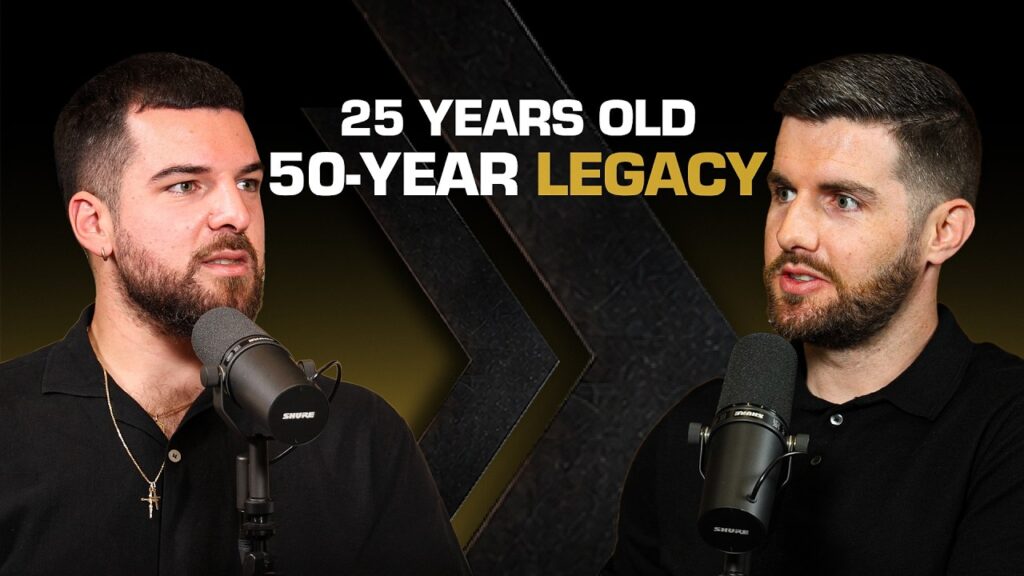
Antonio’s Winery has been making wine on the same 10 acres in Herne Hill since 1975, and 2026 is the first year it’s going to market properly. The man taking it there is Elijah Principe, who is 25 and has been helping crush grapes since he was sitting on his grandfather’s shoulders.
In Episode 28 of Unlocking Business, I sit down with Elijah, winemaker and director of Antonio’s Winery in the Swan Valley. His grandparents, Antonio and Emma, arrived in Australia in 1969 and by 1975 had claimed 10 neglected acres, clearing them by hand after long days at other jobs. Antonio learned winemaking from the old European families of the valley, not from a textbook, and ran the vineyard on the same principles until he passed away in 2013.
We talk about how the wine used to be sold, why Elijah calls his wine prestige rather than premium, the mistakes of a first vintage, why he’s staying out of the big bottle shops, and the cellar door he wants to open by late 2027 or early 2028.
Who is Elijah Principe?
Elijah is the third generation of the Principe family to make wine on the property, and he’s been doing it since he was about four. Making wine was the family’s summer hobby. Harvest ran from the start of February to the end of March, and customers who knew his grandfather came by word of mouth for juice and wine.
Elijah officially started running the business in June last year. The property is still in his grandmother’s name, and he’s clear that he’s taking over the business, not the land. This year’s wines include a Grenache, a Shiraz and a Chenin Blanc, with a Shiraz Cabernet and a La Famiglia blend to come, all made without added sulphites.
Key takeaways from the Antonio’s Winery story
1. Change how you sell, not what you stand for
For decades the wine was never in a shop. Antonio set the price at $3 a litre, and people filled 54-litre kegs, 25-litre containers and even plastic bottles from Coles. If someone only wanted a bottle, they were usually told to just take it. Elijah says the only thing that has changed is that he’s taking it to market. The generosity behind the wine hasn’t, and the long-time customers who buy juice to ferment themselves still get their barrels.
2. Find a word that actually sets you apart
While journaling one night, Elijah noticed every winery calls itself premium. So he doesn’t. He calls Antonio’s a boutique prestige brand: handmade, natural and made without added sulphites, egg whites or milk powder. He knows he’s a tadpole in the ocean next to the big wineries, and he’s fine with that, because nobody else can copy three generations of family winemaking.
3. Protect the brand by choosing where you sell
The plan is WA first, then the rest of Australia, then maybe the world. Italy is the dream. But Antonio’s won’t be going into the big chain bottle shops, because Elijah believes that would ruin the branding. He’d rather be in a limited number of wine bars and venues where people have to go looking for it, so he doesn’t saturate his own brand.
4. Treat every mistake as next year’s plan
Two things didn’t go to plan in the first vintage. Some of the Grenache had high sugar levels and started fermenting again in the bottle, turning into a natural sparkling red. And a Shiraz meant to be a rosé went into oak barrels before the stainless steel tank, so it came out as a light Shiraz instead. Both still taste good. For next year, Elijah is cutting back to the reds the family does best, with no blends.
5. Check your suppliers before you put your name on it
When Elijah buys in grapes, he runs a checklist first. How long have the vines been there? Are they watered or dry-grown? What are they sprayed with? If the answers could harm the brand, he doesn’t buy. It’s the same thinking any business owner should use with suppliers and subcontractors, because their work ends up with your name on it.
6. Find people who will tell you straight
Elijah has a mentor in the valley who gives it to him straight, good or bad. He’s the one who told him how to make the rosé, and then asked why he didn’t listen when it went in the barrel first. Elijah also credits networking for getting his labels made: one contact at an event led to the next, and that led to the designers and the printer.
The 100-year-old shed and the cellar door plan
The tin and timber shed on the property was already there when Antonio and Emma bought it, and it’s close to 100 years old. Elijah loves it, but if the cellar door goes on the property, the shed will have to come down to make way for a new double-storey building with a mezzanine that wraps around the huge mulberry tree. He plans to photograph every corner of it first so the history can be shown in the new cellar door. If the cellar door ends up somewhere else, it will be because he’s bought more land, somewhere between 30 and 100 acres, to expand.
There’s also a great story about his 72-year-old nonna, who pruned a full row of Shiraz in about half an hour and let him know loudly, in Italian, when he pruned the Shiraz the wrong way.
“You’ve got to work hard to get what you want. Be stubborn in certain things, but never disrespect anyone, and always stay humble.”
Elijah Principe, winemaker and director of Antonio’s Winery
Running a winery at 25
Elijah is honest about how much has changed. A year and a half ago, he says, his head wasn’t screwed on properly, and if someone had told him he’d have a winery and be in a room with award-winning winemakers, he wouldn’t have believed it. When he gets anxious about everything still to do, he reminds himself that he’s 25, he has a winery and he knows how to make wine, something people pay thousands of dollars to learn. He isn’t interested in gatekeeping any of it either. If someone wants to learn how the family makes wine, he tells them to come out at harvest.
We finish with a pour of the Grenache that turned sparkling and the Shiraz that was meant to be a rosé, and we’ve already agreed to do another episode on exactly how the wine is made.
Where to find Antonio’s Winery
You can buy the wine online, or follow Elijah and the winery on Instagram for tastings and updates from the vineyard.
- Website: antonioswinery.com
- Instagram (Antonio’s Winery): @antonios_winery
- Instagram (Elijah): @elijxh_p
More episodes you might like
- Buy a House or Open a Shop? He Put Everything Into the Shop | Edward Maradona
- If You Market to Everyone, You’re an Expert to No One | Tracy Fryer
- AFL Draft to Business Owner | Jacob Blight
Building something on top of what your family or your business started? Work with me.
In this episode
- 00:00Cold open
- 00:48Meet Elijah and Antonio's Winery
- 01:32Why take the winery to market now
- 02:50How the wine was sold before
- 04:10Filling kegs and bottles with wine
- 05:48$3 a litre and the same principle today
- 07:15Premium or prestige?
- 07:46Natural wine without added sulphites
- 09:24The Grenache that turned sparkling
- 11:22A natural mistake and why he won't add sulphites
- 13:44A tadpole in the ocean, with 20 years of experience
- 14:41The plan: WA first, then Australia, then the world
- 14:52Why not the big bottle shops
- 15:11The cellar door plan for 2027 or 2028
- 16:17The 100-year-old shed
- 18:47Turning a family hobby into a business at 25
- 19:35People pay thousands to learn what he learned from family
- 20:57Knocking down the shed for a new cellar door
- 22:49Why the old shed has to go
- 23:42Expanding to 30 to 100 acres
- 24:23Buying grapes with a checklist
- 27:37His 72-year-old nonna out pruning
- 29:17The January window to plan the vintage
- 30:25This year's vintage
- 31:34Bottling it themselves
- 33:57How far ahead he plans each season
- 34:27The rosé that became a Shiraz
- 36:30Are there rules on what you can call a wine?
- 37:10Entering the awards
- 39:15Taking over the winery: pen and paper
- 40:45A year and a half ago to now
- 43:23Running a winery at 25
- 44:15What his grandparents taught him
- 45:25Not gatekeeping what he knows
- 48:24Do other winemakers help each other?
- 50:09The power of networking
- 58:48Tasting the sparkling Grenache
- 1:00:26How much wine does he drink?
- 1:02:57The labels and who made them
- 1:04:15Where to find Elijah
Full transcript
Read the full transcriptAuto-generated from the episode, lightly edited for clarity
[00:00] Cold open
Elijah: It's not going into Liquorland or Dan Murphy's, no. That's going to ruin my branding.
Kane: And would you have it somewhere else, potentially, because of licensing and other complications as to why you might not be able to have it on your property?
Elijah: I love it to passion. Unfortunately, I've got to basically get rid of it. It's sad, yes, I've got to be honest with you.
Kane: I don't understand how you make it. So you have to buy the grapes for the different types of wines?
Elijah: Yeah, correct.
Kane: How far in advance do you have to plan what you're going to do?
[00:48] Meet Elijah and Antonio's Winery
Kane: Hey, I'm Kane Tyler Smith, the founder and CEO of Smartfix and Hypotential. This is Unlocking Business, where we have real conversations around business, leadership, mindset and personal growth. If you've been getting value from these conversations, please take a second to like, subscribe and follow our channels. It helps us reach more people, bring on more guests and share more stories. Now, let's get into this episode.
Today I'm joined by Elijah, winemaker and director of Antonio's Winery. His grandfather Antonio and grandmother Emma arrived in Australia in 1969, and by 1975 they'd claimed 10 neglected acres in Herne Hill in the Swan Valley and started cleaning it by hand after long days at other jobs, while raising a family. Antonio never learned winemaking from a textbook. He learned it from the old European winemaking families of the Swan Valley, and he ran that vineyard on the same principles until he passed away in 2013. Now it's Elijah's turn to carry it forward. The same 10 acres, with some of the original vines still growing. And after 50 years as essentially a family project, 2026 is the first year they're taking it to market properly. Thanks for coming on the podcast.
Elijah: No, thank you for the opportunity. Really appreciate it.
[01:32] Why take the winery to market now
Kane: You're taking something your grandfather built quietly over 50 years and putting it in front of the public for the first time. What made you do that now?
Elijah: I've always had a passion for making wine. Making wine was basically the hobby. Every summer the harvest would start on our vineyard at the beginning of February and end in March, and I've always found fulfilment and enjoyment in that. I have a strong faith as well, and I was taught by my family that wine is such a holy statement. It's the blood of Christ, which I've got on the back of the labels.
I still have a fond memory from when I was a little kid. I was on Antonio's shoulders, my grandfather, pushing grapes into the crusher. I was about three or four years old. I thought back on that last year and I thought, I've always loved making wine and I've always wanted a business. Why not lock in with this? I locked in for about a month, throwing around branding ideas and networking with the right people, and it sparked that fuel inside of me. It went bang. I was like, "Okay, I'm doing this now." I got stubborn with it, and here we are today.
[02:50] How the wine was sold before
Kane: When we say taking it to market properly, what does that mean? How did you guys sell the wine before?
Elijah: Before, it was never in stores. It was always crushed grapes and wine in the shed. My grandfather was well known and respected in the valley, because he built the legacy of the Principe name, and I'm grateful to continue that. Whoever knew my grandfather from his work or around the valley came by word of mouth, like back in the day. They'd come with their utes full of whatever they wanted the wine in, or the grape juice, because a majority of the customers back then loved to ferment it themselves. In Italian we call the juice mosto. Some of these people would get a thousand-plus litres of juice every year and ferment it themselves.
Whenever the wine was ready, they'd ring my nonna and nonno, Antonio and Emma: "The wine's amazing. Even when I ferment it, something's just different. What do you do?" You make people happy. I love to do that, and when I hear that, I feel fulfilment in it.
[04:10] Filling kegs and bottles with wine
Elijah: They'd sell the wine in boxes or crates to friends and referrals. Or if you had a 25-litre container and you wanted some wine in that, cool, we'd fill it up. If you had a 54-litre keg, we'd fill that up for you. Even the two-litre plastic bottles from Coles. Anything you could put wine or juice in, we'd do it for you.
Kane: That's so cool.
Elijah: Literally. If you came there even two years ago, the things people brought to put the juice in were insane. I've been making wine since I was four years old, and I'm 25. Two years ago was the craziest thing I've seen. People brought 750 ml bottles from Coles or Woolworths, and the tiniest little glass bottles. I'm thinking, the whole thing's not going to fit in there. It was my dad's customer, and he said to me, "You go to the switch, turn it on and off, and I'll tell you when." Next minute, I turned it on and it overflowed. Me and Dad were laughing. He said, "Listen to me next time." But that's how it used to be.
[05:48] $3 a litre and the same principle today
Kane: How would you charge, then? Was it based on litres?
Elijah: My grandfather set the price per litre, and it was $3 a litre. But people always bought in bulk. If someone only wanted three litres, we'd just say take it, it's not going to harm us. It was always like that, and I still carry that on. If someone asks for one bottle of wine, I'll say just take the bottle. What Antonio did back then doesn't change with me now. The only thing that's changed is that I'm taking it to market. The principle behind the wine, of giving and making people happy, doesn't change. I'm not one to be greedy with it. This is a passion project I'm blessed to do, and it doesn't mean I'm going to change anything. The principle behind Antonio's is exactly the same as when he bought the vineyard around '71 and started making wine in '75.
[07:15] Premium or prestige?
Kane: So what does taking it to market mean?
Elijah: I want to get my wine out there. Everyone says they're premium this, premium that. I was journaling a couple of nights ago and thinking, what does it actually mean to be premium? I got curious and looked at other wineries, even internationally, and it's just a term everyone uses.
[07:46] Natural wine without added sulphites
Elijah: How I'm trying to get out there is that I'm handmade. I'm making natural wine without any chemicals or sulphites. I've seen skim milk powder and egg whites on the back of wine labels as well. I don't use any of that. I'm all in on natural. So I don't like to say I'm premium. I'm prestige. My wine is a boutique prestige brand. Yes, I'm a tadpole in the ocean compared to all the other wineries, but I'm doing something no other winery can do.
I saw a label once that said organic, but it still had minimal sulphites. If it says organic on the label but has sulphites, that means the way they tend the vineyard is organic, not the wine itself.
Kane: And are sulphites a preservative?
Elijah: Yes, a preservative, an additive. You use them for a lot of things. I'm still learning that side of it, because I've only just started taking the wine to market, to a limited number of venues and wine bars, so I don't saturate my brand.
[09:24] The Grenache that turned sparkling
Elijah: For example, some bottles of my Grenache are starting to re-ferment in the bottle. It's not bad. The only thing is, instead of being a nice Grenache, it's a sparkling red. Still a beautiful taste and a beautiful drop, but it's a bit sparkling. And it's natural sparkling. Nothing's been added to make it bubbly like champagne.
Kane: Does that happen if it's been in there too long? Does it change the label?
Elijah: Unfortunately I might have to change the label, or work around it somehow. It's not about time in the bottle. The glucose and fructose levels were very high this year with the Grenache. When I got the wine filtered before bottling, to get the yeast and sugar out, the levels were still very high. I was hoping it wouldn't happen, but it did. Some bottles are fine, some are sparkling.
Kane: So you know straight away when you're pouring it?
Elijah: If you open the Grenache and you hear that sound like opening a can of Coke, it's sparkling. That doesn't mean the wine's bad. That's where sulphites come into play. Some wineries, I've been told, will water down the grapes so the sugar isn't too high, or add sulphites to stop it happening.
[11:22] A natural mistake and why he won't add sulphites
Elijah: That's an example of a natural mistake. To stop it, I'd have to put sulphites in, and I'm very against that. A lot of people I know who love wine get headaches from store-bought wine, brain fog, aches behind the ears, a blocked nose. In my view that's not the alcohol, that's the sulphites reacting with your body. I gave people my wine before I'd even put the labels on, and they woke up the next day feeling fine.
And being faith-driven, you look back at the winemakers of the old days. Did they put any of that in their wine? No. Just crushed grapes, left to ferment. It's time, patience and grapes. Nothing else is added.
Kane: That's a good point. It's time, patience and a natural product, so it might be a bit different each time. And the bigger competitors can push out a ton of it and make every bottle taste the same, whereas one of your bottles might taste slightly different to another bottle of the same wine.
Elijah: 100%. And don't get me wrong, I've got a friend who works on a bigger vineyard and they pump out a lot more wine than I can for now, and their wine is some of the best I've tasted. I'm not talking anyone down.
[13:44] A tadpole in the ocean, with 20 years of experience
Elijah: It's just that I know what wine should be like from what I was brought up with and what I hear from people. I'm not trying to say I'm the best, because I'm not. Like you said, I'm a pebble in the ocean. But I've got 20-odd years of winemaking experience behind me, and I'm the third generation making this, with two generations before me. I'm not trying to ruin anything. I want to show the world what my grandfather taught me and what my father still teaches me about wine. When I tell people I live on a vineyard, they love it and want to hear what it's like. I want to share that feeling with the world.
[14:41] The plan: WA first, then Australia, then the world
Elijah: The dream is to get to Italy. If it gets to Italy, I'll be amazed. If it doesn't, it's not the end of the world. First, I want to sell in WA and get known in WA, then take it around Australia, and then think about global.
[14:52] Why not the big bottle shops
Elijah: But it's not going into Liquorland or Dan Murphy's. That's going to ruin my branding. If people want to buy a bottle, it'll be at wine bars or certain stockists. They'll have to go and find the wine. I don't want to saturate my own brand.
Kane: But they can still buy from you directly?
Elijah: Yeah, 100%.
[15:11] The cellar door plan for 2027 or 2028
Kane: Are you going to have a cellar door? Is that what it's called?
Elijah: Yeah, correct. Long story short, I'm aiming to have a cellar door by the beginning of 2028, if not late 2027. If it's not on the property where we are now, I'll probably look to buy another vineyard and expand there. I've got another plan as well, but I'm going to leave that as a surprise. It's definitely going to happen. I'm just figuring out exactly where and how.
[16:17] The 100-year-old shed
Kane: With the cellar door, I assume you'd want it on your property?
Elijah: Ideally. When Antonio and Emma bought the property, the tin shed was already there. My dad knows a lot about the history, and he's told me about the people who owned the property before us. That shed has been there nearly 100-plus years now, and it's still holding up. It's 100% timber and tin. Jarrah or pine and a tin shed, that's it. Before it gets renovated or demolished, I want to take photos inside and out and showcase them wherever the cellar door ends up. You can't renovate it to have it in there. It's too old.
If that shed could speak, the stories it would tell. You'd just sit there with a glass of wine and a blanket and let the shed speak. It's heartwarming and emotional at the same time, because of the memories in that shed, under the patio and on the cobblestones outside where the tractors are parked. You read about this sort of thing in books, but when you experience it, it hits different. That's when you see why Antonio started all this.
[18:47] Turning a family hobby into a business at 25
Elijah: I never expected I'd be making wine as a business and have the courage to continue something that was a summer hobby for the family. Now it's my business, and I'm blessed and thankful for it. And it's a winery. Not e-commerce, not anything mainstream. I'm 25, so I humble myself pretty quickly. I'll be lying in bed thinking, "I've got to do this, I've got to do that. How am I going to do all these things?" Then it's like someone gives me a Mike Tyson left hook and I'm humbled. "Pause, Elijah. You're 25. You might not have time, but don't forget you've got plenty of time. You've got a winery at 25, and you know how to make wine."
[19:35] People pay thousands to learn what he learned from family
Elijah: People pay thousands of dollars to learn this. Last year I did a couple of classes in vineyard work, viticulture, and I saw the fees.
Kane: Why did you do that? Just to see what it was about?
Elijah: Correct. I thought I needed a certificate behind me for the vineyard, but you don't. I was sitting there thinking, "I know this, I know that." Unfortunately I couldn't juggle it with work at the time. But people are paying all that money to learn this, and I got it for free from my family and the Europeans in the valley. That humbles me when I get worked up and anxious about it. There's also a verse that comforts me, Philippians 4:13: "I can do all things through Christ who strengthens me." When I'm in bed and it comes to mind, I think, "Okay, I can sleep."
[20:57] Knocking down the shed for a new cellar door
Kane: So with the cellar door potentially on the property, are you saying you might have to take the shed down and use that space to build the new cellar door?
Elijah: The concrete is mostly good, but some parts need to be cut out and re-cemented. Where the barrels are will stay, but I'm going to extend out. There's a mulberry tree, the tractor area and the chickens, nowhere near the wine, but all in one old tin shed, separated. Me and my dad have talked about relocating the chickens to another part of the property near the houses, cleaning everything out and turning the whole area into a new cellar door.
The plan is to knock it all down, get new timbers in, insulate the shed and raise it, because I want a double-storey mezzanine. The mulberry tree is massive, so the mezzanine would wrap around it. And if it's in season, you just pick a mulberry and eat it.
Kane: [laughs]
Elijah: You've got the hills behind you too, and the sunset comes through the trees by the railway line. It's amazing.
[22:49] Why the old shed has to go
Elijah: Unfortunately I've got to get rid of the tin. I don't want to, because it gives that heritage, rustic look. I love it to passion. But you've got to stand back and think, if I want to really take this to market and get traffic coming through, I've got to basically get rid of it. It's sad, yes, I've got to be honest with you. But I'm excited, because it's a new journey and it'll be beautiful on the property. It's what we need, to be fair.
[23:42] Expanding to 30 to 100 acres
Kane: If it happens somewhere else, you can keep the shed as it is. Would you have it somewhere else because of licensing or other complications?
Elijah: Yes and no. If I have it somewhere else, it'll be to expand the business. We've got 10 acres in the valley, so if I expand, I'll be looking at anywhere between 30 and 100 acres. If it's land with a few vines, I'll plant more vines.
[24:23] Buying grapes with a checklist
Elijah: You can buy grapes in to make wine as well, which I did this year. But when I buy grapes in, I run a checklist. Are they watered? How long have the vines been there? What do you spray them with? If it could harm my branding, I won't buy the grapes. If it doesn't, I'll get them.
I could do so much on the property now, and I'm blessed and grateful for it. But if I want to take things further, I've got to expand somewhere. People think, "I'll just buy a vineyard." There's more to it. What's the soil like? What's the history of the vines? Have there been any diseases? Have they been watered, and if so, why? How long have they been on a trickle? Or are they dry-grown vines that grow without watering, which is what we have on our property. I could go on about that for ages.
Kane: And that would be a huge business decision because of the investment. If you bought a different property and had to plant new vines, I assume that takes a long time to get the money back.
Elijah: 110%.
Kane: You mentioned earlier having about a one-month window?
Elijah: Right now it's pruning. Once the pruning's done, you're maintaining the vineyard: ploughing the dirt and strip digging under the vines so they don't get clustered with weeds. Ploughing just turns the soil over. That's what we're doing now, and selling the wine.
Kane: How long does that take?
Elijah: Right now it's very quiet. Ploughing takes about a week to do properly, same with the strip digging. Pruning depends on the size of the vineyard. The property is 10 acres, and the vineyard itself is just over nine once you take out the houses and sheds. It takes a week or two, depending on whether you get pruners in and their availability. We had pruners in for our Cabernet, and they were flat out, so it took us about two weeks to prune the whole vineyard.
[27:37] His 72-year-old nonna out pruning
Elijah: And I've got to be honest, my nonna cannot stay still in the house. She was out there with little electric scissors chopping the vines. I thought I knew how to prune. No. My nonna is 72 and still going strong on that vineyard. The rows aren't short, they're long rows, and she did a whole row of Shiraz in about half an hour. Shiraz vines are a complete nightmare to prune, as my nonna says.
I found that out last year with my nonna and dad. With the Grenache, you cut one flush and leave two buds, so it can sprout new growth. You can't do that with Shiraz. I did it to a few Shiraz vines, and I think the next-door neighbours heard my nonna yelling at me in Italian. She's very Italian. She's Calabrese.
Kane: You were in trouble.
Elijah: Yeah. [laughs] I was in trouble. She had the wooden spoon ready.
[29:17] The January window to plan the vintage
Elijah: So the length of pruning varies with the vineyard, and then you maintain it until harvest. But there's a one-month window in January before we start crushing. That window gives me time to plan this year's vintage, because we still have old customers from decades ago who buy juice from us, and Dad's close friends too. They still come and buy juice, not wine, and ferment it themselves. Dad was a bit worried I was going to take over that. I said, "No, that's not changing. I'm not ruining that." He said, "Okay, you're giving me a heart attack." I said, "Relax."
Kane: [laughs]
Elijah: So that's accounted for. The barrels are allocated for that, and then I plan everything else. That month in January gives me time to focus on it.
[30:25] This year's vintage
Kane: So when you say vintage, is that the season and your plan for it?
Elijah: Yeah, correct, for this year. This year's vintage is three wines, the Shiraz, the Chenin Blanc and the Grenache, plus two blends, a Shiraz Cabernet and a La Famiglia blend. The La Famiglia blend, to be fair with you, is nearly gone and I haven't even bottled it, because people have tasted it and they love it. I thought people would say it's not for them. We had about 1,100 litres of it, and now I think we've only got 500 litres left.
The Shiraz Cabernet blend I'll get bottled next week, because Dad comes back from the Middle East on Friday after seeing my sister. Him and I will put the wine in an IBC, get it filtered, then put it in the stainless steel tank and start bottling.
[31:34] Bottling it themselves
Kane: You bottle it yourself?
Elijah: Yeah, by ourselves. We get a machine to put the caps on, because you can't just push these caps on. The machine winds and screws them on. This year was still an experimental phase, working out what to push out and what to bring in, and it was a bit rushed. I don't like things rushed. I've got to learn not to be a perfectionist, but that's me.
Next year I'm going to focus on what we do very well: Grenache, either a Shiraz or a Cabernet, and a Malbec. No blends next year. A lot of people have asked for a Grenache, Shiraz and Malbec blend, and if I have time I might do a little batch privately, unlabelled, just for us. I might also do a Muscat, a fortified wine, which is a very sweet white. You'd put it in a small bottle as a dessert wine. But mainly three reds. The white was a bit of an experiment, because I wanted to do a white and see how it went. We never had Chenin Blanc on the vineyard. We have Semillon, Muscat and one more. I wanted to do something completely new, so I bought the Chenin Blanc grapes in. I went to the vineyard, asked how long the vines had been there and whether they'd been watered, and it checked out.
[33:57] How far ahead he plans each season
Kane: So when you buy the grapes for the different wines, you're saying, I'm going to plan for this, this and this?
Elijah: Yeah, correct.
Kane: How far in advance do you have to plan?
Elijah: Probably around September to November I'll start reaching out to vineyards I know, if I need to buy grapes. I've already got about three tonnes of Shiraz lined up for next year.
Kane: Three tonnes?
[34:27] The rosé that became a Shiraz
Elijah: Yeah. Because this year the Shiraz was an experiment at a rosé. A Shiraz is meant to be dark and bold, with a very deep texture. This year it's very bright in colour. It doesn't have that boldness, because I was trying to make a rosé. It's a light burgundy colour and quite see-through. I didn't leave it on the skins for long. We crushed the grapes, left it for about an hour and drained it. If I'd put it in the stainless steel tanks before the oak barrels, it would have been a beautiful rosé. But I put it in the barrels first, then the tank, so it didn't come out as a rosé. Rosé is meant to be pink, and this isn't pink. I stuffed up. It is what it is.
But it's still a beautiful summer wine. When I do taste tests, people say the same thing: chilled, this would be elite. So I put one in the fridge, cracked it open and was amazed. It's a great chilled red for summer.
Kane: So what have you called it? A rosé or a Shiraz?
Elijah: It's a Shiraz. I'd love to call it a rosé, but it's not pink enough. I'm not heartbroken, but it's like, ah. It would have been such a beautiful natural rosé. But you've got to work around your mistakes and learn from them. Now I know what to do next year. That's why I'm going to focus on three wines, do what we know, and punch that out.
[36:30] Are there rules on what you can call a wine?
Kane: A question on that, because there are laws or rules around what you can and can't call certain things. Is that right?
Elijah: To be honest with you, I don't know. I've never heard of anything like that. If there is, I've got to do my homework pretty quickly.
Kane: I remember hearing once that if it's a Cab Sav, it has to meet certain requirements to be called that. I could be wrong.
[37:10] Entering the awards
Elijah: For award shows there are requirements. I put the Grenache in an award, and there were proper rules. If it's this year's wine, it goes in this class. Is it blended? Is it a pure Grenache or a dominant blend? A dominant blend might be 80 or 90% Grenache with 5 or 10% other grapes. Mine was a pure Grenache made this year, so it went in that class.
I didn't get anything, and I wasn't expecting to. Deep down I knew I had no chance compared to the other wineries in the valley, and to be fair, the wines in the valley are elite. They make beautiful wine. I wasn't going in there as the young gun saying I'm going to win. That's not me. I was blessed to have the opportunity, within a year, to be in a room full of other winemakers, winery owners, business owners and mentors I can look up to. There are a few wineries around me I go to for advice: I need help with this problem, what do you recommend? They're my mentors, and I'd never disrespect anyone in the valley. I still got some decent points, just not top three, and that's fine.
Kane: You're in the room.
Elijah: Correct. With a year's worth of progress.
[39:15] Taking over the winery: pen and paper
Kane: So you took over the winery a year before that event?
Elijah: I officially started last year in June.
Kane: As in, you running the business?
Elijah: Correct. I'm still building it, don't get me wrong. Last June was pen and paper: the business name and all the legal side sorted, done and dusted.
Kane: What did that moment feel like?
Elijah: Oh my gosh. I have a business, and it's a winery. My brain was doing star jumps. Fireworks were popping off.
Kane: Did you know you were going to get it? Was that always on the cards?
Elijah: It wasn't always on the cards. It came when I had the ambition to do the paperwork. The property is in my grandmother's name, and I'd never do anything to jeopardise that. There's a painting in the house of what the property looked like when they first bought it. I'm not taking over the property, just the business. The plan was always something like this, but I didn't expect it to this level, in a good way.
[40:45] A year and a half ago to now
Elijah: If you'd told me a year or a year and a half ago that I'd have a winery, that I'd be in a room full of winemakers going for awards, that I'd have my head screwed on properly, because I'll be honest, a year and a half ago my head was not screwed on properly, I would have laughed. Or I'd have got so worked up asking how to get there that I'd have had a massive anxiety attack.
I look back on the progress I've made and the struggles I had to go through to get these labels on a bottle, and I'm in disbelief. Everyone has ups and downs and goes through many cycles of life, but I'm still amazed that I'm here today with this final product after one year. So imagine next year, and the year after that. I'm already thinking about next year and getting stressed, because I'm not there yet and I need help planning. But it's September, and I've got four or five months until the next harvest. Still plenty of time to plan.
I wouldn't be in this seat today without all the progress, the planning, learning to be the director and the man I need to be for the business, the late nights reading and watching videos, and the networking. I'm proud of it, and I did it with the blessing of God behind me.
[43:23] Running a winery at 25
Elijah: People think winery owners are mid-40s or late 50s with grey hair. Then they see a 25-year-old with a winery. Think what you want. You can think I'm an egotistical bloke or a rich kid, but I'm none of that. The property isn't mine, and I'm happy to admit that. I'm not pulling seven figures a year. I'm blessed with what I have, and you make do with what you have. I was brought up like that.
[44:15] What his grandparents taught him
Elijah: I was taught you've got to work hard to get what you want, and that teaching is still with me to this day. I'm thankful that my dad, my grandfather and my grandmother still teach me the same thing. You've got to work hard to get what you want. Be stubborn in certain things, because you don't want to be a pushover. But never disrespect anyone, and always stay humble, because if you don't show humility, it'll come back to bite you pretty quickly. I've learned that the easy way and the hard way.
So being 25 with a winery is insane, but it's not like I bought 100 acres and a cellar for two million and I'm loaded. Nothing like that.
[45:25] Not gatekeeping what he knows
Elijah: I'm still a kid trying to figure things out in life. If I can teach someone what they want or need to know, I'm not going to gatekeep it. If someone wants to know how we make wine compared to other wineries, come to the property at harvest and I'll show you. Completely off topic, but the same goes for my weight-loss journey. My heaviest was 130 kilos, and now I'm around 88. The discipline it took is something I'd happily help people with.
When it comes to mental health and your own health, I don't muck around. If you need help, reach out to me. I've had people say they're there for me and then not show up, and I'm nothing like that. If it's 2am, I'm at yours by 2:01. I won't charge a fee for that. If you want to learn to make wine, come to the property when we're crushing and help out. If you want to learn to ride a jet ski, come out with me. Whatever I can do to bring joy to someone, I'll do it. I used to be a heavy people pleaser, I'll be honest. This is different. If I know something and it helps, I'll reach out and do it.
[48:24] Do other winemakers help each other?
Kane: That's so cool. I reckon you've got such a good story, and real potential, without having your wines in the big bottle shops. You talked about staying humble, and Perth is very small, and I assume the valley is even smaller and everyone knows each other. You mentioned mentors helping you. Is that common in the valley, or are some people like, "I'm not helping you"?
Elijah: Some people in the valley will help out, but only to a certain degree.
Kane: And then say things behind your back?
Elijah: There's one person, and I won't say his name, who is a massive mentor of mine. I've got his number, and whenever I need help, I message him. He gives it to me straight, good or bad.
Kane: As in, these are the facts?
Elijah: 100%. Don't muck around, this is what you've got to do with the wines. He told me how to do the rosé. Then I told him I'd put it in oak first instead of stainless, and he said, "Why did you not listen to me?" I said, "I'm sorry, I'm sorry."
Kane: [laughs]
Elijah: But he's my main go-to mentor, 100%.
[50:09] The power of networking
Kane: That's awesome. That's the power of a network, and that's how we know each other, through Inner Circle. How important is networking to you?
Elijah: Like you said, shout out to Inner Circle, because I wouldn't have these labels done if it wasn't for them. I networked with the right person at one of their events, that person gave me the contact I needed, and that person gave me the next contact I needed. That's the power of networking. I've been with Inner Circle since their very first event on a rooftop bar on 17 May last year, and I was told I was the very first member to sign up. Seeing the journey they've built from then to now is insane.
People ask me if the membership is worth it, and I tell them to look at who's in the room. I had a conversation with a bloke who was so genuine and humble, and he's helped me a lot. I didn't realise who he was or how big his business was until later, and I wouldn't have met him otherwise.
Kane: That's interesting, because if you'd known that before you met him, you might have acted differently.
Elijah: The other thing is that they don't want ego in the room. Since I joined, I haven't met anyone ungrateful or egotistical. Everyone wants to help you and catch up with you. My friend group has changed a lot from last year to this year. I didn't realise how many people in Perth are business-minded and just want to be around like-minded people.
If you're not sure, go to a free event first and see who's there. If you like it and want to be around those people more, then join. But it's not like Netflix, where you pay and just watch. You get out what you put in.
Kane: 100%.
Elijah: I can yap, and thanks to my yapping I was able to network with the right people. The product's on the bottle because of the power of networking.
Kane: That's such a good pitch. He's going to clip that.
Elijah: [laughs] I'm not pitching anything. It's just my own testimony.
Kane: We're going to have to do this again another time, and go through exactly how you make it.
Elijah: 100%. That one is very detailed, so whenever you want me back on, let's do it.
[58:48] Tasting the sparkling Grenache
Kane: Let me try one. I'll do the one you've spoken so much about, the rosé that became a Shiraz.
Elijah: Okay. Oh, this is the Grenache, not the Shiraz. That's the Shiraz there.
Kane: I noticed you've got names on the back, like your name.
Elijah: Elijah, obviously. See, this is sparkling. This bottle of Grenache turned into a sparkling red. But it's not bad. I'm going to have some myself.
Kane: Yeah, that's nice. So what is it now?
Elijah: If all the Grenache turns sparkling, it goes under sparkling wine rather than a regular wine. It's still wine, just sparkling. And the colour is still insane.
Kane: And sparkling is always chilled, or not necessarily?
Elijah: I'm going to say yes, from what I've seen, but I'm honestly not sure. Sparkling wine is brand new to me.
Kane: Ooh, that's actually really good.
[1:00:26] How much wine does he drink?
Kane: How much wine do you drink? Do you test it all on a regular basis?
Elijah: One week can be quiet, and then one week makes up for everything. One week I had taste testings back to back, two in one day. I'm allowed to refuse sometimes, but I didn't that week. So I thought I'd have a detox the following week, and then we had two more taste testings. The detox didn't work.
Kane: [laughs]
Elijah: My last taste testing was the day before my birthday, which was the 10th of September, so we've had a break since. And this one has no added sulphites.
Kane: Bingo.
Elijah: And you can taste it. This one was meant to be the rosé. You'll see the difference in colour. It's nice and clear, and it still has good structure and depth on the palate. If it were bolder in colour, it would be a pure Shiraz, but for a Shiraz it's very bright.
[1:02:57] The labels and who made them
Kane: I love the labels.
Elijah: Thank you, I appreciate it. I've got to shout out Tucker Creative, who did a phenomenal job designing them, and Jared at Label Makers for hooking it up. The metallic on the A, the emboss on the N and the I, how the I hits the very edge and came out nicely, and the texture of the paper. I wanted that prestige, boutique feel. I'll go for the same concept next year, though the A might be a different design. I knew I'd have a good label, but this good? No. Shout out to Tim at Tucker Creative and Jared at Label Makers. They did massive work. And next year I've got to figure out the names for the wines.
[1:04:15] Where to find Elijah
Kane: Stay tuned. So where can people find you and the winery?
Elijah: In the Swan Valley, or at any Inner Circle event.
Kane: You're on Instagram?
Elijah: Yep.
Kane: We'll link you in the description. Thanks so much for coming on. We'll definitely book another one.
Elijah: 100%. We'll explain how the wine's actually made.
Kane: Yeah, let's do it.
Elijah: No, thank you for your time. Genuinely appreciate it.
Kane: Thanks for tuning in to this episode of Unlocking Business. If you've enjoyed this conversation, please take a second to like, subscribe and follow our channels. It really helps us bring on more guests and have great conversations. If you'd like to connect with today's guest, the details are in the description below. I'm Kane Tyler Smith. I'll see you on the next one.